July 17, 2026:


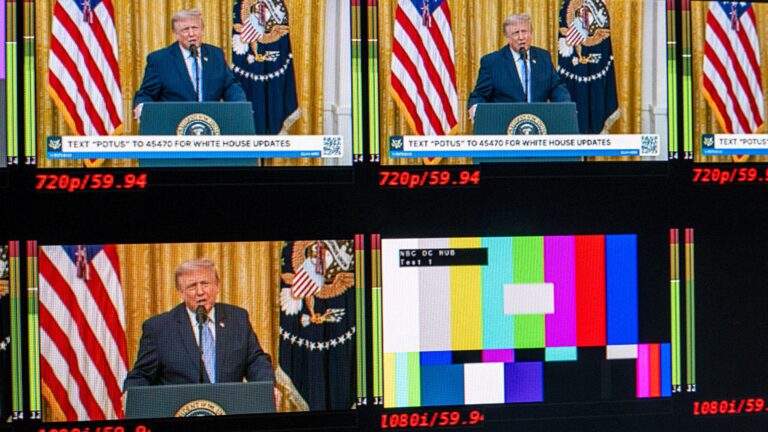
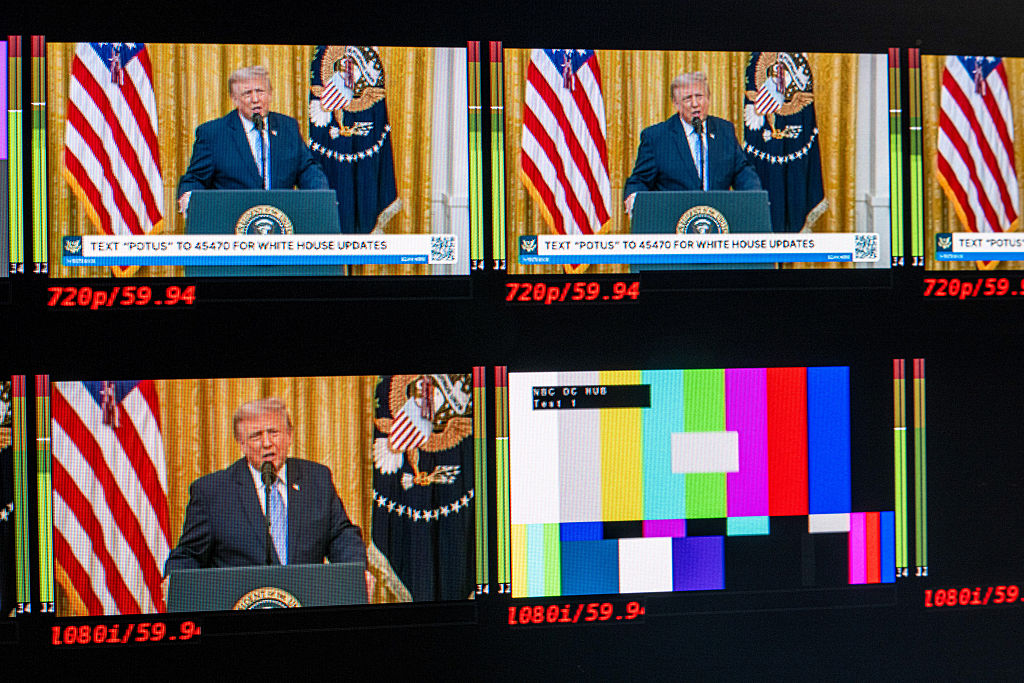
President Donald Trump accused U.S. TV networks that opted not to broadcast his election security speech of being engaged in a “plot” and said they should lose their licenses.
“In a rare move, NBC and ABC ‘Fake’ News have both said that they would not cover this speech. They knew what it was about,” Trump said during his 25-minute address Thursday night.
As he made a series of allegations about foreign interference in U.S. elections, Trump claimed the major TV networks “are part of a plot, they want to continue this fraud, for whatever reason.”
Doubling down on his stance, he said: “Fraud like this should mean a revocation of their licenses.”
The White House’s Rapid Response social media account also lashed out at CNN for opting against a live broadcast of the speech.
NBC and ABC carried Trump’s remarks on their streaming channels, while other networks including CBS, MS NOW, and Fox News chose to broadcast part or all of the speech.
TV networks are not required to provide a live broadcast of Presidential speeches. Some have occasionally opted not to air addresses from former Presidents, including Joe Biden’s 2022 speech on threats to democracy.
Broadcasters may also be wary of airing Trump’s claims about election interference following Fox News’ $787.5 million defamation settlement over false claims related to the 2020 election.
Sen. Bernie Sanders of Vermont criticized Trump’s threat against the major TV networks.
“Pathetically, in true authoritarian fashion, he even threatened to revoke the licenses of ABC and NBC because they would not cover his speech. Insane,” Sanders said. “Too many Americans have fought and died to defend American democracy.”
Trump’s lambasting of the TV networks during his speech comes after months of tension including threats against late-night TV hosts and Federal Communications Commission (FCC) investigations led by chairman Brendan Carr.
Last August, Trump signaled his support for revoking the broadcast licenses of ABC and NBC, claiming the media outlets were an “arm of the Democrat party.”
Despite longstanding legal protections for press freedom that limit such action, in December, Trump again argued that certain TV stations should lose their licenses over perceived political leanings.
Since returning to the White House, Trump has also engaged in a long-standing feud with late-night TV.
Last September, late-night host Jimmy Kimmel mocked Trump for his response to a reporter’s question over the assassination of Charlie Kirk. When Trump’s response focused on construction of the White House ballroom rather than the conservative commentator’s death, Kimmel joked: “This is not how an adult grieves the murder of someone he called a friend… This is how a four-year-old mourns a goldfish.” The comedian then went on to say that the “MAGA gang” was trying to “score political points” following Kirk’s assassination.
Following his comments, ABC announced it would suspend Kimmel’s show indefinitely—a decision Trump celebrated, saying: “Great news for America: The ratings challenged Jimmy Kimmel Show is canceled. Congratulations to ABC for finally having the courage to do what had to be done.”
When Kimmel’s show returned to air a few days later, Trump strongly criticized the network over its decision
More recently, both Trump and First Lady Melania called for Kimmel to be fired over a skit the comedian delivered about the White House Correspondents’ Dinner—a bit which was filmed and televised days before this year’s event, which involved a shooting incident.
Trump also celebrated the cancellation of Stephen Colbert’s late-night talk show when it was first announced last year.
Colbert’s show was canceled by CBS due to financial reasons, according to the network. But others voiced concerns that it was instead done due to pressure from the Trump Administration, especially given the timing. The cancellation was announced days after Colbert, in his opening monologue, addressed how CBS’ parent company, Paramount, had reached a $16 million settlement with Trump over the editing of a 60 Minutes interview with former Vice President Kamala Harris. Colbert called the settlement a “big fat bribe,” referencing the then-pending sale of Paramount to Skydance Media, which required the approval of the Trump Administration.
The FCC under Carr, a Trump ally, has also sparked debate with its investigations.
In February, it was reported the FCC was looking into whether ABC’s The View had violated equal time rules for interviews with political candidates after interviewing a Democratic Texas Senate.
ABC has argued it still qualifies as a “bona fide” news program, making it exempt from equal-time requirements for political candidates.
In a filing submitted July 6, ABC argued the issue had already been settled, pointing to a 2002 FCC decision granting the program that exemption.
Carr, however, defended the agency’s review during an interview on July 10, stating: “The baseline position is that all political candidates should get equal time on these types of shows. But we’ll work through all these issues as they arise.”
Carr added that the FCC had not yet made a decision in regards to The View and whether it is a “bona fide” news program.
Prior to the final episode of his show airing in May this year, Colbert sparred with his then-network CBS, accusing them of refusing to broadcast his interview with Democratic Texas state Rep. James Talarico, a U.S. Senate candidate, out of fear of the FCC.
CBS denied this portrayal, arguing that The Late Show had been “provided legal guidance that the broadcast could trigger the FCC equal time rule for two other candidates, including Rep. Jasmine Crockett, and presented options for how the equal time for other candidates could be fulfilled.”
Hitting back, Colbert—who instead opted to release his interview on the show’s YouTube channel—told his viewers: “CBS told me unilaterally that I had to abide by the equal time rules, something I have never been asked to do for an interview in the 21 years of this job.”
“We obeyed our network and put the interview on YouTube, where it’s gotten millions of views,” said Colbert. “I wish we could have put it on the show, where no one would have watched it.”