
June 26, 2026:


Airlines are set to encounter significantly lower fuel costs due to the interim U.S.-Iran peace agreement, but travelers are unlikely to experience immediate financial relief.
During the Iran war, the continued disruption to the Strait of Hormuz, a crucial passage through which around a fifth of global oil production flows, upended trade and sparked an energy crisis.
The cost of jet fuel surged, peaking at $4.88 per gallon in early April, compared to the $2.50 price the day before the war. As of June 25, following the signing of the agreement last week, that price has fallen to $2.91 per gallon.
Aviation fuel costs for U.S. airlines increased by 78% to nearly $6.5 billion in April 2026 when compared to the same time last year, according to the Bureau of Transport Statistics.
Airlines made a series of adjustments early on in response to the jet fuel crisis. Some cut routes that were less profitable or in-demand, American Airlines is temporarily suspending six domestic routes from August to October.
Travelers “on impacted routes will be offered alternate travel arrangements or a refund in line with American’s customer-friendly schedule change policy,” a spokesperson told TIME.
Airlines have also raised the price of tickets since the start of the Iran war, with the average U.S. domestic airfare price climbing by around 15%, from $333 to $384, from mid-February to mid-May, according to data from travel search engine Kayak.
Surcharges–a cost added by some airlines into tickets to offset the fluctuating cost of jet fuel–have also impacted American consumers.
“We need about [a] 15 to 20% increase in airfares to ultimately recover 100% of that fuel price, and so fares have gone up,” said Scott Kirby, United Airlines CEO.
Some carriers also increased their checked bag fees. American Airlines in April said they would be adjusting their price in “light of the current operating environment.”
The financial stress proved too much for some to mitigate, with budget carrier Spirit Airlines ceasing operations in May.
The average price for domestic flights in the U.S. is still much higher than it was last summer.
According to Kayak, based on search data up to June 21, the average domestic U.S. flights were $370 compared to $289 the same time last year. For international flights out of the U.S., prices are also higher compared to last year, sitting at an average $956 compared to $776.
Despite the progress in the U.S.-Iran peace efforts, and even with the gradual reopening of the Strait and the ease in fuel prices, ticket prices are likely to remain elevated for the time being, experts tell TIME.
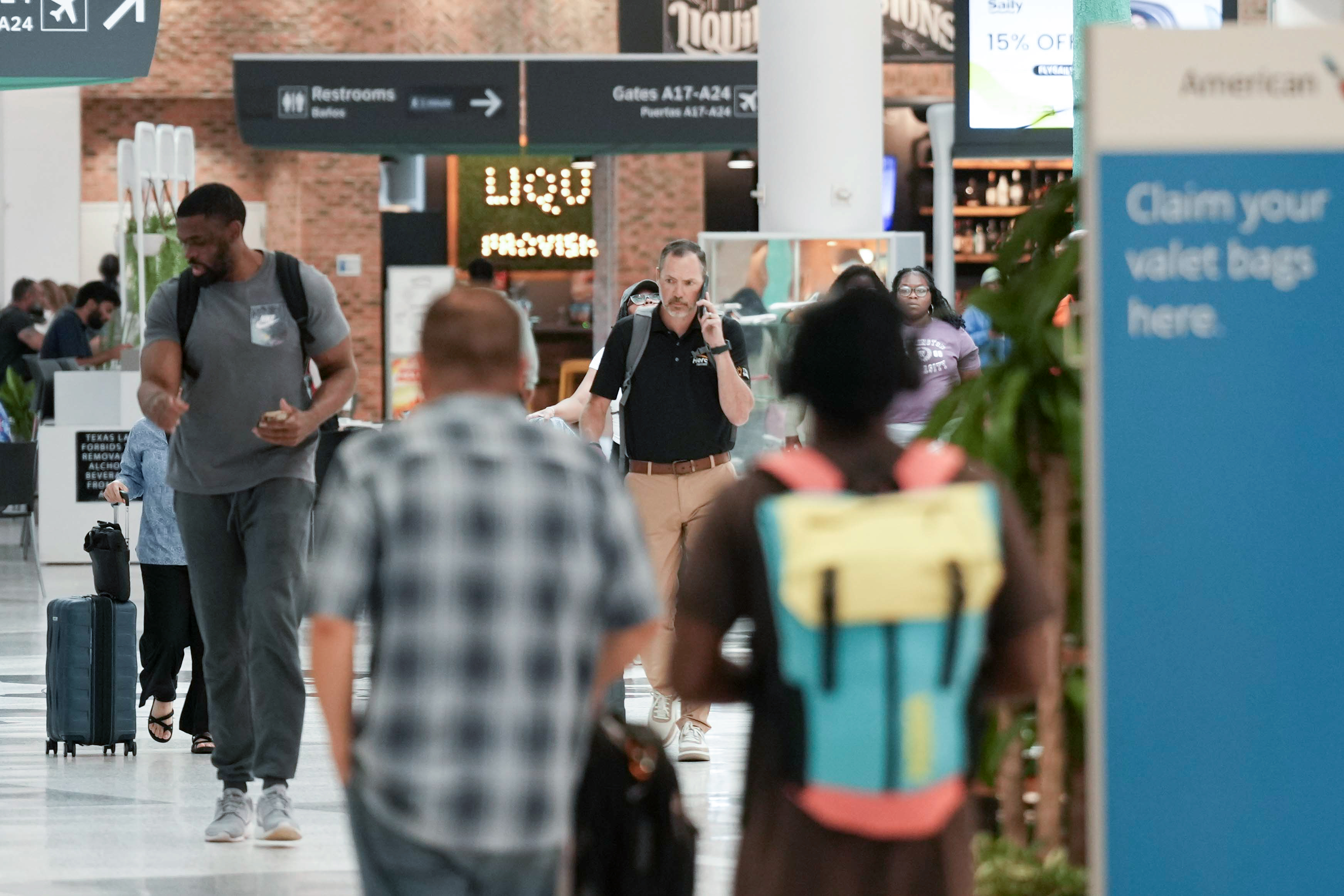
Despite higher airfares for flights in the U.S., demand remains high. The Transport Security Administration said it is preparing for a “heavy volume” of passengers traveling as part of the July 4 celebrations, with 18.7 million travelers expected at U.S. airport security checkpoints between June 30 and July 6.
International inbound travel is projected to encounter a 1.6% growth, according to the U.S. Travel Association. This is in part due to the World Cup that’s currently being hosted across North America, including 11 cities in the U.S. There’s also travel related to ongoing festivities for America’s 250th anniversary.
Clifford Winston, a senior fellow in the Brookings Institution’s Economic Studies program, tells TIME that the summer travel season is typically always one of higher demand, and that hasn’t changed, despite the elevated prices due to the fallout of the Iran war.
“Your prices are going to depend on how many people are up there flying, and in the summer, there tend to be more, and they tend to put pressure on fares, so there’ll be demand side effects that probably lead to the higher fares [anyway],” he says.
The loss of Spirit Airlines has also created demand for alternatives to those flights.
Christopher Hodge, chief U.S. economist at Natixis, agrees that the high consumer demand is among the key reasons why “airline passenger fares have stayed high.”
Travel continues to be prioritized by Americans, but spending is being driven by higher-income households, according to the U.S. Travel Association.
Additionally, there hasn’t been much disruption to business travel, Hodge adds.
While demand remains high, airlines will be keen to maximise the number of passengers flying, but competitiveness in the industry could eventually encourage a decrease in prices, notes Dudley Shanley, head of aviation and travel research at Goodbody.
“It’s a very competitive commodity-type industry with high capital intensity, so [carriers are] going to be flying those aircraft anyway,” he says. “If you could get a few extra passengers on, any extra passenger is almost 100% profit, so they will tend to compete it away relatively quickly.”
Despite the gradual reopening of the Strait, uncertainty remains as tensions could flare once more given the fragility of the interim agreement.
Oil prices rose by nearly 2.5% again on Thursday after a vessel in the Strait was struck by an unknown projectile, reviving security concerns.
Winston notes that due to the uncertainty in the region, airlines may be more cautious and not shift their higher fares just yet, in case hostilities resume.
“We’re still in a very uncertain world,” he says. “That sort of pervades all airline operations, and the net effect of that is going to lead to higher prices.”
The conflict over the past few months has increased war risk insurance costs for both maritime and aviation sectors, with insurers reassessing exposure due to missile threats, airspace closure, and other disruptions.
“This is a geopolitically-induced shock to energy prices, and that’s what’s really going to have more of a lasting effect,” adds Hodge.
Even if the reopening of the Strait continues largely uninterrupted, it could still take weeks or months for lagging shipping flows, damaged energy infrastructure, and unstable insurance markets to return to their pre-war states.
The cost of airline fuel and oil typically makes up around a third of an airline’s operating expenses, according to World Air Transport Statistics.
Fuel hedging––buying jet fuel at a fixed price for delivery later on—can help airlines stabilize costs and protect against price hikes, but it can also be a costly practice if jet fuel prices drop suddenly.
Many airlines around the world hedge the cost of buying jet fuel. For example, low-cost Irish airline Ryanair currently hedges 80% of its jet fuel costs, giving them a significant competitive advantage when fuel prices increase.
Most major U.S. airlines have abandoned this practice over the years as they had benefitted from low and relatively unchanged jet fuel costs. Southwest Airlines, one of the last holdouts, ended the practice last year.
As a result, U.S. airlines have felt the rise of jet fuel prices more than many of their international competitors as they are exposed to market volatility.
United Airlines’ first-quarter results noted a $340 million increase in fuel expense compared to the first quarter of 2025.
“The problem for U.S. [airlines] is they had no hedging in place, so they had to pass on [price increases] straight away to the consumer,” says Shanley.