Who Will Be the Next Leader of the U.N.? Meet the Contenders

September 24, 2026:

Who Will Be the Next Leader of the U.N.? Meet the Contenders

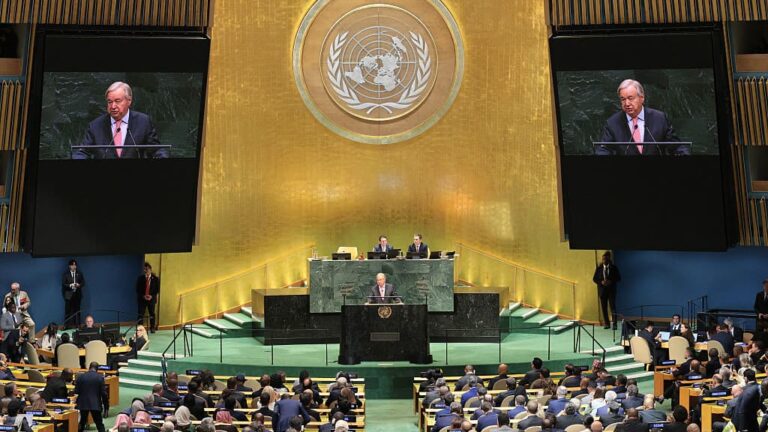
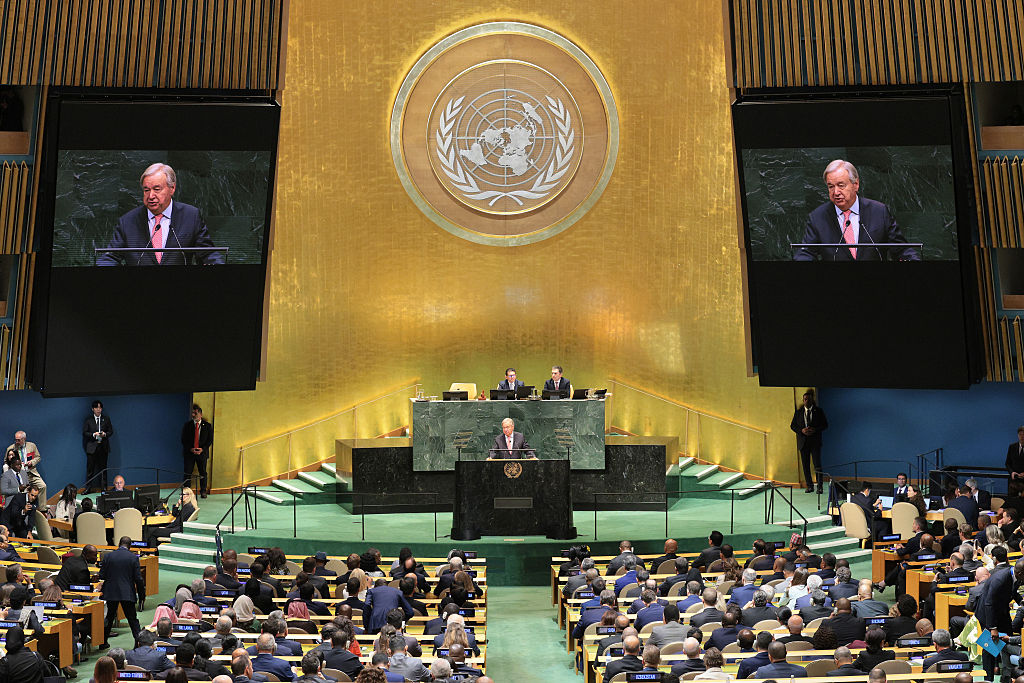
United Nations Secretary-General António Guterres speaks during the 81st session of the United Nations (U.N.) General Assembly at U.N. Headquarters in New York City on September 22, 2026. —Michael M. Santiago—Getty Images

With António Guterres’s nearly decade-long tenure as the Secretary-General of the United Nations drawing to a close amid rising conflict around the globe, the race to succeed him as the leader of the world’s most powerful diplomatic body is already underway.

Guterres this week delivered his final address to the U.N. General Assembly, in which he called for a greater focus on climate change, a two-state solution for Israel and Palestine, “de-escalation and dialogue” in the Middle East, and regulations for artificial intelligence. 

At the end of his speech, Guterres bid goodbye to a crowd filled with many diplomats and world leaders who he has worked with over his two five-year terms.

“So, on January 1st, when ​I am no longer Secretary-General, be sure of this. Wherever I will be, whatever I will be doing, I will keep championing the conviction that peace is possible,” he said. “I will continue ​to stand up for the values of the United Nations Charter and I will never, ever give up. Thank you.”

Guterres’s successor is set to step in as Secretary-General at a consequential moment for global diplomacy. Research indicates that last year saw the highest number of active global conflicts since World War II and the greatest number of fatalities since the Rwandan genocide. Tensions in other parts of the world are threatening to boil over. Climate change is exacting a growing toll. AI’s development is prompting increasing alarm. And the U.N. itself is confronting a growing funding crisis.

Read More: Make the U.N. Great Again: The Uphill Struggle Facing the Next Secretary General

Seven candidates are so far in the running to shepherd the U.N. through those challenges. Here’s what to know about the race. 

How will the next Secretary-General be chosen?

The process to choose the next Secretary-General began in November, when a joint letter from the presidents of the U.N. General Assembly and Security Council invited the nominations of candidates from member states. 

The initiation letter noted “with regret that no woman has ever held the position” and encouraged member states to “strongly consider nominating women as candidates.” 

Member states nominate candidates by submitting an application to the U.N. including a personal statement with that candidate’s vision for what they’d do in the role, a resume, and campaign finance disclosures. 

The General Assembly then holds “interactive dialogues” in which candidates express their hopes for the position and the U.N. in an opening statement, which is followed by questioning from the assembly. These televised hearings continue as candidates are submitted to the U.N.

Who becomes Secretary-General ultimately comes down to a decision from the U.N.’s 15-person Security Council, which recommends one individual to the General Assembly. The General Assembly then appoints that person to the position. 

As part of its selection process, the Security Council holds “straw polls,” in which members of the council select one of three options for each candidate: “encourage,” “discourage,” or “no opinion expressed.” This anonymized process is used to gauge whether candidates would be able to secure the nine votes needed for a formal recommendation by the Security Council. 

Who’s in the running? 

So far nine candidates have been nominated for the position of Secretary-General. Two of those candidates have withdrawn, leaving seven individuals vying to replace Guterres. 

Carolyn Rodrigues Birkett has been Guyana’s permanent representative to the U.N. since 2020 and previously served as foreign minister for her country and held senior roles at the U.N. Food and Agriculture Organization. Nominated by Guyana, her vision statement emphasizes refocusing on the U.N.’s core principles and “a more agile and effective United Nations.”

Rebeca Grynspan is the former vice president of Costa Rica, which nominated her for the position, and current secretary-general of trade and development for the U.N. She named three principles that define the mission she would undertake as Secretary-General: making the U.N. “more useful,” “more agile,” and “more accountable.”

Ivonne A-Baki, nominated by Tonga, is a long-time Ecuadorean diplomat who has twice served as the country’s ambassador to the U.S. She has also served as ambassador to countries including Qatar and France. Her platform highlights her involvement in the 1998 Ecuador-Peru peace settlement. “Where others speak of reform, I speak of renewal,” A-Baki’s vision statement reads. “An institution can be indispensable and in need of renewal at the same time, and ours is both. It is failing to live up to its own Charter, not for want of purpose but for want of focus and discipline.”

María Fernanda Espinosa is the former Foreign Minister and Defense Minister of Ecuador and served as President of the 73rd U.N. General Assembly in 2018. She was nominated by Antigua and Barbuda. Her vision consists of five pillars: “peace and security, development, digital and energy transformation, closing the delivery gap, and rebuilding credibility.” Garcés in her statement contended that “what is now in question is not the relevance of the United Nations, but its credibility.”

Rafael Mariano Grossi is an Argentine diplomat who has served as the Director General of the International Atomic Energy Agency (IAEA) since 2019. “The world does not need more declarations. It needs a United Nations capable of responding to the real demands of our time, with impartiality and a results-oriented approach grounded in facts,” Grossi, who was nominated by his country, wrote in his vision statement.

Olara Otunnu was Uganda’s permanent representative to the U.N. for five years and briefly served as the country’s foreign minister. He was also the U.N. under-secretary-general and the special representative for children and armed conflict. “Reform is no longer an optional choice. It is an imperative,” he said. 

Macky Sall was the president of Senegal for twelve years and has served as the chair of the Africa Union, a continental organization spanning 55 member states. He expressed a goal to “restore trust in multilateralism” if chosen as Secretary-General and said that “peace, security and development are intrinsically linked.”

Where does the race stand?

“We’re at a moment right now where the race is entering a pretty pivotal phase,” says Daniel Forti, head of U.N. affairs at the International Crisis Group, a non-profit think tank dedicated to preventing deadly crises around the world. 

With just over three months remaining in Guterre’s term, it won’t be long before a successor is chosen. The Security Council, though, “is not especially enthusiastic about any of the current contenders,” Forti tells TIME. He cites the last three straw polls, which have favored Greenspan and Birkett, but without “a real consolidation of overwhelming support.” 

This lack of consensus, Forti believes, could suggest that other candidates may enter the race late in the game. Although there have been no formal announcements of new candidates, Forti has heard chatter surrounding certain individuals: Nickolay Mladenov, the former Bulgarian foreign minister and former U.N. Middle East envoy who currently serves as the Board of Peace’s High Representative for Gaza; U.N. Deputy Secretary-General Amina Mohammed; and former Mexican Foreign Minister Alicia Bárcena. 

“At this late stage, new candidates don’t have the luxury of time to really socialize their candidacies, build out their visions, and elaborate very detailed policy platforms and bring them to U.N. member states, and try and win over the P5,” Forti says, referring to the five permanent members of the Security Council. The support of these members—China, France, Russia, the United Kingdom, and the U.S.

—is the most critical because they have the power to veto candidates before being recommended to the General Assembly.

Regardless of the outcome, Forti asserts that whoever is chosen to replace Guterres will inherit a fraught state of international affairs, and certainly be tested. 

“You have a really fragmented global landscape,” he says. “The challenges for whoever takes over the office are going to be immense.”

Source link