September 25, 2026:


Wars exact a heavy toll on women and yet, too often their voices and concerns are pushed to the margins of global peacemaking. Since the end of the Cold War, the United Nations has made halting but real progress in bringing women into peace negotiations and postwar reconstruction from Guatemala to Bangsamoro and beyond.
Now that progress is being reversed. As peacemaking organizations fracture and lose their ability to press warring groups toward compromise, an assortment of social conservatives and warlords is finding new ways to exclude women from discussions about war and peace. Finding space for gender diversity could do more than ensure that women are heard; it could also give peace efforts a better chance of success.
About a decade ago, Colombia’s peace process culminated in an agreement that seemed to offer a lesson in how to end a deeply rooted conflict. Negotiators brought in the belligerents but they also consulted civil society groups on rural reform, inclusive governance, and accountability for wartime atrocities, including sexual violence. Women’s groups had a voice in these discussions.
The process had its shortcomings. Civil society was unevenly represented, and many of the peace agreement’s provisions on gender have yet to be fully carried out. Still, it rested on the premise that people with local relationships, legitimacy, and knowledge should be engaged in the peace process to help shape an enduring agreement.
That conviction is fading. Women are increasingly absent from the negotiating table. Recent diplomatic efforts—from Sudan’s peace talks, trade negotiations with China, Gaza’s Board of Peace—have featured teams composed entirely of men. Women’s representation may still be a top priority for some governments in prominent contexts, such as the selection of the next United Nations secretary-general, but it has become less visible in the daily diplomatic practice of making peace.
Today’s narrow ceasefire agreements struggle to secure even minimal protections against sexual violence: none of the 13 ceasefire agreements reached in 2025 prohibited it. The loss is both practical and moral. In many conflicts, women have political networks that men do not. They can connect humanitarian actors with communities, and act as bridges and brokers who can link local leaders with national processes.
A combination of factors helps explain why diplomacy has become less inclusive. Stalemates on the battlefield have encouraged a minimalist approach to peacemaking: diplomats and envoys bring military and political leaders together to stop the fighting, with less attention to conditions that would sustain peace.
As conflicts and postwar transitions grow more complex, diplomats have less room to pursue longer term goals such as political representation. Finally, diversity has become a point of contention. The Trump Administration has challenged efforts to increase representation of historically marginalized groups.
Sudan’s bloody war has raged for more than three years, and the need for an armistice is urgent. In September 2025, the United States, the United Arab Emirates, Saudi Arabia and Egypt, who are leading mediation efforts, proposed a humanitarian truce. The effort failed. Other diplomatic initiatives have tried to bring civilians into the conversation. An April conference in Berlin included women’s groups and other organizations, but it failed to persuade the warring parties to engage with anyone, much less with civil society. For now, even progress toward a basic ceasefire seems unattainable, making a broader approach to ending the violence ever more distant.
Diplomats with involvement and knowledge of the Sudan talks describe gender as a “non-starter” with the Sudanese Armed Forces and Rapid Support Forces. Both factions have an interest in avoiding accountability for sexual violence and other atrocities while remaining focused on retaining their power. As Sudanese communities endure the war, diplomats are pursuing a narrow but pragmatic goal: finding a path to ceasefire while preserving space for later talks on who will have a voice in Sudan’s political future.
Elsewhere too, hopes for fair representation even in a postwar future remain bleak. Diversity is slipping off the diplomatic agenda in postwar Syria. Immediate concerns over stabilization and security takes precedence over any discussions of women’s representation between influential foreign governments and President Ahmad Al-Sharaa’s administration.
It remains unclear whether President al-Sharaa intends to build a government that reflects Syria’s diversity among women and men, and across its many ethnic and religious communities. Women hold just 22 of the recently formed parliament’s 207 seats. That number falls below the 20% quota for women in the electoral bodies from which the candidates were selected, and well short of the 30% target that civil society groups and the United Nations have often urged to increase political representation of women in Syria and elsewhere.
Across Syria, women hold meaningful influence in local community life. Parliamentarians might earn some communities’ trust over time, but women’s absence from national politics leaves a gap that a more inclusive system would be better equipped to close.
The manicured avenues of Washington are now home to some of the most powerful forces opposing diversity and gender justice. Even before the Trump Administration cast itself as a global peacemaker, its overwhelmingly male leadership had made opposition to diversity a defining feature of its foreign policy, rejecting the idea that a group can be considered oppressed based primarily on characteristics such as sex, race, or religion.
In its diplomacy at the United Nations and elsewhere, the Administration has made clear its opposition to quotas and other goals for representation. Senior U.S. officials have portrayed diversity as a weakness and linked traditional markers of masculinity, such as testosterone levels, to the ability to effectively deter battlefield threats.
The result is a vision of global power that places men at its center. Given Washington’s prominent role in many ongoing peace efforts, and Trump’s apparent affinity for strongmen, that stance reinforces the other two trends of minimalist peacemaking with a narrow set of elite interlocutors and an equally narrow set of issues to discuss. Some governments hesitate to raise diversity issues with the Trump Administration for fear of retaliation. Others, once more guarded in their opposition to diversity, now feel validated.
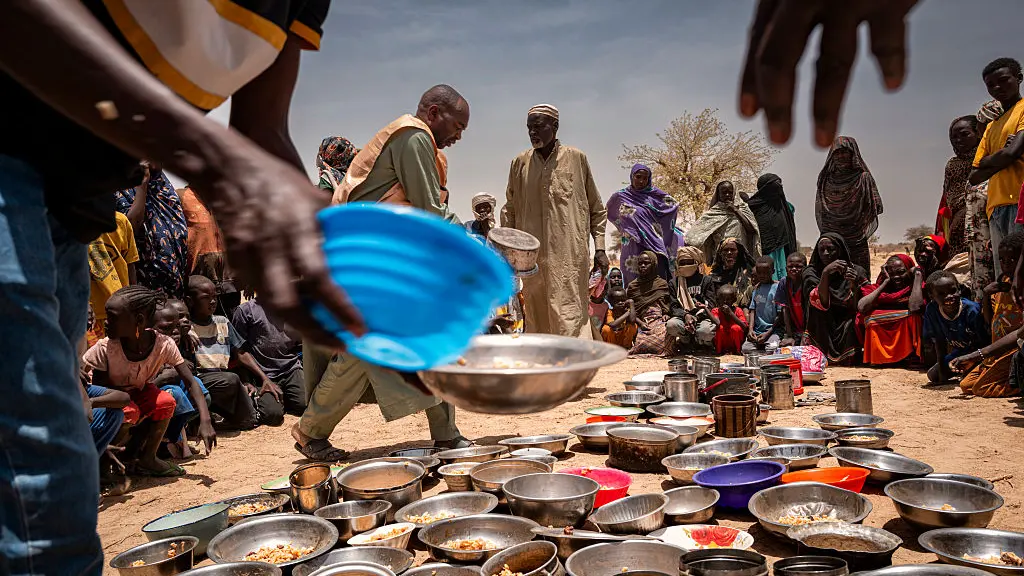
Diversity may be losing ground in elite diplomacy, but it remains vital closer to the ground. Sudan’s Emergency Response Rooms offer an example. When war broke out in April 2023, women who had worked in political resistance committees began organizing around their communities’ most urgent needs: protection, health care and psychosocial support.
They established Women’s Response Rooms to carry that work forward, drawing on networks built through years of efforts to claim a voice in public decisions. Across the wider network of Emergency Response Rooms, volunteers have negotiated humanitarian access, while women have mediated local disputes and helped hold communities together through conflict and displacement.
This extraordinary work takes place largely outside formal peace talks. Those peace processes may have changed, perhaps irreversibly, but local peacemaking persists. High-level negotiators should remember a lesson they once seemed to understand: Peace must be made not only by and for the belligerents in a conflict but also with and by people who have the legitimacy and relationships necessary to sustain societies through war and into peace.
The question now is whether diplomats will stay connected to those efforts and recognize what a peace process loses when it leaves the people sustaining their communities outside the room.