U.S. Troop Withdrawals From Europe Won't Hurt Defenses, Says NATO Chief

May 21, 2026:

U.S. Troop Withdrawals From Europe Won't Hurt Defenses, Says NATO Chief

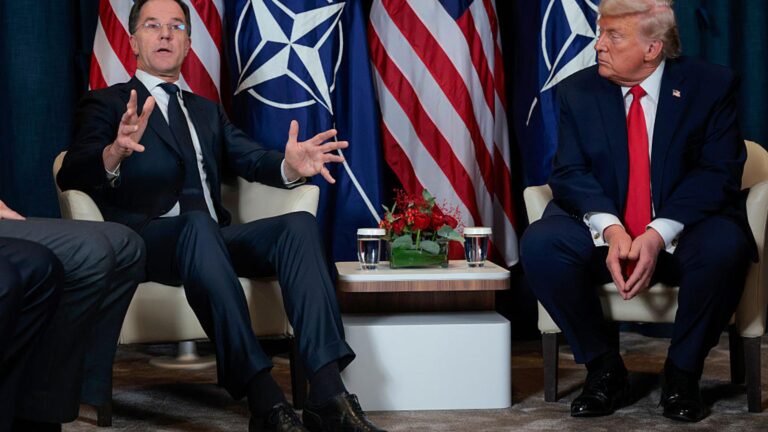
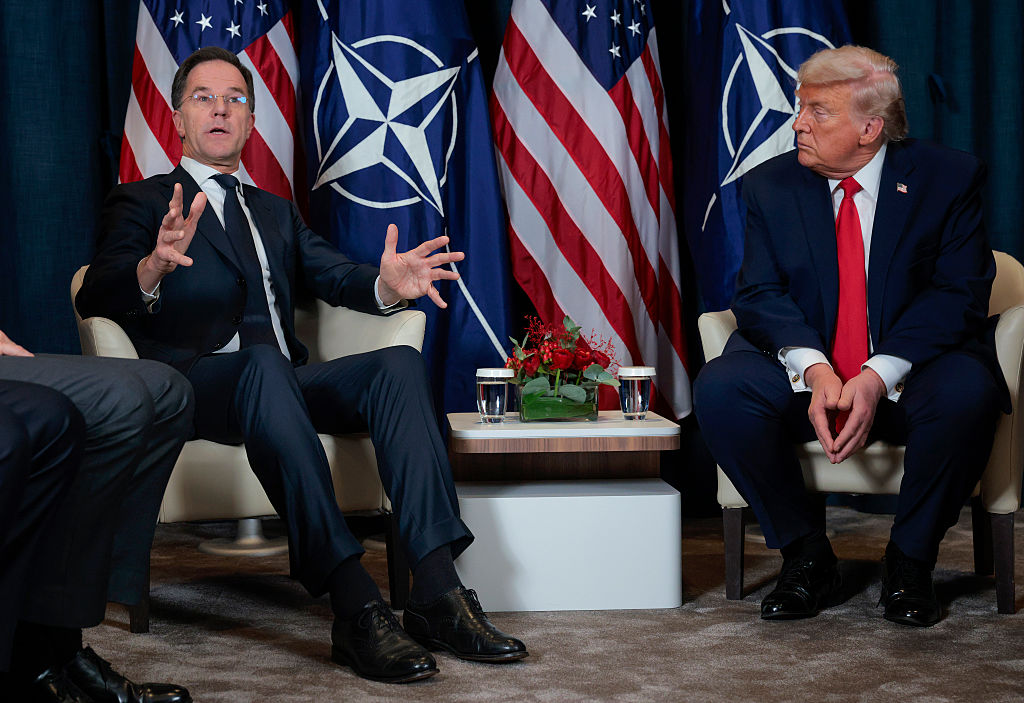
NATO Secretary General Mark Rutte and President Donald Trump at the World Economic Forum in Davos, Switzerland, on Jan. 21, 2026. —Chip Somodevilla—Getty Images

The withdrawal of U.S. troops “will not have an impact on NATO’s defense plans” and will unfold gradually in a “structured” way, according to NATO chief Mark Rutte.

“We know that adjustments will take place, the U.S. has to pivot more towards, for example, Asia,” Rutte said at a press conference in Brussels Wednesday.

He went on to suggest it’s time for Europe to “take a bigger role together with Canada” advocating for “a stronger Europe in a stronger NATO, taking more of the responsibility for the conventional defence.”

Rutte’s remarks came a day after the Pentagon announced it has “reduced the total number of Brigade Combat Teams (BCTs) assigned to Europe from four to three,” returning the levels of BCTs in Europe to what they were in 2021. BCTs are “stand-alone and self-sufficient tactical units that train and deploy together on a rotating basis,” according to the U.S. Central Command. 

The Pentagon’s chief spokesperson flagged this change as the reason behind the delayed deployment of 4,000 U.S. troops to Poland earlier this month—a move which one Republican lawmaker had labeled a “slap in the face” to the European country. 

Washington also recently announced it was withdrawing 5,000 troops from Germany, prompting several Republican lawmakers on the Armed Services Committee to express they were “very concerned.”

Rutte downplayed the transatlantic tensions when asked by a reporter if Trump’s “surprise” announcements are undermining NATO’s deterrence, insisting that the U.S. will remain “involved” with Europe.

His assurances echoed those made by NATO’s top commander, U.S. Gen. Alexus Grynkewich, who indicated Tuesday that he did not expect further withdrawals of American troops from Europe in the “near term.”

Instead, he said, the gradual process of redeployment will take place “over time as [European] allies build their capacity” and could even take “several years.”

But concerns remain, especially as Trump has previously threatened to withdraw troops from other European countries. He has also threatened to pull the U.S. out of the NATO alliance, despite warnings from European lawmakers and an impassioned championing of the alliance from King Charles III. 

The growing rift between the U.S. and Europe

The Trump Administration’s move to withdraw 5,000 troops from Germany followed a public clash between the U.S. President and German Chancellor Friedrich Merz.

Trump took umbrage at the European leader’s assessment that the U.S. was being “humiliated” by Iranian leadership amid stalled peace talks between Washington and Tehran.

In response, Trump told Merz to focus on the Russia-Ukraine conflict and matters within his own country rather than “interfering” with the Iran war. 

Trump later threatened to pull U.S. troops from Italy and Spain, signifying further discord between the U.S. and Europe.

The U.S. President has clashed with Spain over a number of key issues—from NATO defense spending to the Iran war, which Spanish Prime Minister Pedro Sánchez has repeatedly called “illegal.”

Spain denied America access to its joint-military bases to attack Iran and also proceeded to close its airspace to U.S. planes involved in the conflict. The country’s position has drawn repeated criticism from Trump, who threatened to cut trade ties with Spain in March.

Reports of a leaked internal Pentagon email, which reportedly indicated the U.S. was floating the idea of suspending Spain from NATO as part of a move to punish “difficult” allies, did little to ease tensions.

Trump previously had a close alliance with Italian Prime Minister Giorgia Meloni, but relations have become splintered due to Italy’s refusal to get actively involved in the Iran war and its leaders’ response to the President’s verbal attacks on Pope Leo.

The once prosperous relationship between Washington and London has also splintered since the start of the Iran war, with Trump repeatedly lashing out at British Prime Minister Keir Starmer for refusing to get actively involved in the war.

Furthermore, the fallout between the U.S. and NATO allies about Greenland is still simmering, after major disputes developed earlier this year over Trump’s unwelcome push to annex the semi-autonomous Danish territory.

Secretary of State Marco Rubio is due to travel to Sweden on Friday to meet with European counterparts and Greenland is set to be on the agenda.

How Rutte’s strong relationship with Trump has persisted throughout splintering ties

Rutte’s interactions with the President—and the results they appear to yield—have helped earn him the moniker of “Trump whisperer.”

The NATO chief took a measured response earlier this year amid heightened tensions between Trump and European allies after the U.S. President renewed his efforts to annex Greenland.

While the NATO chief largely avoided commenting specifically on the threat to Greenland, he showed support for Trump’s concerns over Arctic security—an argument the President made when pushing his stance.

“When it comes to the Arctic, I think President Trump is right, other leaders in NATO are right: we need to defend the Arctic. We know that the sea lanes are opening up. We know that China and Russia are increasingly active in the Arctic,” Rutte said.

Rutte also suggested that NATO should be happy with Trump’s push for increased financial commitments from Europe, which last year resulted in most members of the alliance pledging to increase their national spending on defense to 5% of GDP by 2035.

“I’m not popular with you now because I’m defending Donald Trump, but I really believe you can be happy that he is there because he has forced us in Europe to step up, to face the consequences that we have to take care more of our own defence,” he argued.

At the height of the row, Rutte and Trump enjoyed a “very productive meeting” on the sidelines of the World Economic Forum which ultimately led to Trump walking back his threats to impose tariffs on European partners over Greenland. 

Despite some successful results, Rutte’s interactions with Trump—and his one-time use of the nickname “daddy”—have also earned him criticism.

In March, he received blowback over comments regarding the Iran war. 

“The President doing this is crucial…  I really hope the American people will be with him, because he is doing this to make the whole world safer,” said Rutte, arguing that if Iran had nuclear and missile capability, it would be an “existential threat” to Europe and the stability of the world.

Rutte has addressed the backlash over his praise for Trump. 

“I hear the criticism, obviously. I’m not deaf,” he said earlier this year. “I ⁠think if a President of a country is… providing that type of leadership, some praise is warranted.”

Source link