July 8, 2026:


President Donald Trump on Wednesday said the interim agreement to end the Iran war is “over” after Washington and Tehran traded fresh strikes.
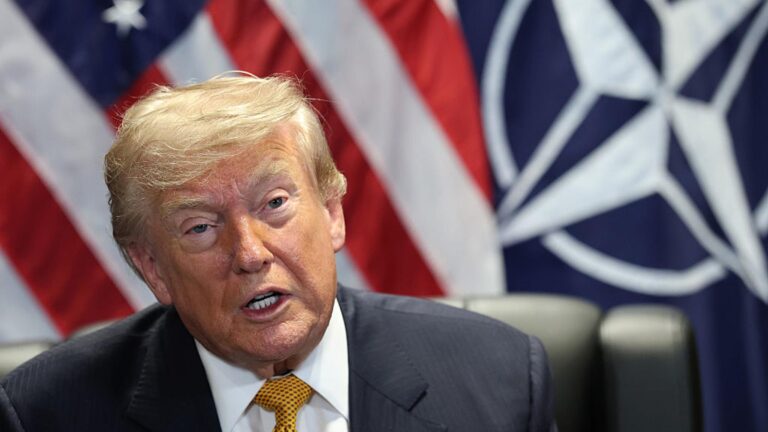
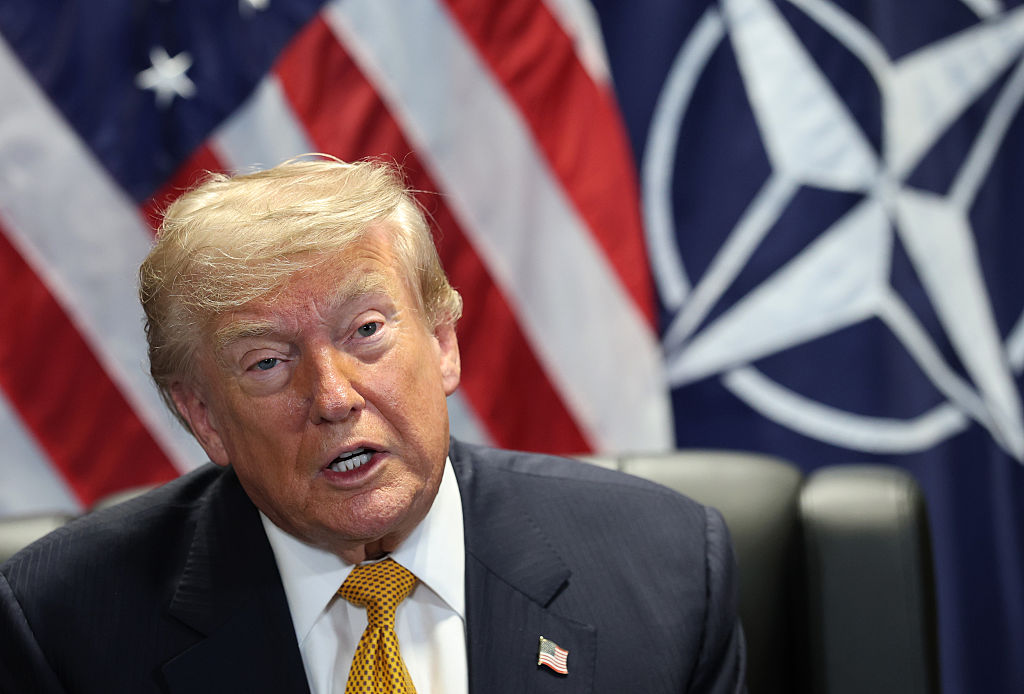
“I think it’s over. I don’t want to deal with them anymore,” Trump told reporters on the second day of the NATO summit in Ankara, Turkey, when asked about the status of the Memorandum of Understanding signed on June 17.
“They’re scum. They’re sick people. They’re led by sick people,” he continued. “If they had a nuclear weapon, they’d use it. As far as I’m concerned, it’s over.”
Trump’s remarks came amid a flare-up of hostilities which saw Iran target U.S. military sites in Kuwait and Bahrain overnight after the U.S. struck Iranian targets following attacks on vessels in the Strait of Hormuz.
NATO Secretary General Mark Rutte called the U.S. strikes “absolutely necessary” on account of Iran “violating” the cease-fire.
“I think it is totally crucial that [the] U.S. forcefully reacts,” he told reporters. “I expect allies today to reconfirm that Iran should never, ever get its hands on a nuclear capability.”
Rutte also urged for “freedom of navigation” in the Strait of Hormuz, a vital passage through which around a fifth of global oil production traditionally flows. He emphasized a full reopening of the waterway was “crucial for all 32 allies.”
Iranian parliamentary speaker Mohammad Bagher Ghalibaf, a top negotiator for Iran, insisted it was the U.S. that had violated the interim peace agreement. He cited the U.S. reinstating sanctions on Iranian oil sales—a move made Tuesday after oil tanker attacks—as an example, as well as the “persistent threats of further strikes.”
“The era of bullying and extortion is over. It leads nowhere. We don’t fold,” he vowed.
The U.S. military said three commercial vessels transiting the Strait of Hormuz had been “recently attacked” by Iran.
U.S. Central Command (CENTCOM) announced late afternoon Tuesday that it had begun launching “a series of powerful strikes against Iran to impose heavy costs for targeting and attacking commercial shipping crewed by innocent civilians in an international waterway.”
Hours later, CENTCOM confirmed it had struck over 80 targets across Iran, including air defense systems, command and control networks, coastal radar sites, and anti-ship missile capabilities. It also struck “more than 60 Islamic Revolutionary Guard Corps small boats in and near the Strait to degrade Iran’s ability to continue attacking international commerce flowing through the international trade corridor.”
The IRGC, in a statement carried by semi-official state media, said that it had retaliated to the U.S. by launching a salvo of drone and missile strikes at “key U.S. military facilities” across Bahrain and Kuwait.
Bahrain’s Ministry of Interior issued several warnings for civilians to seek shelter and Kuwait’s armed forces said it had detected and successfully intercepted ballistic missiles and drones breaching its airspace. No material damage was reported as a result of the attacks.
The strikes brought renewed instability to the Gulf region, prompting international leaders to urge for restraint.
Kaja Kallas, the European Union’s foreign affairs chief, said: “The exchanges of fire between the U.S. and Iran further complicate already fraught talks to end the war. Iran’s attacks on Bahrain and Kuwait are unacceptable.”
“Under the memorandum, Tehran committed to reopening the Strait of Hormuz,” she continued. “Its recent attacks on ships near the Strait violate that commitment and threaten to disrupt the resumption of energy supplies. Freedom of navigation must be unimpeded.”
The Memorandum of Understanding laid out the terms for an extended 60-day cease-fire, allowing time for further technical talks to take place.
That deadline is set to expire in mid-August, but amid flare-ups of violence and accusations of violations from both sides, it seems little progress has been made in negotiations.
U.S. envoy Steve Witkoff and Trump’s son-in-law Jared Kushner discussed the Iran deal with mediators in Doha at the end of June, but it’s understood there were no high-level talks held with Iranian officials.
After declaring the cease-fire as “over” on Wednesday, Trump said he would speak to his negotiators, but argued it was a “waste of time” dealing with Iran.
After Trump’s latest comments, and following the overnight hostilities, the price of Brent crude oil spiked once again, jumping to almost $79 per barrel Wednesday morning—an increase of over 5% from the $75.86 per barrel recorded Tuesday evening.
Maritime authorities raised the threat risk for vessels transiting the Strait to “severe.”
Arsenio Dominguez, secretary general of the International Maritime Organization (IMO), called for “maximum restraint and de-escalation.” He said nearly 6,000 seafarers are stranded in the Strait, “unable to depart the Persian Gulf safely,” amid the renewed volatility.