June 5, 2026:


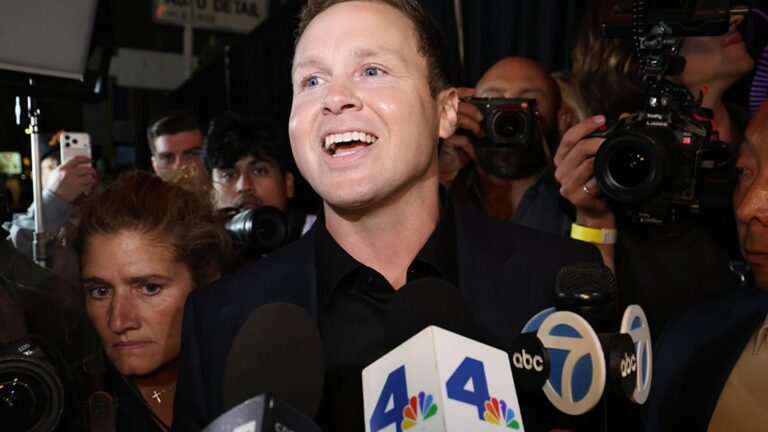
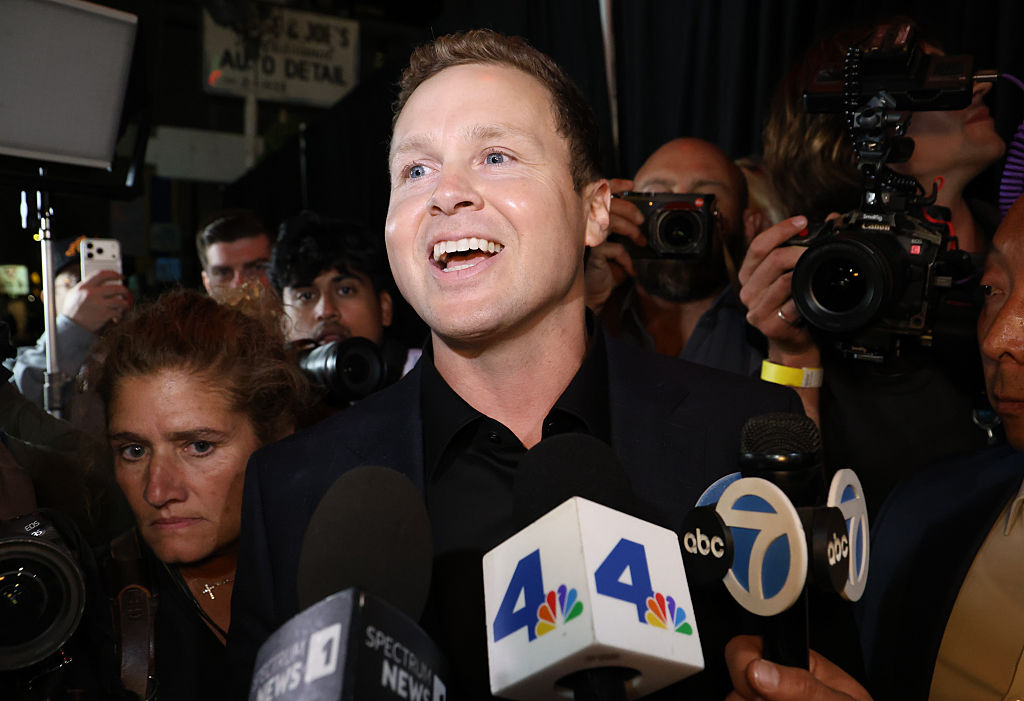
While Los Angeles Mayor Karen Bass drew enough votes in Tuesday’s primary to advance to a runoff, first-time candidate Spencer Pratt was still duking it out with City Councilmember Nithya Raman on Thursday for the second spot on the Nov. 3 ballot.
Whether Pratt makes it to the runoff or not, his insurgent bid may mark a sea change in political campaigns, largely around how he and his supporters employed provocative, and often effective, AI ads to spread his message.
Read More: How AI Could Drive the 2026 Midterm Elections
Pratt, a Republican, was once a reality star villain—gracing televisions in MTV’s The Hills in the 2000s and eventually competing in the British version of Celebrity Big Brother twice with his wife, Heidi Montag. He launched his bid for mayor earlier this year with no prior political experience. The 42-year-old’s improbable campaign gained traction on social media in part through AI ads created by supporters and promoted by Pratt, who has more than a million followers on X.
In one particularly viral video, Pratt is depicted as Batman fighting crime in a Gotham-esque dystopian L.A.—with Bass as the Joker in white face paint. It has more than 5 million views on X.
https://x.com/charliebcurran/status/2051647381981290697
In another video, four women huddle after a pilates class. One by one, they confess to each other they are voting for Pratt. That video has been seen nearly 2 million times on X.
https://x.com/dsonoiki/status/2056032010859409544
There were plenty of other pro-Pratt videos, including one based on A Christmas Carol, and another featuring Pratt as a lightsaber-wielding Jedi battling Bass as Darth Vader.
“The beauty of these videos is that they take a narrative and they turn it into a very snackable, digestible story,” Karen North, professor of communication at USC Annenberg in Los Angeles, tells TIME. “You can take his rhetoric, and you turn it into a trope that is so familiar and so easy to understand—the good versus evil, or Batman versus the Joker and people really do,in a glance, understand his message.”
North argues that Pratt’s meteoric rise is not because of these AI videos, but rather the effective way in which he criticized the city’s handling of last year’s Palisades fires, in which Pratt’s house was one of many that burned down. His storytelling, she says, has allowed him to express his clear message about how he believes L.A.’s leadership failed him, and the city as a whole.
“You can only imagine when you look at the voters, how angry a lot of people are out here,” she says, referencing the Los Angeles fires and the aftermath.
The appeal for using this kind of AI for political messaging is, in part, because it is much cheaper than traditional advertisements, North says, but also because there is a belief that some social media sites may be artificially boosting AI content.
“Things that are created by AI are suspected to have a boost on some of these platforms, like TikTok and the places where a lot of this Spencer Pratt content is getting a lot of visibility,” she continued. “So you have something created mechanically that’s then recognized by another mechanical tool to promote it.”
President Donald Trump—who endorsed Pratt and said he’d “likes to see him do well”—has also embraced AI images and videos, often reposting them on his Truth Social account.
Last year, TIME spoke with experts who warned that Trump’s use of AI-generated videos could usher in a new era of political messaging—especially when candidates try to reach Gen Z voters.
“It’s part of this larger conversation around where the Gen Z voters see themselves,” Cayce Myers, professor of communication at Virginia Tech, told TIME. “ Gen Z is very different from older generations, and they also seem to have a greater appetite for that kind of commentary, that kind of visual commentary.”
He and other experts also see this moment as indicative of how the strategies once relegated to websites like Reddit have drifted into the political sphere: “I think that we’re in a political space where the appetite for political content that would in previous generations be seen as distasteful is now palatable,” he said.
The L.A. mayoral race is far from the only race being infiltrated by artificial intelligence. In last month’s heated Republican primary between U.S. Rep. Thomas Massie and Ed Gallrein in northern Kentucky, both sides decried the surge in AI-generated ads from super PACS.
In one of these ads, Massie, a prominent Trump critic who lost the primary, was accused of “cheating on the America First” movement and being in a “throuple” with Democratic Reps. Alexandria Ocasio-Cortez and Ilhan Omar. The ad included an AI-generated depiction of Massie escorting the two women into a room.
Massie has said he believes older voters’ susceptibility to such AI videos played a role in his loss.
“There were a lot of misinformed, uninformed voters,” Massie said on NBC’s “Meet the Press” last week. “It was actually very effective on the Boomers.”