The U.S. Can Thank Birthright Citizenship for Its Best World Cup Player

June 25, 2026:

The U.S. Can Thank Birthright Citizenship for Its Best World Cup Player

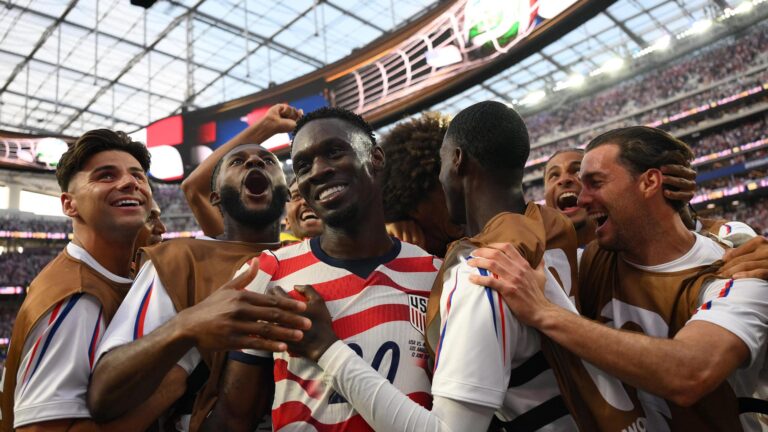
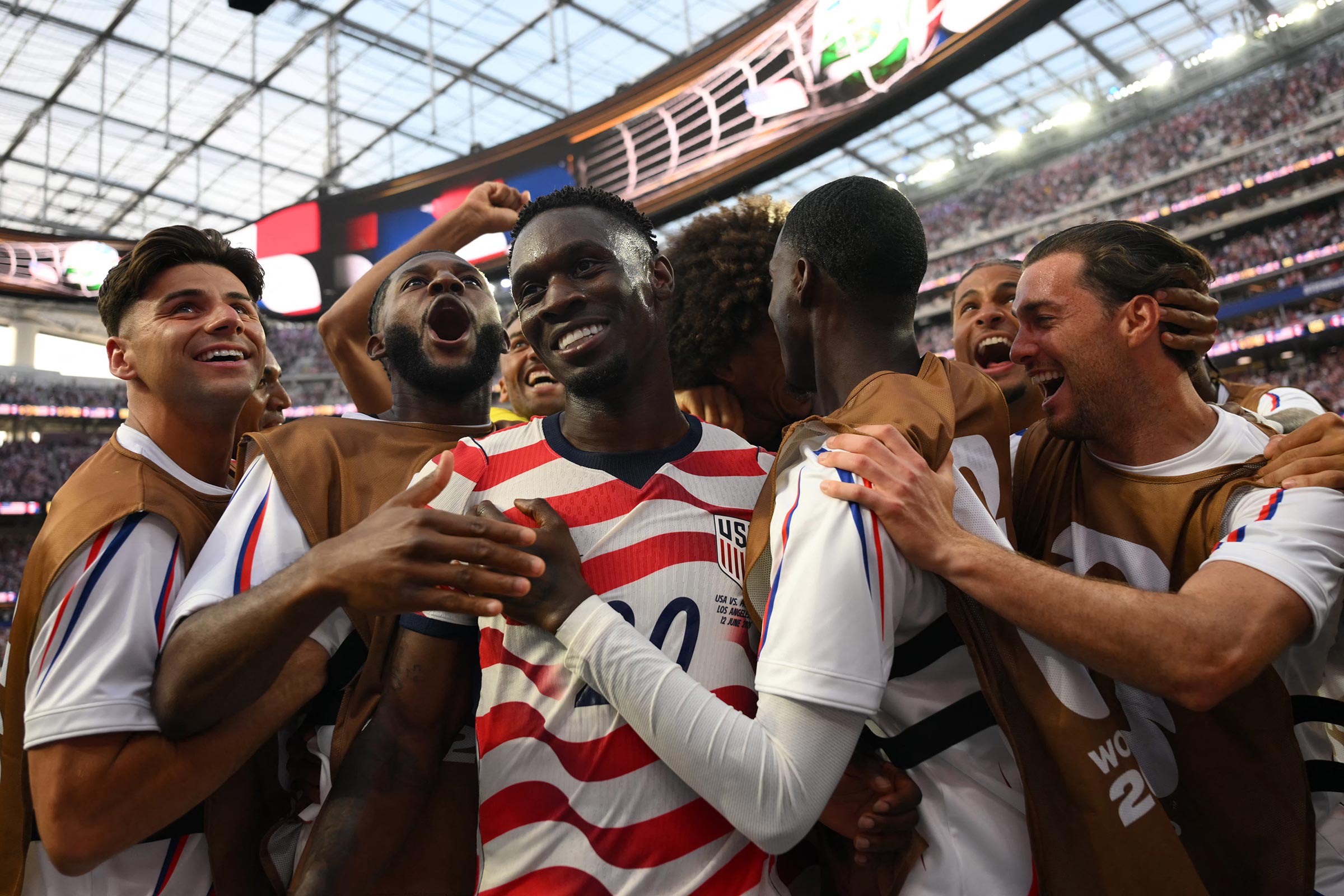
U.S. forward Folarin Balogun celebrates with teammates after scoring his team’s third goal during a World Cup match against Paraguay at the Los Angeles Stadium on June 12, 2026. —Patrick T. Fallon—AFP/Getty Images

American striker Folarin Balogun is all wide-eyed at the World Cup, much like the international soccer fans who’ve gone viral for discovering the wonders of the United States—Bucee’s, Texas barbecue, Walmart—during the tournament. For Balogun, America is still somewhat of a foreign land. He grew up in the U.K.,  he’s played professionally in Europe, and he joined the American team just three years ago, after the U.S. won a recruiting battle over England and Nigeria, where his parents are from. 

So teammates have introduced him to American culinary staples, like Chili’s. According to his U.S. defender Chris Richards, an Alabama native, things like American restaurant portion sizes and the fact that the U.S. coaching staff listens to country music dumbfound Balogun. “He says America’s a simulation quite often,” says Mark McKenzie, who like Richards faces the challenge of defending Balogun in practice sessions. “We’ll be driving down the road and he’ll see something and be like, ‘What is that?’ Why is that individual dressed like that, or why are they throwing a sign up in the air on the corner, or what is Bojangles? It’s stuff like that, where he’s like, ‘America … what is going on?’”

Balogun has been in the U.S. for almost a month now, for the World Cup training camp, tune-up games, and now the tournament itself. So he’s soaking in the sheer size and dynamism of the country. “We wake up in the morning, and some of the boys are going to go surf, and some boys are going to go fishing, some boys are going to go shopping,” he says. “It’s just the options. I really do like that.” 

Balogun’s eager to take advantage of the twist of fate that brought him to the States—and has Americans dreaming of long-awaited World Cup glory for its men’s team, which after finishing off group play against Turkey tonight, plays in the round-of-32 knockout stage, most likely against Bosnia and Herzegovina, on July 1 in Santa Clara, Calif. Balogun’s an accidental American. His mother, Florence, visited New York City in 2001 when she was pregnant with him. She tried to return to London, but the airline deemed her too far along to fly. So she gave birth to her son in July 2001 in Brooklyn, stayed at her sister-in-law’s place for about two months, then flew home with her newborn.

He’s grateful for the airline’s decision. “I’m very proud and very honored,” says Balogun, who earned player of the match honors in both of the team’s group-stage wins. “I ⁠feel like it’s happened in the way it has for a reason … it’s beyond explainable how special and ​unique my story is.”

Balogun’s teammates feel happy too. “Look what he’s done in the last couple games,” says American star Christian Pulisic. “But that’s not the only reason why we’re happy he’s born in America. He’s just an awesome teammate to have around. Getting to know him over the last couple of years has been great. He’s such a nice guy, and obviously you can see a killer when he’s on the field.”

Thanks to the 14th Amendment, which enshrined the concept of birthright citizenship in the U.S. Constitution, Balogun’s able to star for the United States during a time when his very right to suit up for the Stars and Stripes is under attack—and now in the hands of the Supreme Court. During President Trump’s first day in office in his second term, he issued an executive order intending to end the principle of universal birthright citizenship, arguing that it does not automatically extend to children born to undocumented immigrants or to mothers whose “presence in the United States at the time of said person’s birth was lawful but temporary.” Several federal courts stuck down the order, and in 2025 the U.S. Court of Appeals for the 9th Circuit ruled that it is invalid because it “contradicts the plain language of the Fourteenth Amendment’s Citizenship Clause, which grants citizenship to ‘all persons born in the United States and subject to the jurisdiction thereof.’” The Supreme Court agreed to review the constitutionality of the executive order: at the oral arguments, which Trump himself attended, in April, both liberal and conservative judges expressed skepticism that birthright citizenship should be overturned. A decision is expected any day now. 

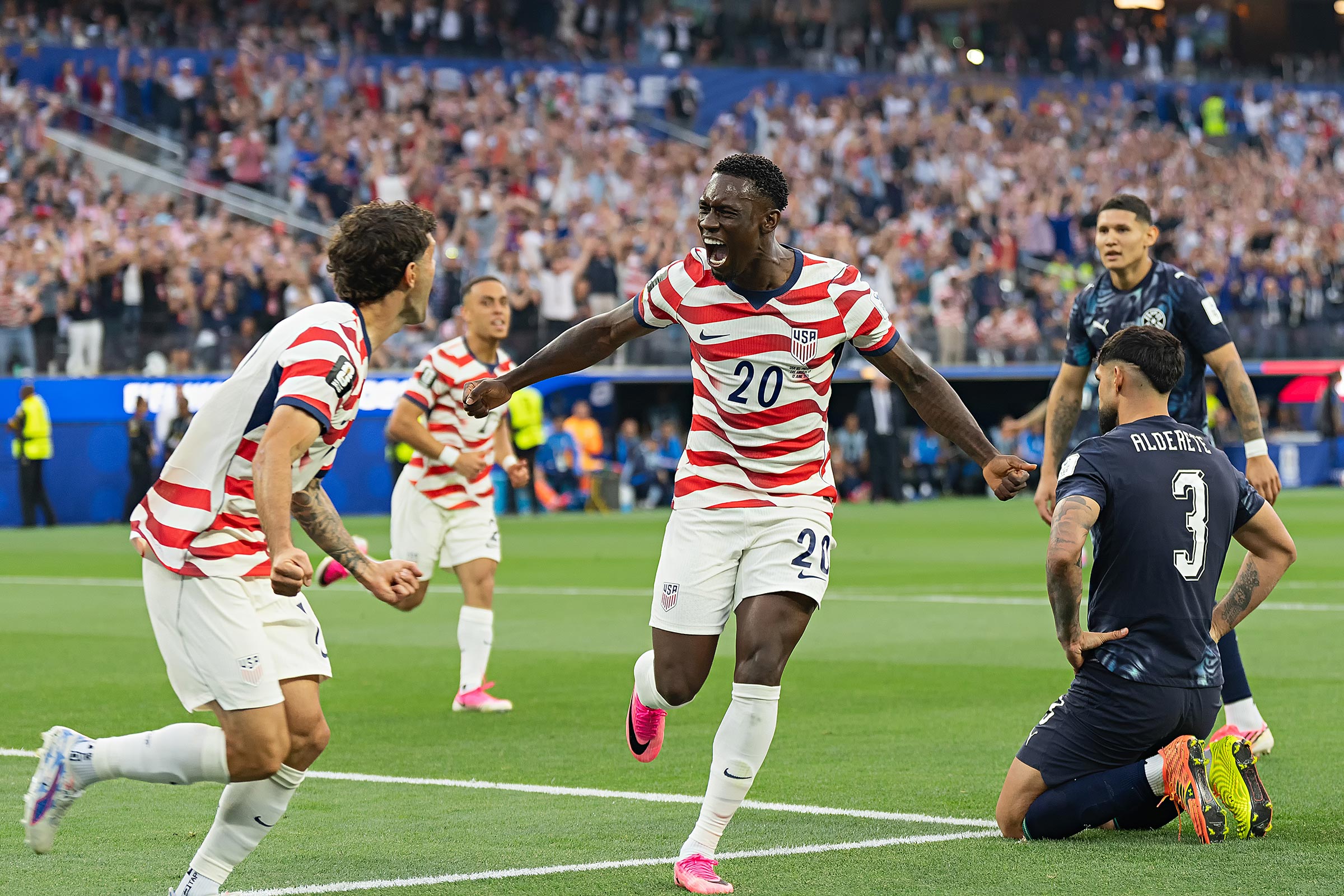
Balogun celebrates after scoring a goal during a match between the U.S. and Paraguay on June 12, 2026. —Dave Bernal—ISI Photos/Getty Images

Balogun’s World Cup exploits—two goals in the June 12 opening-game victory over Paraguay, forcing an own goal against Australia a week later, propelling the team to a first-place finish in Group D—have been celebrated by champions of birthright citizenship. “Here we see ‘birthright serendipity,’ where Folarin Balogun’s mother’s advanced pregnancy actually helped the U.S., since her talented son can now play for America,” says David Boyle, a Long Beach, Calif, attorney who filed an amicus brief in favor of birthright citizenship. “America has been rewarded many times for its generosity to birthright-citizen babies. Those infant immigrants who have received much, but sometimes grow up to give back even more.”

“You can dismiss a baby born here to parents who are tourists,” says Gerard Magliocca, professor at Indiana University’s Robert H. McKinney School of Law, who has also weighed in on the case. “‘They’re not worth being American. What could they possibly do for us?’ And this is one answer.”  

Opponents, however, won’t change their tune because of a few goals. “It’s really admirable what this guy is doing in soccer,” says Dennis Grossman, who filed a brief on behalf of the Christian Family Coalition Florida, an organization that ties illegal immigration to rising levels of religious intolerance, including antisemitism, in the U.S. “But you can’t alter public policy, you can’t alter the nation’s security concerns, and you can’t alter the nation’s tolerance religiously and the intent of the 14th Amendment, because there is a rare exception.” 

William Dickson, an attorney in Plano, Texas, who also supports Trump’s position, is a soccer fan rooting for the U.S. men’s national team. But Dickson believes the 14th Amendment has been misinterpreted, and that Balogun shouldn’t be a citizen eligible to play on the team. “I was thrilled by his play,” says Dickson. “But the law is the law. It’s nothing personal. His connection to the United States is very tenuous.” 

It’s a conversation that is unlikely to fade with the Supreme Court ruling, but also one that for many Americans seems to take a back seat to Balogun’s excellence on the pitch and the thrill of seeing the home team advance. U.S. midfielder Weston McKennie has been showing him videos of American soccer fans, in bars and streets throughout the country, erupting in cheers when the U.S. scores, to give him a sense of his contributions to a defining American moment. “It’s not something any of us can really comprehend, because we’re in it,” says Balogun. “But I think once we’re out of it and kind of getting on with our daily lives, we will be able to see the impact. It’s a beautiful thing.” 

Source link