The Democrat Ready to Beef Up Pentagon Oversight if the House Flips

June 8, 2026:

The Democrat Ready to Beef Up Pentagon Oversight if the House Flips

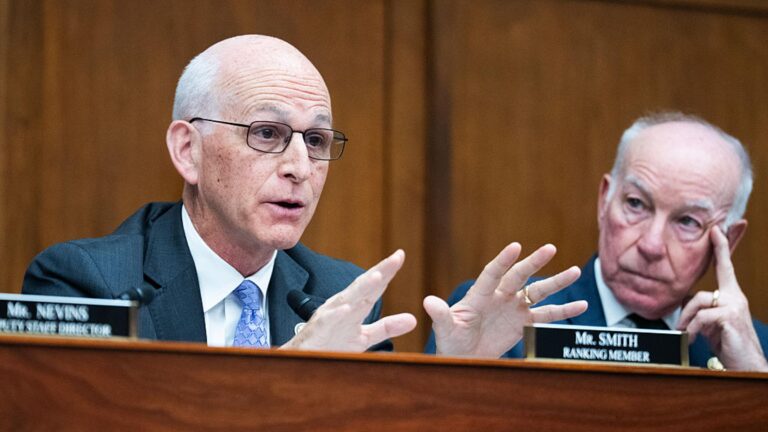
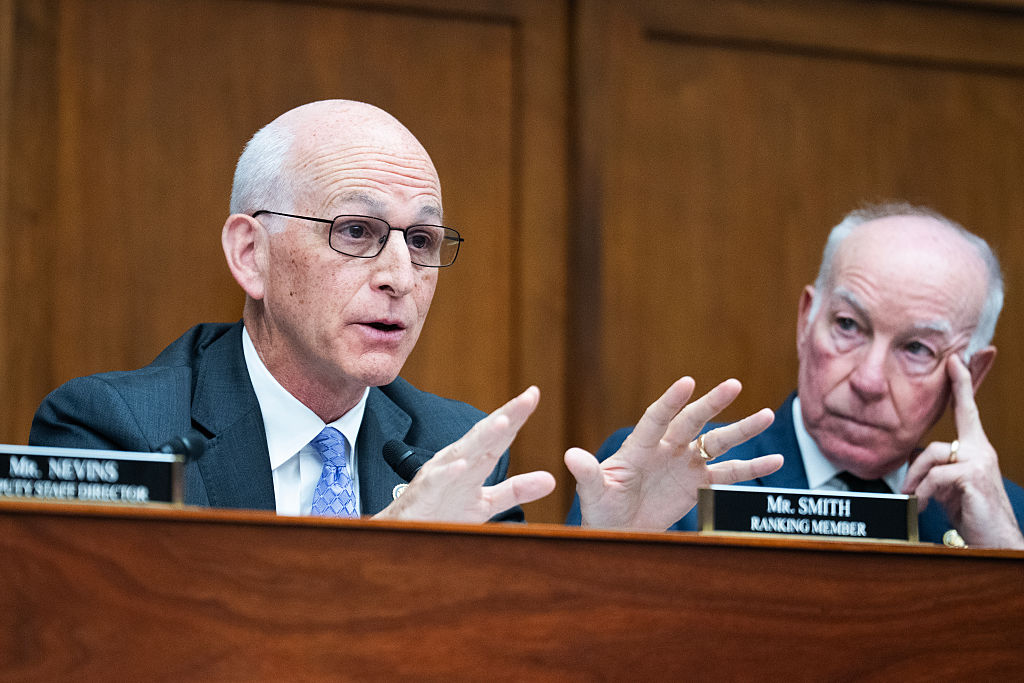
Rep. Adam Smith, the ranking Democrat on the House Armed Services Committee, speaks during a committee hearing on April 29, 2026. —Tom Williams—CQ-Roll Call, Inc via Getty Images

A framed bill hangs on a blue wall inside Rep. Adam Smith’s office, easy to miss among the accumulated artifacts of nearly three decades in Congress. It’s a copy of the National Defense Authorization Act from 2020, during the final months of Donald Trump’s first presidency. Smith was chairman of the House Armed Services Committee then, one of the most powerful positions in Washington’s national-security apparatus. Trump vetoed the defense bill, objecting to, among other things, provisions that constrained troop withdrawals from Afghanistan and Europe and authorized the renaming of military bases honoring Confederate generals. Days later, Congress overrode the veto.

The bill occupies no special place in the room. But Smith points to it as a reminder of something he is no longer sure exists. A majority of Republicans in the House and Senate voted against a Republican President on a matter of national security. Congress asserted itself. The legislative branch behaved as a coequal branch of government.

“Can you imagine that happening today?” Smith tells me in May as he paces around his office, before pausing. “I can’t.”

Congress’ weakened oversight role weighs heavy on Smith’s mind. The Washington state Democrat is now the ranking member on Armed Services and a likely candidate to reclaim the chairmanship should his party retake the House. The assumptions that guided his first tenure atop the committee, he says, have largely collapsed.

As Democrats increasingly contemplate what governing would look like if they return to power in 2027, few lawmakers could find themselves in a more consequential position than Smith. As chairman of Armed Services, he would oversee the Pentagon as American forces are likely to still be engaged in politically fraught conflicts in the Middle East and elsewhere. Defense Secretary Pete Hegseth has redefined the department’s public posture around slogans of lethality and aggression while overhauling everything from the military’s chain of command to its integration of artificial intelligence into targeting and battlefield decision-making.

The House Armed Services Committee traditionally concerns itself with budgets, weapons systems, and military readiness. Smith is contemplating whether it may need to become something else as well: a vehicle for forcing transparency from an Administration he alleges has repeatedly denied Congress information to which it is entitled. 

“I’ve been on the committee 30 years,” Smith tells TIME. “I don’t know that we’ve ever subpoenaed anybody. Just not typically the way we’ve done it. But we may have to now to try and get more honest answers.”

For a lawmaker who has spent most of his career cultivating a reputation as a pragmatic institutionalist, the remark amounts to a notable shift. Smith is among Congress’s longest-serving national-security lawmakers—yet he is still a relatively young 60, having been first elected in 1996 at the age of 31. From the start, the former prosecutor has been immersed in the mechanics of defense policy: procurement reform, military readiness, and budget negotiations. He recently joined all of the Armed Services Committee’s Republicans and about half of its Democrats in voting to advance a $1.15 trillion defense policy bill, despite concerns about the measure’s price tag and some of its provisions.

Smith is known around the Capitol for maintaining a lower profile than some of his colleagues. He has never been naturally drawn to political spectacle. Colleagues and staff often describe him as a policy obsessive more interested in acquisition reform than television appearances.

Yet over the past year, Smith has emerged as one of the Administration’s most persistent and forthright critics on national security matters, using Armed Services hearings to challenge military leaders over civilian casualties, strategic objectives, and what he describes as a troubling lack of transparency. Clips of his exchanges with Hegseth and other officials have ricocheted across social media, introducing a wider audience to a lawmaker long better known inside the Pentagon than outside it.

What has animated Smith most in recent months is a belief that the Trump Administration has not been candid with Congress about its military objectives. In late April, Hegseth appeared before the Armed Services Committee for a budget hearing that stretched nearly six hours and devolved at times into a debate over the war with Iran, its rationale, and its likely endgame. Smith arrived with a specific objective.

“The number one thing I was trying to expose was just the lack of a coherent explanation for what they’re doing and their lack of transparency,” he says. Smith is more charitable than some of his Democratic colleagues about the Administration’s strategy in Iran. “I actually don’t agree with the assessment that the Administration didn’t have a plan,” he adds. “They just haven’t been particularly honest about what that plan is.”

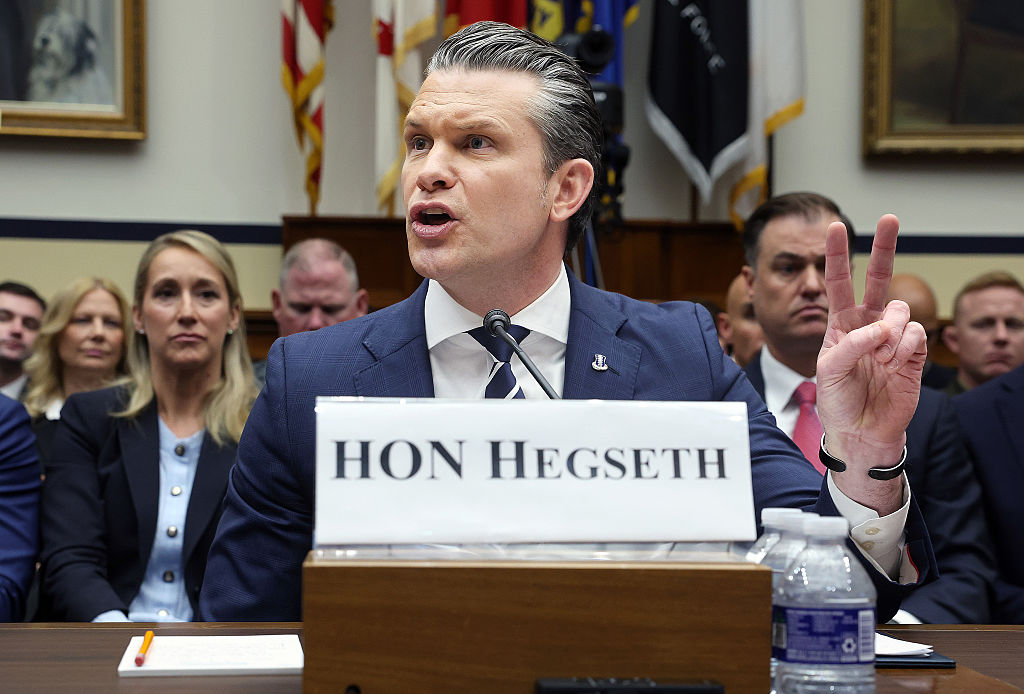
Defense Secretary Pete Hegseth testifies before the House Armed Services Committe on April 29, 2026. —Kevin Dietsch—Getty Images

Throughout the hearing, Smith repeatedly challenged what he viewed as contradictions in the Administration’s public rationale. Officials had argued that previous U.S. strikes had effectively destroyed Iran’s nuclear infrastructure, but that the war became necessary because Iran posed an imminent nuclear threat. “We had to start this war,” Smith told Hegseth during the hearing, “because the nuclear weapon was an imminent threat. Now you’re saying that it was completely obliterated?”

Weeks later, a similar set of questions resurfaced in a hearing with Adm. Brad Cooper, the head of U.S. Central Command. This time, Smith focused much of his attention on a February strike on the Shajareh Tayyebeh school in Minab, Iran, where Iranian authorities say more than 150 people were killed, many of them children. In the hearing, Cooper sidestepped whether the U.S. was responsible for a strike that, to many, looked like a tragic blunder.

“In the past when we’ve had these types of mistakes, they have been quickly acknowledged,” Smith said at the hearing. “So we will not take responsibility for something we very obviously did?” When Cooper repeated that the investigation was still underway, Smith cut him off. “I do not trust that answer.” 

Months later, Smith is visibly angry as he discusses the episode. “Pathetic,” he says of the Pentagon’s continued reliance on the unfinished investigation. To him, there is little mystery about what happened. “The fact that they’re not accepting responsibility makes me worried that they don’t really intend to.”

The prospect of perpetual stonewalling from the Trump Administration is increasingly shaping how Smith imagines a future Democratic majority exercising oversight powers. If Democrats regain control of the House, he says, one priority for Armed Services would be a sweeping examination of civilian casualties throughout the Iran conflict, including the school strike. He wants investigators to scrutinize whether the Pentagon’s accounting of civilian deaths is accurate and whether additional incidents have gone unacknowledged.

“What I really want to press for is greater transparency,” he says. “I think we want to use levers to force them to reveal more information to us.”

He also repeatedly returns to another issue: the military’s campaign against suspected drug-trafficking vessels in the Caribbean and eastern Pacific, which have killed over 200 people, and have been described by some legal experts as war crimes. “The boat strike issue is something I really want to dive into,” Smith says. “Because it sure looks like a bunch of extrajudicial killings.”

One brewing battle is over the documentation directing the military to conduct the boat strikes—known as “execute orders.” Under federal law, the House and Senate Armed Services Committees are supposed to receive those orders within 15 days of the Defense Secretary issuing them. Smith says Hegseth hasn’t provided any execute orders related to the boat strikes. Whether subpoenas ultimately become necessary remains unclear. But unlike during his previous chairmanship, he no longer dismisses the possibility.

“I don’t know at this point whether we need to subpoena anyone, hold anyone in contempt for not providing information,” he says. “But it’s on the table.”

The Pentagon declined to comment for this story. The Republican-led House Armed Services Committee did not respond to a request for comment.

Yet Smith resists the idea that Democrats should define a future majority solely through investigations. When asked about complaints that Democrats have become the party of strongly worded letters, he reacts with visible irritation. “What the hell does that mean?” he says. “I think this whole notion that somehow we haven’t been tough enough on Trump is patently ridiculous. We’re playing the cards we have available to us.”

The challenge, he argues, is balancing accountability with governance. On the policy side, he wants to focus on accelerating military innovation, reforming the Pentagon’s acquisition system, and crafting what he considers a more realistic national-security strategy. “We have substantive work to do,” he says.

For years, Smith tried to work within the rhythms of congressional oversight. During Trump’s first term, he says, he maintained relationships with Defense Secretaries Jim Mattis and Mark Esper. He believed preserving institutional relationships served both Congress and the country. The difference between then and now, he says, is startling. 

“This is such a different Trump Administration,” he says. “Trump has turned his second term into a revenge tour, where he wants sycophants and loyalists around him.

He points toward the framed defense bill on the wall, the veto now distant enough to feel almost historical. “I think that’s a pretty good illustration,” he says, “of how the equation has changed.”

Source link