November 20, 2026:


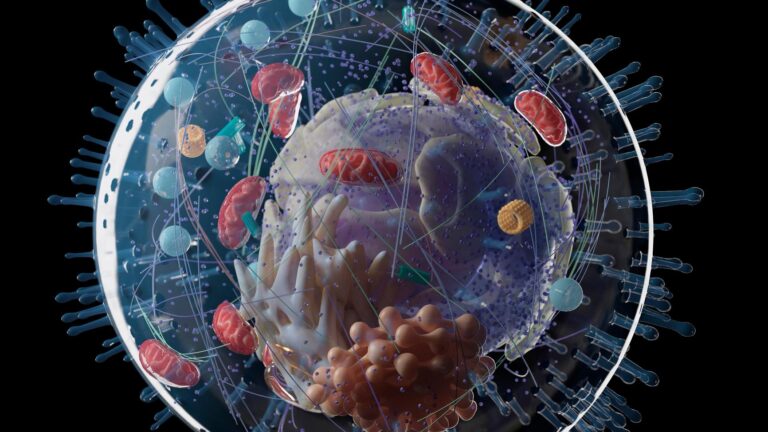
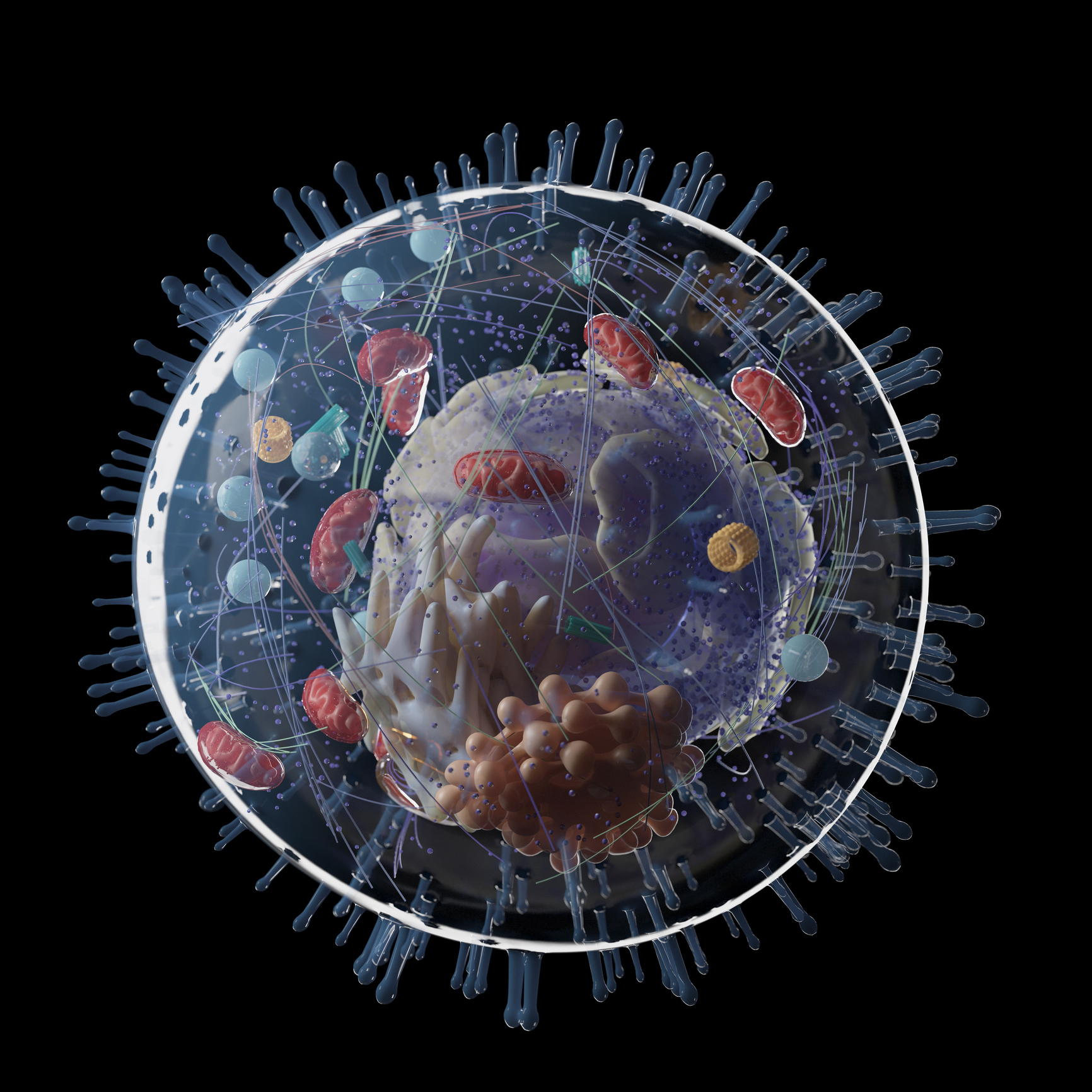
A single cell is a world unto itself, billions of interlocking molecules whose intricate patterns foretell health and disease. Biologists usually investigate how cells work in the lab. But in recent years, the idea of a “virtual cell”—a computer model so detailed, with such a close resemblance to the real thing, that scientists could run experiments on it instead of in the lab—has entered the conversation.
With a virtual cell, biologists imagine, you could switch off a gene involved in a disease, or add an experimental drug, and then watch how the cell changes. Such a model, which many observers think would have to involve AI, could help generate ideas for new treatments. It might suggest promising hypotheses to explore in live cells, or speed up the lengthy process of drug discovery.
While such developments are still a long way off, researchers are racing toward them. The Arc Institute, an AI and biology research center in Palo Alto, Calif., announced on Nov. 19 the top teams in their second annual Virtual Cell Challenge, a competition where researchers design computer models to predict what cells will do.
Three times as many teams as last year—about 1,000 in total—competed in the final judging, says contest head Hani Goodarzi, AI research lead at the Arc Institute and a professor of biochemistry at the University of California, San Francisco, suggesting a significant rise in interest and resources aimed at the problem. “It’s a staggering number of participants,” he says. “This year, everyone jumped in.”
In 2020, AlphaFold, an AI system developed by Google DeepMind, won first place in a competition to predict the final folded shape of a protein, a hard problem in biology. Shocked and intrigued, scientists began to wonder what other problems such tools could solve.
The Arc competition was inspired by this “AlphaFold moment.” But virtual cells pose a much larger challenge. AlphaFold’s prediction of a single molecule’s structure drew on the massive Protein Data Bank, painstakingly generated by decades of scientists’ contributions. By contrast, “cells have billions of molecules inside of them, and thousands of different processes that are all coordinated and taking place at any one time,” says Shana Kelley, a professor of chemistry and biomedical engineering at Northwestern University and president of bioengineering at the Chan Zuckerberg Initiative’s Biohub, who was not involved in the challenge. “How much data is it going to take for us to be able to train a model to the same level? It’s probably going to be billions, maybe trillions, of datasets.”
For this year’s Virtual Cell Challenge, the organizers asked for just part of what a virtual cell might eventually deliver: a prediction of what happens to cells when genes are switched off. That’s the kind of experiment science has collectively spent hundreds of millions of dollars on, says Goodarzi. “If you think about, similar to AlphaFold, replacing something that’s very slow and expensive with a reliable in silico simulation”—meaning a computer simulation—“that is like the north star for us, for at least this phase,” he says. The hope is that figuring out this question will one day lead to advances like better, faster drug discovery.
To start, participants got information about how three types of cells respond when a variety of genes are switched off. Then they were asked to come up with a model that could predict how three other very different types of cells would react to such changes.
More than 1,600 teams, including individual academic labs and groups from biotechnology companies, submitted models in the early phases of the competition, according to Goodarzi. About a thousand teams submitted the predictions made by their models for the final phase.
Data made a difference. Teams could train their models using any available data, including proprietary information, about what genes do and how different kinds of cells function—the sort of thing generated in lab experiments—and “some of them have a lot of it,” Goodarzi says. “It shows.” The model that won first prize (an award of $100,000) came from a team at Illumina, the biotechnology company. Their model drew on the Illumina Billion Cell Atlas, a dataset owned by the company. The team from Xaira Therapeutics, a biotech, drew on its own data for the third-prize-winning model (an award of $25,000). But the second-prize model, FlowState, used only publicly available data and was developed by a pair of young independent researchers, Sina Khodaveisi and Navid Bagheri, who won a total of $50,000.
Khodaveisi, whose background is machine learning, describes their model as a team of three parts. “One decides what changes in the cell, another decides how big the impact is, and the last decides the direction of the change,” he says. “This is what makes our model interesting—we could see the reasoning behind it.”
The three winning models had one thing in common: They all used step-by-step procedures to predict the likely effects of a change based on known results. But there’s still a long way to go. While the models did well at predicting the general picture, they did less well at predicting the individual quirks of the different cell types, a key part of a virtual cell model.
“As a community, we need to generate more and more data,” says Goodarzi, “to allow the models to generalize better and better.”
“Biological data has to be made. It’s not found,” says Illumina team member Eyal Ben David, who leads bioinformatics on the company’s Billion Cell Atlas. “It’s a big challenge for us in the field to just have enough data to be able to meaningfully predict biology.”
The escalation is already underway. In April, Biohub—a nonprofit biomedical research organization backed by the Chan Zuckerberg Initiative—announced a new Virtual Biology Initiative, a five-year program to generate data that could be used in virtual cell models. In July, the U.S. National Institutes of Health announced the Bio Genesis Mission, which will also create such data. “In the next 18 months, we think we can increase the amount of available relevant data by about tenfold as a start,” says Kelley. “Then we’ll keep going from there.”
Goodarzi and his colleagues at the Arc Institute are already preparing for next year’s Virtual Cell Challenge, which will begin in the summer. “We are going to run this indefinitely, every year,” he says. “Until we have a virtual cell.”