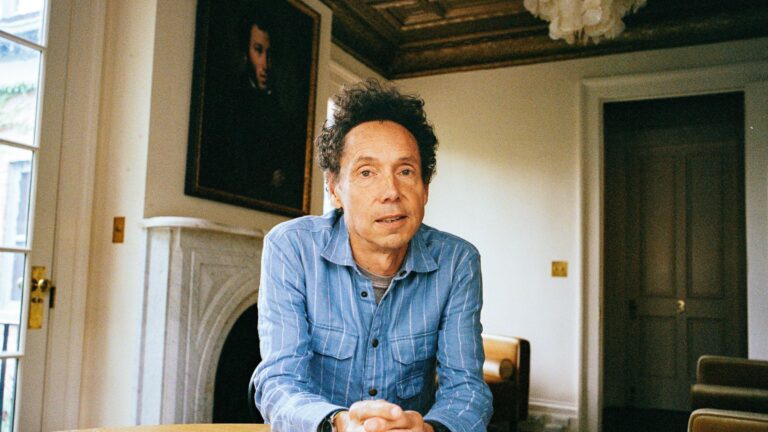
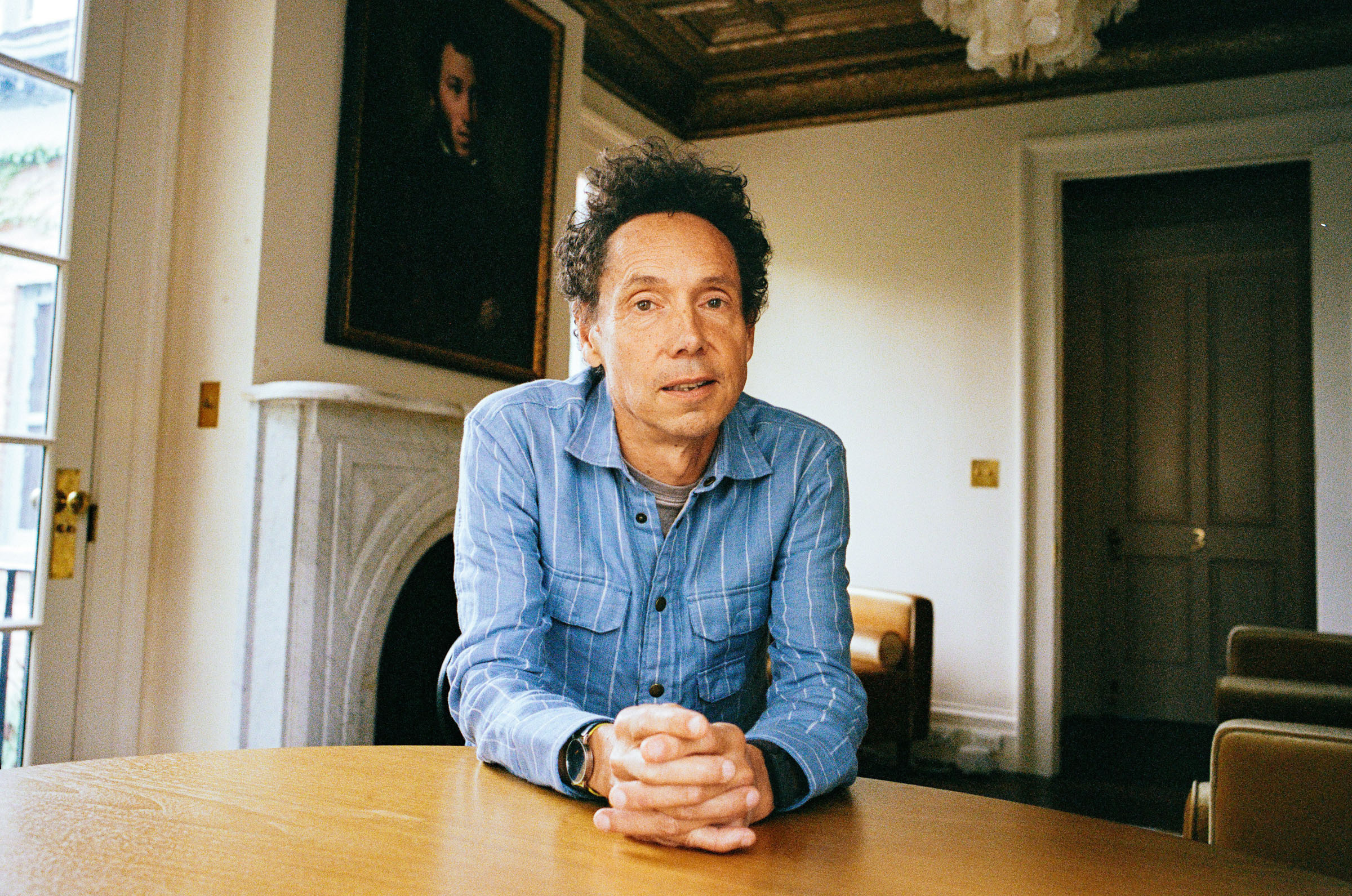
Malcolm Gladwell is one of America’s foremost chroniclers of curious social phenomena and what’s behind them. In The Tipping Point, he examined why things seem to suddenly change. In Blink, he scrutinized the power and limits of snap judgments. In Outliers, he delved into why some people achieve extraordinary success. In his first book set entirely in the U.S. (out Sept. 29), The American Way of Killing, which is based on a 2023 season of his podcast Revisionist History, he probes into America’s continuing struggle with gun violence. On the eve of his 12-stop book tour, Gladwell told TIME that Americans on both sides of the gun-control argument are not being honest—about the police, about the Second Amendment, and about what really causes gun homicides.
This interview has been edited and condensed for clarity.
You’ve been interested in crime for some time. Why did it take you so long to get to guns?
My early books were about the importance of environment and context in shaping our behavior. You don’t really get to guns from that perspective. I had to work through a lot of my interests in the environment before I could turn around and say, “Now wait a minute, what about this?” Also, I was much more interested in understanding universal questions about criminality, and this book is really about very America-specific things.
You’ve subtitled it The Invention of an Epidemic. Is gun violence not an epidemic?
What I mean is, it’s an epidemic we invented. There are certain traits that countries have that are inherent; the Swiss are shaped by their geography, Jamaicans will go on and on about how the fact they have no snakes shapes who they are. I don’t think American criminality is about anything inherent to the United States. I think it’s a problem that was brought about by a wide set of very specific choices, misapprehensions, and errors. There’s no reason why the United States cannot have the same level of homicide as its Western European peers. It just chose a different direction.
Do you think assault-rifle bans work?
No. Assault-rifle bans of the sort that have been passed and contemplated in the United States are completely pointless. They’re just a charade, and they are a distraction from the real issues. I think gun control can play an important role in violence prevention. But empty theatrical exercises in removing a class of rifles because they look a certain way do not move the needle.
Would pistol regulation be more effective?
I don’t know how practically you would do that. But if I could wave a magic wand and remove all the handguns in the United States, the country would be dramatically safer overnight. There’s no question about that. In places where there are vanishingly few handguns, when people get into an argument, they don’t shoot each other. At worst, they stab each other, and when you stab someone, you have—what is it, one-sixth?—the chance of killing them as you do if you shoot them.
You suggest that Americans have profoundly misunderstood the real history of the Second Amendment. What is it really about?
Slavery. The reason the Second Amendment begins with that clause about the militias is that the people who were called upon to ratify the Constitution were worried about their slaves. In many parts of the South, slaves greatly outnumbered their white masters, and as a result, the white masters were terrified of uprisings, of being killed in their beds. To deal with that, they had a whole system of slave patrols, armed militias who went around and kept slaves in check, and they were extremely concerned that this new thing called the United States would limit the ability of Southern plantation owners to run their slave patrols. So they said: because slave patrols are so important to us, you can’t take all our guns. That’s the Second Amendment, and we have somehow erased that particular history from our consideration of it today.
Is this a majority enough view that it would stand up in, say, a very originalist-minded Supreme Court?
This history has been known for decades now. The originalists are not nearly as serious in their consideration of history as they claim to be. They’re just using it in an extremely selective way to support a predisposition they have towards gun ownership.
Are trauma surgeons one of the reasons that Americans don’t care more about gun violence?
Murder statistics go down year after year. Some of that is a legitimate decrease in violence. Some of it is the fact that a lot of people who would have been dead are now being kept alive by virtue of very skilled doctors. There’s a statistic I use in the book that says that if you held the level of medical care constant at 1960 levels, we’d have 75,000 homicides every year in the United States, and we have 12,000. It’s a huge difference. I don’t think we would be as blasé about homicides if there were 75,000 of them every year.
How much of the gun-violence problem is actually a crime problem?
This is where popular understanding and facts diverge. A lot of people think that gun violence is something that is used in the commission of some other criminal act—to defend the drug trade, to rob someone’s house. In fact, the overwhelming amount of gun violence is young people arguing with each other and using guns to resolve some grievance or exact revenge. We design our system on the assumption that gun violence is a rational thing that people do to get something. It doesn’t work, because that’s not what it is. It’s kids with beefs, trapped in cycles of revenge and retaliation, who don’t have any other means of resolving their conflicts.
Somewhat controversially, considering your usual audience, you advocate for a lot more cops. Why is that?
Because America doesn’t have any police officers. It’s not controversial. It’s just a fact. European countries have twice as many cops per capita as we do. The central statistic is that as a share of GDP, Western Europe and the U.S spend about the same amount of money on public safety, but in America, the bulk of that money goes to prisons, and a little bit goes to the cops. And in Europe, a little bit goes to prisons, and a lot goes to the cops. If police can in fact prevent crime, which I believe they can, you’d rather spend more on them and promote public safety and prevent crime than spend your money after the fact locking people up under heinous circumstances for decade upon decade. Los Angeles has 8,500 police officers. Berlin has 18,000. It’s just absurd, and any American police chief you talk to, their No. 1 complaint is that their police are just completely overmatched.
And does that then, in your view, lead to the police being more scared and therefore themselves overreacting?
This is an argument made by two sociologists at Harvard, Chris Lewis and Adaner Usmani. They think there is a direct correlation: the fewer police you have, the more violent they have to be. The most violent police are in the countries that have the fewest police. The least violent police are in the countries that have the most police. The logic is obvious. If you are outnumbered, the only way you can project authority is by being forceful, by being extravagant in the way you flex your muscles.
You’re not worried at all about an over-policed state? Black communities have talked about how they feel over-policed.
I don’t buy the assumption that people think that they are over-policed. I think that there’s probably far more African Americans in poor neighborhoods who believe they’re under-policed, that they can’t find a police officer when they need one. To the extent that people use the phrase “over-policed” in America, they’re referring to the conduct of the police, not the number. They are responding legitimately to the fact that American police are more violent than their peers around the world. That violent behavior is a symptom of how small the police force is.
Do violence-prevention programs in schools actually work?
They do. I’m just doing a podcast now about this project going on in Baltimore that has had extraordinary success in lowering the homicide rate there. It’s a kind of community-level intervention that identifies those most at risk for homicide and reaches out to them on a personal basis, talks to them, helps them. These things are insanely successful. We’ve known this for 30 years. Baltimore has gone in the space of three years from 330 homicides to 130. They work. There’s no mystery about that. They’re hard to do, but absolutely, they work.
They’re hard to do because…?
They’re hard to do institutionally. They require the police to work with social workers, with clergy, with the need to reorient police away from arresting people and more towards psychological interventions. They require the police to predict where conflict is heading, which is a very different kind of mind space than responding to conflict. So it’s just a difficult institutional learning process.
Polls suggest a lot of Americans believe that guns should be more regulated. In your mind, what is preventing it?
There’s the obvious political thing that people with guns are the most motivated to fight hardest politically. The Supreme Court currently has been captured by a majority of people who believe very strongly in gun rights. I don’t know how many hundreds of millions of guns there are in America, but there’s a lot. Practically speaking, I don’t know how you get rid of them. No one’s ever answered that. I’m as big an advocate of gun control as anyone else, but I have no clue about how it would work if it was passed. I mean, are you going into people’s homes to remove their guns? Very few gun-control advocates have a good answer to that question.
How much do you think the inertia is because gun violence particularly bedevils Black communities?
As is the case with any problem which strikes the bottom of the social economic ladder, it’s very easy for everyone else to ignore. It’s striking to me that when you talk to middle-class people about gun violence, they speak instantly about school shootings. School shootings, comparatively, are a tiny, tiny, tiny, problem. The idea that you would look at America and that would be the thing that you single out as the biggest problem is absurd. I mean, they’re horrendous, but more people are killed by gun violence in a month in America than have been killed in the history of school shootings or mass shootings.
You write that one of the reasons that Americans have a gun issue is a deficiency in the national character. What do you mean?
I talk a lot about this fundamental dishonesty in the way Americans conduct this conversation. That’s a deficiency in national character. If the Second Amendment is really about slavery, and you can’t admit that, that’s a problem. This was an amendment conceived with the intent to prop up the most heinous institution in American history, and we can’t be honest about that. No one’s honest about an assault-rifle ban; they don’t read the fine print, which says that all we’re really banning are cosmetic additions to the barrel of an assault rifle. The laziness of confusing crime and weapons—we wouldn’t tolerate this imprecision of thought in any other pressing issue, but we do when it comes to gun violence. It’s maddening.
Is it partly because of the thing you’ve identified, which is we don’t have a good solution, so we minimize the problem?
I would quarrel with “we don’t have a good solution.” There are solutions out there. The issue is that they’re uncomfortable with the solutions. I think in their hearts, people know we have a big guns problem, but the solutions make them so nervous and uncomfortable that they don’t want to do them.
Could it also be the fact that there are actually many legitimate uses for guns in civilian hands, such as farming and hunting? And guns can be fun, like at the Olympics. Is the issue that people just enjoy guns?
No. I hung out with a guy in North Carolina, he has a bunch of guns. He’s an expert and takes it very seriously. He knows how to deal with them. That’s not the context in which guns are problematic. They are problematic in the hands of angry young men with a grievance, who don’t have the psychological wherewithal to resolve their disputes in a peaceful manner. That’s what the problem is. We should be focused on guns in that setting.
So, “Guns don’t kill people. Young men with psychological issues kill people, but guns make it too easy.” Is that the summary?
One of the many annoying things about the gun debate in America is the extent to which liberals roll their eyes at “Guns don’t kill people; people do.” I understand their aversion to it because it was dreamt up by people who wanted to escape any responsibility at all for the presence of guns in America. But the truth is, there’s a really important point in it. Addressing the behavior of people who own guns is the best way to curb gun violence, given the constraints we’re living under. There is ample evidence for this. If, for the next five years, we focused only on the behavior of those people who are likely to use guns in an irresponsible manner, we would bring the homicide rate down by a huge number. One of the irresponsible things about progressive views on gun violence is the extent to which they use their legitimate antipathy towards guns as an excuse not to address more fundamental issues about human behavior.
Some gun-control advocates gave up after the elementary-school shooting at Sandy Hook. Do you ever feel like you’re shouting into the void on this issue?
No. I write books because I’m interested in the topic, and I feel like if I’m interested, there’ll be some people who’ll be interested in it too. I’ve never thought about that notion of shouting into the void. Sometimes maybe you have to shout into the void.