
August 14, 2026:


A couple months after Anthony Gross moved to New York, he came up with an idea for a new TikTok series: He decided to visit and rank different Catholic churches in the city.
“As someone who just moved there from out of state, Midwest, I don’t know anything about New York,” the 23-year-old recalls thinking. “I don’t really have that many friends. I don’t have community. And I definitely don’t know where to go to mass. I would just look it up on ChatGPT. Like I would want to go at night, I’d say, ‘What’s a 5 p.m. mass near me?’”
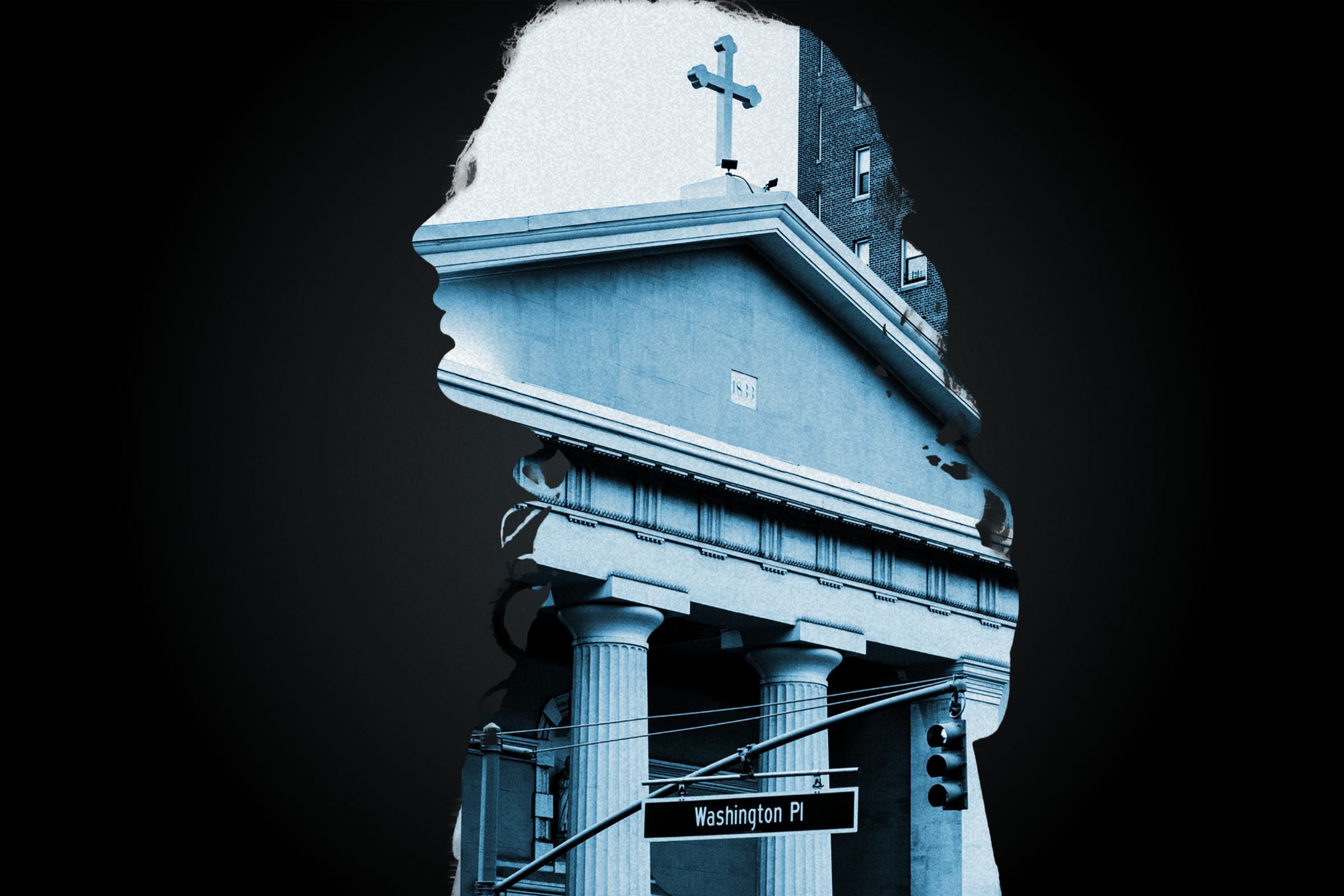
Some of those videos garnered tens of thousands of likes on TikTok. And, at some of the services he went to, he noticed a lot of other Gen Zers; one Sunday, Gross attended mass at St. Joseph’s Church in Greenwich Village at the recommendation of another content creator, and he recalls that he was “blown away.”
“The place was packed,” he says. “You had to show up 10 minutes early. You could barely get a seat. Everybody was under the age of 30.”
Gross says this is part of a broader religious revival among young people in the U.S.—a sentiment echoed by many people in the Christian community.
Pastors and priests from across the country have said that they’ve observed more young people attending their services: Bishop John Dolan of the Roman Catholic Diocese of Phoenix, for instance, says his diocese saw hundreds of people baptized over Easter weekend, most of them Gen Z. Young Christian influencers have also gone viral online. Media outlets have published articles about church being the new Gen Z “hot spot.”
Throngs of young people are turning out for religious conferences and gatherings around the U.S. as well. During the first weekend of August, nearly 2,000 people convened for a three-day Catholic youth conference in Houston, where attendees hailed a resurgence of faith among young people in interviews with the local press. A similar Catholic youth conference will be held in New Orleans for students in grades seven through twelve next month. And in November, thousands of teens will flock to Long Beach, California for the National Catholic Youth Conference—what’s considered to be the largest gathering of Catholic youth in the country. The Passion Conference, a broader non-denominational Christian event designed for 18- to 25-year-olds, is then set to take place—and for the first time ever, the conference will be held in two stadiums, one in Texas in December and another in Georgia in February, which organizers said will “mak[e] room for more students than ever before.”
But researchers and political scientists have cast doubt on whether those anecdotes are reflective of a widespread trend. In a report released in December, the Pew Research Center said that its polls, as well as other reputable surveys, “show no clear evidence” of a “nationwide religious resurgence” among young people. (The center’s report breaks some of its findings down by “Christianity,” “no religion,” and “other religion.” Many other religion-related surveys don’t break their findings down by different religious traditions; political scientists say that the majority of Americans are Christian, so it can be difficult to draw nationwide trends on other faiths based on the data.)
In fact, the data shows that young adults are still less religious than their older counterparts. According to data released by the Public Religion Research Institute (PRRI) in April, more than 75% of Americans ages 65 and older identify as Christian, compared to 54% of Americans between the ages of 18 and 29.
If you look at survey findings, says Ryan Burge, a former pastor who is now a professor of practice at the John C. Danforth Center on Religion and Politics at Washington University in St. Louis, there’s no indication of a religious revival among young people. The data does show that religiosity, which refers to the depth of a person’s religious beliefs, has been holding steady since about 2020 after years of decline—but, Burge says, “that’s not a resurgence.”
“I do think that young people are just more open to the idea of religion because they don’t have all this religion background that prior generations did,” he acknowledges. “But at the end of the day, it’s butts in seats. That’s what religion is.”
Burge says the dissonance between the narrative of a religious revival and what the nationwide data is showing could be because “outlier stories are the ones that stick in our minds.”
Another possible explanation he posits for the split between the data and the anecdotes is that the media tends to draw attention to stories that show a reversal of trends. Other experts put forward the same theory.
“One reason we might be seeing the dissonance is that the news media often likes to run stories that run counter to the typical conventional wisdom,” says Melissa Deckman, the chief executive officer of the PRRI. “So I think there might be some legitimate cases where we see an uptick in individual churches where more young people are coming to join or attending services regularly … but I would caution against looking at anecdotes as being the same things as general trends.”
Some experts say that certain pieces of data do suggest that there might be a revival—for instance, Gallup polling released in April found an increase in the number of young men who said that religion is “very important” in their lives. But other metrics, such as regular weekly church attendance, analyzed by other pollsters don’t show this same uptick.
Read More: Religion’s Longstanding Gender Gap Is Narrowing Among Gen Z. But Which Gender Is Narrowing It—and Why?
“I would not say that the evidence [of a revival] has been convincing, but there are hints in the data,” says David Campbell, a professor of political science at the University of Notre Dame. “It’s entirely possible that the anecdotal reports are a leading indicator—so one possibility is three years from now, we’ll be having this conversation and say yeah, it turns out there really was a religious revival; it just takes a while to show up in the data.”
“And yet another [possibility] is there really isn’t a religious revival at all,” he continues. “There have always been examples of particular congregations that are able to draw in young people; it’s just nobody had stitched them together into a common narrative until now.”
Deckman also says that the idea of a religious revival “fits into the larger narrative of younger people struggling to find meaning and connection in life,” particularly in this era of the rise of social media and AI, when people are searching for more human connection—which, for some people, religious institutions can provide them with.
Last year, the Roman Catholic Diocese of Phoenix began working on an initiative that involved holding listening sessions with young people about their thoughts and feelings on various topics, including faith and family life. What the diocese found, Dolan says, is that young people are wanting—and finding, through the church—“a sense of belonging, a sense of healing from family instability and personal trauma and mental health struggles, [and] a sense of formation.” Young people also said they are searching for “a sense of safety,” Dolan says, adding that the church is “kind of a refuge of reverence and stability; it’s a place where they can step out of this hectic world.”
Rachel Janfaza, a youth political analyst and founder of the research and strategy firm The Up and Up, says that she has also been hearing from many young people that religion is important to them—which “makes sense,” she adds, given the times they’re living in.
“When we look at Gen Z, which has grown up amid constant chaos and really a loneliness epidemic, it makes sense why this cohort would be moving into religion as an organized form of not only community and a sense of belonging, but it also gives them purpose and a way to find meaning in a world that has felt very chaotic,” Janfaza says.
Gross, who recently moved to Fort Lauderdale, says it seems to him that, in New York, “definitely the numbers are up.” His TikToks of St. Joseph’s in Greenwich Village show packed pews. Sometimes, he says, people have to stand in the back.
And he attributes that to young people craving community, particularly in the aftermath of the COVID-19 pandemic.
“I mean, some people may call us the crisis generation; there’s been a lot of stuff that we’ve gone through that has made us feel anxious, uncertain, lost, not loved, lack of community,” Gross says.
“And in times like that,” he says, people may feel like, “‘I can’t play this game of life alone, and I need somebody else that I can put my trust in, and someone else that I can believe in, and someone else that I know at the end of the day loves me and is going to lead me down a path for a greater good.’”