Is a Manual Treadmill Worth the Extra Effort?

November 17, 2026:

Is a Manual Treadmill Worth the Extra Effort?

—MDV Edwards—Getty Images

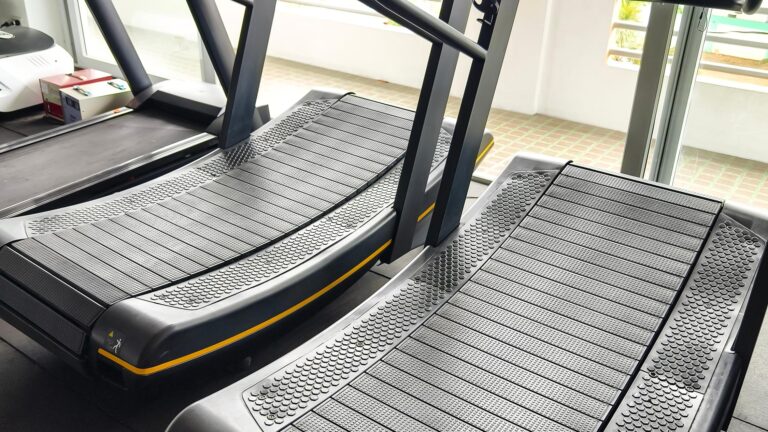
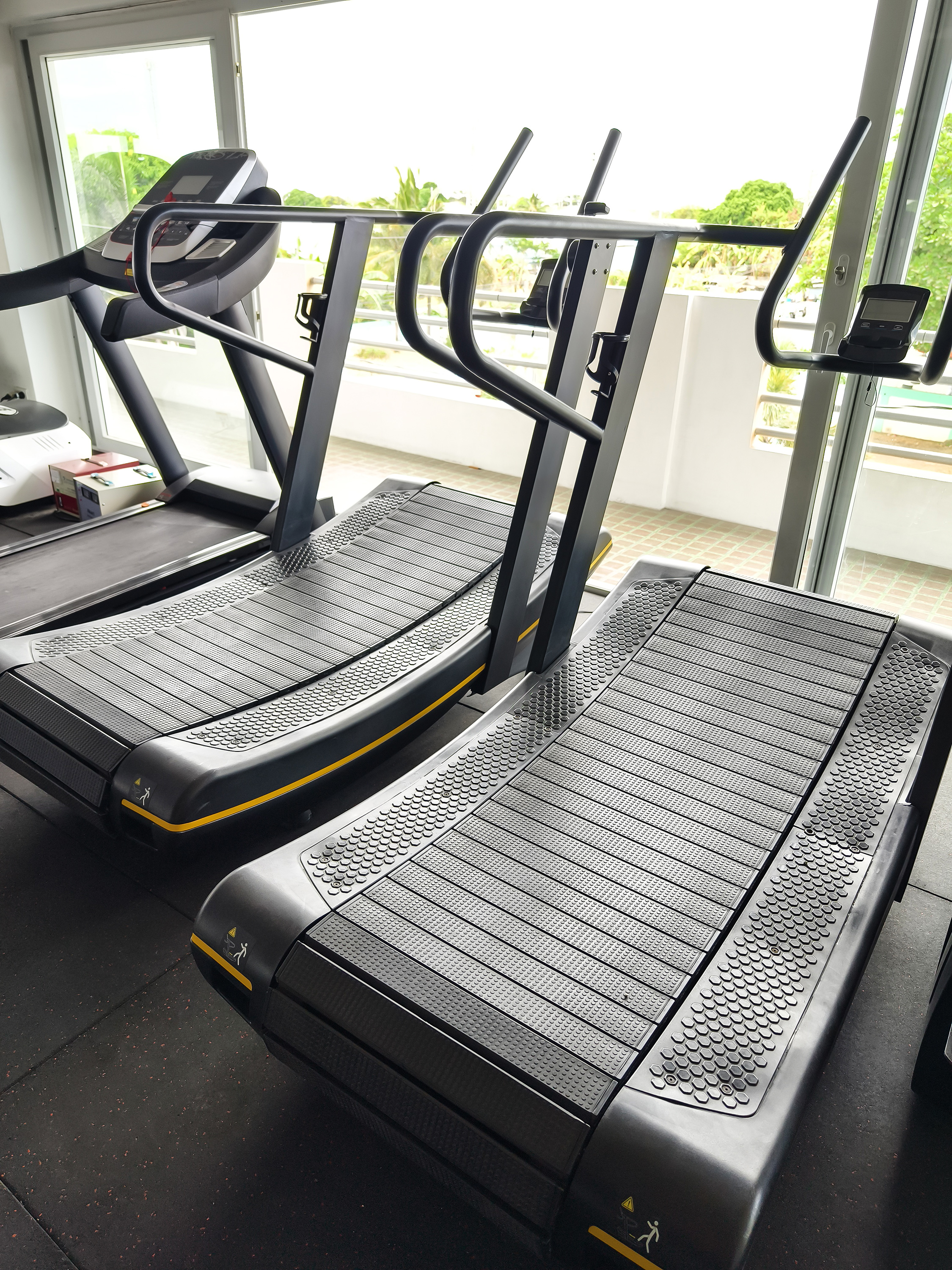
You’re at the gym facing a line of treadmills. Most are your standard running machine with an electric motor and a flat deck. But there are also a few odd looking machines that arch up in the front and the back, with no buttons on the console and no plug for an outlet. 

Meet the manual treadmill, also called a self-powered or non-motorized treadmill. These machines are designed with a curved surface so that as you land from each stride, the force of your foot moving downward revolves the belt around the deck. Each step you take powers the treadmill. (There are also some flat manual treadmills, though they’re far less common and generally used only for walking.)   

In CrossFit gyms and Reddit threads alike, you’ll come across plenty of runners who say manual treadmills are better for you. “A lot of people think that the motorized treadmill is doing all the work, and because of that, they have to use a non-motorized treadmill to really get the benefits of running,” says Richard Willy, an associate professor in the school of health and rehabilitation sciences at The Ohio State University. Experts say that’s largely a misconception—yet there are other good reasons to hop on a manual treadmill. 

How manual treadmills work your body differently

The most common argument for manual treadmills is that they help you run with a more natural gait, closer to how you’d run on a road or a track. But a 2023 study in the Journal of Sports Sciences found that traditional treadmills actually do a better job of replicating outdoor running than manual ones do. “There’s very little difference between running on a motorized treadmill and running overground,” Willy says. 

The curve of a manual treadmill changes the joint movements in the lower body, explains Mohammad Saad, a physical therapist with Hospital for Special Surgery in New York City. The thighs lift higher, putting the hips in a more flexed position, while the ankles go through a bigger range of motion, and the knees stay in a more flexed position the entire time. 

With this gait, the mechanical load shifts away from the knee joints and more onto the hips and ankles. And because runners have to use the force of their stride to accelerate the belt, they tend to use their propulsive muscles—the calves, hamstrings, and glutes—more, according to Willy. He says this can make manual treadmills helpful for people with knee pain, but dicey for those with glute, hamstring, calf, or Achilles problems. 

Meanwhile, research also shows that runners also tend to run with a shorter stride and higher cadence (meaning more steps per minute) on a manual treadmill. These two patterns are generally linked to more efficient running, though it hasn’t yet been studied if this gait style translates when a runner steps off the treadmill and heads out the door. 

Biomechanics aside, there’s also the effort level to consider: A manual treadmill makes for a brutal workout. Multiple studies have found it takes significantly more energy to run on these machines compared to motorized treadmills. “The metabolic cost can be anywhere from 16-38% more,” Saad says. Runners use up more oxygen and calories, their heart rate spikes higher, they breathe heavier, and the same pace feels harder. 

This is partially because of the extra energy it takes to move the belt, and partly because that curved surface means you’re basically running uphill nonstop. “It’s the equivalent of running on about a five-degree incline the whole time,” says James Smoliga, a professor in the department of rehabilitation sciences at Tufts University who led a 2015 study comparing the intensities on manual and motorized treadmills.   

Although there’s been far less research on walking on a non-motorized treadmill, the trends are similar: Smoliga’s study found that even for healthy, athletic adults, walking on the curved, manual treadmill used up so much energy it qualified as a “vigorous” workout by American College of Sports Medicine standards. (That can be good or bad, depending on your goals.)

So why do many runners think manual treadmills feel more natural? That likely has more to do with the mental challenge of running than any physical effects. On a traditional treadmill, you key in the pace you want, then just have to keep up. But on a manual treadmill, your body sets the pace with each stride, so you have to keep focused and continually check in to stay on target—just like you would outside. Practicing this can help runners prepare for the cognitive effort it takes to maintain a certain speed on race day. “You can do your entire workout based on your own feeling of intensity, which is a valuable part of training,” Smoliga says.

The best way to use a manual treadmill

It’s not unheard of for runners to do the bulk of their workouts on motorized treadmills. Recently, professional runner Vincent Mauri placed 10th in the Chicago Marathon after doing about 70% of his training on standard treadmills at his local Planet Fitness. “You just don’t hear about people doing that on a non-motorized treadmill, and that’s because the metabolic cost is too high,” Willy says. 

Manual treadmills are best used as specialized tools for short, hard efforts like sprints or fast intervals. Saad, for instance, says he typically only hops on a manual treadmill for one to four minutes at a time in his own training. “If you’re looking to have a very intense workout in a very short period of time, a curved, non-motorized treadmill is the way to go,” Willy says. 

While it’s technically possible to do a long endurance run on a manual treadmill, just know that doing, say, a 10-miler on this machine will tax your body far more than running 10 miles on the road or a motorized treadmill. You’ll essentially be running 10 miles uphill the entire time while also pushing against the resistance of the belt. 

For this reason, Smoliga cautions runners to generally ignore their pace on manual treadmills and instead run by effort, listening to their bodies. He also warns beginners that these machines take some time to get used to. Step too far forward, and the belt starts whizzing underneath you; too far back, and it barely moves. “It takes practice to get to the point where you can maintain a consistent pace,” Smoliga says. 

Although they call for different approaches, Smoliga emphasizes that both machines can be valuable training tools. Choosing which to hop on just depends on your goals for that day’s run. “I don’t think one treadmill is better or worse than the other,” Smoliga says. “They do slightly similar but different things, and each has their place.”

Source link