August 20, 2026:


Iranian officials have dismissed President Donald Trump’s threat to launch what he called the “most crushing economic operation”against Tehran, as the nearly six-month war enters a new phase of economic pressure and negotiations between the two countries remain stalled.
Trump announced the campaign late Wednesday, threatening consequences for countries that continue to provide Iran with access to global trade and financial networks.
“This will be economic warfare and isolation on an unprecedented scale,” he said. “Any country that allows its financial institutions, businesses, airports, or government entities to provide any type of lifeline to Iran will itself face tremendous economic consequences.”
Trump did not specify what specific measures would be imposed on countries that continue to do business with Iran. TIME has reached out to the White House for comment.
The President also called on U.S. allies to impose additional restrictions on Tehran in order to “cripple them and their ability to project terror worldwide.”
“This will be an economic D-Day, and we need all of our allies to stand with the United States of America to isolate, and defeat, the Iran threat,” he said.
D-Day commonly refers to June 6, 1944, Allied landings on the beaches of Normandy, France, which opened a major Western front against Nazi Germany.
Treasury Secretary Scott Bessent said on Thursday the United States will impose “maximum economic pressure” on Iran.
“It is a one-two punch. We have the blockade (on Iran), and we are going to have the toughest sanctions in history,” Bessent told CNBC. “It is going to work in Iran and we are going to collapse this regime.”
Iranian officials rejected Trump’s threats and instead pointed to the strains the conflict has placed on the U.S. economy.
Iranian Foreign Minister Abbas Araghchi called the move a “diversion from America’s own crisis: unprecedented debt & surging interest costs.”
“Doubling down on failed policies will only bring further defeat—and enmity of Iranians. U.S. economic terrorism threatens global economy and sovereignty worldwide,” he said Thursday morning.
The U.S. national public debt surpassed $40 trillion threshold this week.
Iran’s deputy foreign minister Kazem Gharibabadi similarly took aim at Trump’s rhetoric, arguing that the President’s threats have become less relevant as the conflict, which began on Feb. 28, approaches its six-month mark.
“They claim Iran is on the brink of collapse and hanging by a thread, yet they beg all their allies to help them! The problem is the wrong calculations that, each time to cover them up, they’re forced to create a bigger failure for themselves,” he said Thursday on social media. “The military war didn’t yield results, so now they’ve named the next failure “economic war”.”
Trump has repeatedly used maximalist rhetoric during the war, previously warning that a “whole civilization would die” if Iran failed to meet a deadline for a deal in April and, more recently, weighing a “massive attack” against Tehran at the end of July.
Neither threat resulted in the action that Trump initially described.
The latest warning came a day after the United Arab Emirates (UAE), a major regional trading hub with Iran, announced that it would suspend trade with Iran following reported missile strikes.
Since the start of the war, the U.S. has imposed additional heavy economic sanctions on Iran as part of a “maximum pressure” campaign intended to restrict funding for Tehran’s military capabilities.
Some Iranian officials have responded by calling for the country to abandon its international nuclear commitments.
“The best response to Trump’s escalation of the economic war is to withdraw from the NPT,” said Iranian member of parliament Ebrahim Rezaei.
The NPT, also known as the Nuclear Non-Proliferation Treaty, is an international agreement aimed at stopping the spread of nuclear weapons.
The Islamic Republic of Iran signed the treaty in 1968 and ratified it in 1970, committing as a non-nuclear-weapon state not to manufacture or acquire nuclear weapons.
Trump has repeatedly cited preventing Iran from obtaining a nuclear weapon as a justification for U.S. military action
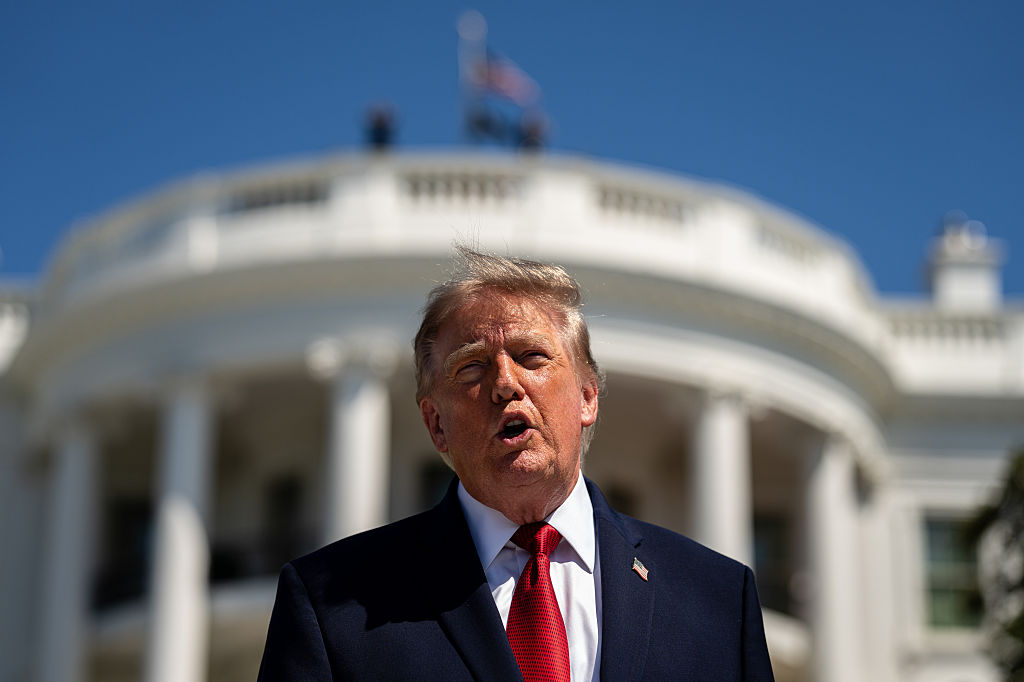
“They have to get rid of it completely. They have to get rid of nuclear weapons. Iran cannot have a nuclear weapon,” Trump repeated Wednesday during the unveiling of the new White House helipad.
Trump’s renewed economic threats come as negotiations between Washington and Tehran appear to have stalled amid disagreements over the Memorandum of Understanding (MOU), signed by both countries on June 17.
The document outlined commitments aimed at ensuring the full, toll-free reopening of the Strait of Hormuz, and established a 60-day cease-fire intended to allow technical talks to take place, including over Iran’s nuclear capabilities. Before the war, roughly a fifth of the world’s global petroleum liquids consumptions passed through the waterway.
But Washington and Tehran have since offered differing interpretations of the agreement, and fighting resumed before the diplomatic process produced a broader settlement.
The dispute over the Strait has since reignited, with Iran releasing a list of six key demands that it says the U.S. must meet before the waterway can reopen.
Senior Iranian lawmaker Ebrahim Azizi on Thursday reiterated one of Iran’s demands to end America’s “presence in the region immediately” and warned that “any further mistake or miscalculation will carry consequences far greater than before.”
Trump has dismissed the demands and instructed his representatives to seek compensation “for all of the people” that Iran has “killed and gravely wounded with their roadside bombs and many conflicts.”
The 60-day threshold has now passed and there is little sign of a renewed cease-fire agreement.
Trump has also increased pressure on Oman, a longtime U.S. security partner that had reportedly been nearing a deal with Iran over commercial shipping through the Strait, repeating threats to bomb the country
“If Oman gets in the way, we’ll bomb the sh-t out of them,” Trump told Fox News reporter Trey Yingst on Monday.
China could present an even greater test of Trump’s economic strategy. The U.S.-China Economic and Security Review Commission stated that the country remains Iran’s largest trading partner and the primary buyer of Iranian oil.
When asked whether the sanctions would target China, Bessent responded: “Many conversations are best to have in private, and we are confident that everyone wants the Strait (of Hormuz) re-opened, and for energy prices to come back down,” adding “it would do them a big service to get with the program.”
Trump’s warning that countries doing business with Iran could face economic consequences raises questions about how the policy could affect Beijing as Chinese President Xi Jinping prepares to visit the U.S. next month.