July 27, 2026:


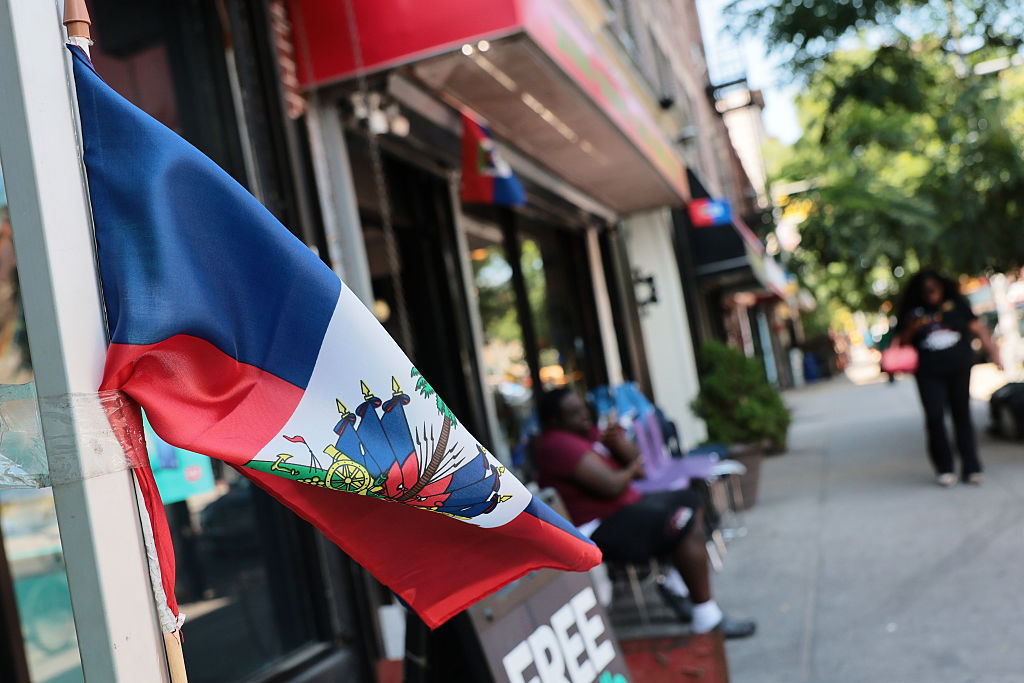
More than 300,000 Haitian immigrants are set to lose their ability to legally live and work in the U.S. on Monday, and Immigration and Customs Enforcement (ICE) is reportedly preparing to escalate its operations to arrest and deport some of them.
Those expanded operations could start as early as this week, according to reports from Fox News and CBS News, which cite unnamed federal sources. Ohio will reportedly be heavily targeted, particularly Springfield, where President Donald Trump had, in 2024, falsely accused Haitian migrants of eating residents’ pets.
A potential crackdown on Haitian migrants follows the Supreme Court’s June ruling that allowed the Trump Administration, for the time being, to end the Temporary Protected Status (TPS) designation for those fleeing violence and natural disaster in Haiti and Syria. The binding mandate of that ruling is expected to be transmitted to lower courts on Monday.
It remains unclear how aggressive the reported ICE campaign will be, and if Haiti can successfully reintegrate an influx of returnees. But Jean Négot Bonheur Delva, director-general of Haiti’s National Office of Migration, told local media earlier this month that following a conversation with the U.S. embassy in the country, Haitians should expect weekly deportation flights carrying about 250 former TPS status grantees.
The court ruling and its expected implementation have stirred anxiety among Haitians in the U.S. who could lose their livelihoods and may be sent back to the crisis-stricken Caribbean nation. It could also have a profound impact on the U.S. economy. A January 2026 fact sheet from immigration advocacy group FWD.us estimates that about 200,000 Haitian TPS holders are in the U.S. workforce, including 15,000 agricultural workers, 13,000 nursing assistants, and thousands of others in various industries.
In a statement to CBS News, DHS said it “does not discuss ongoing or future operations,” adding: “What we would say now is it’s closing time which means you don’t have to go home, but you can’t stay here… The good news is it’s not too late to get a $2,600 check and a free flight home.”
During his first-term Administration, Trump targeted TPS, a program since 1990 that has allowed migrants from designated countries with unsafe conditions—such as armed conflict, natural disaster, epidemics, or other extraordinary conditions—to reside and work legally in the U.S.
In his second-term Administration, the Department of Homeland Security (DHS) moved to terminate TPS designations for several countries, including Ethiopia, Myanmar, and Yemen. In many announcements ending those protections, then-Secretary Kristi Noem emphasized that TPS was designed to be temporary, and she argued that the living conditions in many of the countries with TPS designation have improved. Any extension to the TPS designations for those countries, the department said, would be “contrary” to the “national interest.”
Persons who lose their TPS status must find another lawful basis for staying in the U.S. or depart the U.S.; otherwise they may be removed.
But these TPS rescissions and terminations have been legally challenged. In February, a federal judge temporarily blocked the Administration’s termination of Haiti’s TPS designation, though the Trump Administration appealed, eventually leading to the Supreme Court ruling.
Haiti first received a TPS designation in 2010 after a magnitude-7.0 earthquake struck the country in January that year, leaving more than 300,000 people dead and displacing over a million others. Since then, the country has been a TPS designee: the first-term Trump Administration’s planned termination was delayed mainly due to court injunctions and other rulings, and the succeeding Biden Administration renewed and extended those designations.
As DHS Secretary, Noem reviewed Haiti’s TPS designation and her department found that there were no “extraordinary and temporary conditions” that prevented Haitian nationals from returning safely, and that even if there were, allowing them to stay longer in the U.S. went against national interest.
The State Department, however, notes that conditions in the country are not that safe: as of July 10, it holds the highest-level travel warning to Americans, urging them not to visit. A state of national emergency has been in effect since 2024 because of gang-linked criminality and violence: an estimated 26 gangs, at times heavily armed, control 90% of the capital Port-au-Prince and its surrounding areas, and the nation’s government has had a hard time putting the situation under control.
According to the latest report by the International Organization for Migration, the violence in Haiti has displaced nearly 1.5 million persons, of whom more than half are women and girls.
Some Republicans have opposed the Trump Administration’s plan to end the TPS designation for Haiti.
In April, the GOP-controlled House passed legislation that would require the Homeland Security Secretary to redesignate Haiti to TPS until a few months into 2029, with 10 Republicans siding with Democrats. The legislation is now pending in the Senate, where the latest attempt to pass it was blocked on July 22 by Sen. Eric Schmitt (R, Mo.). But even if the bill passes both chambers, the White House earlier said that the President’s advisers would recommend vetoing it.
Rep. Carlos Gimenez (R, Fla.) told CBS News earlier this month that while Haiti is a “failed state,” he thinks “deporting Haitians that are under TPS right now, back to Haiti, would be a huge mistake.”
Markwayne Mullin, who took over for Noem as DHS Secretary in March, defended the decision to end Haiti’s TPS designation. Speaking to CNN in June, Mullin said that those staying in the U.S. under TPS have “had plenty of time” to explore other options to legally stay in the U.S. long-term, instead of banking solely on what was intended to be a temporary measure.
Asked about whether Haiti qualified as “safe,” Mullin told CNN that such a qualification “isn’t quite just that simple,” and he argued that the State Department travel advisory had Americans in mind and not Haitians.
“There isn’t a more generous country in the world than the United States,” Mullin said of the TPS designation, “but we don’t want people to take advantage of it.”