
July 3, 2026:


In the opening scene of Human Vapor, the first collaboration between Netflix and historic Japanese company Toho, Korean showrunner Yeon Sang-ho and Japanese director Shinzo Katayama deftly establish how science-fiction has scaled up since 1960, the release year of the original The Human Vapor film.
We meet harried but dedicated reporter Kyoko Kono (Yû Aoi) interviewing a scientist about his new method of biomass power on live Japanese television when a strange and self-directing vapor infiltrates the studio, slipping under the scientist’s clothes and into his airways. All hell breaks loose: the autonomous, aggressive vapor floods his body, suspending him high in the air. His clothes stretch and his legs twitch as the vapor forces itself down his throat—before he explodes, blood and viscera raining down on the studio.
Rendered with vivid, pulsating CG effects, this is an explicit and attention-grabbing moment of body-horror, and viewers who only know the simplest contextual details about the series before they hit play—that it’s based on an old Japanese sci-fi film—will realize this reboot is not beholden to the style and restraint of a ‘60s monster movie. (The fact that the vapor-triggered combustion is broadcast live itself feels like a comment on the type of extreme material that you see on television nowadays.) This happens before we even meet the titular Human Vapor, a sinister suited man who can shift between physical and gaseous form responsible for a mysterious killing spree. But how does the Netflix series expand the scope of the original film by the original Godzilla director Ishirō Honda and special effects pioneer Eiji Tsuburaya, and how faithful is the show to its beguiling murderous villain?

The Human Vapor is a tokusatsu film, which literally translates as “special photography” and refers to Japanese film and television that makes prominent use of practical special effects. Think monster suits, miniature battlefields and cityscapes, masked superheroes and giant mechas. (Famously, Mighty Morphin’ Power Rangers was created by localizing footage from tokusatsu series Super Sentai into new stories for Western audiences.)
Ishirō Honda is most famous in the West for establishing the kaiju genre and directing Godzilla and seven of its sequels. But special effects director Tsuburaya is sometimes credited as “the father of tokusatsu”, and his fascination with how Western special effects were developing in the 1920s and 30s drove him to push SFX boundaries while working for Toho, first in war movies and then in kaiju monster movies like Godzilla. His kokusatsu work goes beyond film into television, where he created the original Ultraman series.
The Human Vapor belongs to a niche category under the tokusatsu umbrella—Toho’s “Transforming Human Series”, three films where scientifically altered humans, made amoral or downright villainous through their transformation, use their new supernatural powers to steal and kill, forging a new ethical code and escaping the authorities. In The Human Vapor, Mizuno (Yoshio Tsuchiya) is a librarian who, after being discharged from the air force for health concerns, takes part in a scientist’s astronautical experiment that goes awry. (Think The Invisible Man for Japan’s nuclear age.) The doctor becomes Mizano’s first victim; let loose with no father figure to guide his powerful new existence, the gaseous man pulls off a series of bank robberies to fund performances for his beloved Fujichiyo (Kaoru Yachigusa), a Noh and Kabuki-trained dancer in dire need of a comeback.
Honda and Tsuburaya delay the first sight of a man turning into vapor, but they come thick and fast in the film’s second half, using several different techniques like dry ice, optical compositing, and wire workin a single sequence to sell the Human Vapor effect. The mystery plot is basic, but effective at immersing us in the key relationships – primarily between gruff, disciplined detective Okamoto (Tatsuya Mihashi) and his sparky reporter girlfriend Kyoko Kono (Keiko Sata), who try to solve the bank robbery independently and act act as a mirror to the doomed devotion shared by Mizuno and Fujichiyo.
The Human Vapor is built around Mizuno, and Yoshio Tsuchiya’s controlled, intense charisma ably conveys the calm, arrogant ambition the character now possesses. He turns himself in to the police, only to demonstrate how easily he can escape; later, he sits down with the press to explain his entire elaborate backstory, eager to explain his new ideology. The film is notable for smuggling in a socio-political angle: the atomic powers that gave Mizuno his powers also gave him a new morality, and his superiority over society feels just as chilling to the authorities as his supernatural powers. “I am no longer a human being,” he says. “Therefore I am no longer subject to human law.”
In their biography Ishiro Honda: A Life in Film, from Godzilla to Kurosawa, writers Steve Ryfle and Ed Godziszewski argue that the script directly reflects a moment of crisis and change in Japan – the main romance is between a lowly librarian and a bankrupted upper-class woman whose fortunes have flipped, and the dynamic between the anti-authority Human Vapor and the incompetent police reflected Japan’s recent year of unrest with mass protests and strikes. This human edge is likely what made The Human Vapor appealing to Japanese critics; Ryfle and Godziszewski note that major Japanese publications ran glowing reviews, leading to a cult following in the years since.

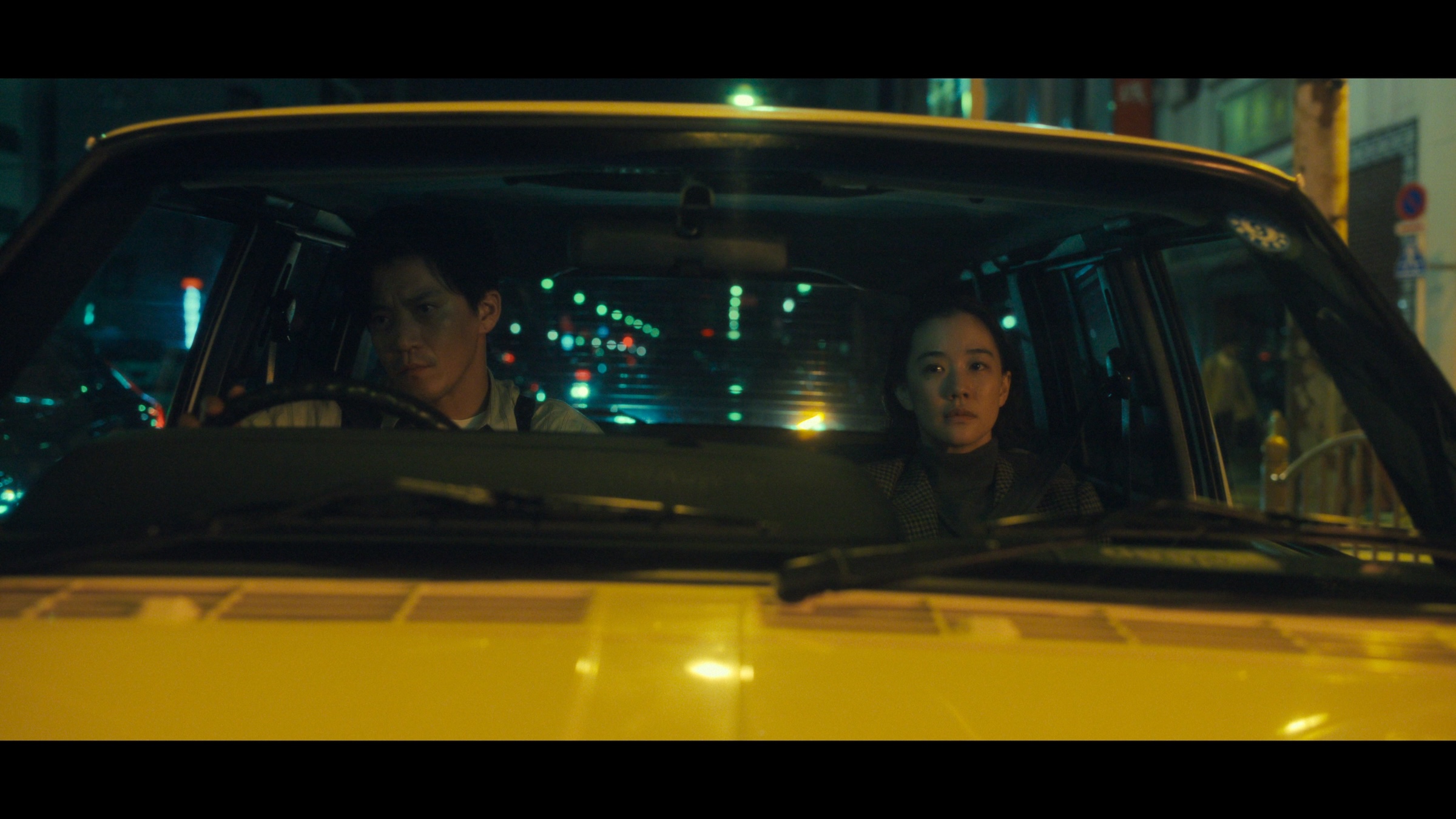
There is no bank robbery in Human Vapor; the eight-episode story is entirely original, turning its focus to idols and yakuza whenever it chooses. But in homage to Honda’s film, Netflix’s Human Vapor carries over several elements. The leads are named Detective Kenji Okamoto (Shun Ogori) and Kyoko Kono, but they are not romantic partners – at least, not anymore. They met on a case, but when Kenji was ready to propose, Kyoko ruined one of his investigations with an ill-timed prime suspect interview, resulting in Kenj’s suspension.
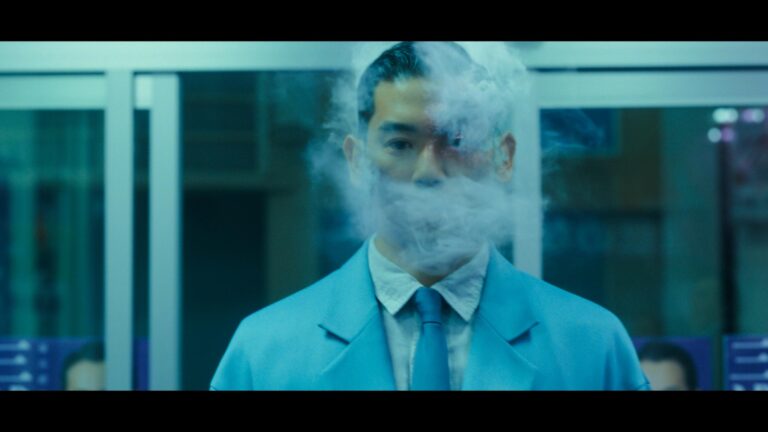
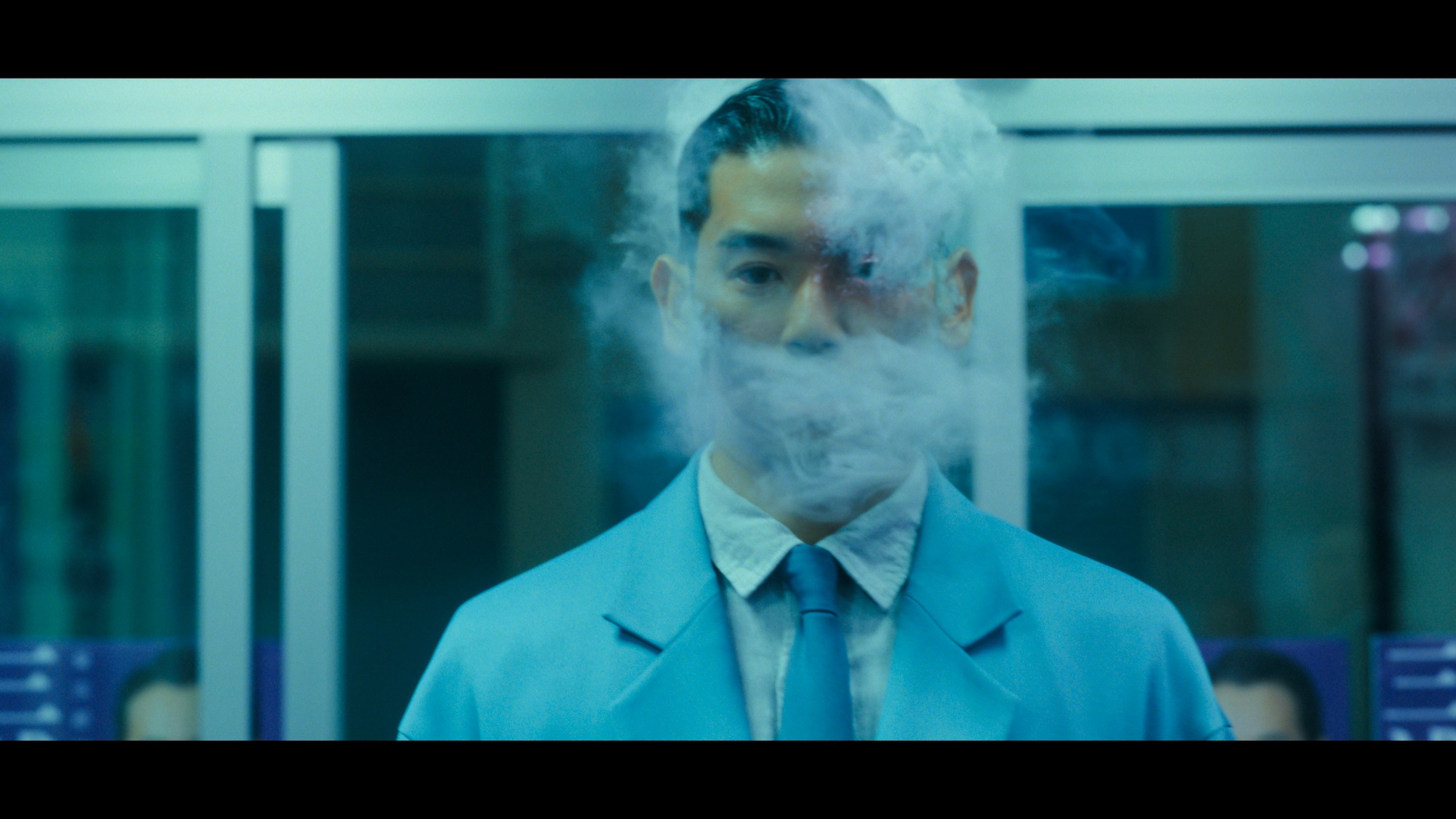
Like in the original film, Kyoko is often a couple steps ahead of the police, recording an initial interview with the Human Vapor (played by model UTA) before the cops arrive to arrest him. A key difference is that the Human Vapor’s mission is now explicitly political. In his oversized blue suit and deadpan voice, he calls for everyone involved in “White Center” to pay for their historic crimes, lighting a fuse on a conspiracy that connects politicians, corporate officials, and crooked cops.
Still, the character is rendered in a completely different fashion. Mizuno the Human Vapor was eloquent and rational, a flesh-and-blood man believably warped by power, still in touch with human emotions. The series version of the Human Vapor is heavy on menace, but not very talkative; when he does speak, it’s in a low, slow voice and his stare is piercing in its vacantness. Compared to Mizuno’s controlled, lively energy, this Human Vapor feels like he’s in a hypnotic trance—and the series contrasts the Vapor’s sinister, muted human form and hyperactive VFX of his lethal gaseous powers.
Human Vapor feels most spiritually accurate to the original Toho film in its themes. A significant amount of the Human Vapor’s backstory and motivations are tied to social divisions, something that appealed to Shinzo Katayama, who told Netflix when the show was first announced, “I want to accurately depict the social dynamics of contemporary Japanese society, such as the relationships between the powerful and the weak.”
As Kyoko and Okamoto follow the Human Vapor’s trail, a history of institutional abuses and neglected people takes shape: ostensibly a charitable organization, the White Center offered shelter to vulnerable and impoverished people only to exploit them into forced labor in abysmal conditions behind closed doors. As soon as we learn that the White Center is connected to a 1999 meteorite crash, the Human Vapor’s nefarious grudge feels far less opaque. Human Vapor pushes with more grisly conviction The Human Vapor’s criticism of authority figures playing fast and loose with desperate people’s lives.
Yeon Sang-ho and co-writer Takeshi Kimura make sure no corner of their world is untouched by disillusionment and corruption, even in the innocuous details: Kenji’s first scene shows him intervening on a restaurant owner extorting his immigrant employee; Kyoko meets an alcoholic journalist who was shunned for doggedly reporting on the White Center; a senile former White Center director spends his twilight years in a seaside commune consumed by guilt. Even a tonally lighter mid-season tangent about two horror host streamers who stumble on an early sighting of the Human Vapor in a music video is charged with precarity and desperation.
While we do learn Human Vapor’s origins and accomplices, the fact that the grand reveal is rooted in senseless pain orchestrated by criminal corruption does not come as a surprise. Human Vapor plays it smart with its adaptation choices, not just upgrading effects-heavy spectacle, but also bringing the film’s subtext of anti-authority righteousness to the foreground, leaning on tragic character dynamics that propel the action in ways that tokusatsu monsters and superheroes cannot.