Democrats Win Control of Both House and Senate in Huge Blow to Trump

November 4, 2026:

Democrats Win Control of Both House and Senate in Huge Blow to Trump

In a resounding rebuke of President Donald Trump and his Republican Party, Democrats will control both the House and Senate for the last two years of Trump’s presidency, cementing one of the strongest midterm showings for either party in decades.
The Associated Press called the upper chamber for Democrats late on Tuesday, after the party’s candidates secured victories in battleground races across the map. The outlet later called control of the lower chamber in the early hours of Wednesday morning as Democrats picked up more than two dozen seats.

The milestone potentially sets up a new political dynamic in Washington. A President has not had to deal with a Congress completely controlled by the opposition party since the last two years of Barack Obama’s presidency. Congress now stands to be a true counterweight to the White House and its agenda. 

Democrats needed to net four seats to claim the Senate majority—a tough task given the map this cycle clearly favored Republicans. But with wins in Texas, Ohio, North Carolina, Iowa, and Maine, Democrats achieved what most handicappers had treated as a long shot until just weeks before Election Day. Democrats in multiple toss-up Senate races managed to effectively harness a national mood against Trump, the economy and the Iran War to win in places initially deemed out of reach for the party. Outstanding Senate races in states like Michigan could potentially pad Democrats’ majority. 

Read more: How Trump’s Approval Compares to Other Presidents Just Before the Midterms

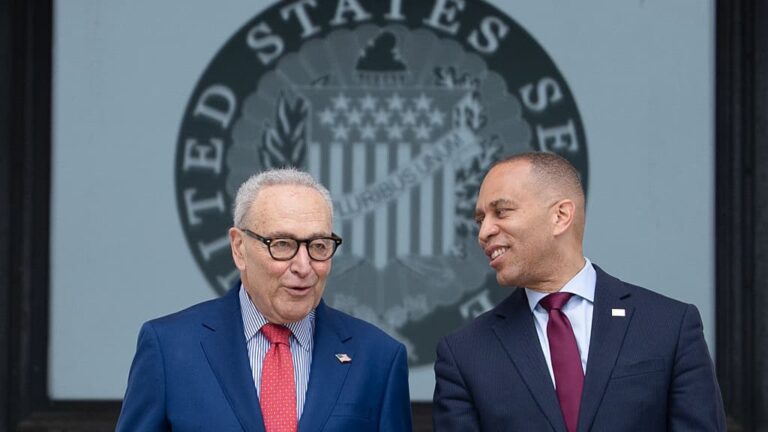
The new Senate is likely to be led by Senator Chuck Schumer of New York, who will regain his title of Senate Majority Leader from Republican Senator John Thune of South Dakota. While some Democrats have criticized Schumer’s leadership as minority leader over the past two years, it’s not clear if any Senators are prepared to challenge his leadership before the next Congress convenes in January.

The size of a possible Democratic majority in the House is still unclear as votes in many states were still being tallied, but signs of a significant Trump-centered backlash were popping up all over the country Tuesday night, potentially setting up the party to come away with a double-digit majority. Strategists with both parties had predicted for months that Republicans were unlikely to hold onto the House, where they could only afford to lose three seats.

House Democrats have vowed to use a House majority to aggressively investigate Trump, his Administration, and his allies, as well as push policy proposals they campaigned on, including ending the Iran War, undoing Trump’s tariffs and lowering the cost of living.

Likely Democratic control of the House would also mean the end of Mike Johnson’s speakership, with Democrats likely set to rally behind their leader in the House, Rep. Hakeem Jeffries of New York, to replace him. Jeffries would be the first Black speaker in U.S. history.

Read more: 10 Candidates Who Could Make History in the Midterms

Polls had been consistently pointing for months to the House flipping to Democrats. For well over a year, nearly every poll from a reputable pollster asking voters which party’s candidate they intended to support showed Democrats with a clear advantage. But Republicans managed to hold their own or do better in fundraising, especially in pivotal battlegrounds for control of the Senate. And some Democrats as recently as this past weekend were worried that they may somehow still come up short.

Republicans spent much of the year trying to make the best of a bad environment. They constantly claimed the polls were all off, that Trump could still turn out his coalition that remade the modern GOP, and that Democrats’ overconfidence could depress their own turnout.

As Election Day neared, Republicans moved into triage mode. While they initially had planned to go on the offense against incumbent Democrats, those ambitions quickly evaporated as they shifted funding away from flipping Democratic seats and toward shoring up Republicans in a wider array of districts. 

By late Tuesday, as exit polls started to paint a picture of the national mood, there were signs that many polls had likely under-estimated Democrats’ strength heading into Election Day.

The new Democratic caucus in both chambers are poised to include many new faces, from those who ran as moderates to self-avowed democratic socialists who ran as much against centrist leaders like Jeffries than Trump. Now starts the messy business of this new majority figuring out what they plan to do with their power. Trump will certainly be watching closely.

Source link