HomeNews Activist Dolores Huerta Has Died. Here's What To Know About Her Trailblazing Life
Activist Dolores Huerta Has Died. Here's What To Know About Her Trailblazing Life
October 28, 2026:
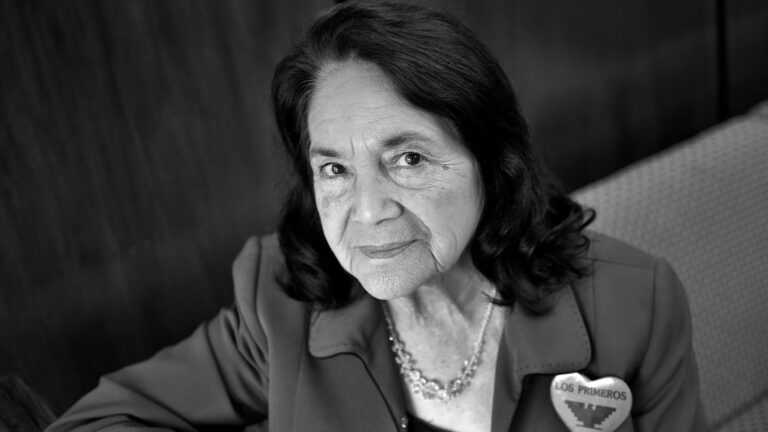
Dolores Huerta at the United States Department of Labor in Washington, in 2012. —Marvin Joseph—The Washington Post/Getty Images
Dolores Huerta, an internationally renowned activist, community organizer, and political force who co-founded what is now known as the United Farm Workers of America (UFW) alongside Cesar Chavez, died Wednesday at her home in Bakersfield, California. She was 96.
Read more:Dolores Huerta, Labor Leader and Civil Rights Icon, Dies at 96
News of Huerta’s death was shared by family members through her Instagram account, though the post did not disclose a cause of death. The New York Times reported that the cause of death was cancer, citing a spokesperson for Huerta.
“We know that many of you around the world share in our mourning, and we will be following up on plans to recognize and celebrate her incredible life and legacy,” the post said.
Huerta dedicated her career to fighting a variety of causes, including labor rights, women’s rights and immigrants’ rights. She is also credited with coining the phrase “Yes we can”—”Sí se puede”—which was later adopted by Barack Obama.
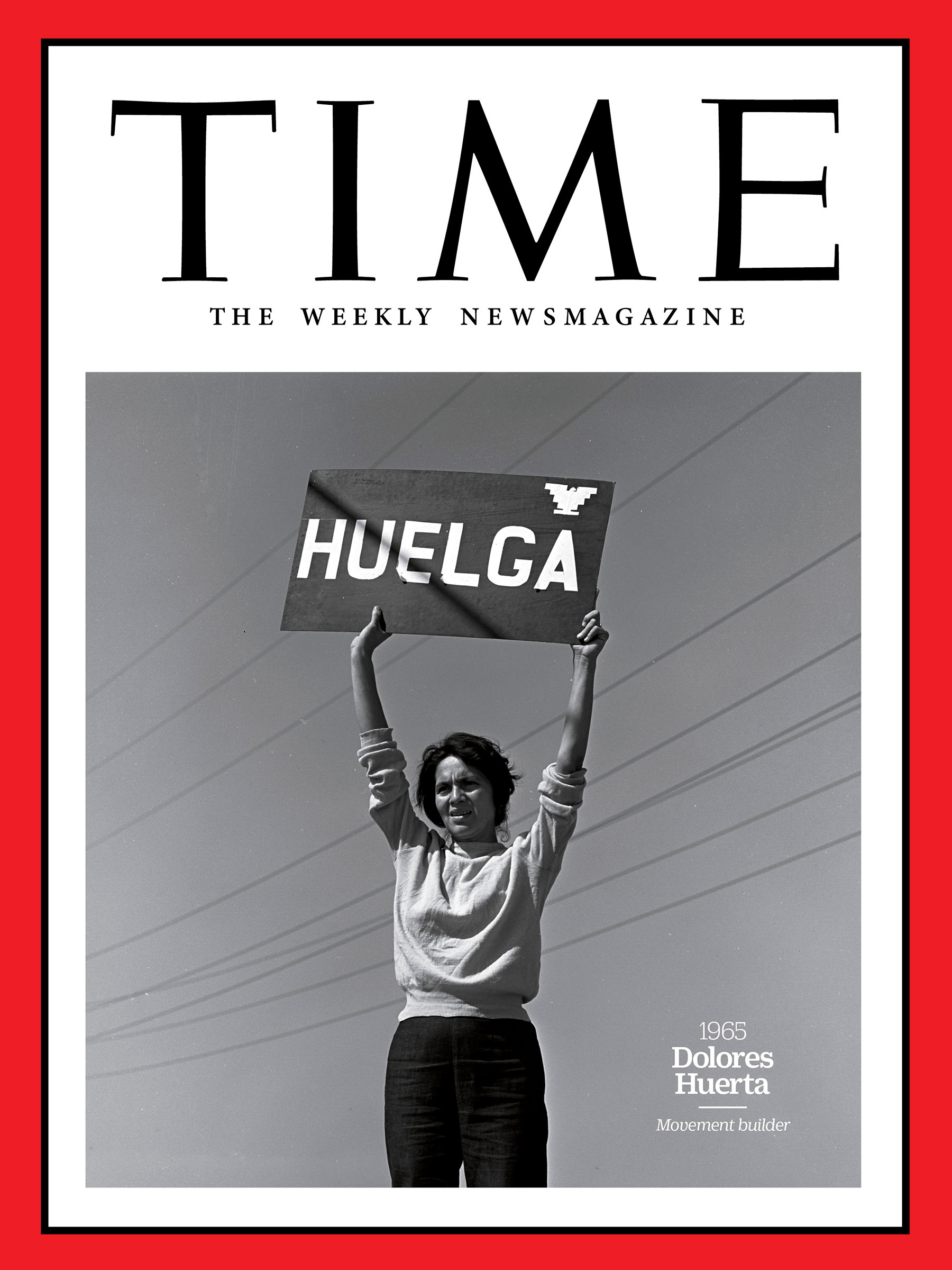
Read More:TIME100’s Most Influential People of 2026: Dolores Huerta
—Harvey Richards Media Archive
In March 2026, Huerta publicly accused Chavez of sexually abusing her decades earlier, breaking a silence she said she had maintained to protect the farmworker movement. Her disclosure accompanied a New York Times investigation into allegations that Chavez sexually abused women and girls.
“I think she kind of radiates empowerment not only for herself, but for others,” Mario Garcia, a professor of Chicano Studies and History at the University of California, Santa Barbara, told TIME in an interview before Huerta’s death. “She’s really quite an electrifying person.”
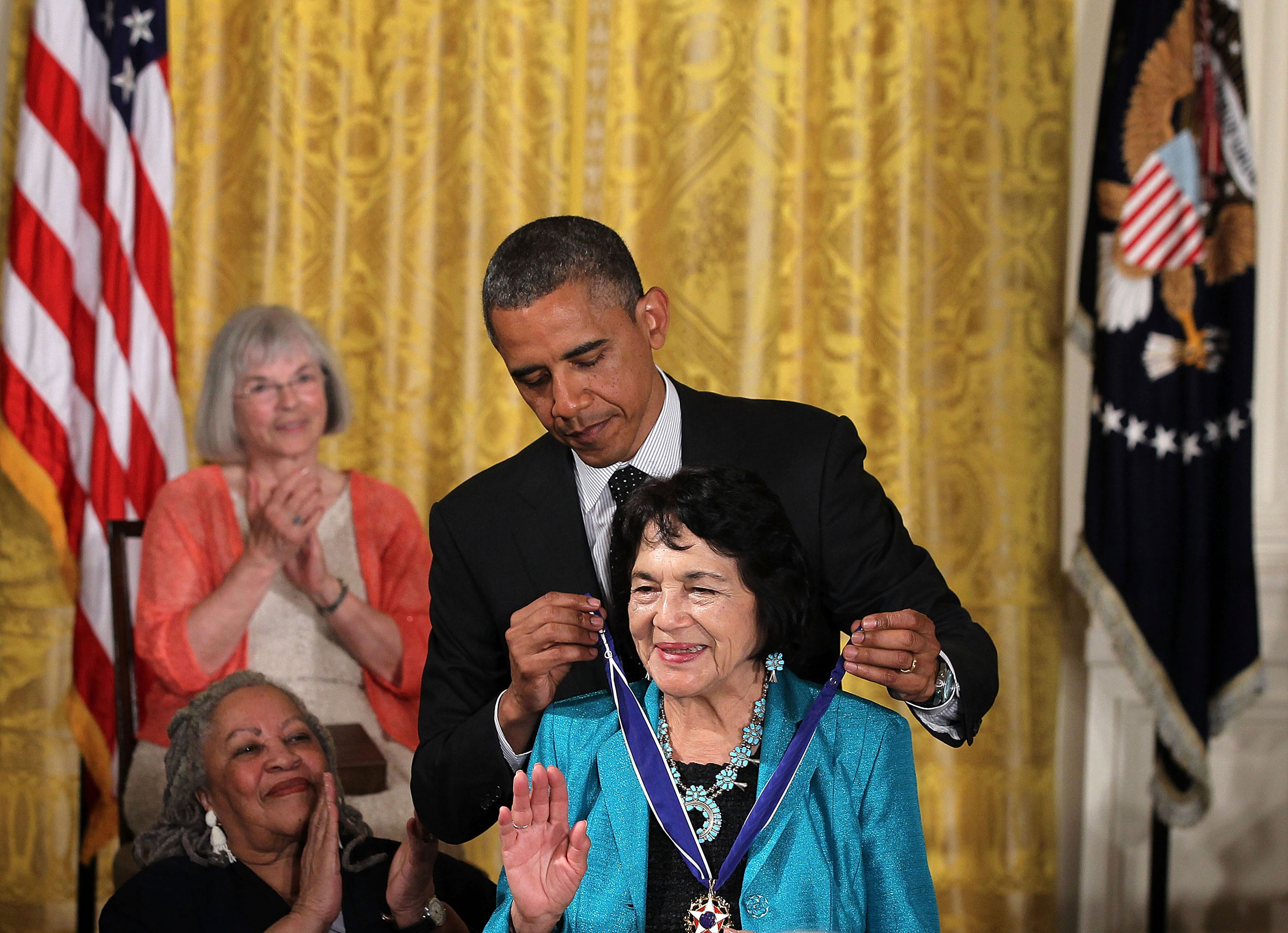
Indeed, when Huerta received the Presidential Medal of Freedom in 2012, Obama noted that she “does not play.”
“Without any negotiating experience, Dolores helped lead a worldwide grape boycott that forced growers to agree to some of the country’s first farmworker contracts,” Obama said during the ceremony. “And ever since she has fought to give more people a seat at the table. ‘Don’t wait to be invited,’ she says. ‘Step in there.'”
“On a personal note, Dolores was very gracious when I told her I had stolen her slogan, Sí se puede, Yes we can,” Obama added. “Knowing her, I’m pleased that she let me off easy.”
Huerta is presented with a Presidential Medal of Freedom by President Barack Obama on May 29, 2012. —Alex Wong—Getty Images
How Huerta’s early life shaped her activism
Huerta was born on April 10, 1930, in Dawson, New Mexico, to Alicia Chávez and Juan Fernández, who both played a major role in her views on justice.
Her father was a miner and farmworker who went on to join the New Mexico state legislature. After her parents’ divorce, her mother opened up her own hotel in Stockton, California, and often offered affordable or free rooms to low-wage workers, according to a biography by the Dolores Huerta Foundation (DHF). Huerta often said she became a feminist because of her mother. As a girl, Huerta was a high-achieving student, an active member of several school clubs, and a member of the Girl Scouts. Huerta now has a Scouts patch dedicated to her.
In 1945, one of her two brothers was beaten for wearing a zoot suit, an ensemble then popular with Black and Mexican-American men who were often unfairly labeled as delinquents. She has said that her brother’s beating further influenced her activism.
After Huerta graduated from high school, she obtained a provisional teaching credential at the University of the Pacific’s Stockton College, which later became San Joaquin Delta College, and began teaching at an area elementary school. She also got married and had two children with her husband at the time, Ralph Head. She has repeatedly said that her students, many of whom were children of farmworkers, inspired her activism.
“I think the one thing that really kind of hooked me for life was going to the homes of some workers who did not have linoleum or wood on their floor, only dirt,” Huerta told MAKERS, a documentary project featuring influential women, in 2012. “And yet, these are people who are working, they’re working very hard and you know that this is wrong.”
Huerta decided to pursue a career in community organizing in 1955 when she met Fred Ross Sr., founder of the Community Service Organization (CSO) and a nationally influential community organizer who began his career fighting for the rights of Dust Bowl-era farmworkers.
Dolores Huerta accepts TIME100 Impact Award
Finding her voice
At a November 2018 TED Talk, Huerta told an audience she found her voice while volunteering at the Stockton chapter of CSO, which she co-founded.
She described a day she was volunteering there when she was 25 years old and a disabled farmworker walked in asking if someone could help him apply for disability benefits. She went to a welfare office with the man, but she was not allowed to submit an application on his behalf. Defeated, she returned to CSO, where Ross told her to go back and demand that a supervisor allow the man to submit an application.
“I kind of overcame my anxieties and my fears. I went down to the welfare office and I demanded to see the supervisor,” Huerta said. “That taught me a lesson. That taught me that I had a voice.”
Ross taught Huerta to make demands of people, she said, especially public officials. He also instilled the importance of voting.
While at CSO, Huerta founded the Agricultural Workers Association, led voter registration drives and met Cesar Chavez in 1955, while he was an organizer with CSO. Chavez would later become CSO’s executive director in 1959.
Ross died in 1992, but Huerta described Ross as her “spiritual father” for the rest of her life, and the first person to teach her and Chavez community-organizing techniques.
Founding the United Farm Workers
In 1962, Huerta and Chavez left CSO to found the National Farm Workers Association, which would later become UFW, a union that continues to advocate for the rights of agricultural workers.
They were motivated to found the association after hearing from scores of California farmworkers working under harsh conditions: no benefits, low wages, and no access to bathrooms or water while in the fields. The Bracero Program, established through a 1942 agreement between the U.S. and Mexico, recruited Mexican workers to address wartime agricultural labor shortages and continued until 1964.
Chavez and Huerta believed the Bracero Program allowed for farmworker abuses and lobbied to end it. They lobbied against the program, which ended in 1964.
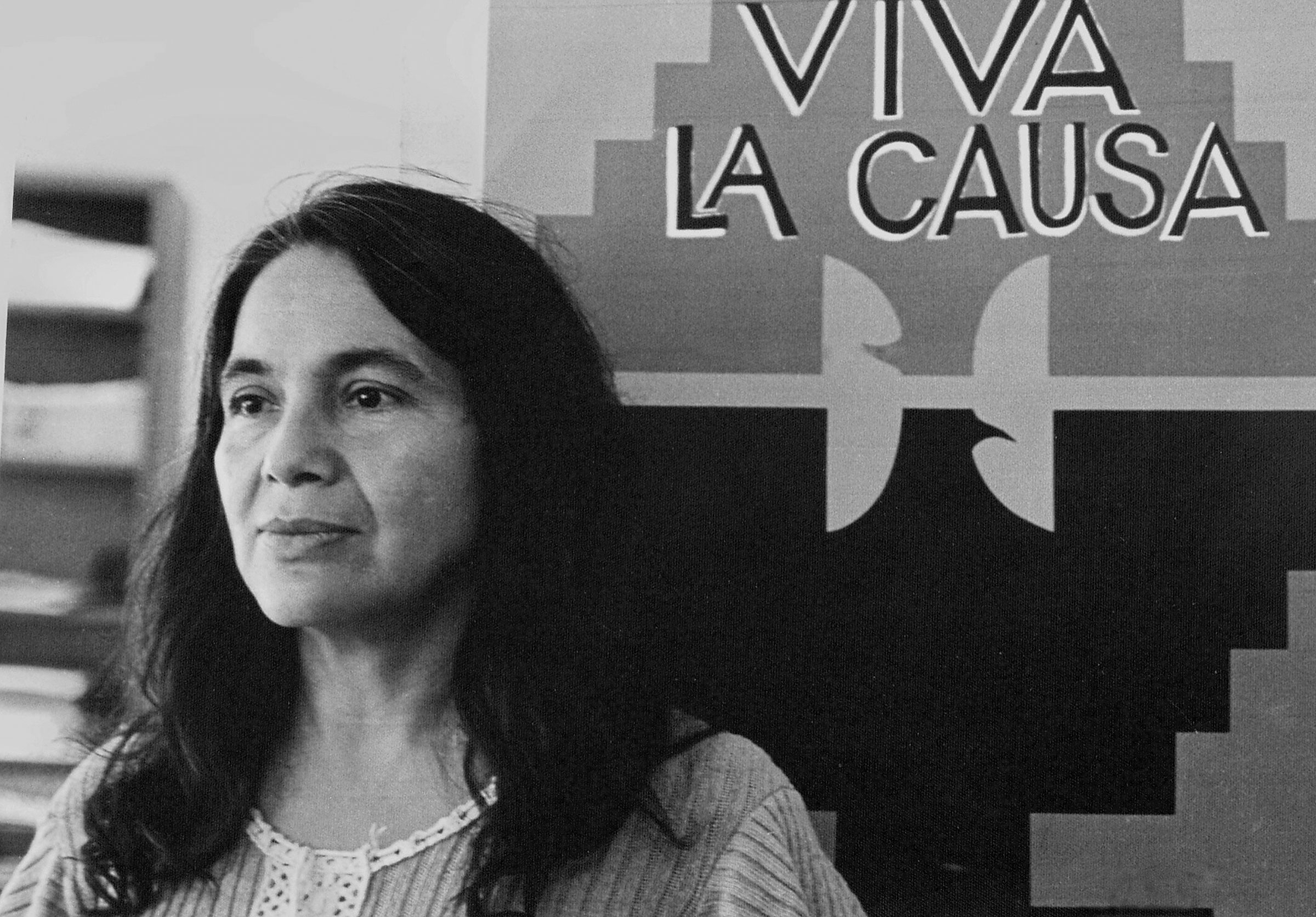
Huerta with a union flag that reads ‘Viva La Causa’, ca. 1970s. —Cathy Murphy—Getty Images
Huerta and Chavez continued their fight for workers’ rights, including leading protests, worker strikes, hunger strikes, and arguably their most famous tactic, national boycotts. Huerta helped organize the nationwide grape boycott that supported the Delano grape strike of 1965-1970. The strike began with Filipino farmworkers affiliated with the Agricultural Workers Organizing Committee; Huerta and Chavez’s National Farm Workers Association subsequently joined them. The Delano Grape Strike and Boycott convinced grocery store chains to stop selling the fruit until industry labor standards were set.
Huerta’s boycotts were effective in forcing industries to guarantee better working conditions for their employees.
“I think one of the things about when people are oppressed is that they start accepting their condition and they often kind of blame themselves,” Huerta said during a 2015 Q&A with the National Portrait Gallery. “Our job was to convince them again that they could make a difference and that they had the power to do it.”
In 1975, California passed the Agricultural Labor Relations Act, which gave farmworkers the right to unionize. The state credited Huerta as instrumental in establishing those rights. Though Chavez often receives national accolades for the achievements of the farmworker movement, historians say Huerta played an equally essential role through every success—but historically received far less credit.
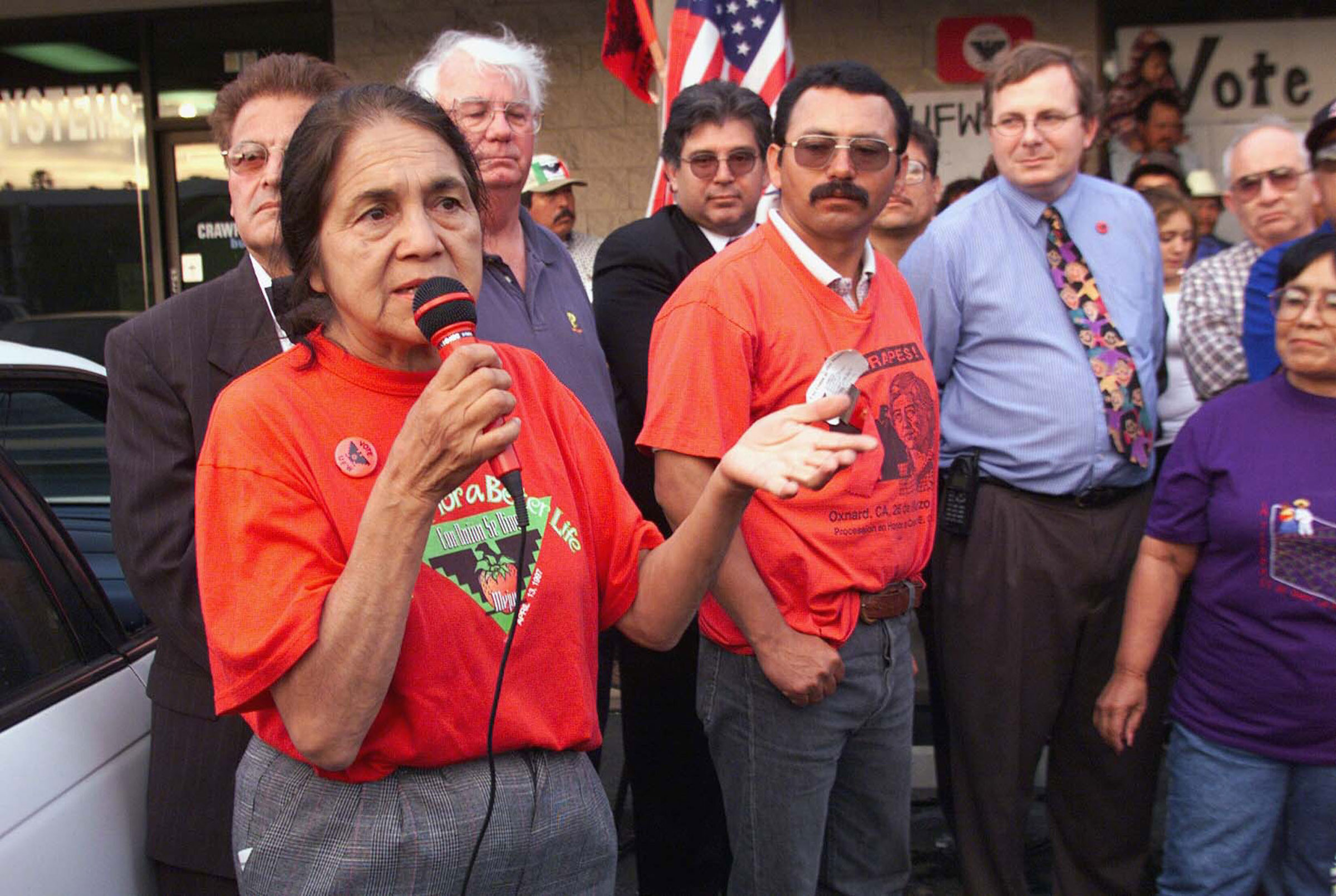
Huerta, along with union organizers, speaks to strawberry workers and supporters gathered at the United Farmworkers Union office in Oxnard, Calif. as they awaited the results of a union representation election in 1999. —Monica Almeida—The New York Times/Redux
“[Chavez] didn’t win you over with his rhetoric, [Chavez] was always soft spoken, but he also radiated strong internal leadership qualities,” Garcia said. “[Huerta], by contrast, was always much more verbal, a much better speaker than [Chavez].”
In a 2018 interview with TIME, Huerta said she didn’t expect recognition.
“I think that’s very typical of women,” she said. “I had been acculturated to be supportive, to be accommodating, to support men in the work they do. We never think of getting credit or recognition or even taking the power. We didn’t think in those terms.”
She added that she believed times were changing. “That could make an incredible amount of difference in our world,” she said. “We will never have peace in the world until feminists take power.”
In March 2026, Huerta disclosed that Chavez had sexually abused her in the 1960s. She alleged that he pressured her into sex on one occasion and raped her on another. Both encounters resulted in pregnancies, she said, and she arranged for the children to be raised by other families. She said she later developed close relationships with them.
Huerta said she had remained silent for decades because she feared damaging the movement to which she had devoted her life. Coming forward after a New York Times investigation into allegations that Chavez abused other women and girls, she emphasized that the movement’s achievements belonged to thousands of people.
Balancing activism and motherhood
Huerta was a change-maker while also raising 11 children, which gave her kids a front-row seat to her activism.
During the five-year Delano grape boycott, Huerta said she and her family encountered violence.
“There were times when my home was terrorized in the middle of the night, my windows broken when I’m there alone with my children,” she told MAKERS. “We had shotguns and rifles aimed at us.”
In order to start the farmworkers union, Huerta had to move most of her family—by then she had seven children—to Delano, while leaving two of her children behind in Stockton, California. Huerta credited the women of the movement, including Cesar Chavez’s wife, Helen Chavez, and his sisters-in-law, for organizing childcare in Delano.
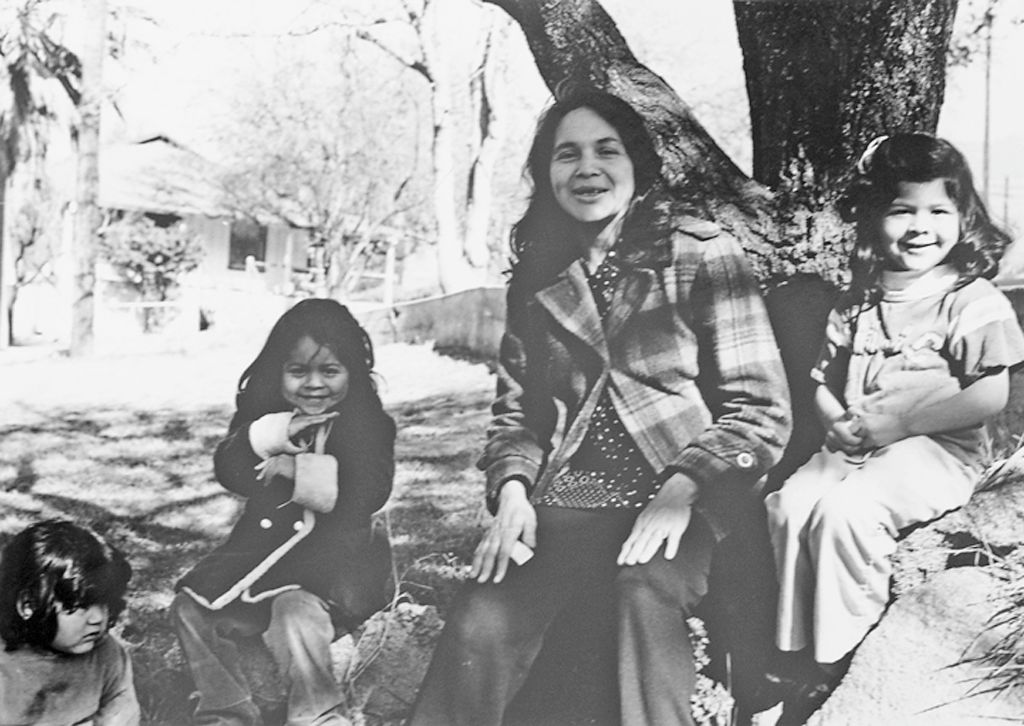
American labor activist and cofounder of the United Farm Workers of America (UFW) Dolores Huerta and her daughters sit outdoors on a tree, Keene, California, mid-1970s. —Cathy Murphy—Getty Images
“I had a lot of criticism from family and friends for years until huelga [the strike] became famous and now they all like me,” Huerta jokingly said during the 2015 National Portrait Gallery Q&A. “But it was difficult. We were pretty much living like the farmworkers.”
Huerta’s family and Chavez’s family relied on assistance from a food bank and were organizing the union without a steady source of income of their own.
“In the strike, women were always on the picket lines with the children,” Huerta said.
It was also not lost on Huerta that Chavez and other male activists were not asked about how they managed their important work with their parental duties.
“The thing about that is that every single mother in every single working family has that question every single day. Who am I going to leave my children with? Are they going to be safe? Are they going to be protected? That’s something women have to deal with all the time,” she told TIME in 2018.
Her lasting legacy
Over the course of her career, Huerta was arrested more than 20 times. In 1988, she was severely beaten by a police officer in San Francisco at a rally against presidential candidate George H. W. Bush. She was 58 years old at the time, and suffered broken ribs and a ruptured spleen.
Despite those types of encounters, Huerta continued to mobilize and fight for causes through her Dolores Huerta Foundation. She established her foundation in 2003 after receiving a $100,000 prize from the Puffin/Nation Prize for Creative Citizenshipin 2002. Her youngest daughter, Camila Chávez, helped run the foundation as the executive director.
In the course of her career, Huerta was awarded the Presidential Medal of Freedom, the Eleanor Roosevelt Human Rights Award, and the Mexican Government’s Ohtli Award. She also received at least nine honorary doctorates from universities across the country. In 2026, TIME named Huerta one of the world’s 100 most influential people, with a tribute by Gloria Steinem recognizing her decades of organizing and her courage in speaking publicly about Chavez. She received the TIME100 Impact Award at the TIME100 Gala in New York City on April 23, 2026.
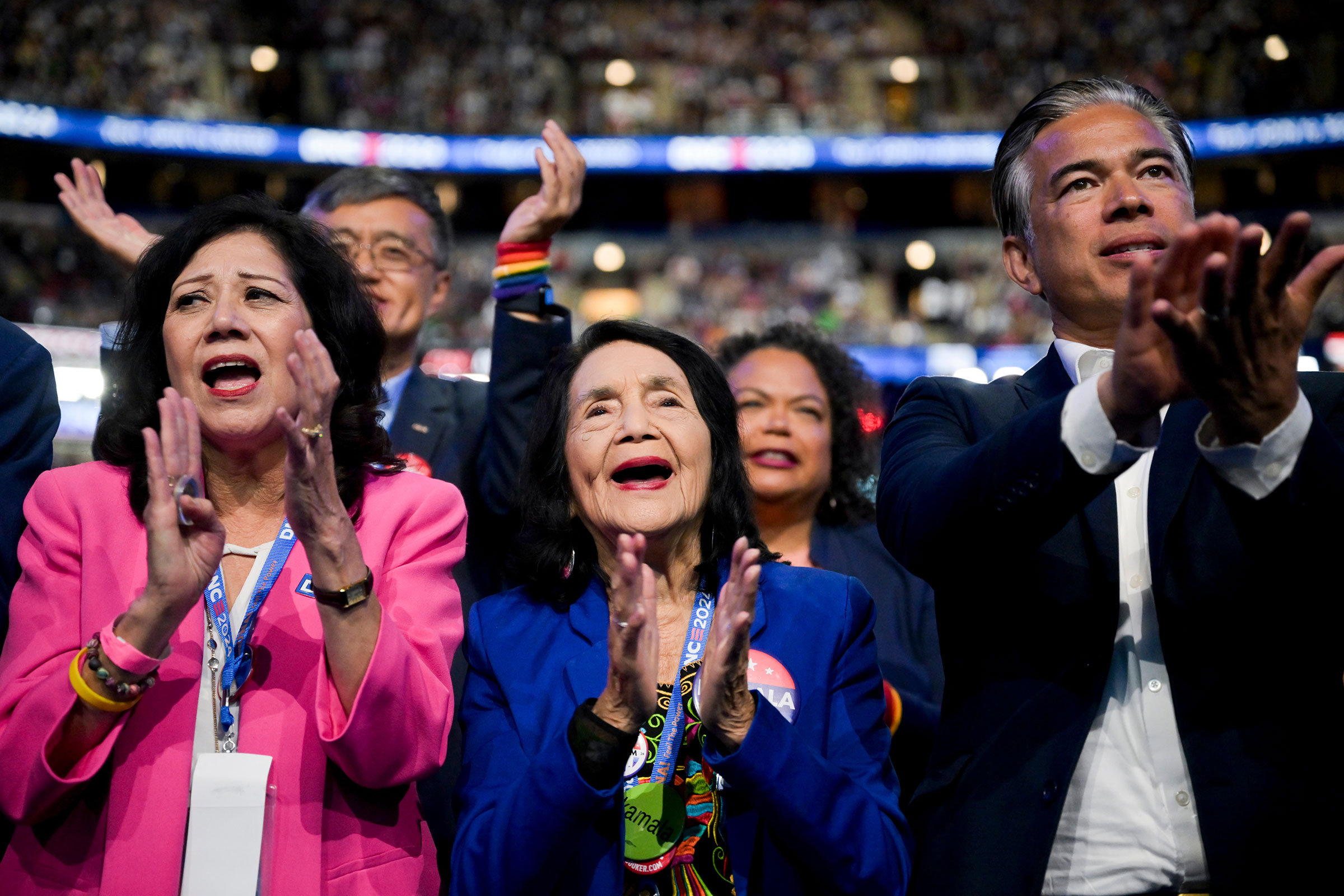
Huerta during the Democratic National Convention at the United Center in Chicago, on Aug. 21, 2024. —Victor J. Blue—Bloomberg/Getty Images
Huerta endorsed presidential candidates, including speaking at the 2016 Democratic National Convention in support of Hillary Clinton. She was also the subject of a PBS documentary, Dolores, which won a Peabody Award in 2018.
“She was not afraid to speak truth to power,” Clinton said of her in the Dolores documentary.
In July 2018, California Governor Jerry Brown signed a bill declaring April 10 Dolores Huerta Day. “Dolores Huerta deserves proper recognition for her numerous sacrifices in the name of justice and the amelioration of severely inadequate working conditions,” the bill’s text said.
“Change comes from the bottom,” Huerta said during a May 2012 interview. “But you’ve got to be able to organize those folks at the bottom to be able to get out there and make the changes that they need. And of course, if you don’t have organization, then you don’t have a democracy.”