September 29, 2026:


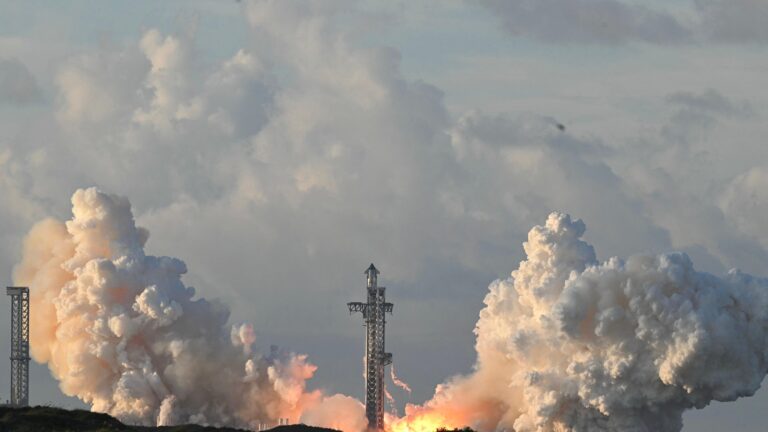
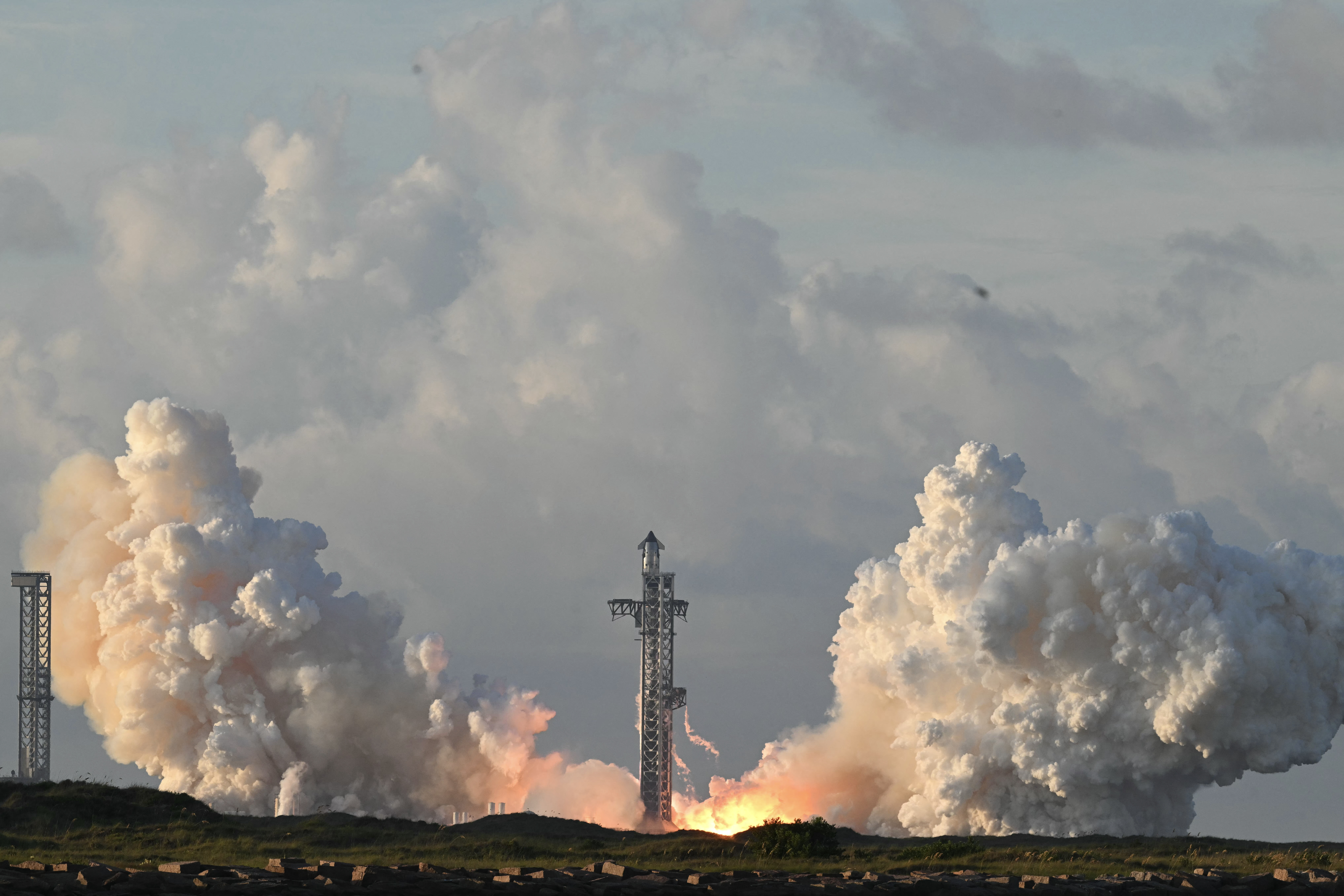
For three and a half years, ever since the spring of 2023, when SpaceX launched the first of its massive Starship rockets, the company has been promising that before too long the towering, stainless steel machine would get to orbit. This morning, on the 14th such launch, it made good on that boast.
“Starship performs its orbital insertion burn and enters orbit of Earth for the first time,” SpaceX announced on X at 9:15 a.m. ET, along with a video of that engine maneuver. It took just 25 minutes and 17 seconds for the spacecraft to travel from its launch pad in Starbase, Texas, to its circular orbit 170 miles high.
There is no overstating how important today’s success was to SpaceX’s—and NASA’s—long-term plans. Starship is pivotal to getting human beings to the moon and Mars, and SpaceX sees it as an ultimate replacement for its workhorse Falcon 9 rocket, which accounted for nearly 51% of the global total of commercial launches—including 85% of all satellites—in 2025. Starship’s far larger payload bay can carry a cargo equivalent of nearly five Falcon 9s, ultimately consolidating launches and cutting costs.
Starship is a two-part rocket. Standing 407 ft. on the launch pad, it is equipped with 33 first stage engines, which produce 16.7 million lbs. of thrust, making it far and away the most powerful rocket ever successfully launched—easily eclipsing NASA’s Space Launch System (SLS) and its 8.8 million lbs. Starship’s first stage represents 236 ft. of the overall stack. Atop it is the 171-ft. spacecraft—also dubbed Starship—a six-engine machine intended for satellite deployment and for crew travel.
In 2021, NASA selected Starship as one of two spacecraft that will land astronauts on the moon as early as 2028. (Blue Origin, the aerospace company founded by Amazon boss Jeff Bezos, will provide the other.) In 2027, NASA is planning a crewed test of either or both spacecraft in Earth orbit during the mission of Artemis III.
“Congrats @SpaceX!” NASA Administrator Jared Isaacman posted on X after SpaceX confirmed this morning’s orbital success. “Gorgeous launch, getting Ship to orbit and managing every step in a safe, responsible, and especially inspirational way. @NASA, along with the rest of the interested public, is excited to help where we can and for Starship missions to become routine!”
Early on, routine was not remotely how Starship launches were being described. Four minutes into the rocket’s inaugural launch on April 20, 2023, it exploded spectacularly. Concrete and steel debris rained down in a near-400-acre footprint in the surrounding Boca Chica State Park, and a 3.85-acre fire burned south of the launch site. Environmental organizations mounted multiple legal challenges to slow or halt the launches until hazards could be eliminated. But the flights proceeded apace at a rate of once every three months, none achieving stable orbit—until today.
The launch this morning was both imperfect and stripped down to its orbital essentials. On the way up, one of the Starship’s six engines failed to burn properly, requiring the other engines to compensate for the missing thrust to get the ship in orbit.
In addition, the return to Earth was simplified. SpaceX has made itself famous for safely landing the first stage of its Falcon 9 and Starship boosters—with 641 out of 688 Falcon 9 launches featuring this kind of recovery, allowing the boosters to be reused and make flying cheaper. Starship’s first stage, meantime, performs what has become known as a chopstick recovery, with the booster navigating its way back to the launch tower where two giant metal arms pluck it from the sky. For the current mission, the chopstick recovery was done away with to simplify the flight objectives; instead the first stage made a soft, engine-assisted splashdown in the Gulf of Mexico. The Starship spacecraft was planned for a six-orbit, 10-hour mission, with the ship’s engines set to fire around the dinner hour Monday to bring the spacecraft down for a similar gentle, watery landing.
Today’s launch was not just a test flight; it was also an operational mission designed to deliver 26 Starlink satellites to orbit, adding to the whopping 11,000 that already comprise the Starlink constellation—with an eventual goal of 100,000. SpaceX released footage of Starship deploying the satellites with what it has dubbed its Pez dispenser system, because that’s exactly what the spacecraft resembles as it releases its payload one satellite at a time. Ultimately, the spacecraft was brought down early, after just three orbits, since its satellites had all been deployed and the ship proved its flight worthiness quickly.
The launch of Starship 14 is in many ways only a very small—if critical—step. Even the biggest SpaceX supporters don’t pretend that Starship is anywhere near ready to land astronauts on the moon in 2028. The spacecraft—which is now essentially a giant, flying, cargo truck—has to be adapted to carry crew, with all of the environmental and habitat modifications that implies. It will also have to solve a stubborn refueling problem: before heading out for the moon, Starship will need to enter a parking orbit around the Earth where up to a dozen other Starship-sized tankers will top off its tanks. It will have to fly its Artemis III test flight in 2027, and later, an uncrewed landing on—and liftoff from—the moon before it will be trusted to carry astronauts in as little as two years’ time.
Still, SpaceX promises that an Earth-orbital launch that today is headline-making could become almost as commonplace as the takeoff of a commercial airliner. Elon Musk, the company’s founder and CEO, has spoken openly about Starships launching as frequently as once a day—or even once an hour. Maybe. For now the company is celebrating one launch on one day, on a mission that didn’t even last past east coast lunchtime. But spaceflight is iterative and incremental. And today SpaceX moved one big increment indeed.