Yes, You Can Pee If You’re Wearing A Tampon, and Other Basics of Human Anatomy

September 25, 2026:

Yes, You Can Pee If You’re Wearing A Tampon, and Other Basics of Human Anatomy

When it comes to our bodies, there are no stupid questions—just bad sex ed, writes sex columnist Martha Kempner.

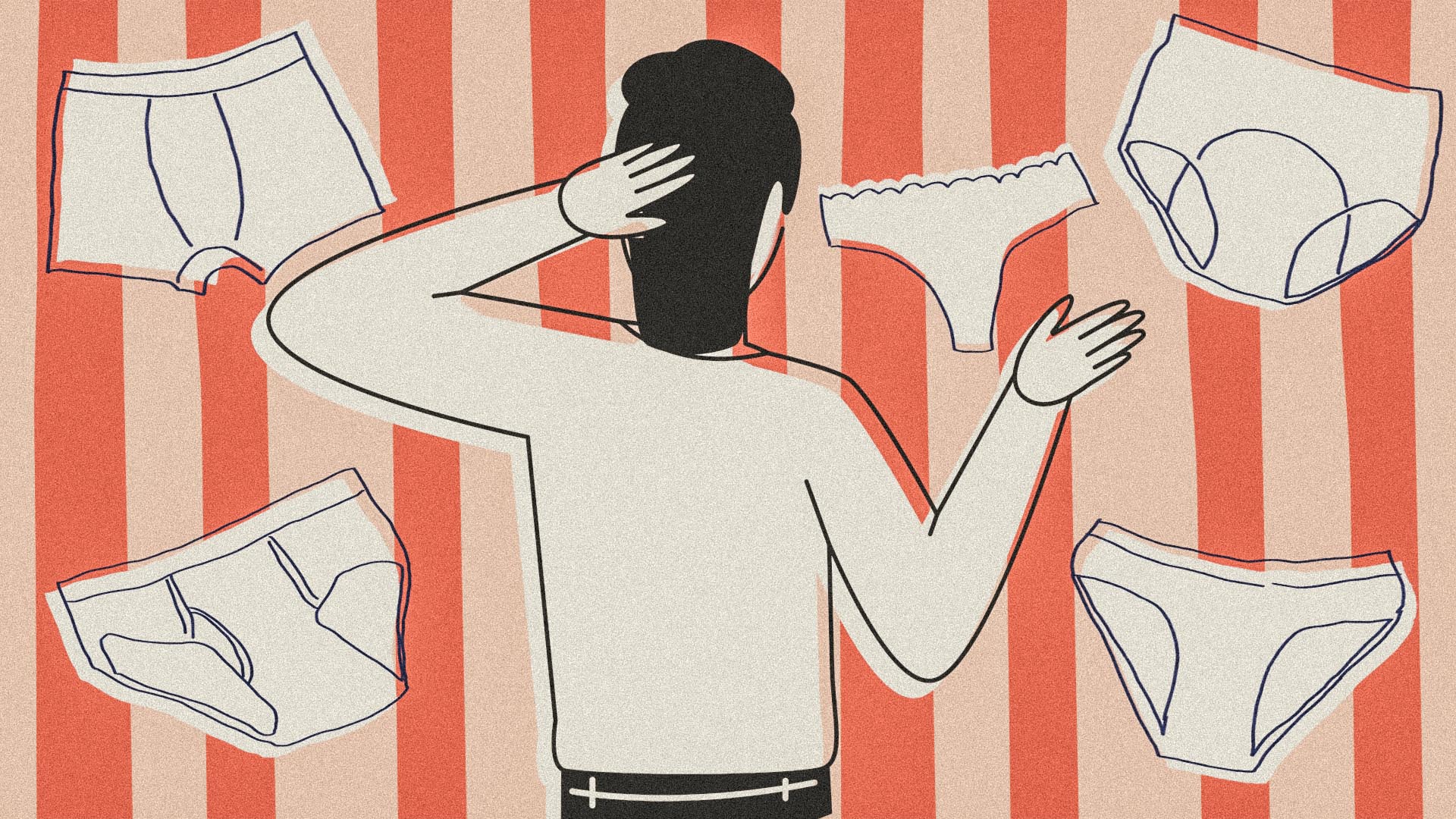
Person scratching their head surrounded by underwear

I’ve been a sex educator for more than 25 years, and in that time, I have gotten some pretty wild questions. 

Kids demand to know if I’ve had a threesome, for example, or heard of a “smash burger.” These aren’t really sex questions—they’re attempts to shock me, embarrass me, or get me to reveal something about my own sex life. 

Anonymous question boxes—like the one I dutifully decorated in stickers and sequins before teaching my very first human sexuality course—make it easy for students to say absolutely anything. But that’s the point of the box, because mixed in with queries about how old I was when I “lost my virginity,” I always find a few questions that demonstrate a true lack of knowledge. 

These questions are never stupid, but they do make me angry about how little sex education people get at home and at school. The questions that reveal a lack of understanding about basic anatomy are always most alarming. 

What is a vulva? Can you pee while wearing a tampon?

Here’s one that I’ve been asked more than once, both by young kids and grown adults: How can you pee when you’re wearing a tampon?

I remember when one young woman asked this in my Sociology of Sexuality college course, in New Jersey. I regularly taught that class from 2012 to 2020, and it wasn’t designed to cover the basics. As I explained to my students at the beginning of each semester, we weren’t going to talk about how the birth control pill works, but we would talk a lot about how the pill changed the world for women. 

Nonetheless, when the question came up—I think we were discussing the feminine hygiene industry and why vaginas don’t need to smell like wildflowers—I stopped the conversation and threw a slide up on the screen: It was a genitalia diagram. 

I explained that people with vulvas and vaginas have three holes. One goes to the urethra, which is the tube that brings urine (pee) from the bladder. One is the opening to the vagina, which is a canal that goes from the vulva to the cervix (the bottom part of the uterus). The vagina is made of muscles that can stretch open when a penis, sex toy, or tampon goes in—or when a baby comes out. Then there’s the anus, which is where feces (poop) come out. 

You can wear a tampon and pee because those are two different holes. A tampon sits right inside the vagina and absorbs menstrual blood coming from the uterus. It does not interfere with pee coming from your urethra. The string—which hangs down from a tampon so you can remove it—may get a little wet, but that’s no big deal.

The reason this story sticks with me years later is because the woman who asked the question was genuinely surprised when she learned that pee did not come from your vagina, and she was horrified that she’d made it more than two decades without understanding her own body. 

I’ve gotten many other questions about basic anatomy. I’ve been asked about the difference between the vulva and the vagina more times than I can count. The vagina is the inside, the vulva is everything on the outside. But most people use “vagina” for everything—that is if they don’t call it a “cookie,” a “hoo-ha,” a “vajayjay,” or simply “down there.”   

I’ve gotten questions about whether tampons can get lost in your body. (They can’t, because the vagina ends at the cervix.) I’ve been asked whether a penis can accidentally go into the uterus. (No. In certain positions, a long penis might hit the cervix, but there’s not a hole big enough for it to go in.) 

People have questions about penises too. 

They want to know if the prostate is in the penis. (No, it’s inside the body in front of the rectum.) They want to know if sperm and semen are the same thing. (No, semen is the fluid that comes out during ejaculation. It has sperm in it.) 

And they want to know if you can still ejaculate after you’ve had a vasectomy. (Yes, there won’t be any sperm in it, but semen will come out like normal.)

Why sex ed matters

It’s much harder to take care of our sexual health if we can’t tell our providers what burns, what hurts, or where the painful sore used to be. And it’s much harder to have good sex if we don’t understand our own anatomy enough to tell our partners where we want to be touched.

Several studies have documented the positive knock-on effects of comprehensive sex ed. 

One recent study, published in late 2025, found that people who understood genital anatomy and were comfortable using the correct terms were more confident in their ability to take care of their sexual health. They also reported more sexual satisfaction and less sexual dysfunction. Participants who had more knowledge about genitals were also found to be more respectful of their partners. 

Research shows they’re more likely to use contraception, to refuse unwanted sexual advances, and to experience pleasure. 

This doesn’t surprise me. Teaching people where the urethra is isn’t just about telling them where pee comes out of; it’s reminding them that this is another part of your body, like your elbow or your left nostril, that you should be comfortable with.  

We’re all taught the basics of how our lungs work, how our hearts pump blood, and how our stomachs and intestines digest our food. When our genitals and reproductive organs are left out of those lessons, we send the message that these body parts are shameful, and sex is not something we should talk about openly. 

This is exactly the opposite of what young people need in order to feel confident and enjoy their sex lives as adults.

There are no stupid questions. But not teaching people about their own bodies is stupid.

Source

Source link