


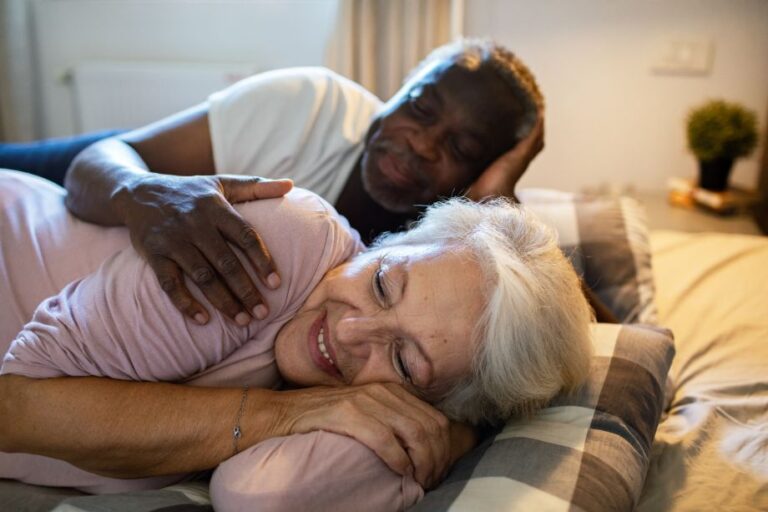
With more and more medical advancements, the aging population across the globe continues to grow. Beyond screening for cancer, cardiovascular issues, and hormonal imbalances, older adults’ sexual health and needs should be considered an essential aspect of health care.
Current social stigma surrounding their sexual activity may make it difficult for older adults to approach the topic with friends, partners, and their healthcare providers. Some older adults may struggle to believe that they are still capable of having sex after a certain age.
However, this is far from the truth. Sexual activity and intimate partnerships can actually increase well-being and decrease mortality rates in the aging population. It’s time to adjust the lens and focus on the important aspects of keeping an active sex life well into one’s later years.
Sex Is a Form of Physical Activity
Frequent sexual activity (1-2 times per month) can help improve circulation, heart rate variability, stamina, muscle elasticity, and bone density. Frequent sexual activity may also help decrease the risk of dangerous cardiovascular events (like heart attacks), some cancers, and mental health issues known to impact life expectancy (depression, anxiety, etc.).
Staying active is a common way medical professionals encourage older adults to stay happy and healthy. Exercise and physical activity can increase endorphins (the happy hormone), promote good blood circulation, and retain muscle strength.
Partaking in sexual activity is just one of many ways that older adults can support their physical health well into their retirement.
Endorphins Increase Overall Enjoyment of Life
One of the facets of well-being is the overall enjoyment of life. The release of endorphins and the increase in serotonin that happens during orgasm, or any form of physical activity, can play a role in improved mood and, consequently, enjoyment of life.
In addition to physical activity and the feeling of bliss upon orgasm, emotional closeness and non-sexual intimacy, such as handholding, kissing, and quality time, play an important role in mood regulation. These actions, even if it’s just a long walk on the beach or pillow talk after sexual activity, can help reduce stress and improve depression.
Stress and depression can hurt the longevity of one’s life, so it’s important to take care of oneself in body and mind. Whether or not that’s through a lot of sexual activity, or a lot of time spent together watching reruns of Jeopardy!, the activity should not feel like a burden.
Addressing Sexual Dysfunction and Psychological Issues in Older Adults May Help
Due to societal stigma, many older adults may struggle with unknown sexual dysfunction (SD). This may be due to erectile dysfunction (ED), vaginal atrophy or dryness related to genitourinary syndrome of menopause (GSM), or from something more psychological in nature.
It’s important to speak with a sexual health professional if sex becomes painful, if achieving and maintaining an erection becomes difficult, or if sex is simply not appealing anymore. Despite what popular culture may have everyone else believing, sex is important no matter the age. Sexual health professionals have the expertise to provide any medication or counseling needed to promote a thriving sexuality for everyone.
Key Takeaways
- Sexual activity in older adults is often stigmatized and ignored, leading to a lack of education and medical intervention that could prolong life expectancy.
- Sexual activity is physical activity, and can help improve cardiovascular systems, muscle health, and bone health.
- Orgasm and other aspects of intimacy (emotional closeness) are beneficial to mental health in older adults. Consider sex to be a preventative medicine against depression and a stress reliever.
- If an older adult is struggling with sexual dysfunction related to the body or the mind, it may be beneficial to speak with a sexual health professional – they are not there to judge.
Resources
Boyacıoğlu, N. E., Oflaz, F., Karaahmet, A. Y., Hodaeı, B. K., Afşin, Y., & Taşabat, S. E. (2023). Sexuality, quality of life and psychological well-being in older adults: A correlational study. European Journal of Obstetrics & Gynecology and Reproductive Biology: X, 17, 100177. https://doi.org/10.1016/j.eurox.2023.100177
Smith, L., Yang, L., Veronese, N., Soysal, P., Stubbs, B., & Jackson, S. E. (2019). Sexual activity is associated with greater enjoyment of life in older adults. Sexual Medicine, 7(1), 11–18. https://doi.org/10.1016/j.esxm.2018.11.001
Zhang, F., Yang, Z., Li, X., & Wang, A. (2023). Factors influencing the quality of sexual life in the older adults: A scoping review. International Journal of Nursing Sciences, 10(2), 167–173. https://doi.org/10.1016/j.ijnss.2023.03.006