Telehealth Is Not a Solution to the Abortion Crisis—It’s a Workaround: Opinion

July 28, 2026:

Telehealth Is Not a Solution to the Abortion Crisis—It’s a Workaround: Opinion

Reproductive justice demands that patients who want or need to end their pregnancy have a full range of care options.

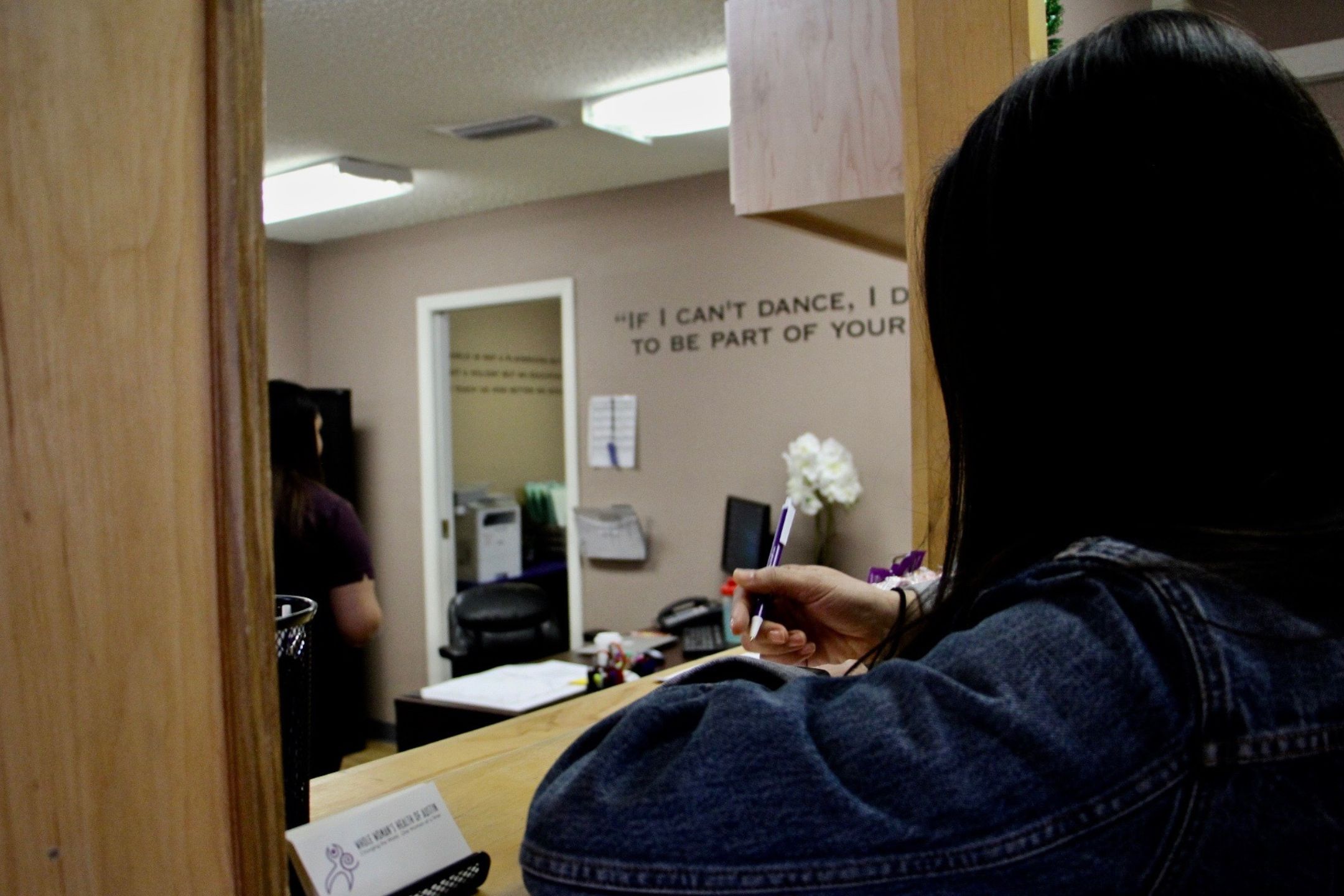
Image of a young woman signing into an abortion clinic.

When a Louisiana court briefly blocked the telehealth prescribing and remote dispensing of the abortion drug mifepristone in spring of 2026, the outcry and legal retort was swift. The Supreme Court ultimately blocked that ruling.

Protecting telehealth medication abortion has emerged as a rallying point for advocates, funders, and policymakers alike since the Supreme Court’s 2022 Dobbs v. Jackson Women’s Health Organization decision eliminated the constitutional right to abortion. 

The pitch has obvious appeal: No clinics, just a virtual request and pills by mail. Technology can deliver what politicians won’t. 

Research confirms that telehealth medication abortion is safe, effective, and acceptable to many who use it. But safe and effective is not the same as sufficient—and a reproductive justice framework demands we know the difference. In today’s abortion access crisis, telehealth care is a concession dressed as a solution.

Reproductive justice goes beyond reproductive rights

Reproductive justice, a framework developed by Black women in the 1990s, demands that everyone have the right to choose whether to have kids—or not—and raise them in safe and healthy communities. This framework does not ask whether the existing system can legally and logistically deliver care. It asks what care people need, want, and deserve—and whether they are getting it. 

The distinction matters. Reproductive rights advocates are concerned primarily with legal access. From this lens, we can celebrate telehealth as progress: The law may restrict clinics, but the pills can still arrive. 

But reproductive justice, which is rooted in self-determination and bodily autonomy, asks  harder questions: Is this the care the person wanted? Did they have access to a full range of options? 

When telehealth abortion care becomes the only choice, the answer to at least one—and potentially both—of those questions is no. As telehealth can only provide medication abortion, and some may prefer in-person care or procedural abortion. Abortion care preferences are seldom researched, but differences have been seen by race and gender identity, when examined. 

We are researchers at the Reproductive Equity Action Lab (REAL), where we work in partnership with community-based organizations, providers, clinic administrators, abortion funds, and others who facilitate abortion access to understand what people actually want from abortion care.

Our team is conducting community-involved research that centers the values, preferences, and priorities of people who have had or may need abortions. Using a nationally representative survey of more than 50,000 people (think of it like a reproductive health census) and a study on Black people’s abortion care preferences that used surveys and interviews, we aim to uncover what people want—not just what they can get. 

We also study the perspectives of policy makers, providers, clinic administrators, abortion funds, and practical support organizations to understand what it would take to implement person-centered care.

Our work is driven by a simple premise: improving abortion access for those who face the greatest barriers improves abortion access and experiences for everyone.

Still, even within any given racial, gender, or sociodemographic group, preferences are not uniform. An equitable system rooted in reproductive justice must account for this variation. 

Telehealth may not reach the people who need it most

Beyond preferences, geographic and legal realities sharply limit telehealth’s reach. 

About 40 percent of  U.S. states have total or restrictive abortion bans. In those places—where the abortion access crisis is most acute—telehealth may not be able to legally operate. Pills cannot legally be mailed. 

Eight states have expansive shield laws that protect telehealth abortion providers, meaning a provider in a state with legal abortion can prescribe medication abortion via telehealth to a patient in a state where abortion or telehealth abortion is banned or restricted. (Ten states have shield laws that protect providers who provide abortion care to patients in the same state).

As of December 2025, more than half of telehealth abortions were provided under shield laws. While providers have so far been able to withstand legal challenges brought against them, the threats are mounting. 

Eight states introduced bills in 2025 that could apply criminal or civil penalties to abortion funds and other organizations that help patients access abortion. A failed bill in South Carolina would have allowed imprisonment for up to 30 years for having an abortion or aiding in abortion care. 

Pregnancy criminalization in the U.S. is rising. In the first two years after Dobbs, at least 412 cases were initiated where pregnant people were charged  with crimes related to pregnancy, pregnancy loss, or birth.

Pros and cons of telehealth

To be clear, we support broad telehealth abortion access. In states where abortion remains legal, telehealth does meaningfully expand access for some: Research shows it is particularly valuable for rural patients, younger patients, and those experiencing food insecurity. These are real benefits. 

But telehealth requires reliable internet, a private physical space, a safe mailing address, and the capacity to manage a medical process, potentially without nearby clinical support. 

The people least likely to have these things are the same people already most burdened by abortion restrictions—that is, communities with limited geographic access to reproductive health care and those experiencing economic insecurity. Telehealth does not level this kind of structural inequality; it operates within it. 

Scholars have argued that addressing these structural inequities is a necessary step toward more equitable telehealth abortion. But reproductive justice demands equitable access to the full spectrum of abortion care—not just better delivery of one type. 

In any case, telehealth cannot serve all pregnant patients in today’s real-world timelines. 

Abortion restrictions are forcing people to remain pregnant for longer while they navigate legal and geographic barriers to care. As a result, many are pushed past the point at which telehealth abortion providers typically offer medication, commonly around 12 weeks of gestation. For patients whose access to care is most delayed by structural inequality, then, telehealth is likely not an option. 

The risk of calling a workaround a solution

The risk of elevating telehealth abortion care to “solution” status is that it distracts researchers, policymakers, funders, and health systems from realizing robust, person-centered abortion access. Telehealth is just one kind of care—a useful and important one—in an underresourced ecosystem. 

If telehealth is the answer, there is less pressure to restore clinic infrastructure, integrate abortion into primary care settings, protect and expand the abortion workforce, repeal bans, and ensure that people can access the full range of care they might want or need.

Reproductive justice has always demanded that we resist exactly this move: The substitution of what is convenient or sufficient for the luckiest swath of people, at the cost of what everyone else needs or wants. 

Centering medication abortion by telehealth as the workaround to meeting people’s preferences is not an abortion landscape rooted in reproductive justice. It is a constrained one.

As the philosopher Abraham Maslow once observed, if the only tool you have is a hammer, every problem looks like a nail. Telehealth is becoming our field’s hammer—a singular answer to a broad structural crisis. 

True reproductive justice means decriminalizing the full spectrum of abortion care and working to restore what’s been lost: reopening clinics, improving workforce development, protecting providers and patients, ensuring that Medicaid and insurance cover all kinds of abortion care—and, yes, offering telehealth, too. 

But in our work, restoring access is not the ceiling. The ceiling is what people seeking care can imagine, because they’re the ones we center in our research.

Source

Source link