


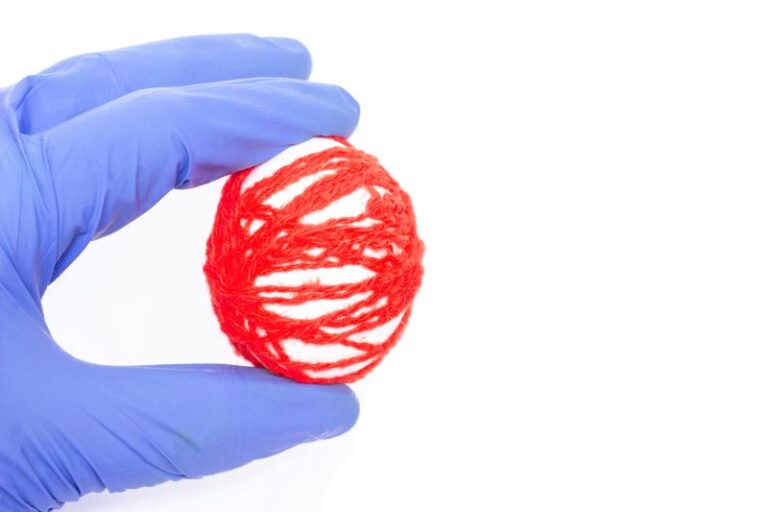
Varicoceles are considered a common disorder that happens when the veins in the scrotum become enlarged. While 15-20% of US males are affected, varicoceles are typically painless and often unnoticeable. If noticeable, they may present as swollen testicles, or produce dull pains or aches in the scrotum or groin. The enlarged veins may make the scrotum feel like a bag of worms.
While mostly harmless, there are a few adverse health effects that varicoceles may present. The main issue is with infertility, with varicoceles contributing to about 40% of all male infertility cases. Medical professionals believe this may be due to an increase in scrotal temperature from the excess blood in enlarged veins, which may lead to decreased sperm quality. Otherwise, there may be issues of “azoospermia,” where the seminal fluid (ejaculate) contains no sperm.
There are several theories as to how varicoceles form. It is assumed that they are congenital, meaning males are born with them. They may become more evident around puberty when the reproductive system begins to circulate more blood flow. Varicoceles in this stage can stunt the growth of the affected testicle, which in theory can affect testosterone levels. This may lead to male hypogonadism, which can reduce sex drive, decrease muscle mass, weaken bones, and cause depression. In very severe cases, varicoceles may cause testicular atrophy and sometimes complete testicular shut-down. Usually though, there are no adverse effects unless the varicoceles are severe.
In terms of sexual function, varicoceles have been linked to erectile dysfunction (ED) in young men and in men over 60. ED occurs when the penis cannot maintain an erection long enough for satisfactory sexual activity. This may be due to the decrease in testosterone influencing sex drive. There may also be adverse sexual function issues such as prostatitis, caused by pelvic congestion and prostatic inflammation as a result of varicoceles.
Potential Treatments
Because they’re generally harmless, common treatments for varicoceles are more centered around pain management, such as using ice packs or over-the-counter anti-inflammatory drugs like ibuprofen. It has also been suggested to wear tight underwear, spandex, or sports straps as a form of compression, which may help with any swelling. Because varicoceles are essentially like varicose veins located in the scrotum, this would work similarly to compression socks.
In certain cases, such as severe varicoceles affecting fertility or testosterone production, varicocelectomy may be performed. This involves a urologist cutting off affected veins and sealing the ends, which redirects blood flow to other healthy veins. Otherwise, a specialist may choose to perform an embolization, which creates a blockage of scar tissue in the affected veins, cutting off blood flow and redirecting to healthier veins. These procedures can help improve sperm counts, or semen quality, and may allow the affected testicle to return to its intended size.
Conclusion
Overall, varicoceles are not of huge concern and can be treated with basic pain management techniques. However, if they are causing severe chronic pain, infertility, or other more serious testicular problems, it’s important to contact a sexual health professional.
References:
Keller, J. J., Chen, Y.-K., & Lin, H.-C. (2012). Varicocele is associated with erectile dysfunction: A population-based case-control study. The Journal of Sexual Medicine, 9(7), 1745–1752. https://doi.org/10.1111/j.1743-6109.2012.02736.x
Leslie, S. W., Sajjad, H., & Siref, L. E. (2023, November 13). Varicocele. StatPearls [Internet]. https://www.ncbi.nlm.nih.gov/books/NBK448113
Lotti, F., Corona, G., Mancini, M., Biagini, C., Colpi, G. M., Innocenti, S. D., Filimberti, E., Gacci, M., Krausz, C., Sforza, A., Forti, G., Mannucci, E., & Maggi, M. (2009). The association between varicocele, premature ejaculation and prostatitis symptoms: Possible mechanisms. The Journal of Sexual Medicine, 6(10), 2878–2887. https://doi.org/10.1111/j.1743-6109.2009.01417.x
Mayo Foundation for Medical Education and Research. (2024, October 25). Varicocele. Mayo Clinic. https://www.mayoclinic.org/diseases-conditions/varicocele/diagnosis-treatment/drc-20378772
Varicocele. Cleveland Clinic. (2023, March 30). https://my.clevelandclinic.org/health/diseases/15239-varicocele