July 22, 2026:

Check out what’s clicking on FoxBusiness.com.
The Ryanair passenger who was partly pulled out of a Boeing 737 when a window was smashed during a flight earlier this month recounted his horrifying experience, saying he is lucky to be alive.
Ljubisa Karović, 61, was on a Ryanair flight operated by Malta Air from Thessaloniki, Greece, en route to Memmingen, Germany, on July 10 when debris believed to have come from the aircraft’s damaged engine struck and shattered a window shortly after departure.
The plane lost cabin pressure and was forced to make an emergency return to Thessaloniki. Ryanair CEO Michael O’Leary said on Monday that preliminary findings suggested the engine may have suffered “foreign-object damage,” although the cause remains under investigation.
Karović, a Serbian entrepreneur, told The Guardian that it is the moments before the “chaos, the catastrophe” that keep him awake at night.
RYANAIR CEO SAYS FOREIGN OBJECT MAY HAVE CAUSED GREECE WINDOW INCIDENT

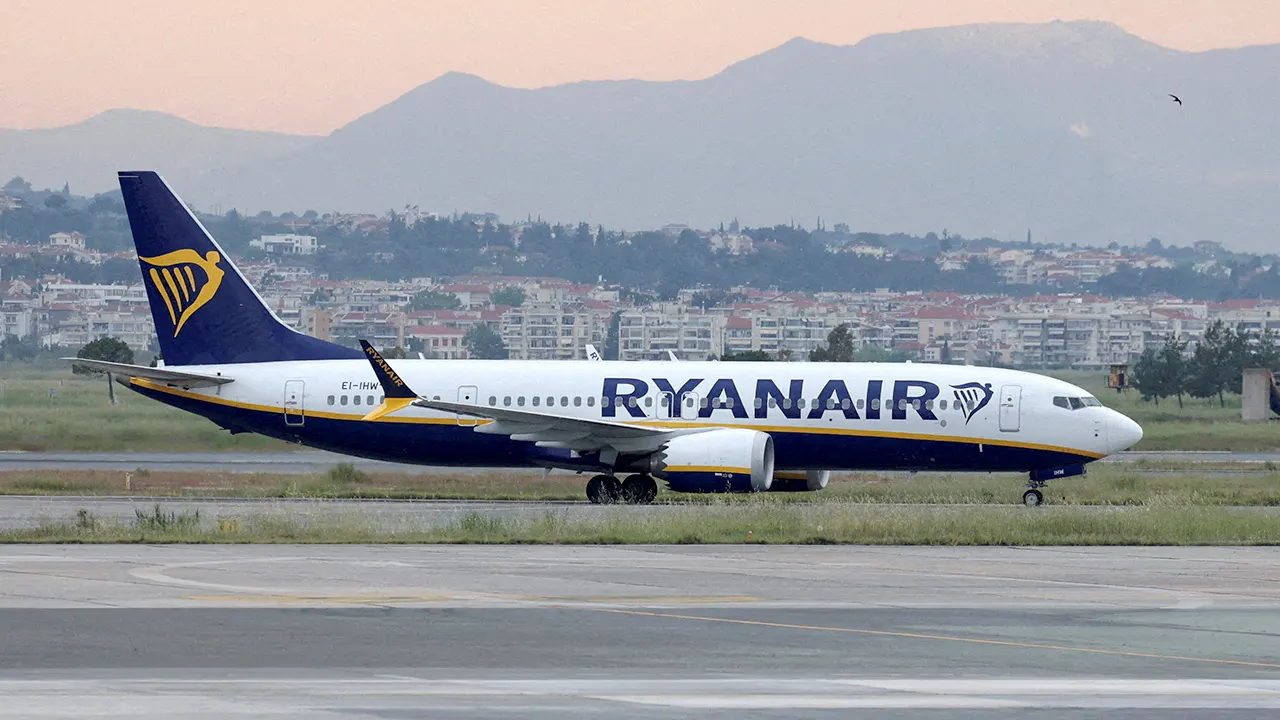
Ljubisa Karović, 61, was on a Ryanair flight operated by Malta Air from Thessaloniki, Greece, en route to Memmingen, Germany, when debris believed to have come from the aircraft’s damaged engine struck and shattered a window. (Reuters/Alexandros Avramidis/File Photo / Reuters Photos)
“The explosion is what I remember,” Karović told the outlet. “It’s the noise before the chaos, the noise that is always there when I close my eyes to sleep.”
“They tell me I fainted twice and again inside the plane and that my face was briefly swollen and deformed because of the pressure, the rush of air,” he continued.
Karović managed to survive the near-death experience after his wife and other passengers grabbed him and pull him back inside the aircraft.
His wife, Svetlana, was seated three rows back when she rushed over to grab her husband, who she said was “half in and out of the plane” for about two minutes.
“None of the cabin crew helped. It was the passengers,” she said. “One man, I think he was an Albanian, was incredible. He did all he could to bring him in and then tried to block the window, first with a bag that was immediately sucked out and then with a suitcase, which worked. We are eternally grateful to him.”
Ryanair disputed the suggestion that the crew failed to respond appropriately. The airline told The Guardian that during the depressurization and rapid descent, all passengers and crew were required to stay seated and put on oxygen masks, adding that the crew attended to Karović and arranged medical assistance once the aircraft descended to a safe altitude. Investigators have not yet publicly determined whether all required crew procedures were followed.

A broken window in the Ryanair aircraft following an emergency landing in Thessaloniki, Greece, July 10, 2026. (Despoina Papapavlou via REUTERS / Reuters Photos)
Karović was hospitalized after he suffered neck and shoulder injuries as well as friction burns. Doctors told Karović that his recovery will be slow and he must wear a neck brace for the next six weeks, at which point a determination will be made about whether surgery is necessary.
“I am lucky,” Karović said. “I don’t remember much and my head and neck still hurt, but I am still alive.”
Karović said his seatbelt may have saved him from being completely pulled through the window, although he did not rule out other factors.
“It could have been the seatbelt, the fact that I was still strapped in,” Karović said. “But maybe it is fate.”
“I believe in God and I thank him every day,” he added.
Karović’s lawyer, Vasilis Tsiaras, said the man is “alive by mistake.”
WHY A BLOWN-OUT PLANE WINDOW NEARLY SUCKED A PASSENGER OUTSIDE AT 16,000 FEET

The interior of the Ryanair aircraft after an emergency landing in Thessaloniki, Greece, July 10, 2026. (Despoina Papapavlou via REUTERS / Reuters Photos)
“Ljubisa dipped in and out of death,” Tsiaras said. “When the cabin lost pressure, he was hurled out of the window from his chest up and immediately lost consciousness. At 15,000 feet, he ended up with his head and right arm outside the aircraft as it moved at a speed of more than 600km/h [373 mph]. Imagine that!”
“He looked at death, that other world, and came back,” the lawyer added.
GET FOX BUSINESS ON THE GO BY CLICKING HERE
Flight records show the aircraft, which was delivered new to Ryanair in 2008, had been climbing past 15,000 feet about six minutes after takeoff before then descending to about 6,000 feet. The aircraft remained at the lower altitude for about 30 minutes to burn fuel before returning to Thessaloniki about an hour after departure, according to flight-tracking site Flightradar24.
The U.S. National Transportation Safety Board is leading the investigation after Greece’s Hellenic Air and Rail Safety Investigation Authority delegated the probe to the U.S. agency. Greek investigators are also participating.