


September 26, 2026:

Protocol School of Washington President Pamela Eyring explains why growing reliance on AI could weaken communication and relationship-building skills that remain critical to winning clients and closing deals.
As artificial intelligence becomes embedded in the workplace, companies may be overlooking another skill set that could increasingly separate successful employees from the pack: the ability to communicate, listen, disagree and build relationships with actual people.
Pamela Eyring, president of the Protocol School of Washington, told Fox Business that employers increasingly need workers who can use AI effectively without allowing their interpersonal skills to deteriorate.
According to Eyring, people need to focus on what she calls “power skills.”
“These are essential skills that we need as human beings in business,” she said.
TOP AI COMPANIES CALL FOR SAFETY MEASURES WHILE CRITICS WARN REGULATION COULD STIFLE INNOVATION

As artificial intelligence becomes more embedded in the workplace, Eyring warned that employees shouldn’t allow the technology to replace communication and relationship-building skills. (Napong Rattanaraktiya/Getty Images / Getty Images)
As a variety of AI platforms continue to expand, Eyring argued that the technology’s convenience makes it tempting for workers to turn to a chatbot over another person.
And while users may get instant gratification, quick answers and — importantly — less pushback than they might receive from a colleague, Eyring warned that convenience could come at a personal cost.
“It doesn’t dispute us. It’s so nice to us, it’s so good. ‘Oh, that’s a great idea, Pamela, let’s do that.’ And sometimes your ideas aren’t good. That’s why I’m afraid we’re gonna lose our people skills and, more importantly, our relationships,” she added.
AI EXPERT WARNS ‘MACHINE-SPEED’ CYBERTHREATS MAY REQUIRE FASTER DEFENSES THAN HUMAN-LED RESPONSES

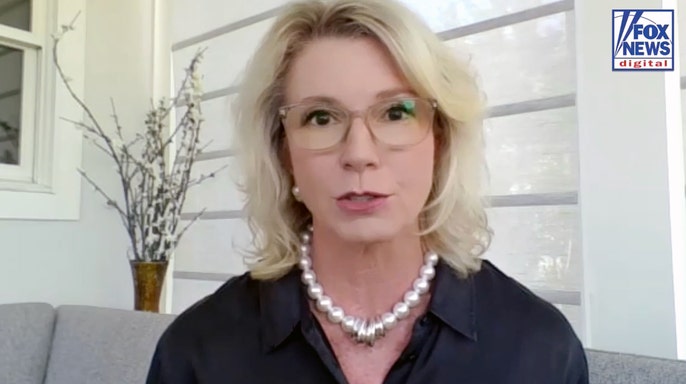
Protocol School of Washington President Pamela Eyring told FOX Business that workers need to maintain strong interpersonal skills as artificial intelligence becomes more prevalent in the workplace. (FOX Business)
Although many employers may expect their employees to be proficient with AI and other emerging technologies, that alone doesn’t prepare someone to present an idea, read a room, negotiate or develop a client relationship.
“They want you to be smart with AI, but they also want you to be able to close a billion, a multi-billion dollar deal,” Eyring said.
Eyring said technical expertise alone may not be enough when employees are expected to advise clients, build relationships and communicate the experience they’ve accumulated over their careers.
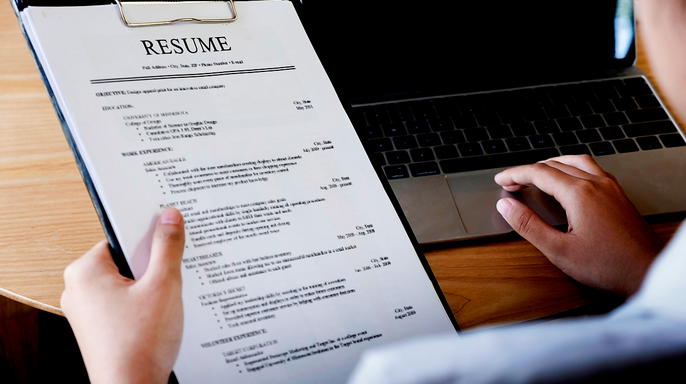
She said she and her clients have encountered job applicants who apparently relied too heavily on AI when preparing application materials.
“We laugh and tell stories about how, you know, the AI created a great resume, and it has still brackets, you know, ‘fill in the blank here,'” Eyring said.
GOOGLE PARTNERS WITH VETERANS GROUPS TO HELP 25,000 ENTER SKILLED TRADES CAREERS AMID WORKER SHORTAGE

Eyring warned that relying too heavily on AI could erode employees’ ability to communicate, listen, disagree and build relationships with other people. (Drazen Zigic/Getty Images)
The consequences of overreliance on AI aren’t limited to embarrassing job applications, she argued. Businesses themselves could pay a price if automation comes at the expense of human interaction.
Leaning too heavily on AI could also cost companies customers — and money.
When asked whether companies risk paying a financial price by automating aggressively while neglecting human skills, Eyring was blunt: “Yes, it’s dangerous.”
“They can’t go full steam ahead and not take into consideration the people,” she said. “If it is not balanced, they are going to lose clients and that’s where you lose money.”
Customers can become frustrated when they can’t reach a person or when the employee they eventually reach doesn’t understand their situation, Eyring said.
AUSTRALIAN PRIME MINISTER SAYS OPENAI AGENT ACCESSED GOVERNMENT HEALTH WEBSITE, RAISES ‘EXTREME CONCERN’

Eyring said some job applicants have apparently relied so heavily on AI-generated résumés that placeholder instructions were left in their application materials. (Jakkapant Turasen / Getty Images)
“They want real people,” she said.
“When you’re developing that AI strategy, you’ve got to look at where do we need to keep the people for that connection and continue to build our reputation and our brand,” she continued.
Eyring doesn’t blame AI alone for the erosion of workplace communication.
She said workplace culture had already become more casual before the COVID-19 pandemic, while remote work accelerated the shift by eliminating many informal “water cooler conversations” in which employees could test ideas with colleagues or receive casual coaching from supervisors.
Many supervisors also lost opportunities to physically work alongside employees and mentor them informally, she said.
AI, Eyring argued, has since introduced another challenge.
“I’m not sure where we’re at, but it’s not pretty,” she said.
ANTHROPIC CEO SAYS AI COULD CURE MOST MAJOR DISEASES WITHIN NEXT DECADE

Eyring said remote work reduced informal workplace interactions and mentoring opportunities before the rapid expansion of AI added another challenge. (Daniel Acker/Bloomberg via Getty Images / Getty Images)
While younger generations are sometimes blamed for lacking social skills, Eyring noted that younger workers often haven’t had the same opportunities as older generations to observe workplace behavior and learn through informal coaching.
Many are eager to learn, she said, pointing to her experience teaching professional skills to students preparing to enter the workforce.
Eyring said employers also bear responsibility, arguing that companies should clearly teach workplace expectations and professional norms during onboarding rather than assuming younger employees already know them.
Ultimately, Eyring said businesses don’t have to choose between embracing AI and maintaining the human relationships that help build trust with employees and customers.
GET FOX BUSINESS ON THE GO BY CLICKING HERE
“Don’t let artificial intelligence replace our social intelligence,” she said. “The best investment is in your people.”