WoW Midnight Eclipse Unveils Talebound: Action-RPG Roguelite Mode Built Inside WoW

September 14, 2026:

WoW Midnight Eclipse Unveils Talebound: Action-RPG Roguelite Mode Built Inside WoW
Wow. Midnight
Blizzard.com

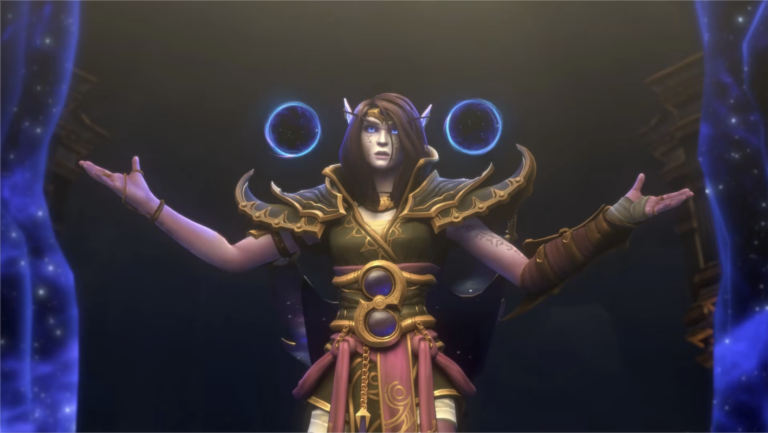
At BlizzCon 2026’s Opening Ceremony yesterday, Blizzard Entertainment revealed Patch 12.2: Eclipse — the final major content update for World of Warcraft: Midnight — and its headline surprise wasn’t a new zone or a climactic raid boss. It was Talebound: a fully standalone action-RPG roguelite mode built inside WoW with three purpose-built classes that do not exist anywhere else in the game. Eclipse also brings the long-awaited eight-boss Worldcore raid where players finally face Xal’atath directly, Midnight‘s first Legendary weapon, a sprawling underground zone, and a Season 3 competitive overhaul — but it is Talebound that marks the most structurally significant expansion of what WoW is in its 22-year history.

For WoW players who have drifted away because the MMORPG endgame — raid tiers, Mythic+ seasons, weekly gear caps — doesn’t fit their available time, Talebound offers a fundamentally different proposition: short-session roguelite runs through macabre story-themed levels with no group finder required, no gear score gatekeeping, and no seasonal calendar to keep pace with. That it exists inside a subscription MMORPG is the news.

Blizzard confirmed Talebound at BlizzCon 2026 as the most complete standalone play mode the game has ever offered, with its own dedicated classes, narrative structure, persistent meta-progression layer, and multiple content chapters at launch.

Talebound: WoW’s First Action-RPG Roguelite Mode

Talebound launches alongside the Echoes of the Worldcore content update and uses a framing device that immediately signals its tonal departure from standard WoW: a mysterious Storyteller whose favorite stories lean toward the macabre pulls players into self-contained tales with enemies and bosses, each set in a distinct themed level packed with puzzles, treasure, relics, and rewards. Players choose their run as a solo hero or bring friends along.

Between each run, players return to Quillgrave — an unsettling village hub — and work with four resident characters (the Arcanist, Scribe, Outfitter, and Antiquarian) to improve potions, talents, stats, and passives for the next attempt. This is the roguelite loop: runs end, the hub persists, and each return makes the next attempt stronger. Four stories are available at Talebound launch: Darkhaven, Greenthistle Wood, Greywake’s Expedition, and Grove of the Night Court, each with distinct bosses, settings, and lore.

What makes Talebound mechanically distinct from every piece of WoW content before it is the class architecture. Rather than entering the mode on your main character — with all the gear, artifact levels, and seasonal currencies that implies — Talebound uses three purpose-built classes exclusive to this mode:

  • Slayer — martial combat with a sword and gun, built for players who want a monster-hunter fantasy
  • Inquisitor — zeal-powered holy fire that burns through enemies with conviction
  • Witch — a spell-slinging class commanding lightning, poison, spiders, moonlight, thorns, and ravens

All three classes share a standardized movement architecture — double jumping, dodging, and guarding — that makes positioning a core element of each run. This represents a fundamental departure from WoW’s traditional global-cooldown combat loop, where mobility is class-specific and combat revolves around managing ability rotations rather than real-time spatial decision-making. Talebound plays like an action RPG that happens to be inside WoW, not like a WoW dungeon that happens to use some action-game controls.

Blizzard is targeting an early PTR preview for Talebound in October, ahead of the full Eclipse release.

What Does This Mean for WoW Players Who Aren’t Raiding?

The significance of Talebound isn’t just that it’s a new mode. It’s that Blizzard is structurally acknowledging that a portion of WoW’s audience — current and lapsed subscribers — wants something the MMORPG loop has never delivered well: short, self-contained sessions with a clear beginning and end, no dependency on organized groups, and a style of combat that rewards moment-to-moment skill rather than months of character investment.

Plunderstorm — WoW’s 2024 battle-royale side mode — showed Blizzard was willing to experiment with entirely different game modes inside the WoW client. Talebound goes further: it has a narrative spine (the Storyteller), a persistent meta-progression layer (Quillgrave upgrades), multiple content chapters at launch, and a dedicated class roster. It is the most complete standalone play mode WoW has ever offered.

Whether Talebound retains players who might otherwise leave for Path of Exile 2 or Diablo IV is a question the October PTR will begin to answer.

Xal’atath’s Endgame: The Worldcore Raid

The centerpiece of Eclipse’s MMORPG endgame is the Worldcore raid with eight bosses, with Xal’atath herself at the end of the encounter. Game Director Ion Hazzikostas confirmed the reveal during the BlizzCon Opening Ceremony. The raid takes heroes deeper beneath Azeroth than any previous content, past Titan vaults and through the forces of the Devouring Host, to the Worldsoul itself where Xal’atath has nearly achieved her goal.

The raid is the payoff of a story arc that has run across The War Within and all of Midnight — the culmination of Xal’atath’s scheming that players have tracked since she first emerged as a credible threat to Azeroth’s existence. Eclipse is explicitly framed as Midnight’s finale per Blizzard’s own language, with the showdown in the Worldcore setting the stage for The Last Titan.

A standalone Lair encounter also accompanies the raid: Noctinaxx, an enormous azerite bat found in its own Lair called The Gearhold, available at World, Normal, Heroic, and Flexible Mythic difficulties.

Midnight’s First Legendary: Midnight’s Edge

For players who clear the Worldcore raid, Eclipse delivers the first Legendary item of the entire Worldsoul Saga: Midnight’s Edge, a caster dagger. Blizzard’s panel noted pointedly that it is not the Blade of the Black Empire — pre-empting the fan theory that has circulated since Xal’atath’s expanded role was first teased. Clearing the raid is one of several unlock requirements for the weapon.

Into the Mantle Vault: Eclipse’s New Underground Zone

Eclipse introduces the Mantle Vault as its new outdoor zone — a region hidden by the Titans eons ago that lies deeper beneath Azeroth than any previously accessible area. Players will venture through it alongside the Thraegar, an ancient race of crystalline, dwarf-like creatures who serve as the zone’s key allied faction against the Devouring Host.

The zone’s ecology is built around stone and Azerite — stone worms, crystalline elementals — and features a new antagonist faction, the Deepskar Empire: a coalition of subterranean foes including kobolds, troggs, drogbar, and their niffen leaders, who are hostile to surface-world intruders.

A new three-boss dungeon, Thraegar’s Stand, also arrives with Eclipse and enters the Season 3 Mythic+ rotation. Its boss roster features excavation foremen Cragcleaver and Foreman Sullk, an Azerite elemental named Monokk, and a Titan construct called Stenvarg the Inevitable.

Season 3 Competitive Changes

Season 3 launches alongside Eclipse and brings a restructured Mythic+ dungeon pool: the updated legacy dungeons The Underrot, Iron Docks, Sanguine Depths, The Stonecore, and Uldaman: Legacy of Tyr, plus returning Midnight dungeons Magisters’ Terrace and Maisara Cavern, and the new Thraegar’s Stand.

The Season 3 rewards structure introduces an additional tier for the top 5% of Mythic+ players. More significantly, eligibility for both the top 1% and top 5% rewards will now be calculated within your specialization — not an overall cross-class ranking. A Protection Warrior’s standing will be measured against other Protection Warriors, not against Restoration Druids and Frost Mages. For dedicated spec mains who have historically found high-end cosmetic rewards harder to reach in open-class competition, this change directly expands access.

Delves, Housing, and Paladin Race Expansion

Delves in Season 3 deepen alongside new companion Valeera Sanguinar, whose storyline continues with an increased level cap and new Curios. A new Delve Nemesis, Astalor Bloodsworn, joins the roster, adding optional challenges and fresh variations to existing Delves.

Player Housing receives meaningful updates in Eclipse, including a Showcase mode where players can browse and visit featured community homes, submit their own builds for consideration, and earn exclusive decor rewards. Mannequins allow players to display gear and weapon appearances inside their homes. Interface improvements add copy-paste and multi-select support for decorating workflows.

On the race side, Forsaken, Night Elf, and Troll characters will gain the ability to become Paladins in Eclipse — an expansion that has been one of the most requested character combination changes in WoW’s recent history.

Looking ahead to content update 12.2.5, Blizzard confirmed that players will be able to transmog gear across all armor types without restriction — cloth, leather, mail, and plate becoming interchangeable for cosmetic purposes. Blizzard also confirmed a Wrath of the Lich King Remix on the horizon, giving players a chance to return to Northrend in the popular limited-time event format.

What WoW Looks Like After Eclipse

Patch 12.2: Eclipse does not yet have a confirmed release date. The October PTR window for Talebound’s preview provides a partial anchor; the full patch is expected to land in the months following. The Last Titan, the third and final chapter of the Worldsoul Saga, is targeting a 2027 release, with Blizzard indicating more information will arrive after Midnight: Eclipse completes its story.

What Eclipse signals clearly is the direction Blizzard is taking WoW’s next year: a climactic narrative payoff (Xal’atath and the Worldsoul), an entirely new mode designed to recapture players who don’t engage with the MMORPG endgame (Talebound), and a wave of quality-of-life changes (transmog freedom, new Paladin races, housing Showcase) that reward long-time players for staying through the Worldsoul Saga’s three-expansion arc. Whether The Last Titan lives up to the weight of that closure is a story for 2027. For now, Eclipse is how Midnight earns its ending.


Frequently Asked Questions

What is Talebound in World of Warcraft?

Talebound is a new standalone action-RPG roguelite game mode launching with Eclipse (Patch 12.2) inside World of Warcraft: Midnight. Players are pulled into macabre tales by a mysterious Storyteller, choose from three purpose-built classes (Slayer, Inquisitor, or Witch) that do not exist in standard WoW, run through themed story levels with bosses and puzzles, then return between runs to Quillgrave — an unsettling village hub — to upgrade potions, talents, stats, and passives for their next attempt. Four stories are available at launch: Darkhaven, Greenthistle Wood, Greywake’s Expedition, and Grove of the Night Court. A PTR preview is expected in October.

When does WoW Patch 12.2: Eclipse come out?

Blizzard has not announced a specific release date for Patch 12.2: Eclipse as of BlizzCon 2026. An early PTR preview for the Talebound mode is expected in October 2026, which typically precedes a patch’s full release by several weeks. The Last Titan, the next and final expansion, is targeting a 2027 release, meaning Eclipse needs to launch and complete its story cycle before then.

What classes are available in Talebound?

Talebound launches with three classes: the Slayer (sword and gun, martial-style monster hunting), the Inquisitor (zeal-powered holy fire), and the Witch (lightning, poison, spiders, moonlight, thorns, and ravens). All three share the same core movement mechanics — double jumping, dodging, and guarding — which makes Talebound play as a real-time action game rather than the traditional rotation-based combat of standard WoW. These classes exist only inside Talebound and are separate from the main WoW class roster.

What races can be Paladins in WoW Eclipse?

Eclipse adds the Forsaken, Night Elf, and Troll as playable Paladin races in standard WoW — expanding the class beyond its historically limited race availability. Additionally, content update 12.2.5 (arriving after Eclipse) will allow players to transmog gear across all four armor types (cloth, leather, mail, plate) without restriction, dramatically expanding cosmetic options for every class.

Source link