HomeAuto WHO Study: 1 in 4 Teens Worldwide Had Zero Active Days Last Week — and Nothing Has Changed in 15 Years
WHO Study: 1 in 4 Teens Worldwide Had Zero Active Days Last Week — and Nothing Has Changed in 15 Years
November 5, 2026:
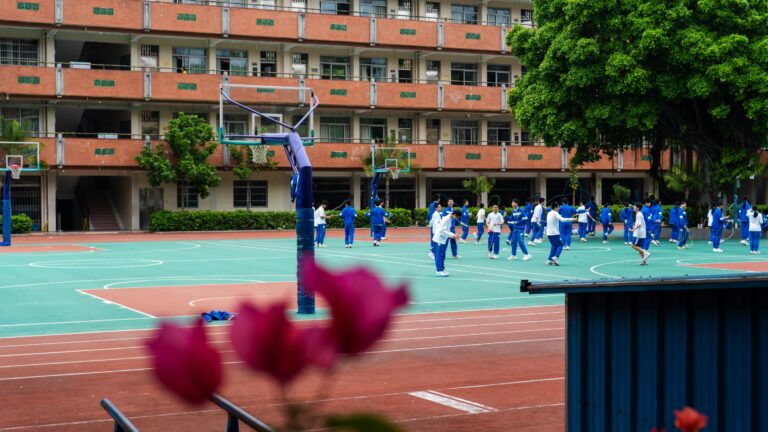
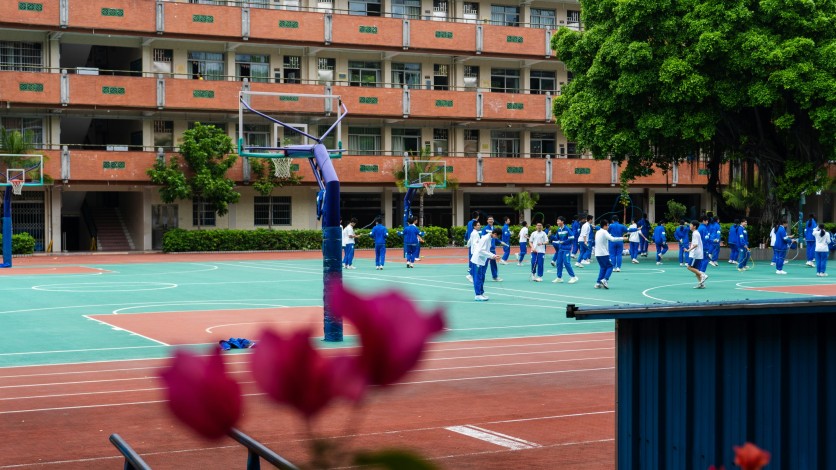
Diego Mattevi/Unsplash.com
One in four adolescents on the planet — roughly 240 million young people — went the entire past week without a single hour of physical activity. And they did the same the week before, and the week before that. A landmark WHO news release published yesterday by the World Health Organization and The Lancet Global Health has put a precise number on a crisis that researchers have watched build, essentially unimpeded, for a decade and a half.
The report, titled A Generation Missing Out: Global Trends in Adolescent Physical Activity 2010–2025, is the most comprehensive picture of adolescent physical activity ever assembled: 389 population-based surveys, 140 countries and territories, more than 3.2 million adolescents aged 11 to 17. Its central finding is not new — teenagers have always struggled to meet activity guidelines — but its longitudinal scope makes the conclusion inescapable: despite more than a decade of public health campaigns, awareness initiatives, and voluntary corporate pledges, the needle has not moved.
The implication WHO draws from this data is pointed. The bottleneck is not motivation. It is infrastructure.
The Numbers
Only 14% of the adolescents surveyed reported being physically active for at least one hour on all seven days of the week. The other 86% fell short of the WHO minimum. On average, adolescents worldwide reported being active on just 2.7 days a week — roughly three afternoons out of seven.
The study introduces a new metric that sharpens the picture further: “active days per week,” rather than the binary sufficient/insufficient threshold used in earlier research. Under that lens, approximately 240 million adolescents aged 11 to 17 reported zero active days in the previous week — none. Not one hour. Not one walk to school.
No country, the report states, is currently on track to meet the WHO’s 2030 inactivity target. Without accelerated action, the report projects that adolescent inactivity will remain largely unchanged through the rest of the decade.
For context: the WHO currently recommends that children and adolescents aged 5 to 17 get at least 60 minutes of moderate-to-vigorous physical activity every day. According to updated WHO guidelines reportedly issued in March 2026 — the first major revision since 2020 — that threshold has been raised to 90 minutes per day for the same age group, based on a growing body of evidence for a dose-response relationship between activity volume and health outcomes, including a sharp rise in childhood obesity since 1990. The 2026 study’s core dataset was collected against the previous 60-minute standard; the new threshold, if fully applied, would raise the share of “insufficient” adolescents further still.
Why This Study Is Different From the Last One
This is not the first time WHO researchers have published a global reckoning on adolescent inactivity. A 2020 study in The Lancet Child & Adolescent Health, drawing on 298 surveys across 146 countries and 1.6 million participants, found that more than 80% of adolescents worldwide were insufficiently active.
The 2026 study represents a methodological step forward. It more than doubles the participant sample (3.2 million vs. 1.6 million), extends the data timeline by nearly a decade (through 2025 vs. through 2016), and shifts the analytical frame from a binary threshold to a continuous measure of active days per week. That shift is scientifically meaningful: it captures degree of inactivity, not just whether someone clears a bar. The 240 million “zero active days” figure is not derivable from the earlier study’s methodology.
The finding that 15 years of data show no measurable improvement is itself a contribution. The 2020 paper could not make that claim with confidence. The 2026 paper can.
“The Answer Is Not to Tell Adolescents to Try Harder”
The report’s most pointed message is directed not at teenagers themselves, but at the systems they inhabit.
“For 15 years, the world has made almost no progress in getting young people moving, and girls are being left furthest behind,” said WHO Director-General Dr. Tedros Adhanom Ghebreyesus. “The answer is not to tell adolescents to try harder. It is to build schools, streets and communities where moving, playing and being active is safe, easy and normal.”
That framing represents a deliberate shift in public health emphasis. For much of the past decade, inactivity campaigns have centered on behavioral nudges — messaging, apps, school fitness challenges. The 2026 report treats those as insufficient, and its policy prescription reflects that verdict: multi-sectoral investment in physical environments, transportation networks, and school infrastructure.
“Physical activity is one of the most effective ways of preventing stroke, cardiovascular disease, or other NCDs,” said Dr. Etienne Krug, Director at WHO’s Department of Health Determinants, Promotion and Prevention, “but it also contributes to better mental health and well-being, supports healthy growth and development, and helps young people to learn, connect, and thrive.”
Physical inactivity is not merely a lifestyle concern. The WHO links it directly to cardiovascular disease, type 2 diabetes, and certain cancers. Inactive adolescents are, the evidence shows, substantially more likely to become inactive adults — compounding lifetime disease risk at precisely the window when peak bone density, cardiovascular fitness, and metabolic baselines are being set. If current inactivity levels persist globally, the WHO estimates more than 500 million new non-communicable disease and mental illness cases will occur worldwide between 2020 and 2030, with treatment costs exceeding $300 billion.
The Gender Gap: Persistent and Structural
One of the study’s most consistent findings is a gender disparity that runs in the same direction in almost every country on Earth.
Some 28% of girls reported no active days in the past week, compared with 22% of boys. At the other end, only 11% of girls reported being physically active every day, versus 17% of boys. Girls were less active than boys in nearly every country and every WHO region in the dataset — not in a few countries, not in certain regions, but essentially everywhere.
Dr. Fiona Bull, WHO’s head of Physical Activity Promotion, described the causes as multilayered: “Some of the reasons are the lack of visibility of role models, the lack of female coaches when we’re talking about more formal sports. But actually, at the community level, it can get down to simply it being not expected, even culturally inappropriate.”
Bull noted that religious and cultural norms, family dynamics, safety concerns, and preferences around activities all shape whether girls are introduced to, and supported in sustaining, physical activity through adolescence. She highlighted dance as an activity where girls show strong preference and engagement — suggesting that expanding access to dance, rather than defaulting to male-coded sport structures, represents a concrete, evidence-based policy opportunity.
A World Divided: Regional Patterns
The global aggregate conceals enormous variation. The study’s country-level data reveals a bifurcated picture, with income level as a powerful predictor of youth activity.
Adolescents in wealthier regions — Central and Eastern Europe, East Asia and the Pacific, and high-income Western nations — averaged approximately four active days per week, with roughly 7% to 8% reporting no active days at all. By contrast, adolescents in lower- and middle-income regions of Sub-Saharan Africa, Latin America, and the Middle East averaged closer to two active days per week, with some countries seeing more than 40% of teens reporting zero active days.
Dr. Leanne Riley, unit head of surveillance, monitoring and reporting at WHO’s NCD division, explained that in many low- and middle-income settings, the data shows a high prevalence of zero active days — whereas high-income Western nations, Central and Eastern Europe, Central Asia, East Asia, and the Pacific show more favorable patterns.
At the country level, contrasts were striking: while around 40% of adolescents in countries such as Namibia, Nepal, and the Philippines reportedly had no active days, more than 30% of youth in Bangladesh and Serbia reportedly engaged in daily physical activity. (Note: country-level figures are as reported in the draft article and attributed to the original Lancet paper; independent corroboration pending against the full study text.)
The regional patterns matter for policy design. High-income countries face the structural challenges of car-centric urban planning and screen-based lifestyles. Low- and middle-income settings often face the more fundamental barrier of safe physical space — fields, sidewalks, public parks — that do not yet exist.
Infrastructure as Medicine: What the Policy Prescription Actually Requires
The 2026 study positions the physical activity crisis as a built-environment problem first, and a behavioral problem second. That framing has specific empirical grounding.
Research on walkability consistently shows that a 5% improvement in neighborhood walkability corresponds to a 32% increase in walking and cycling and a 0.23-point drop in BMI. The design of streets, the existence of safe cycling routes, the presence or absence of sidewalks and public parks — these variables shape whether physical activity is possible, not just preferable. Adolescents who live in car-dependent neighborhoods with no safe walking routes to school are not making a choice when they don’t walk; they are navigating an environment that has already made the choice for them.
“There is no single explanation for the lack of global progress,” WHO stated. “Physical activity is shaped by where adolescents live, learn, travel and spend their free time. Transport patterns, access to safe public spaces, opportunities for safe walking and cycling, school environments, affordability, social norms and increasingly screen-based lifestyles can all influence adolescents’ opportunities to be active.”
Dr. Riley articulated the vision: “It will look like more communities with safe walking and cycling networks, connected networks, taking us to the places we go to daily, from home to school to community to friends to shops. It will require the public transport systems to enable more walking and cycling.”
The report explicitly calls for multi-sectoral policy action spanning education, urban planning, road safety, sport, and health — a recognition that no single ministry or agency controls all the levers.
15 Years of Campaigns: A Natural Experiment in What Doesn’t Work
The 2026 study’s 15-year longitudinal view is not only a measurement of a problem. It is, in effect, a natural experiment in the limits of soft intervention.
Over the past decade and a half, governments worldwide have issued guidelines, run awareness campaigns, funded school fitness programs, and enlisted corporate partners. The data shows that none of this, in aggregate, produced measurable population-level improvement in adolescent physical activity. That is a finding with direct policy implications: the existing toolkit — messaging, voluntary targets, behavioral nudges — appears insufficient when deployed without parallel investment in the physical environments where adolescents actually live.
Researchers from earlier studies have noted similar patterns. Prof. Jo Salmon of Deakin University, commenting on a 2019 analysis of Australian youth activity, observed that over a decade of government spending on youth sport “made very little difference to overall physical activity levels.” Associate Professor Carol Maher of the University of South Australia pointed specifically to safer cycling routes and reduced car-centric infrastructure as the structural interventions with the strongest evidence base.
The convergence of three structural trends — rising screen time (documented from roughly 7 to more than 8 hours per day for teens between 2007 and 2016), declining free play (children get approximately 8 fewer hours of unstructured play per week than a generation ago), and car-centric urban design that passivizes daily travel — means the problem is self-reinforcing in a way that behavioral campaigns alone cannot address. Each trend amplifies the others.
Industry Responds — With Commitments That Will Need to Outlast the Headlines
In direct response to the WHO report’s publication, approximately 84 sporting goods companies and federations signed an open letter coordinated by the WFSGI, the World Federation of the Sporting Goods Industry, pledging to strengthen efforts to get more young people moving.
Confirmed signatories include major brands: Adidas, Amer Sports, Anta, ASICS, Decathlon, Li-Ning, New Balance, Nike, On, Pentland, Puma, Shimano, Tecnica, Under Armour, and Yonex. The companies stated their commitment could mean “making products more accessible, investing in participation programmes, supporting schools and communities, rethinking how we engage with young people, or using innovation to remove barriers to activity.”
WFSGI CEO Emma Zwiebler articulated the industry’s position: “Our biggest competitor is inactivity. Our greatest opportunity is participation.”
The industry response is notable as a signal of corporate acknowledgment. Its actual impact will depend on whether the pledged actions translate into measurable participation programs with accountability mechanisms — and whether they extend beyond markets where these companies already have distribution and consumer relationships to the low- and middle-income settings where the inactivity burden is steepest.
Frequently Asked Questions
What exactly did the new WHO study measure?
The study measured “active days per week” — the number of days in the previous week on which an adolescent aged 11 to 17 engaged in at least 60 minutes of moderate-to-vigorous physical activity. This is a more granular measure than the binary “sufficient/insufficient” threshold used in earlier global studies. The dataset covered 389 surveys from 140 countries, involving more than 3.2 million participants, with data through 2025.
How does this differ from the 2020 Lancet study on adolescent inactivity?
The 2020 study covered 298 surveys, 146 countries, and 1.6 million participants, with data running through 2016, and found that more than 80% of adolescents were insufficiently active. The 2026 study more than doubles the participant sample, extends coverage nearly a decade further, introduces the “active days” metric, and can now confirm — with a 15-year trend line — that activity levels have not improved since measurement began at scale.
Why are girls less active than boys almost everywhere?
WHO researchers identify several interlocking causes: absence of female role models in sport, scarcity of female coaches, cultural and religious norms that make girls’ physical activity “not expected” or “culturally inappropriate” in some settings, safety concerns about public space, and activity formats that skew toward male-coded sports. Girls globally show stronger preference for activities like dance, which are underrepresented in physical education curricula and community sport investment.
What are the health consequences of adolescent inactivity?
Physical inactivity in adolescence is linked to elevated lifetime risk of cardiovascular disease, stroke, type 2 diabetes, and certain cancers. Inactive adolescents also miss critical windows for building peak bone density and cardiovascular fitness — baselines set during the teen years that influence health across decades. There are also mental health consequences: physical activity supports cognitive development, reduces anxiety and depression symptoms, and promotes the social bonding that comes from sport and play. Inactive adolescents are significantly more likely to become inactive adults.
What does the WHO actually want governments to do?
The report calls for multi-sectoral action across education, urban planning, road safety, sport, and public health. Specific infrastructure priorities include: safe pedestrian and cycling routes connecting homes, schools, and community spaces; public transport that enables active last-mile travel; school environments designed around movement; and community spaces that are affordable, accessible, and safe for girls specifically. The report explicitly frames this as an infrastructure investment question, not a public messaging question.
Is the WHO’s 2030 inactivity target still achievable?
According to the 2026 study, no country is currently on track. The 2030 target — a 15% relative reduction in adolescent physical inactivity — would require a significant acceleration of structural investment and policy change beginning now. The study’s projection, absent such acceleration, is that adolescent inactivity will remain largely unchanged through the rest of the decade.