HomeAuto Waymo Ojai Now Open to All Riders: Its Zeekr Chassis Faces Same Geely Ban That Expelled Polestar
Waymo Ojai Now Open to All Riders: Its Zeekr Chassis Faces Same Geely Ban That Expelled Polestar
August 21, 2026:
Zeekrlife.com
Waymo dropped the waitlist for its Ojai robotaxi on Wednesday, making the Chinese-built minivan commercially available to any rider in Los Angeles, Phoenix, and San Francisco — a milestone that lands as a bipartisan Senate bill, cleared through committee without a dissenting vote last month, advances toward a vote that could make the Ojai’s chassis illegal to import under the Connected Vehicle Security Act.
What riders are actually stepping into is a vehicle whose body, battery, and electric drivetrain were built in Ningbo, China, by Zeekr — a brand owned by Geely Holding Group, the same Chinese automotive conglomerate whose Polestar subsidiary was banned from U.S. sales in June under the same national security framework now being debated in Congress. Waymo argues that its arrangement is fundamentally different from Polestar’s. The government has not said so publicly.
What the Ojai Is, and What Riders Are Hailing
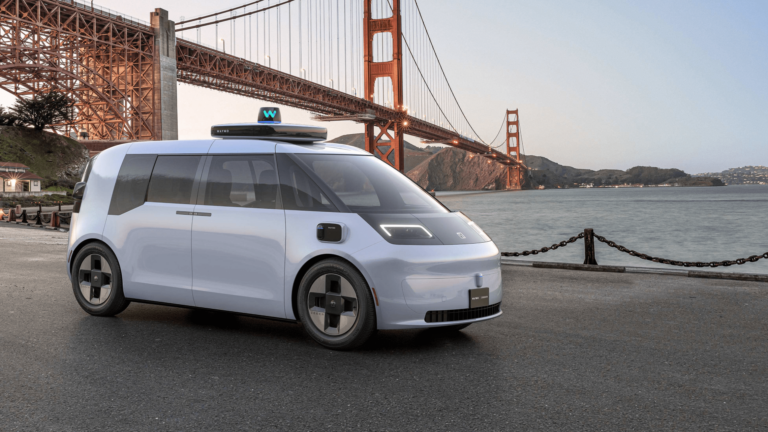
The Ojai (pronounced “oh-hi”) is a boxy, van-shaped electric vehicle that looks nothing like the Jaguar I-Pace SUVs that have been Waymo’s flagship in San Francisco and Los Angeles. It is Waymo’s first purpose-built robotaxi — not a retrofitted consumer vehicle but a vehicle designed from the ground up for commercial driverless ride-hailing. The interior trades automotive styling for practical utility: a flat floor, low step-in height, dual B-pillarless sliding doors that open like elevator doors, and three LED touchscreens where riders can control temperature, audio, and ride preferences. Waymo describes the cabin as a “modern living room on wheels,” and at 1,755 mm (69.1 inches) tall, it is substantially roomier than the I-Pace.
The technology inside is Waymo’s: a sixth-generation autonomous driving system with 13 cameras, four LiDAR units, six radar sensors, and external audio receivers (EARs). That represents a 42% reduction in sensor count compared to the fifth-generation hardware that runs Waymo’s I-Pace fleet, achieved through custom Waymo-designed silicon chips that push more processing into hardware and away from physical sensors. Google’s Gemini AI serves as an in-car assistant for riders.
The vehicle underneath that technology is a Zeekr CM1e — Zeekr’s internal model designation for the platform it built for Waymo, derived from the SEA-M (Sustainable Experience Architecture, Mobile variant) platform also used in the consumer Zeekr Mix van sold in China. It runs an 800V electrical architecture, a 93 kWh lithium-ion battery, and a single 200 kW (268 hp) rear electric motor. It was manufactured at Zeekr’s factory in Ningbo, Zhejiang Province, China, and shipped through the Port of Los Angeles before being completed at a Waymo-operated facility in Mesa, Arizona (20.1 km / 12.5 miles east of downtown Phoenix) in partnership with Tier 1 automotive supplier Magna International.
How a Chinese-Built Vehicle Gets Into the U.S. Robotaxi Fleet
Waymo’s path around U.S. restrictions on Chinese-connected vehicles is a method the automotive industry calls a “glider” import. The argument runs like this: the U.S. Commerce Department’s Connected Vehicle Rule — finalized by BIS in January 2025 — prohibits the import or sale of connected vehicles whose Vehicle Connectivity System (VCS) hardware is Chinese-origin, beginning with model year 2030. A Vehicle Connectivity System is the set of components that allows a car to talk to the outside world: the telematics control unit (TCU), cellular modem, GPS receiver, Bluetooth and Wi-Fi modules, and related systems. Every modern connected vehicle has one.
Zeekr ships the Ojai body from Ningbo with none of those components installed. What arrives through the Port of Los Angeles is, in Waymo’s regulatory framing, not a connected vehicle at all — it is a rolling chassis, a glider. In Mesa, Waymo and Magna install the sixth-generation autonomous driving system, all connectivity hardware, and all sensors using components sourced from U.S.-compliant suppliers. “Those Chinese vehicles, the Geely vehicles, have no smarts, no connectivity,” Waymo Chief Safety Officer Mauricio Peña told Sen. Bernie Moreno (R-OH) at a February 2026 Senate hearing, after Moreno challenged the arrangement directly. “What we do is we install our autonomous driving system right here in the United States.”
Waymo’s spokesperson confirmed the same position to Telemetry Agency’s Sam Abuelsamid in June 2026, stating there was no impact on Ojai deployment and that all connectivity and compute hardware “are designed in the U.S. and produced at plants that comply with the rules.”
Why the Polestar Precedent Complicates Waymo’s Position
The argument Waymo is making — that adding U.S. hardware in Arizona neutralizes the regulatory risk — is the argument the Commerce Department’s Connected Vehicle Rule does not appear to accept in full when applied to Geely’s other brands.
On June 26, BIS denied Polestar the authorization it needed to sell 2027-model-year vehicles in the United States. Polestar is, like Zeekr, owned by Geely Holding. The ruling’s operative standard is an ownership-nexus test: the rule targets not just hardware with Chinese-origin components but manufacturers whose corporate control traces to Chinese entities. BIS applied that standard to expel Polestar from the U.S. market — even for models assembled partly in American facilities. Volvo, also Geely-owned, received authorization to continue U.S. sales, but neither BIS nor Commerce has published the criteria that produced the split outcome between two brands with the same Chinese parent.
The ownership-nexus standard is grounded in China’s National Intelligence Law of 2017, specifically Article 7, which legally requires all organizations and citizens subject to Chinese jurisdiction to “support, assist, and cooperate with national intelligence work.” That obligation runs with corporate ownership, not with the hardware in a specific vehicle. Geely owns Zeekr. The legal obligation Article 7 creates does not disappear because Waymo’s sensors are installed in Arizona.
No independent security audit of the completed Ojai’s data transmission practices has been published. Waymo controls the data architecture — all sensor data and ride information flows through Alphabet’s systems, not Zeekr’s — and the company argues that the chassis manufacturer has no access to rider data. The unresolved question is whether BIS would apply the same ownership-nexus standard to a chassis manufacturer supplying vehicle bodies that it applied to a vehicle manufacturer selling completed connected vehicles. BIS has not issued a public ruling specifically addressing the glider import exception.
Zeekr completed its NYSE delisting in December 2025 after Geely completed its privatization of the brand, reducing Zeekr’s public transparency in the United States.
What the Senate Bill Could Change — and When
The closer threat to the Ojai’s supply chain is not BIS’s existing rule but legislation that cleared the Senate Commerce Committee unanimously on July 22, 2026. The Connected Vehicle Security Act of 2026 (S.4429), introduced April 29 by Sens. Bernie Moreno (R-OH) and Elissa Slotkin (D-MI) with a House companion from Reps. John Moolenaar and Debbie Dingell, would go considerably further than the current BIS framework.
Where the existing Connected Vehicle Rule targets specific hardware components and allows case-by-case authorizations and advisory opinions, S.4429 would ban the importation, manufacture, sale, resale, or entry into interstate commerce of any connected vehicle “designed or made by” a company tied to China, Russia, Iran, or North Korea — not the chip, not the modem, but the car itself. Zeekr designs and makes the Ojai chassis. The bill would extend the prohibition to vehicles originating from or controlled by those countries beginning in 2027, with hardware restrictions from 2030.
“We go way beyond the current connected vehicle rule,” Moreno said at a Washington policy panel, and the Senate Commerce Committee’s unanimous passage — 32 cosponsors, bipartisan support — signals that this broad framing has considerable political momentum even if the bill must still pass both chambers in identical form and be signed before becoming law. The Holland & Knight law firm’s analysis notes the legislation goes further than current BIS rules — requirements that Waymo’s current arrangement does not clearly satisfy.
Moreno’s February 2026 Senate hearing made the political target explicit. After Waymo’s chief safety officer defended the Geely relationship, Moreno responded: “You said in your testimony that we’re locked in a race with China, but it seems like you’re getting in bed with China.”
What Riders Are Hailing Into Today
As of Wednesday, Waymo has approximately 300 Ojai robotaxis in commercial service across the three markets, and riders who open the Waymo app in SF, LA, or Phoenix may be matched with one based on proximity. More than 3,200 Ojai units have entered the United States through the Port of Los Angeles since 2024, with 2,600 units arriving in 2026 alone. According to New York-based research firm MoffettNathanson, which tracks Ojai imports by analyzing customs receipts, Waymo is on pace to bring 5,000 units to the United States by year-end.
The tariff Waymo pays on each Ojai chassis is substantial. Customs filings place the ex-factory value of the CM1e chassis at approximately $38,000 to $38,500 per unit. At a tariff rate of approximately 102.5% on Chinese electric vehicles, the landed cost of the chassis alone rises to roughly $78,000 before Waymo’s hardware is installed. Adding Waymo’s sixth-generation Driver system, estimated at approximately $25,000 per vehicle, brings the pre-integration total to roughly $103,000 per completed Ojai.
That is still substantially less than the estimated $200,000 all-in cost for a fully equipped Jaguar I-Pace robotaxi — roughly 48% cheaper. The math explains why Waymo imports thousands of Ojai units despite trade rules designed to keep Chinese-made vehicles out of the American market.
The Ojai will expand to Denver, Las Vegas, and San Diego later this year. This week’s launch came days after Waymo announced permission to bring driverless vehicles to roads in Sacramento and San Diego.
What Riders Should Know Before Hailing an Ojai
When an American rider boards a Waymo Ojai today, the data their ride generates — location, journey log, sensor footage — flows through Waymo’s systems, which are controlled by Alphabet. Waymo is a U.S. company with U.S. data obligations, and no evidence has surfaced that Zeekr or Geely has access to Waymo’s rider data.
What exists, independently of any evidence of misuse, is a fixed legal framework that applies to Zeekr’s parent company. China’s National Intelligence Law (2017, Article 7) requires Geely and all organizations operating under Chinese jurisdiction to support, assist, and cooperate with national intelligence work on demand. China’s Data Security Law (2021) and Cybersecurity Law (2017) impose additional data localization and government-access requirements on Chinese companies. These obligations apply to the company regardless of where a specific vehicle was completed, where its sensors were installed, or what its privacy policy says.
Whether those legal obligations create a practical data risk for Ojai riders today depends on a factual question that has not been answered publicly: does any data channel exist between the completed Ojai’s systems and Zeekr’s infrastructure? Waymo’s position is that the answer is no — the glider model ensures no Chinese-origin connectivity hardware is present. No independent audit has confirmed or denied this. The privacy question is not resolved; it is deferred.
The accountability question is also evolving. On August 7, a pedestrian in Dallas died after an SUV struck him and threw him into the side of an unoccupied Waymo vehicle operating autonomously on Maple Avenue. Police and Waymo concluded the robotaxi was not at fault: the vehicle detected the pedestrian 150 feet away, slowed to approximately 5 mph at the moment of contact, and was not the primary cause of injury. The incident nonetheless highlighted a structural gap: there is no federal AV accountability framework governing how autonomous vehicle companies are held responsible when a driverless car is involved in a fatal crash, even one they did not cause.
Is This the Ojai’s Biggest Regulatory Moment — or the Last Before Everything Changes?
Waymo’s full commercial rollout of the Ojai is a genuine milestone in U.S. autonomous vehicle history: the first purpose-built robotaxi to open to all riders commercially in multiple major U.S. cities simultaneously. It also represents, as Electrek noted, one of the only ways for an American to ride in a Chinese-made EV — a vehicle the same rider cannot legally buy for themselves.
The regulatory question is whether that remains true in its current form by 2027. S.4429, with unanimous committee support and 32 cosponsors, has more legislative momentum than most transportation security bills reach. It has not passed. It may not pass. But the combination of a unanimous committee vote, bipartisan Senate and House sponsorship, labor union backing, and the same senator who challenged Waymo at a February 2026 hearing as a primary author creates a level of political pressure on the Ojai supply chain that has not existed before.
Waymo’s diversification move — beginning autonomous testing of the Hyundai IONIQ 5 with sixth-generation Driver hardware — may be the clearest evidence of how seriously the company takes that risk. A non-Geely second vehicle platform running the same autonomous system is an insurance policy written in the language of supply chains.
Frequently Asked Questions
Is the Waymo Ojai made in China?
The Ojai’s body, battery pack, and electric drivetrain are manufactured by Zeekr at its factory in Ningbo, China. The vehicle arrives in the United States as a “glider” — a chassis with no connectivity hardware installed — and is completed at a Waymo and Magna International facility in Mesa, Arizona, where all sensors, connectivity components, and autonomous driving software are added using U.S.-compliant hardware. The final assembled vehicle operates on Waymo’s technology stack, which is controlled by Alphabet.
Does Waymo’s Chinese supplier have access to rider data?
Waymo’s position is no: the completed Ojai contains no Chinese-origin connectivity hardware, and all data flows through Alphabet’s systems. Zeekr manufactures only the chassis and drivetrain, not the vehicle’s sensors or data systems. However, no independent third-party security audit of the Ojai’s data transmission practices has been published. Separately, Zeekr’s parent company Geely is legally subject to China’s National Intelligence Law (2017, Article 7), which requires Chinese organizations to cooperate with state intelligence work on demand — an obligation that follows the company regardless of where specific vehicles were assembled or what data they process.
What is the Connected Vehicle Security Act and what would it do to the Ojai?
S.4429, the Connected Vehicle Security Act of 2026, is bipartisan Senate legislation that passed the Senate Commerce Committee unanimously on July 22, 2026. Unlike the existing BIS Connected Vehicle Rule, which targets specific connected-vehicle hardware components, S.4429 would ban the importation, manufacture, sale, resale, or entry into interstate commerce of any connected vehicle “designed or made by” companies tied to China, Russia, Iran, or North Korea — beginning in 2027. Zeekr, which designs and builds the Ojai chassis, is owned by Geely, a Chinese company. If enacted as introduced, the bill would prohibit the importation of Ojai chassis, potentially requiring Waymo to find a non-Chinese-owned chassis supplier. The bill has not passed. It must clear both chambers and be signed by the President.
Is the Ojai’s regulatory exemption the same one Polestar used — or different?
Different in structure, potentially similar in legal vulnerability. Polestar was expelled from the U.S. market because the Commerce Department’s ownership-nexus standard found that Geely’s corporate control over Polestar triggered national security restrictions regardless of where specific vehicles were assembled. Waymo’s glider strategy is different in mechanism — Zeekr ships an incomplete vehicle, not a finished connected car — but Zeekr is also a Geely subsidiary, and the ownership-nexus standard focuses on who manufactures the vehicle, not what hardware is in it. BIS has not issued a public ruling specifically addressing whether the glider exception satisfies the ownership-nexus standard. That unresolved question is the legal gap Waymo’s arrangement occupies today.