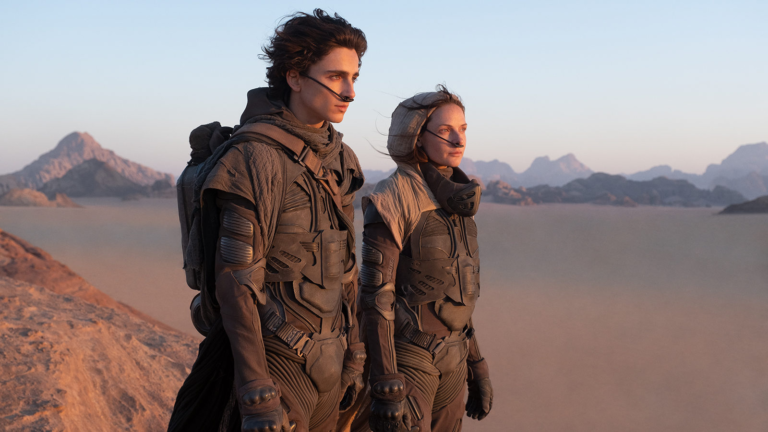
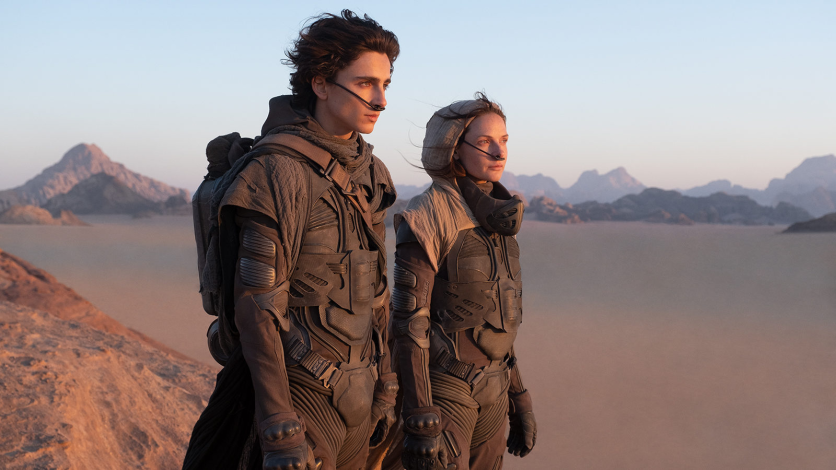
Hans Zimmer and Timothée Chalamet released “Desert Chant” — the first official soundtrack single from Dune: Part Three — on October 20, 2026, and in its two-minute arc from a solitary human hum to a roaring collective war cry, the track makes audible what Frank Herbert spent Dune Messiah trying to explain in prose: the exact acoustic mechanism by which a single man’s voice becomes a civilization-scale catastrophe. The song is not yet a score; it is a demonstration — a controlled experiment in the real-world neuroscience of collective vocal synchronization, performed by the character most implicated in its consequences, as Variety’s Dune Part Three report confirms.
What “Desert Chant” Does in Under Two Minutes
The track opens on silence, then Chalamet’s voice enters — unaccompanied, unprocessed, intimate. There is no percussion, no electronic wash; only a single throat in what the score is proposing as the acoustic equivalent of desert predawn. The hum gradually draws in choral layers and rhythmic drive, cresting into a full collective war chant that multiple reviewers have described as simultaneously haunting and rousing.
Zimmer confirmed the performer immediately. “I’m proud to share with you our new Fremen chant featured in DUNE: PART THREE — developed in collaboration with Denis and performed by my dear friend @tchalamet,” he wrote on Instagram following the release. The confirmation answered a months-long question about the trailer’s arresting chant, which audiences had compared to a Māori haka and which Zimmer’s press statement identifies as a fully original Fremen vocal composition developed collaboratively among Zimmer, Chalamet, and director Denis Villeneuve.
“DUNE remains my dream collaboration, partnering with the legendary director Denis Villeneuve to realize his vision through sounds,” Zimmer added in the official WaterTower Music press release. The single is available now on Apple Music, Spotify, and all major streaming platforms. Dune: Part Three will open in theaters and IMAX on December 18, 2026.
The track’s structural economy is deliberate. At approximately two minutes, it withholds resolution in the same way Dune Messiah deliberately withholds heroic catharsis. As ComicBasics noted: “A war chant built around a human voice suggests the finale may lean harder into the human and spiritual side of Paul’s story. Given how the story ends for Paul in the source material, a chant that starts as a hum and swells into war feels fitting.”
How Individual Voice Becomes Collective Weapon: Neural Entrainment
The most specific claim “Desert Chant” makes is structural, not sonic. Its two-minute arc — solo hum to mass war cry — is not a metaphor for Paul Atreides’ political trajectory. It is a model of documented neural synchronization research.
Neural entrainment refers to the tendency of the brain’s oscillatory networks to synchronize with external rhythmic stimuli. When a group of individuals vocalizes the same rhythmic pattern together, EEG studies confirm that their brainwave frequencies actually converge — listeners are not merely hearing the same sound, they are briefly sharing a synchronized neurological state. The effect scales with participation: the more individuals who join the chant, the stronger the entraining force on each individual within it.
The specific behavioral consequences documented in the research literature are precisely those Herbert describes as characteristic of Fremen combat culture. Rhythmic vocalization suppresses prefrontal inhibitory function — reducing hesitation, deliberation, and the capacity for moral calculation that makes individual combat psychologically costly. Simultaneously, adrenal response is amplified, pain tolerance rises, and mirror-neuron cascade effects homogenize individual emotional states within the group. Fear suppression and aggressive threshold reduction are both measurably affected by sustained synchronized chanting.
This is not marginal or disputed science. The Māori haka — one of the world’s most studied war chant traditions — has been examined specifically for its physiological effects on performers and witnesses alike. Witnesses to a performed haka show elevated cortisol, heightened attention orienting, and in some studies, measurable increases in fear response — the same psychological effect a trained army might want to induce in an adversary. Performers show the opposite: reduced anxiety, increased cohesion, and what researchers have termed “bounded agency” — a state in which individual identity partially dissolves into group identity without eliminating the individual’s functional capacity.
The Fremen sietch culture Herbert describes is optimized for exactly this mechanism. A desert people whose survival requires perfect collective coordination under existential threat develops cultural technologies of solidarity that transcend individual bravery. Under Paul’s leadership, these cultural technologies become the operating system of a galaxy-spanning jihad that, according to Herbert’s Dune Messiah novel, consumes sixty-one billion lives. The jihad is, among other things, a distributed war chant — a mass neural synchronization event that outlives any individual leader because it has been internalized as culture rather than command.
What “Desert Chant” stages is the moment of transfer: the instant when one voice becomes the template to which millions entrain.
Zimmer’s Ethnomusicological Project: Five Traditions in One Track
“Desert Chant” is not Zimmer’s first synthesis of cross-cultural chant traditions for Dune — it is the culmination of a deliberate three-film ethnomusicological project that began with the 2021 original score, as Nerdist’s Dune soundtrack review documents.
For the original Dune, Zimmer collaborated with vocalist Loire Cotler, building a sonic palette drawn from five distinct world traditions, each chosen for what anthropologist Edward T. Hall called “the silent language” — the premise that culture transmits survival-relevant information through non-verbal codes embedded in music, architecture, and temporal rhythm, as Zimmer discussed in his MPAA interview on Dune. His core vocal synthesis drew from:
Tradition
Cultural Origin
Acoustic Function
Dune Application
Niggun
Jewish mystical prayer
Wordless melody as direct spiritual ascent; bypasses linguistic interpretation
Bene Gesserit chant; Loire Cotler vocals in original score
Konnakol
South Indian Carnatic music
Rhythmic syllable percussion without instruments; pure vocal groove
Fremen combat rhythms; percussive vocal textures
Tuvan Throat-Singing (Khoomei)
Siberia / Central Asia
Single vocalist produces multiple simultaneous pitches; inhuman timbre
Otherworldly alien textures in sandworm and spice sequences
The project is principled, not eclectic. Each tradition was selected because it shares a common quality: non-lexical, non-Western tonality that sounds semantically foreign to a Hollywood-trained Western ear while containing cross-cultural precedents for the same acoustic functions Herbert assigned to Fremen culture. King’s College London research confirms Zimmer designed Arrakis to feel simultaneously alien and archaeologically ancient — “references no single real culture while containing all of them.”
For Dune: Part Two, Zimmer intensified the cultural contrast: colder, metallic tones for the Harkonnens versus warmer, scorched-sand frequencies for the Fremen. He stated in his MPAA interview that in Part Two “the only instrument you will identify is the human voice.”
“Desert Chant” takes the next logical step. Where previous films used ethnomusicological synthesis to establish Arrakis as a place, the war chant in Part Three uses Chalamet’s own voice to make the character’s transformation audible. Paul no longer speaks the Voice at individuals; he has become the Voice that a civilization chants back at the universe.
The Bene Gesserit Voice: Psychoacoustics as Applied Neuroscience
The Bene Gesserit “Voice” — the technique of weaponized sonic modulation that compels obedience through precisely calibrated tone — is thematically encoded in how “Desert Chant” evolves structurally. A private hum becomes a commanding collective force, mirroring Paul’s arc in Dune Messiah.
The science behind Herbert’s Voice is less fantastical than it reads on the page. Research in behavioral psychology and linguistics confirms that specific combinations of pitch, rhythm, and tempo in human speech measurably influence listener compliance, stress hormones, and decision-making speed. The Voice’s fictional precision — selecting the exact pitch spectrum, timbre combination, and micro-dynamic envelope matched to an individual’s neurological vulnerabilities — extrapolates from real documented prosodic effects.
The more credible real-world analog to the Voice is not acoustics alone but psychoacoustic priming: the combination of tonal authority, rhythmic entrainment, and information asymmetry that characterizes effective oratory and cult leadership induction. Paul Atreides as Muad’Dib exploits this at civilizational scale.
What “Desert Chant” stages acoustically is the transition from individual acoustic targeting to crowd entrainment, where precision gives way to volume and synchrony. Paul no longer needs to use the Voice on individuals. The chant does the work at mass scale — and the crucial difference is that it does so without his direct participation. Once externalized as cultural practice, the chant becomes autonomous.
Weber’s Charismatic Authority and the Acoustic Transmission of Power
Sociologist Max Weber’s three-part authority typology — published posthumously in Economy and Society (1922) — distinguished three types: traditional (inherited), rational-legal (bureaucratic), and charismatic (personal magnetism that compels obedience). Weber identified charismatic authority as simultaneously the most powerful and most unstable: it exists entirely in the relationship between the leader and the led, requires constant validation through perceived miraculous success, and faces an existential crisis when the leader dies or fails.
Herbert’s Dune Messiah is a sustained dramatization of what Weber called the routinization of charisma concept — the process by which a movement outlives its charismatic founder by embedding his authority into institutional structures, ritual practices, and what Zimmer is here providing: a collective sound. The jihad does not require Paul’s continued consent because the war chant has already accomplished what Weber predicted every successful charismatic movement eventually achieves: it has been internalized as tradition.
Political scientists studying Weber’s charismatic authority research have documented the same structural pattern across real historical cases: a charismatic figure does not instill beliefs so much as activate pre-existing cultural latencies within a community under stress. Millenarian and jihadist movements in history share Herbert’s fictional structure — an existing religious framework, a community under external pressure, a charismatic leader whose personal authority fuses with the collective mythology. The movement then propagates independently of the original leader’s intentions or continued consent.
“Desert Chant” begins as one voice and ends as many — but in the universe of Dune Messiah, the score will eventually need to reckon with the moment when the chant no longer requires the voice that began it. Paul’s blindness after the stone-burner attack — Herbert’s most literal metaphor — is the moment when the prophet loses the ability to see the future he has already set in motion. The chant continues whether he leads it or not.
Zimmer has described this as the core of his three-film musical ambition: “When two teenagers are deeply moved by the same novel that lets their imagination run wild, so wild that the mysticism and philosophy that captured their souls never lets them go, they will inevitably meet and become creative brothers.” The creative brothers meeting here are composer and actor, but the philosophy they are realizing in sound is Herbert’s: the moment when the score stops being Paul’s music and becomes the Imperium’s music.
“Desert Chant” is the hinge. It begins as a character. It ends as a civilization.
Zimmer — a two-time Academy Award and five-time Grammy winner who won 2025 Grammy Best Score for Visual Media for Dune: Part Two at the 2025 Grammy Awards — has described Part Three as “a very complicated one,” and is simultaneously composing the score for HBO’s Harry Potter series, premiering December 25, 2026, per SuperheroHype’s Dune chant report. The full Dune: Part Three Original Motion Picture Soundtrack release date has not been announced. “Desert Chant” is the only officially released track as of this writing.
Frequently Asked Questions
What is “Desert Chant” from Dune: Part Three?
“Desert Chant” is the first official soundtrack single from Dune: Part Three, released by WaterTower Music on October 20, 2026. The track — approximately two minutes long — is co-credited to Timothée Chalamet and Hans Zimmer. It opens with Chalamet delivering a quiet solo hum, then builds into a collective Fremen war chant. Hans Zimmer confirmed on Instagram that Chalamet performed the chant, ending months of audience speculation about the trailer’s haunting vocal performance. The film opens in theaters and IMAX on December 18, 2026.
What is the real science behind war chants like the Fremen battle cry?
War chants trigger a documented neurological process called neural entrainment: when a group of people vocalize the same rhythmic pattern together, their brainwave frequencies synchronize. EEG studies confirm that participants in synchronized chanting temporarily share a converging neurological state. The specific behavioral effects — suppressed prefrontal inhibition, elevated adrenal response, increased pain tolerance, and reduced individual fear — are the same properties Herbert attributed to Fremen battle culture. The Māori haka has been studied most extensively, and Frontiers in Psychology research confirmed that it measurably affects both performers (who show reduced anxiety and heightened cohesion) and witnesses (who show elevated cortisol and fear response). The effect is also documented in Bond University chanting review.
Who is singing the chant in the Dune: Part Three trailers?
Timothée Chalamet. Hans Zimmer confirmed this directly following the release of “Desert Chant” on October 20, 2026, describing the track as developed in collaboration with director Denis Villeneuve “and performed by my dear friend @tchalamet.” Chalamet reportedly developed the Fremen chant collaboratively with Zimmer and Villeneuve over the course of the production, as SuperheroHype reports on Chalamet confirm.
What musical traditions does Hans Zimmer draw from for the Dune score?
Zimmer’s three-film Dune score synthesizes five specific world vocal traditions: the Jewish niggun (wordless spiritual melody), South Indian konnakol (rhythmic syllable percussion), Tuvan throat-singing or khoomei (which enables a single vocalist to produce multiple simultaneous pitches), Celtic keening (ritualized grief vocalization), and the Māori haka (collective war chant for synchronizing arousal and asserting group identity). The synthesis was built in collaboration with vocalist Loire Cotler, and is designed to evoke a culture that feels simultaneously alien and archaeologically ancient — references no single real culture while containing resonances from all of them, as described in the MPAA interview on Dune sounds and further documented in Nerdist’s Dune soundtrack review.