TV Panel Prices Stay Flat This Holiday Season; Demand Falls, Costs Rise

November 6, 2026:

TV Panel Prices Stay Flat This Holiday Season; Demand Falls, Costs Rise
Television section Fnac Montparnasse selection screens displayed
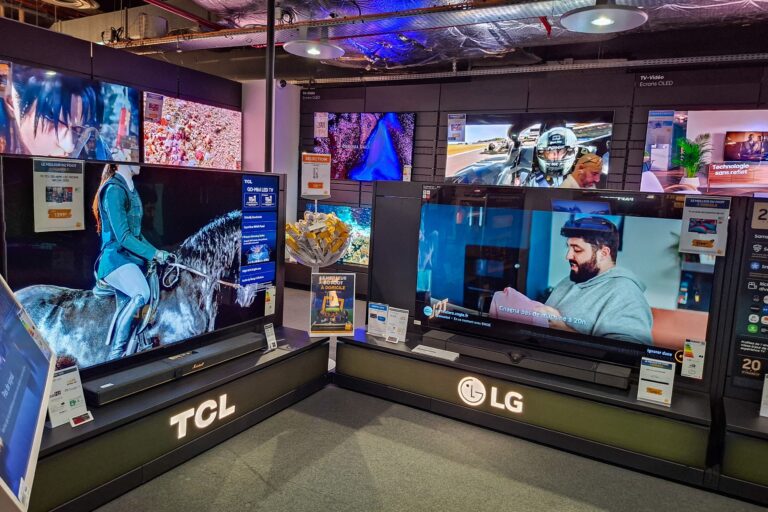
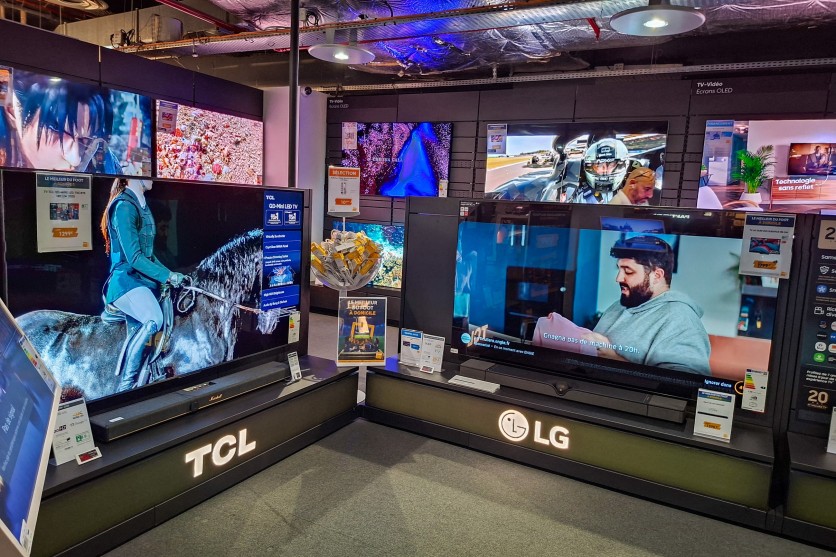
Television section at Fnac Montparnasse, with a selection of screens displayed side-by-side for demonstration in Paris, France, on June 8, 2026. A scene of technological distribution in a Parisian department store, amidst promotional images and model comparisons. TV, tele.
Riccardo Milani/Hans Lucas / AFP via Getty Images

The display panel market is heading into Black Friday and the December selling window in an unusual equilibrium: demand is falling sharply, component costs are climbing, and prices are going nowhere. Market research firm TrendForce released its early-November panel price forecast Thursday, projecting that TV brand panel procurement will decline approximately 5% quarter-on-quarter in Q4 2026 as brands work through accumulated inventory — yet prices across every major panel category are expected to remain flat in November.

It is a supply-chain standoff with direct implications for anyone planning a TV purchase this holiday season: panel makers cannot afford to cut prices (rising component costs are already squeezing margins), and buyers have no incentive to accept increases (they are sitting on more inventory than they want). The resulting stalemate is what keeps retail TV pricing stable heading into peak promotional season, even as the underlying market is under significant pressure.

TrendForce VP of Research Fan Boyu presented the data Thursday. The numbers tell a consistent story across three panel segments: falling procurement, flat prices, and a supply side that has not cut capacity aggressively enough to shift the balance. “Whether prices can recover in the coming months,” Fan noted, “will depend on the intensity of manufacturers’ supply adjustments and shifts in brand procurement demand.”

TV Panels: The Holiday-Season Math

For the television panel segment, the fourth quarter of 2026 is playing out against an unusual backdrop: the highest-demand procurement period of the year is instead producing below-trend orders.

TV brand panel procurement is forecast to decline approximately 5% quarter-on-quarter in Q4 2026. The proximate cause is an inventory overhang built up during the first three quarters of this year, when trade-policy uncertainty prompted many brands to accelerate purchases and stockpile buffer inventory. That pre-buying surge — a pattern that played out from early 2025 through most of 2026 — left brands holding more panel stock than a typical Q4 demand acceleration can absorb. The result is that panel orders are soft even during what would ordinarily be the peak procurement season before Black Friday and the year-end window.

Panel makers implemented some capacity adjustments in October, but TrendForce characterizes them as limited — insufficient to tighten supply enough to push prices higher. The firm notes there are currently no signs of large-scale production cuts by panel makers and therefore forecasts that November TV panel prices across all sizes will remain flat.

TrendForce’s pricing benchmarks for November offer a window into where the market stands. The 65-inch TV panel average price is forecast at $173, with 55-inch panels at $123, 43-inch panels at $63, and 32-inch panels at approximately $35. All figures are carried over from October with no movement in either direction.

For consumers, the flat-pricing environment into the holiday window means TV set manufacturers face no incremental cost escalation from their most significant component — panels account for roughly 40 to 50 percent of total TV manufacturing cost. Retail pricing pressure from the supply side is effectively neutralized through at least November. The critical variable for the December window and beyond is whether panel makers move to more aggressive production cuts before year-end, or whether demand recovers on its own.

Monitor Panels: Waiting for a TV Signal

The monitor segment is locked in a classic supply-chain standoff between buyers and sellers, and the resolution depends on a price signal from a different market entirely.

Monitor panel shipments are forecast to decline approximately 9% quarter-on-quarter in Q4 2026. With component costs rising, panel manufacturers are actively pushing brand customers to accept price increases. Buyers — while acknowledging the cost pressure — are largely holding to flat pricing and remaining cautious about any upward move. As a result, TrendForce expects buyer-seller negotiations to continue through the month, with prices staying flat.

Fan Boyu identified the most critical variable for the monitor segment: the trajectory of TV panel prices. Once TV panel prices establish an upward trend, panel makers gain a stronger basis from which to request price increases from monitor brand customers. Until that inflection arrives, monitor prices are expected to stay in a holding pattern — a standoff that reflects the market’s awareness that monitor pricing follows TV pricing with roughly a one-quarter lag.

The structural backdrop for the monitor segment is starker than the cyclical demand softness. TrendForce estimates that China’s top three panel makers — BOE, CSOT (a subsidiary of TCL Technology), and Tianma — will account for 74% of global LCD monitor panel supply in 2026. That concentration reflects years of capacity expansion at the expense of Taiwanese manufacturers, and it increasingly puts structural pricing power in Chinese manufacturers’ hands — a dynamic that makes independent Taiwanese price increases harder to sustain.

The Chinese panel industry operates with significant state backing, which has historically allowed its manufacturers to absorb losses during market downturns that would force restructuring or exit at a privately capitalized competitor. That capacity to absorb — rather than cut — is part of what keeps global LCD monitor supply elevated even as Taiwanese makers wind down older lines.

Notebook Panels: The Sharpest Correction

The notebook segment faces the most severe demand correction of the three major panel categories, and pricing reflects the asymmetric pressure panel makers are under.

TrendForce forecasts that major brand clients’ notebook panel procurement will decline more than 20% quarter-on-quarter in Q4 2026, placing significant shipment pressure on panel manufacturers. The dilemma facing panel makers is explicit in TrendForce’s framing: lowering prices would not meaningfully stimulate demand (brands are drawing down existing stock regardless of panel cost), while raising prices risks damaging customer relationships heading into next year’s planning cycle, when panel makers will be competing for 2027 order commitments.

Maintaining price stability has emerged as the most viable option for both sides. TrendForce forecasts that November notebook panel prices will remain flat across all sizes.

The notebook LCD panel market is under long-term structural pressure beyond the Q4 seasonal correction. Chinese manufacturers are expanding aggressively in this segment, while major brands are accelerating their shift toward OLED displays — a transition that will further erode LCD demand over time, making future capacity reductions in the segment increasingly necessary. The Q4 2026 correction amplifies an underlying trend rather than representing a temporary dip.

The Structural Backdrop: Taiwan’s Panel Giants Pivot to AI

November’s flat-price, falling-demand dynamic plays out against a longer-term restructuring of the panel supply base that has accelerated dramatically through 2026 — and whose implications extend well beyond display manufacturing.

Taiwan’s two leading display manufacturers — AUO and Innolux — are accelerating factory divestments as they exit competition on production scale in favor of a strategy focused on high-value-added applications. Innolux plans to shut down its Fab 3 production line, which primarily manufactures LCD notebook panels, between late 2027 and 2028, marking the company’s gradual exit from that segment. Innolux is simultaneously investing in fan-out panel-level packaging (FOPLP), co-packaged optics (CPO), and through-glass via (TGV) technologies.

AUO’s restructuring took a significant step forward in October. Following the October 29 board approval of a sale of its Taichung Phase 2 facility to TSMC — encompassing its Gen 5 and Gen 7.5 (L7A) display fabs — for NT$38.8 billion (approximately $1.19 billion USD), AUO is redirecting substantial capital and manufacturing space toward Micro LED, AI-related technologies, and CPO-based advanced packaging. The deal removes the Gen 7.5 L7A line from the global LCD TV panel supply base; TrendForce estimates that its exit will reduce global LCD TV panel supply area by approximately 2.1%, incrementally tightening market supply. If AUO also closes its L6A fab — a separate decision not yet announced — global LCD monitor panel supply would decrease by nearly 5 million units.

The significance of the TSMC/AUO transaction extends beyond panel supply arithmetic. TSMC’s acquisition of display fab space is being driven by its need to expand advanced packaging capacity — specifically CoWoS (Chip on Wafer on Substrate) and co-packaged optics manufacturing — for the production of AI accelerator chips. The same fab floor that once produced Gen 7.5 LCD TV panels will, following conversion, become production area for the packaging of Nvidia, AMD, and similar AI chip designs that have outstripped TSMC’s existing CoWoS capacity. Taiwan’s exit from commodity display manufacturing and its entry into AI chip packaging are, in the AUO/TSMC deal, the same transaction.

TrendForce forecasts that by 2028, AUO and Innolux’s combined share of global LCD monitor panel supply will fall below 10%, while their LCD notebook panel share will decline to about 20%. Their share of LCD TV panel supply is expected to remain around 22% — the TV segment being where their scale still provides competitive differentiation, particularly at the high end.

Chinese panel makers are moving in the opposite direction. Capacity has increased at CSOT’s T9 and BOE’s B19 fabs following process optimization, while Tianma’s TM19 line is still ramping. TrendForce estimates that 8.6-generation capacity — the industry’s current state-of-the-art for large-panel production, using 2250×2600mm glass substrates optimized for 65-inch and 75-inch TV panels — will account for approximately 26% of global LCD production in 2026. As that share grows and older generations are retired, the cost structure of the TV panel market will increasingly reflect Chinese 8.6-gen economics.

For the LCD TV panel market specifically, TrendForce expects the absence of major new capacity investment and the ongoing trend toward larger screen sizes to keep supply in a healthy but relatively tight state between 2026 and 2030 — a dynamic that may eventually give panel makers the pricing power they are currently struggling to establish.

What It Means for Consumers This Holiday Season

The flat-pricing forecast heading into the holiday shopping window carries mixed implications for consumers and retailers.

For TV buyers, the news is neutral-to-positive in the near term. Panel prices being stable — rather than rising — means TV set manufacturers face no incremental cost escalation from their most significant input component through at least November. That stability limits any upside pricing surprise from the supply side before Black Friday and the December selling window. If you have been waiting for prices to drop before buying, the data does not yet support a catalyst on the horizon — but it equally does not support a “buy now before prices rise” argument for Q4 2026.

The 5% procurement decline signals that TV brands entered Q4 holding more inventory than they would like — a hangover from the tariff-driven pre-buying that characterized the first three quarters of the year. That inventory digestion is what’s keeping brand panel orders soft even during what should be the highest-demand procurement period of the year, and it limits any meaningful supply-side shock before the December selling window closes.

The resolution of the panel market standoff — whether through more aggressive production cuts by panel makers or a demand recovery in December — will set the tone for panel pricing heading into 2027. With Taiwan’s display capacity progressively converting to semiconductor packaging, the structural tightening that panel makers have been trying to engineer through cuts may arrive instead through permanent capacity exit. For the medium term, that could give the remaining panel makers better conditions than the current flat-price, falling-demand equilibrium suggests.

Exchange rate as of October 30, 2026; conversions are approximate.

Source link