HomeAuto Tuscany Landowners Face Oct 30 Hunting Exclusion Deadline; Courts Weakened Regional Block
Tuscany Landowners Face Oct 30 Hunting Exclusion Deadline; Courts Weakened Regional Block
October 21, 2026:
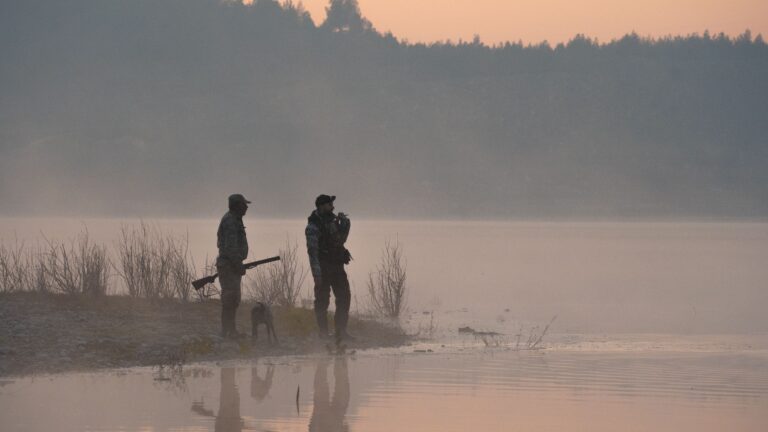
izzet çakallı/pexels.com
Seven of Italy’s leading wildlife and animal protection organizations rolled out a coordinated public campaign on Monday, October 19, urging every Tuscany landowner who does not want hunting on their property to file an exclusion request before October 30 — the closing date of a five-year window that, if missed, will not reopen until the region’s next hunting plan cycle. Pre-filled template forms are now available on the participating organizations’ websites, and the coalition says it will guide landowners through the process and support any legal challenge if requests are rejected without adequate justification, the groups announced on their websites that day.
The move puts direct and time-sensitive pressure on Tuscany’s regional administration — and specifically on President Eugenio Giani, who signed the blocking regulation at the center of this dispute himself in November 2022, without a Regional Council vote, and who retains the authority to remove it the same way.
Tuscany’s 200-Hectare Barrier Blocks Most Landowners From a National Right
At the heart of the dispute is Regulation 36/R/2022, a presidential decree that set a minimum threshold of 200 contiguous hectares (approximately 494 acres) as a prerequisite for a landowner’s exclusion request to be considered by the regional portal. Italy’s national hunting framework law — Law 157 of February 11, 1992, Article 15, paragraph 3 — grants landowners and property managers the right to request that their land be excluded from programmed hunting zones.
The coalition’s position, backed by recent Italian court doctrine, is that Tuscany has turned a right into a near-impossibility. Under the regional portal’s criteria, exclusion requests are accepted only in two narrow circumstances: land dedicated to wildlife protection with the 200-hectare minimum, or land subject to publicly funded experimental breeding or cultivation programs tied to scientific research, the coalition’s September 30 letter to Giani explained.
“The right recognized by national law is in practice denied to almost all citizens,” the seven organizations wrote in their September 30 letter to Giani. “If the Region does not intervene, this will be a clear political responsibility.”
The coalition draws pointed attention to the threshold’s own logic: the 200-hectare minimum is higher than the surface area of many of Tuscany’s own regional nature reserves — meaning the bar to establish a private hunting ban on a single estate exceeds the area of sites the region already designates for wildlife protection, the coalition noted.
Crucially, the organizations note that because the 200-hectare threshold was established by presidential decree rather than by regional legislation, eliminating it requires no vote in the Regional Council and no parliamentary debate. Giani’s office can modify or remove the threshold by administrative act alone.
What Landowners Can Do Before Oct. 30
The five-year clock is running. On September 30, Tuscany published its new Regional Faunistic Hunting Plan (Piano Faunistico-Venatorio Regionale) in the regional official bulletin, triggering a statutory 30-day window under national law during which landowners and property managers may submit exclusion requests.
October 30 is when that window closes.
The coalition’s guidance for those who do not qualify under the regional portal’s 200-hectare criteria: file the request anyway. For landowners who cannot access the official online portal, the organizations advise submitting by certified email (PEC) or registered mail directly to the Regional President’s office. The pre-filled template forms — available on the websites of ENPA, LIPU, LNDC, LAV, and their partners — are designed to make the process accessible to individual property owners regardless of the size of their land, the groups announced at LIPU BirdLife Italia.
Under the Italian administrative procedure framework, the regional authority has 60 days to respond to a submitted request. Silence does not constitute a rejection — the administration is legally obligated to issue a decision. If a request is refused, that refusal may be challenged before the Regional Administrative Court (TAR).
Neighboring parcels with multiple owners may combine their land to reach the 200-hectare threshold — but the coalition’s broader message is that the threshold itself is legally vulnerable and should not be accepted as a final answer.
Courts Are Already Overturning Tuscany’s Hunting Overreaches
The legal ground beneath the 200-hectare rule has shifted. In a significant judgment issued in 2026, the Italian Council of State confirmed that a landowner’s exclusion request may be grounded in ethical or moral reasons — not only in agricultural protection or safety concerns — and that any refusal by a regional authority must rest on “concrete, specific, and verifiable factual data” rather than general administrative principles, Clifford Chance’s Italy hunting briefing states, citing Council of State Judgment no. 895/2026.
That ruling directly narrows the circumstances in which Tuscany can lawfully reject an exclusion request. A refusal justified only by a property’s failure to meet the 200-hectare threshold — without any factual demonstration that excluding the specific land would materially harm the regional wildlife plan — becomes harder to sustain as adequate justification under the standard the Council of State has now established.
The regional government’s legal posture has already suffered a setback in a related case. On October 8, the Tuscany TAR suspended the region’s derogation authorizing the hunting of starlings (storni) for the 2026-2027 season, accepting an emergency application from LAV and LNDC Animal Protection on grounds that the regional measure lacked adequate justification relative to the limits prescribed by ISPRA, Italy’s national environmental research authority, La Nazione reported. A full public hearing on that suspension is set for December 15.
The coalition has stated it will evaluate potential TAR action against rejected exclusion requests, making each refusal a potential legal flashpoint heading into 2027.
What Italy’s Farmland Bird Index Says About the Stakes
The exclusion-rights dispute is unfolding against a backdrop of accelerating ecological decline documented by ISPRA and LIPU through Italy’s Farmland Bird Index — the official EU monitoring instrument for agricultural biodiversity, adopted as a context indicator under the Common Agricultural Policy.
Italy’s 2025 Farmland Bird Index update, covering the period from 2000 to 2025, recorded an overall decline of 33.49% in populations of the 28 bird species associated with agricultural environments. Seventy-one percent of those species are in significant decline. In lowland areas such as the Po Valley, declines reach 50% due to the combined pressures of agricultural intensification and the disappearance of hedgerows and tree lines.
The steepest individual losses among the 28 monitored species: the Wryneck (Torcicollo) has lost 76% of its Italian population since 2000; the Tawny Pipit (Calandro) 73%; the Stonechat (Saltimpalo) 71%, ISPRA’s 2025 update shows. These three species appear in the most severe-loss tier of the index.
LIPU, which conducts the monitoring in partnership with the Italian Ministry of Agriculture and contributes data to the Pan-European Common Bird Monitoring Scheme, has flagged the turtle dove among the species that European data indicate are globally threatened and should be removed from Italy’s list of huntable species entirely, the organization’s conservation materials state.
The practical implication the coalition draws: when wildlife-friendly landowners can voluntarily remove their land from hunting zones, they can create habitat refuges that supplement formal protected-area networks and help stabilize bird populations at the landscape level — a mechanism with measurable effects on bird settlement and population structure documented in published research.
Tuscany’s Hunting Plan Drew Criticism Before the Ink Was Dry
The immediate exclusion-rights dispute sits within a broader controversy surrounding Tuscany’s Regional Faunistic Hunting Plan, approved by the Regional Council in late July 2026 and officially published September 30.
The plan was criticized by multiple conservation bodies and by regional opposition groups as weighted too heavily toward hunting and agricultural interests. Among the specific concerns raised by the coalition: the plan opens hunting in areas including Natura 2000 sites — the EU’s designated network of protected areas under the Birds Directive and Habitats Directive — and authorizes the hunting of millions of animals across multiple species.
Regional deliberations separately approved derogation quotas that coalition groups say included roughly 35,000 stock doves and turtle doves and approximately 20,000 starlings — the latter said to be double the ceiling recommended by ISPRA — along with the killing of the sacred ibis, which groups say was also approved against ISPRA’s advice. The hunting of starlings under the regional derogation was suspended by the TAR on October 8, the court finding inadequate ISPRA justification.
The Alliance of Greens and Lefts (Alleanza Verdi e Sinistra) raised objections in the Regional Council to what critics described as a plan too aligned with hunting industry positions.
On October 12, WWF filed a further protest against the region’s criteria for wolf-monitoring training courses, which require participants to hold a hunting license — a condition that, WWF argued, systematically excludes qualified wildlife scientists and ecologists from contributing to carnivore management.
How Does Tuscany’s President Handle AI Rights but Not Hunting Rights?
The official most directly accountable for the 200-hectare rule is Giani himself — not the Regional Council. The regulation exists because Giani signed a presidential decree creating it in November 2022, and it can be removed the same way: by administrative action from the same office, without debate or vote.
That context carries additional weight because of what Giani’s administration did in July 2026. On July 29, Giani promulgated Tuscany Regional Law 15/2026 — described as Italy’s first comprehensive regional AI governance law, as The Florentine reported July 28. The law established a Tuscany Charter of Digital Rights, algorithmic transparency obligations for the public sector, the right for citizens to know when they are interacting with automated systems, and special protections for minors. Giani stated at the time that Tuscany was writing “a page that went beyond regional borders,” positioning the region as the first in Italy to adopt an organic discipline on artificial intelligence, and doing so by, in Giani’s words, “clearly choosing which side to stand on.”
The same regional president who made explicit commitments to algorithmic accountability and citizen rights in digital governance has maintained, for four years, a presidential decree that courts are finding increasingly difficult to reconcile with the national right it purports to regulate. The coalition’s political framing reflects exactly that tension: if the region’s administration can design and promulgate a nuanced AI governance framework, it can also modify a single-line threshold in a four-year-old hunting regulation — if it chooses to, as the coalition’s Giani letter argued.
Frequently Asked Questions
Can a Tuscany landowner legally stop hunters from entering their property?
Under Italy’s national hunting law — Law 157 of February 11, 1992 — landowners and property managers have a statutory right to request exclusion from programmed hunting zones. The request must be filed within 30 days of a new regional wildlife plan being published. In Tuscany, that 30-day window closes on October 30, 2026. However, Tuscany’s Regulation 36/R/2022 imposes a 200-hectare (approximately 494-acre) minimum that most private landowners cannot meet. The coalition advises filing by certified email or registered mail regardless, on the grounds that Council of State Judgment no. 895/2026 has undermined the legal basis for blanket threshold-based refusals.
What did Italy’s top administrative court say about hunting exclusion requests?
In 2026, the Council of State issued Judgment no. 895/2026, confirming that a landowner’s exclusion request may be grounded in ethical or moral reasons — not just agricultural or safety grounds. The ruling also held that any regional refusal must be based on concrete, specific, and verifiable factual data demonstrating that the exclusion would actually harm the wildlife management plan. That standard is more demanding than a blanket “you don’t meet the 200-hectare requirement,” and the coalition intends to use it as the legal foundation for any TAR challenges following October 30.
Why have Italy’s farmland bird populations fallen so sharply?
ISPRA’s 2025 Farmland Bird Index update recorded a 33.49% decline in Italian farmland bird populations since 2000, with 71% of 28 monitored species in significant decline. ISPRA attributes the primary drivers to agricultural intensification — the loss of hedgerows, the expansion of monoculture farming, and heavy pesticide use — compounded by hunting pressure on already-declining migratory and resident species. The Wryneck, Tawny Pipit, and Stonechat have all lost more than 70% of their Italian populations in 26 years. Reversing those trends requires both agricultural reform and reduced pressure on birds — including through voluntary hunting-free zones on private land.
What happens after October 30 if a landowner misses this deadline?
Miss October 30 and the next opportunity does not arrive until Tuscany’s Faunistic Hunting Plan is revised, which operates on a five-year cycle. That means the next comparable window would open no earlier than 2031. Landowners can still enclose their property physically — erecting a fence at least 1.2 meters (approximately 4 feet) high with required signage — to bar hunters from entering, but that is a significantly more costly and permanent measure than the administrative exclusion process that closes at the end of this month.