The Crust 1.0 Doubles FPS on Large Lunar Bases; Early Access Saves Cannot Transfer

September 13, 2026:

The Crust 1.0 Doubles FPS on Large Lunar Bases; Early Access Saves Cannot Transfer
The. Crust
Veomstudio.com

Two years of player feedback, four major Early Access updates, and a Kickstarter campaign that raised $202,642 from 3,939 backers culminated on September 10, 2026, when VEOM Studio released version 1.0 of The Crust — and the headline engineering achievement is not a new module or story chapter. It is a logistics system rebuilt so fundamentally from scratch that players who spent hundreds of hours in Early Access will need to start over.

That trade-off — backward compatibility sacrificed for a doubling of frame rates on large bases — is the structural center of what 1.0 actually is: not a final coat of polish on an Early Access build, but a different engine under a familiar roof.

The game is available now on Steam and the Humble Store at a 35% introductory discount — $20.79 (regular $31.99) — until September 24. Regional pricing shows £17.54 and €19.49 at the discounted rate on Steam (approximately $24 and $23 USD, respectively).

What Version 1.0 Is and What It Is Not

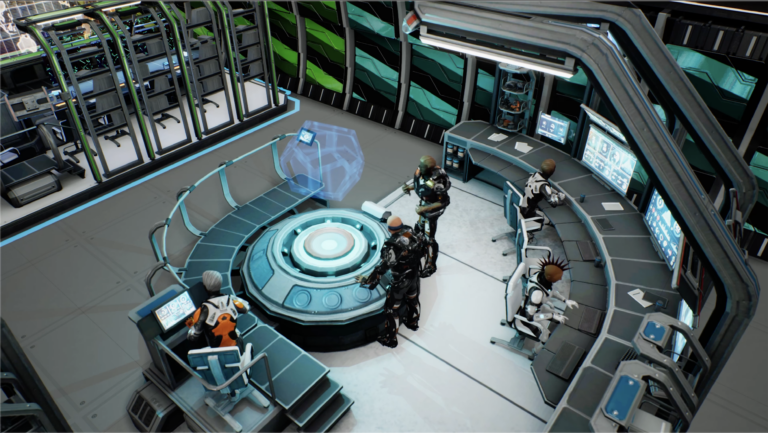
The Crust is a sci-fi factory-building colony sim set on the Moon. Players take the role of CEO of a private lunar mining corporation, arriving on the surface as an unspecified catastrophe puts Earth’s survival in question. The job is to mine regolith and ice, design automated conveyor-and-drone production chains, manage a team of colonists with individual traits, skills, health, and morale requirements, and ultimately build the infrastructure — including an enormous planetary defense weapon — that gives humanity a way out.

The story’s central dramatic question is a race against escalating crises: can you automate a working lunar economy fast enough, while managing factional alliances with rival Earth organizations, to hit the production milestones the narrative demands? The campaign features multiple endings, and the factional trade choices made throughout — speculating on resource scarcity, supporting one political bloc over another, or pouring surplus into interplanetary megaprojects — carry permanent consequences. The emotional register is the industrial pressure of factory-building game trance layered underneath explicit narrative stakes, which is an unusual combination for the genre. The Crust launched into Early Access on July 15, 2024, with about a third of that narrative complete. Version 1.0 finishes it.

One Critical Warning for Existing Players

Early Access saves do not load in version 1.0, and they cannot be converted.

This is not a database format change or a trivial migration problem. VEOM Studio restructured the logistics system from the ground up, adding a road network and overhauling the excavation system in the same architectural pass. An Early Access base does not map onto the new structure. Players who are mid-campaign or mid-experiment when this article publishes face a genuine decision.

The studio’s solution: the last Early Access build remains available as a Steam beta branch. To access it, right-click The Crust in your Steam library → Properties → Betas → select “Previous.” Old saves continue to work there. When you are ready to switch to 1.0, the beta branch is still waiting.

How the Logistics Rewrite Actually Works

The single most technically significant change in 1.0 is not the new content — it is the rewrite of the logistics algorithm.

In the previous build, routing calculations became a per-tick bottleneck at scale: as a base grew larger and supply chains extended across more nodes, the game had to recalculate routes continuously, and frame rates dropped accordingly. The more complex the factory, the worse it got.

The 1.0 rewrite addresses this through two changes. First, VEOM Studio added distance-based calculations — pre-computing route costs rather than resolving them dynamically per frame. Second, they improved warehouse-to-warehouse calculations, optimizing the specific lookup operation that large multi-node supply chains stress most heavily. The studio describes this as “what gave a substantial boost on large bases.”

The rendering pipeline received parallel attention: draw call counts were reduced, and polygon counts on mass-used models — conveyor belts, colonist suits, and standard modules — were optimized. Power calculations at the orbital map layer were also overhauled.

Combined result: a clean 30-50% frame-rate improvement on large bases, and 100-200% improvement on the largest bases. VEOM Studio notes the gain is hardware-dependent in an interesting direction: “the weaker your PC, the bigger the gain from the optimization.” Lower-spec systems were disproportionately throttled by the old algorithm. RAM usage was reduced and minimum system requirements were lowered.

On the minimum-spec end, the game now requires an Intel i5-4590K processor, 8 GB RAM, a GTX 1060 with 6 GB VRAM, and DirectX 11 on Windows. The recommended spec calls for an i5-7700, 16 GB RAM, and a GTX 1070 with 8 GB VRAM.

The cost of the algorithm: anyone who built a large, sophisticated factory in Early Access cannot bring it forward. That base exists in a save file that the new engine cannot read.

Planning Mode Changes How You Build

The logistics rewrite enables larger factories. Planning Mode is what makes building them manageable.

Planning Mode lets players lay out modules and conveyor routes before committing a single unit of material to construction. Modules can be copied together with their saved recipes, so a production cell you spent time configuring can be duplicated into a blueprint. A required-resources tracker calculates what you will need to execute the plan — how many titanium plates, how much concrete — before you break ground. Combined with the new road-building tool for surface trucks, this turns The Crust’s mid-to-late factory design from a reactive improvisation into something closer to deliberate architecture.

Roads are not purely cosmetic. Trucks using paved roads choose routes intelligently, taking the nearest road rather than cutting across facilities, and traffic behavior improves as a result. Parking lots can be designated. The earlier problem — trucks clipping through expensive equipment on their way to a delivery — has been addressed at the routing level.

VEOM Studio says Planning Mode was the most-requested feature during the Early Access period.

Sandbox 2.0 and Global Events

Sandbox mode has been rebuilt as Sandbox 2.0 with four new terrain maps. Players now choose their starting location on the lunar map — a decision with real consequences, since different craters offer different resource compositions. Map seeds now cover both world generation and the starting conditions of a run, meaning two players using the same seed will face the same initial distribution of ore, ice, and rare minerals.

New global events add unpredictability throughout every run. Meteor showers and individual impacts arrive at random intervals; early in a game, they tend to land on open ground and leave debris rich in rare minerals, which is a net positive. As the base expands and open space shrinks, the same randomness becomes a genuine threat. The anti-meteorite laser cannon — a new module added in 1.0 — costs one energy cell per shot and requires strategic placement to cover critical infrastructure. One cannon does not protect an entire base.

Solar flares can either boost solar panel output or damage surface facilities and colonists — the effect is random. Epidemics break out when sanitation is poor or medicine supplies are low; the new shower and toilet module, also added in 1.0, is the front-line mitigation.

The colony workforce management system has been expanded. Players can now fire colonists who underperform, set individual salaries, and raise or lower pay to influence morale. Colonists who find conditions genuinely unbearable can now quit independently and leave on the next capsule. The Training Centre allows players to send specialists on paid accelerated courses to upgrade their skills.

Completed Story and Multiple Endings

The story campaign is now complete. The prologue has been redesigned to function as a 20-minute tutorial scenario introducing the full range of core mechanics before transitioning into the main campaign. Previously unvoiced dialogue has been recorded by professional actors and added throughout. Two new Steam achievements were added, including “The Crust,” awarded for scanning the entire lunar surface.

VEOM Studio confirmed in the release post that further development of The Crust is planned beyond 1.0. The Artemis Edition bundle — available separately — includes the game, the complete soundtrack pack, and a Supporter Pack for $29.41 USD.

Platform Coverage and Visual Updates

Version 1.0 is the first release of The Crust to support macOS. The port runs via Rosetta 2 on Apple Silicon hardware (M1 and later) or natively on Intel Macs with a Metal-capable GPU, 4 GB VRAM. The minimum macOS version required is macOS 10.15 Catalina; the recommended configuration is macOS 12 Monterey with an M1 Pro or a Radeon Pro 5500M. Linux support is also included alongside Windows and Steam Deck.

Excavated walls received fully redesigned artwork for 1.0. Basalt surfaces, regolith walls, and the visual appearance of rocks dropping from newly excavated walls have all been updated. Interior spaces can now be decorated with wall panel styles — wood, steel, stone, and bright wallpaper options — to differentiate rooms and prevent colonists from wandering into the wrong quarters. New music tracks from composer Ilya Khaminov are included, and an online leaderboard tracking base capitalization launched with the game. A Monthly Leaderboard — resetting each calendar month, with past months archived — is set to go live on October 1.

Is It Worth Coming Back to the Moon?

The Crust holds a Mostly Positive rating from 1,813 English-language Steam reviews (75% positive overall; 78% positive in the most recent 30 days). For players who bounced off earlier builds because factories became unmanageable at scale, the logistics rewrite directly addresses that problem. For players who are deep into an Early Access campaign and unwilling to start over, the beta branch option preserves their save.

For new players, 1.0 is the version to start with. The architecture, the content, and the campaign are all built for this build.


Frequently Asked Questions

Can I keep my Early Access save when upgrading to The Crust 1.0?

No — Early Access saves are not compatible with version 1.0 and cannot be converted. VEOM Studio rebuilt the logistics system at the architecture level, and old save files do not map onto the new structure. However, the previous Early Access build remains accessible as a Steam beta branch: right-click The Crust in your Steam library → Properties → Betas → select “Previous.” Old saves continue to work there.

What specifically makes the 1.0 logistics system faster than the Early Access version?

The studio reworked the routing algorithm to use distance-based calculations and improved warehouse-to-warehouse lookup operations — the two operations that scale worst as a factory grows larger. Instead of recalculating routes continuously per frame, the new system pre-computes route costs. The combined effect is a 30-50% frame-rate improvement on standard large bases and a 100-200% improvement on the largest bases, according to VEOM Studio. The gain is larger on weaker hardware, because the old algorithm placed disproportionate stress on lower-spec CPUs and GPUs.

Does The Crust 1.0 run on Mac, and what hardware does it need?

Yes — macOS support is new with version 1.0. On Apple Silicon (M1 or later), the game runs via Rosetta 2. On Intel Macs, a Metal-capable GPU with at least 4 GB of video RAM is required. The minimum supported macOS version is 10.15 Catalina; VEOM Studio recommends macOS 12 Monterey with an M1 Pro or better for optimal performance. Integrated Intel graphics are explicitly not supported.

Is The Crust similar to Factorio or Satisfactory, and what makes it different?

The core loop — mining resources, designing automated conveyor chains, and scaling production — is in the same family as Factorio and Satisfactory. The Crust differentiates itself with a setting-specific colonist management layer (individual workers with health, morale, and skill systems), a narrative campaign with multiple endings and factional Earth politics, and a lunar environment with surface-and-underground construction on the same map. The global events system (meteor impacts, solar flares, epidemics) introduces unpredictability not found in Factorio. The game is also entirely singleplayer.

Source link