HomeAuto Teva’s $420M Samsung Bioepis Deal Includes Biosimilar Banned From US Until 2029 Patent Expires
Teva’s $420M Samsung Bioepis Deal Includes Biosimilar Banned From US Until 2029 Patent Expires
November 4, 2026:
Samsungbioepis.com
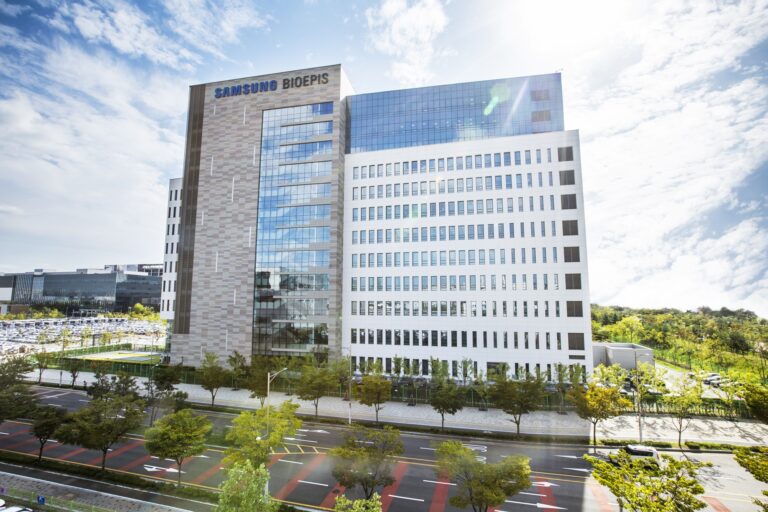
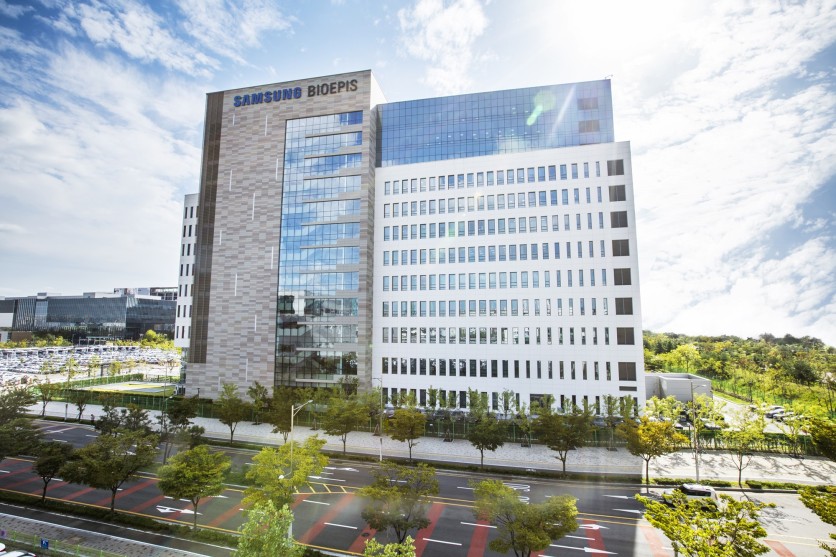
Samsung Bioepis and Teva Pharmaceuticals announced Monday a licensing and commercialization agreement worth up to $420 million for two FDA-approved biosimilars in the US market — but only one of the two products can actually be sold today, per Teva’s SEC 10-Q filing. The deal grants Teva exclusive US rights to infliximab-abda, sold as RENFLEXIS, a biosimilar to Remicade (infliximab), and to etanercept-ykro, sold as ETICOVO, a biosimilar to Enbrel (etanercept). RENFLEXIS is immediately commercializable. ETICOVO is not: a federal court has permanently enjoined Samsung Bioepis from selling it anywhere in the US until at least April 24, 2029.
That injunction — entered November 3, 2021 by the US District Court for the District of New Jersey — found that Samsung Bioepis infringed two Roche-owned patents covering Enbrel’s molecular architecture, as detailed in the 2021 NJ permanent injunction order. The court ordered Samsung to destroy all existing ETICOVO product it had imported into the US. The patents, US No. 8,063,182 and US No. 8,163,522, do not expire until November 2028 and April 2029 respectively, and the injunction terminates only when both have fully expired. Until then, ETICOVO cannot legally reach a single US pharmacy shelf — despite receiving FDA approval in April 2019. For American patients with rheumatoid arthritis, ankylosing spondylitis, psoriasis, and other conditions treated by etanercept, there is still no biosimilar available in the US market, a situation that will not change regardless of this deal for at least two and a half more years.
Two Biosimilars, Two Very Different Commercial Situations
The $420 million headline figure structures as three tiers: a $75 million nonrefundable upfront payment Teva will make to Samsung Bioepis, up to $75 million in launch milestones, and up to $270 million in net sales milestones. From a revenue standpoint, the deal is essentially a split instrument — one leg tied to an immediately active market, the other tied to a future date that depends on patent expiry.
RENFLEXIS entered the US market in 2017, when Samsung Bioepis’s then-partner Merck launched it at a 35 percent discount to branded Remicade, per Merck’s RENFLEXIS launch announcement. Despite FDA approval, it captured only modest share of the infliximab market in its early years, partly because Johnson & Johnson aggressively contracted hospitals and payers to maintain Remicade’s formulary position. Teva’s commercial infrastructure — the company fills one in every 13 US prescriptions through its generic portfolio — represents a meaningfully larger distribution reach than Merck’s earlier effort. Under Richard Francis’s “Pivot to Growth” strategy, Teva has explicitly named biosimilars as a core commercial engine for the coming decade, per Teva’s Pivot to Growth strategy.
ETICOVO’s situation is structurally different. The product has never been sold in the US. The November 3, 2021 court ruling was not a business setback — it was a legal prohibition. Sandoz’s etanercept biosimilar, Erelzi, is under the same framework after the Supreme Court denied Sandoz’s petition for review in May 2021. No biosimilar etanercept is commercially available in the US today, leaving Amgen’s Enbrel with a monopoly that runs until April 2029 — 17 years beyond the original Enbrel molecular patent’s expected expiry date of approximately 2012. Legal and advocacy estimates have put the annual cost of that blocked competition at roughly $1 billion per year in foregone US savings, per estimated $1 billion annual US savings reporting.
RENFLEXIS Takes On Remicade: Teva’s Immediate Commercial Opportunity
Remicade (infliximab) is a chimeric monoclonal antibody administered by intravenous infusion for rheumatoid arthritis, Crohn’s disease, ulcerative colitis, psoriatic arthritis, ankylosing spondylitis, and plaque psoriasis; see all FDA-approved Remicade indications. RENFLEXIS is biosimilar to Remicade — meaning the FDA determined it has no clinically meaningful differences in safety, purity, and potency from the reference product, per Merck’s RENFLEXIS launch announcement. It was approved via the 351(k) pathway established by the Biologics Price Competition and Innovation Act of 2009 (BPCIA), the same legal framework that created the US biosimilar market.
Neither RENFLEXIS nor ETICOVO carries FDA’s highest “interchangeable” designation, which would allow pharmacists to substitute either biosimilar for the branded reference drug without a prescriber’s specific instruction. That means Teva’s commercial team cannot rely on automatic pharmacy-level substitution — they must secure formulary placement through payer negotiations and convince prescribers to adopt RENFLEXIS as the preferred infliximab option in contracts. This is the core commercial challenge Teva is now taking on from Merck: not simply stocking a shelf, but winning market access decisions at health systems, hospital formulary committees, and pharmacy benefit managers across the country.
This deal continues a deepening relationship between Teva and Samsung Bioepis. Following EPYSQLI’s April 2025 US launch of a biosimilar to eculizumab (Soliris), the two companies in October 2026 expanded their collaboration with a global agreement covering six biosimilar products. The November 2026 US deal is specifically scoped to the American market for infliximab and etanercept.
Why ETICOVO Cannot Launch Until 2029: Inside Enbrel’s Patent Wall
Enbrel (etanercept) is not a monoclonal antibody — it is a fusion protein, structurally distinct from infliximab. Where infliximab is a chimeric antibody that binds directly to soluble and membrane-bound TNF-alpha, etanercept is a decoy receptor: a fusion of the p75 tumor necrosis factor receptor binding domain with the Fc region of human IgG1. This fusion protein structure binds and neutralizes free TNF-alpha before it can activate cell-surface receptors, dampening the inflammatory cascade that drives autoimmune conditions. Because biosimilar etanercept must reproduce this specific fusion protein architecture to be biologically active, the two Roche patents covering that architecture — patents ‘182 and ‘522 — necessarily cover any biosimilar version. There is no molecular workaround available to Samsung Bioepis or any other manufacturer.
The original etanercept compound patent expired around 2012. Roche and Amgen then obtained the two secondary structure patents in 2011 and 2012, extending the period of complete US market protection by 17 years. This patent-layering strategy — obtaining secondary patents on specific molecular configurations after the primary patent nears expiry — has become a documented tool for prolonging biologic exclusivity, as analyzed in patent-layering in biologic exclusivity research. The ‘182 patent expires in November 2028. The ‘522 patent expires on April 24, 2029. Both must expire for the injunction to terminate.
The same injunction dynamic blocked Sandoz’s etanercept biosimilar Erelzi, which received FDA approval in August 2016 but has sat in a legal warehouse ever since, per Sandoz Erelzi FDA approval history. As of the November 3, 2026 Samsung Bioepis-Teva deal announcement, there are only two FDA-approved etanercept biosimilars in the world — ETICOVO and Erelzi — and neither can be sold in the US.
This context also colors Amgen’s recent legal history. In May 2025, a Delaware jury found Amgen liable for antitrust violations and awarded Regeneron $406.8 million in damages, finding that Amgen had used bundled rebates on Enbrel and Otezla to push pharmacy benefit managers toward Amgen’s cholesterol drug Repatha over Regeneron’s competing product, documented in Regeneron’s $407 million antitrust award reporting. That verdict does not affect the etanercept patent injunction — the patent claims are legally separate from the antitrust liability — but it underscores how central Enbrel has been to Amgen’s market defense strategy.
When Will an Enbrel Biosimilar Reach US Pharmacies?
Based on current patent expiry schedules, the earliest legally possible date for any etanercept biosimilar US launch is April 25, 2029 — the day after the ‘522 patent expires. Neither the Teva-Samsung deal nor any currently known development changes that date. Unless Amgen enters a patent settlement permitting earlier entry — an arrangement AbbVie pursued with multiple Humira biosimilar makers ahead of that drug’s 2023 US biosimilar wave — ETICOVO and Erelzi are both prohibited from US sale until that date, as covered in AbbVie Humira settlement strategy analysis.
For Teva, the ETICOVO portion of this deal functions as a commercialization infrastructure buildout: establishing the contracts, payer relationships, distribution agreements, and market access architecture needed to execute a rapid launch the moment the injunction terminates. Pharmaceutical companies routinely structure such forward deals precisely because winning formulary access takes years, and arriving at patent expiry without those relationships in place means surrendering early-mover advantage to whoever signed those agreements years earlier.
Teva’s AI-Powered Biosimilar Buildout: Building for the Patent Cliff
Teva CEO Richard Francis has consistently framed biosimilars as a macro-scale commercial opportunity, describing the coming decade as an era in which “three to four hundred billion dollars of brands that will lose their patent” creates a structural opening for companies with the commercialization infrastructure to capitalize, per Francis on biosimilar patent cliff commentary. The Samsung Bioepis partnership is a central pillar of that strategy.
Francis has also invested heavily in AI as a pharmaceutical accelerant. In November 2025, Teva launched Teva Rise, a global open innovation platform focused on artificial intelligence, Industry 4.0 manufacturing, digital health, and biotech, detailed in Teva Rise open innovation platform coverage. The company has committed tens of millions of dollars to these initiatives. Among its AI partnerships is a collaboration with Immunai, whose immune cell atlas (AMICA) and AI model (the Immunodynamics Engine) are being applied to Teva’s immunology clinical trial programs, per Teva-Immunai immunology AI collaboration. In a WebMD interview in April 2025, Francis described a drug-development AI partnership that cut the time from first antibody design to clinic entry from roughly four years to two, per Francis on AI-accelerated antibody development.
The biosimilar business and the AI investment thesis are more connected than they might appear. Biologics manufacturing — the complex living-cell processes required to produce molecules like infliximab and etanercept — is one of the domains where AI-driven process optimization, yield prediction, and quality monitoring can produce meaningful cost reductions. For a company betting that the next decade’s biosimilar pipeline will be worth hundreds of billions in addressable markets, building manufacturing and analytical AI infrastructure now is part of the same long-term position that signing ETICOVO commercialization rights in 2026 represents.
How Do TNF-Alpha Inhibitor Biosimilars Actually Work?
Tumor necrosis factor alpha (TNF-alpha) is a pro-inflammatory cytokine — a signaling protein produced by immune cells during infection or tissue injury that, when overproduced, drives the chronic inflammation underlying conditions like rheumatoid arthritis, Crohn’s disease, and psoriasis. TNF-alpha inhibitors work by blocking TNF-alpha before it can activate its receptors on target cells.
Infliximab (RENFLEXIS/Remicade) and etanercept (ETICOVO/Enbrel) both inhibit TNF-alpha but through structurally distinct approaches. Infliximab is a chimeric monoclonal antibody — 75 percent human sequence, 25 percent mouse — that binds directly to TNF-alpha and neutralizes it on contact. Etanercept takes a different approach: it is a recombinant fusion protein combining two copies of the extracellular domain of the p75 TNF receptor with the Fc segment of human IgG1 antibody, creating a decoy receptor that intercepts TNF-alpha before it reaches the cell surface.
This mechanistic distinction means the two drugs are not interchangeable even with each other, and it explains why their biosimilar development required separate clinical programs and separate FDA approvals. RENFLEXIS and ETICOVO are biosimilars of different reference biologics — a critical point for prescribers choosing between them. The two products treat overlapping but not identical patient populations, and patients who respond well to one TNF-alpha inhibitor do not necessarily respond identically to another. Teva’s commercialization effort will need to address each drug’s clinical positioning separately.
Frequently Asked Questions
When will an Enbrel biosimilar actually be available in the US?
Under the current permanent court injunction, no etanercept biosimilar — including ETICOVO or Sandoz’s Erelzi — can be sold in the US until April 25, 2029 at the earliest, the day after both blocking Roche patents expire. The only scenario that could change this date is a voluntary patent settlement in which Amgen licenses the patents to biosimilar makers before natural expiry — an arrangement AbbVie used with Humira biosimilar manufacturers in 2023. As of the November 3, 2026 deal announcement, no such Amgen settlement has been reported. American patients who could benefit from a lower-cost etanercept option should not expect one before 2029, per US etanercept biosimilar delay reporting.
What is the difference between RENFLEXIS and Remicade?
Remicade (infliximab, Johnson & Johnson) is the reference biologic — the original FDA-approved product. RENFLEXIS (infliximab-abda, Samsung Bioepis) is its biosimilar: a separately manufactured biological product that the FDA has determined to have no clinically meaningful differences from Remicade in safety, purity, and potency, per the RENFLEXIS biosimilar clinical profile. RENFLEXIS is not a generic in the small-molecule sense — it is produced in living cells and cannot be a perfect molecular replica — but it has undergone rigorous analytical, clinical pharmacology, and comparative safety studies. RENFLEXIS does not carry an interchangeability designation, meaning a pharmacist cannot automatically substitute it for a Remicade prescription without the prescriber’s approval. The practical difference for patients who are specifically prescribed RENFLEXIS is essentially none; the practical difference for payers and health systems is a potentially lower cost.
Why can’t ETICOVO be sold in the US despite FDA approval?
FDA approval and legal permission to sell are two separate things. ETICOVO (etanercept-ykro) received FDA approval in April 2019, confirming it is biosimilar to Enbrel and meets US safety and efficacy standards, per ETICOVO’s FDA approval history. However, Amgen, Roche, and Immunex own two US patents — covering specific aspects of etanercept’s protein structure — that do not expire until November 2028 and April 2029. A federal court ruled in November 2021 that ETICOVO infringes both patents, and entered a permanent injunction prohibiting Samsung Bioepis from making, selling, or importing ETICOVO in the US until both patents have fully expired, as confirmed in the 2021 NJ permanent injunction order. This distinction — FDA-approved but legally prohibited — is why the Teva deal for ETICOVO is partly a forward-looking positioning agreement rather than an immediate commercial launch.
How does Teva’s AI investment connect to its biosimilar strategy?
Teva CEO Richard Francis has explicitly linked AI and digital innovation to the company’s biosimilar growth thesis. Through Teva Rise (launched November 2025), the company is investing tens of millions of dollars in AI platforms applied to drug manufacturing, clinical trials, and biologics process optimization, per Teva Rise open innovation platform. A partnership with AI biotech Immunai applies machine-learning immune profiling to Teva’s immunology programs — a direct fit with RENFLEXIS and ETICOVO’s autoimmune therapeutic area, per Teva-Immunai immunology AI collaboration. For a company building commercialization infrastructure today for biosimilars that may not reach their full market potential until 2029 and beyond, AI-driven manufacturing efficiency and clinical analytics are not ancillary — they are part of the competitive cost structure that determines whether biosimilar pricing can undercut branded biologics by enough to win formulary wars, per Francis on AI-accelerated antibody development.