Teenage Engineering Launches $329 CD Player With Auracast Broadcast That AirPods Cannot Receive

November 22, 2026:

Teenage Engineering Launches $329 CD Player With Auracast Broadcast That AirPods Cannot Receive
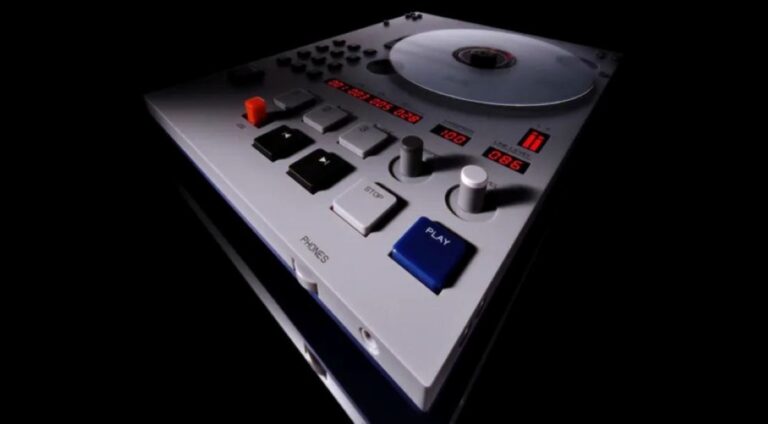
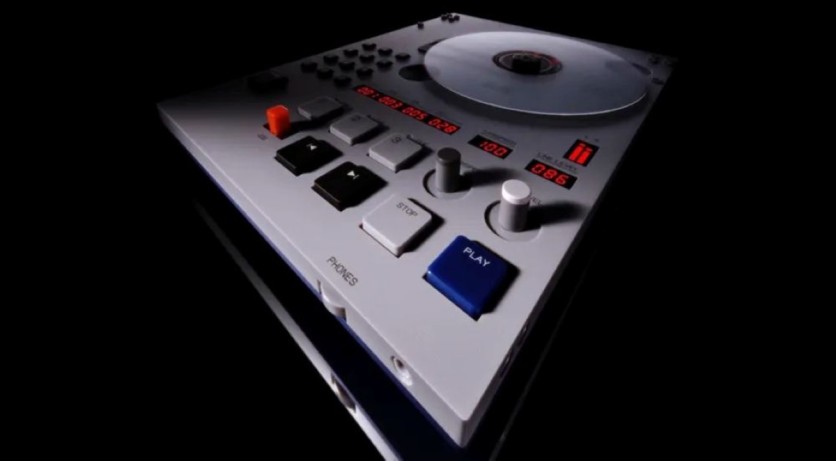
Teenage Engineering CD player EP/BC-1
Teenage.engineering

Teenage Engineering’s EP/BC-1 CD player, which went on sale November 20 for $329, can broadcast its audio over Auracast to an unlimited number of the company’s K.O. AMP 35 speakers, HiConsumption reports the company says, but only receivers with LE Audio broadcast support can join, and Apple has not enabled Auracast on any iPhone, iPad or AirPods model.

If you plan to use the headline feature, that receiver requirement decides whether the $329 player does what you expect. Check your headphones and speakers for Auracast support before you buy, because Bluetooth 5.2 alone does not guarantee it, while standard Bluetooth pairing still works with ordinary headphones and speakers.

The player costs €299 in Europe, approximately $334. Teenage Engineering sells it through its online store, and two U.S. dealers listed it in stock at $329 on launch day.

The player is a battery-powered, open-top disc player: the CD sits exposed on top of the unit and spins like a record. The Stockholm company calls it a professional CD player and the first product in a new Broadcast Series. The company has not said what comes next; Engadget’s writer guessed a cassette player or another mixer, and that is only a guess.

The player rips discs to a USB drive, plays audio CDs and MP3 files on data discs, and has varispeed playback plus beat detection with a tempo sync output. Its footprint is roughly that of the EP-133 K.O. II sampler, which Dubspot lists at 240 x 176 x 16 mm (9.4 x 6.9 x 0.6 in), and it works alone or clips onto the K.O. AMP 35 amp, which lists at $399 in the U.S. The dock kit is a separate purchase: Dubspot says it has four clips and a 90 mm (3.5 in) stereo TRS cable, and one U.S. dealer listed it at $15 on pre-order.

How Does Auracast Broadcast Work in EP/BC-1?

Standard Bluetooth audio uses a profile called A2DP, which transfers stereo audio one way and requires support for the low-complexity SBC codec. The EP/BC-1 supports that mode: Dubspot says holding the BT button pairs it with a speaker or headphones.

Auracast is a different mechanism. It is a broadcast feature of Bluetooth LE Audio, whose specifications the Bluetooth SIG announced as complete on July 12, 2022. The transmitter sends one broadcast rather than keeping a separate connection open to each listener, and receivers find it by choosing from a list of nearby broadcasts, somewhat like picking a Wi-Fi network. Under the hood, the audio travels in broadcast isochronous streams coded with the LC3 codec.

The tradeoff is that “unlimited” describes a protocol ceiling, not what you will hear in practice. The Bluetooth SIG says one transmitter can reach an unlimited number of nearby receivers. Real coverage depends on the transmitter, the receiver, antenna design and the building, and both ends must support Auracast, because Bluetooth 5.2 alone does not guarantee it. Teenage Engineering’s user guide gives no range or latency figure.

Within Teenage Engineering’s own ecosystem the feature is more concrete. The company says there is no limit to how many K.O. AMP 35 units the player can feed at once, and you can set an Auracast password so only matching devices join. The K.O. AMP 35 itself links multiple units over Auracast.

AirPods Cannot Join Auracast Broadcasts, but Standard Bluetooth Still Works

Tech Times reported on October 28 that Apple has not implemented Auracast on any iPhone, iPad or AirPods model, including the iPhone 17 and iOS 26, and that AirPods Max 2, AirPods Pro 2 and AirPods 4 are absent from Auracast-compatible device lists. Hearing-technology outlet HearingTracker reported that Apple did not announce Auracast support at its WWDC26 keynote.

For an iPhone and AirPods owner, that means the player works over standard Bluetooth pairing only. Samsung Galaxy earbuds can receive Auracast, by contrast, according to the same Tech Times report.

Can Auracast Broadcasts From EP/BC-1 Be Intercepted?

Security researchers have documented weaknesses in the broadcast layer that Auracast uses. A 2023 paper from Graz University of Technology, titled BISON: Attacking Bluetooth’s Broadcast Isochronous Streams, showed that these streams can be taken over and manipulated. At the 38th Chaos Communication Congress in December 2024, researchers Frieder Steinmetz and Dennis Heinze said the default configuration on popular devices was weak and that encrypted broadcasts could often be cracked.

Neither piece of research tested the EP/BC-1. Treat its optional password as a convenience filter for shared listening, not as a guarantee of privacy.

Line Output Goes Silent While Bluetooth Is Connected, and Other Limits

Teenage Engineering’s guide says the main line output goes silent while a Bluetooth device is connected. Dubspot’s reading of the guide does not say how the headphone jack behaves, or whether the rule applies in broadcast mode. The two 3.5 mm (0.14 in) stereo outputs are listed at 1 Vrms with a 100 dBA signal-to-noise ratio, and a USB port carries digital audio out at 44.1 kHz and 16 bits. The guide lists no Bluetooth codec for the A2DP link.

Ripping is manual and happens one track at a time. You hold Enter and press Prev during playback, and the player writes a stereo WAV at 44.1 kHz and 16-bit to a flash drive in the second USB port. Those numbers match the CD audio standard, which specifies two-channel 16-bit audio at 44.1 kHz, so the WAV is a copy of the disc’s own format. The drive must be FAT32 and 32 GB or smaller. FAT32 itself supports volumes up to 2 TB with 512-byte sectors; the 32 GB figure matches the limit of Windows’ built-in format tool, and Teenage Engineering does not say why it chose that cap.

Cue markers are bookmarks, not instant triggers. The player stores three per disc and remembers them for the last 40 discs, but not for MP3 data discs. Teenage Engineering’s guide lists no weight.

The battery is a built-in 3.7 V, 2,000 mAh cell charged over USB. The user guide gives about six hours of playback on a full charge and about two hours to charge from a 5 V, 1 A supply, and the player powers off after five minutes of stopped playback.

Beat Detection Sends 1/16 Clock to K.O. II, and Varispeed Spans 50 to 150 Percent

The player detects tempo and sends a 1/16 clock from a 3.5 mm (0.14 in) sync jack, with a play and stop reset on the ring. The display shows the detected BPM and a confidence level, and you can correct the tempo by tapping. The EP-133 K.O. II sampler’s sync input listens for 1/16 by default, which matches the player’s output.

Varispeed runs from 50 percent to 150 percent, with time stretch. The distinction matters for DJs: plain varispeed changes pitch and duration together, so slowing a record lowers its pitch, while time stretching decouples the two. Phase vocoders, a common time-stretch method, have historically smeared transients, the drum hits that define a beat, and some smearing remains. Teenage Engineering has not published the time-stretch algorithm.

Shanling EC Zero AKM Rips CDs at $319 but Its Launch Coverage Names No Auracast

Teenage Engineering is not the first company to sell new portable CD hardware. Shanling’s EC Zero AKM lists at $319 and also rips discs to a USB flash drive as uncompressed WAV files. It has Bluetooth 5.3 with aptX Adaptive, aptX and SBC codecs and a 5,500 mAh battery rated for up to 10 hours with wired headphones and up to 18 hours with wireless headphones, and Notebookcheck’s launch report does not mention Auracast. FiiO’s DM13 was announced in July 2024 at $179 with aptX Bluetooth support.

The EP/BC-1 gives up battery capacity, at 2,000 mAh and about six hours, and adds tempo sync, varispeed, an open-disc design and Auracast broadcast. The market is real: the RIAA reported that U.S. CD revenue overtook downloads in 2023.

The player was no surprise. A Gearnews report on the leak earlier in November showed it under the name EP BC-1 PROFESSIONAL CD PLAYER, and Gizmodo Japan noted it had already appeared in Japanese radio certification. It arrives as Engadget reports rumors, unconfirmed, that Teenage Engineering is phasing out its synthesizer business.

Range, Latency, Codec and Weight Remain Unpublished

Teenage Engineering’s v1.0.3 user guide gives no Auracast range, latency figure, Bluetooth codec or weight. The six-hour battery figure is the company’s rating for continuous playback on a full charge, and regional pricing and stock vary.

For a buyer, the decision comes down to three checks. Confirm that your headphones or speakers support Auracast reception, or accept standard Bluetooth pairing. Decide whether one-track-at-a-time ripping to a 32 GB-or-smaller FAT32 drive fits your collection. And weigh $329 against Shanling’s $319 EC Zero AKM, which has the larger battery, against the EP/BC-1’s tempo sync and broadcast.

Currency conversions are approximate, based on exchange rates at the time of writing, and subject to change.


Frequently Asked Questions

Which headphones and speakers can I use with the EP/BC-1?

Holding the BT button pairs it with a speaker or headphones over standard A2DP streaming. To receive an Auracast broadcast, a receiver must explicitly support Auracast; the Bluetooth version number alone does not tell you. Teenage Engineering’s K.O. AMP 35 is the receiver the company names.

Can the EP/BC-1 rip a whole CD at once, and is ripping my own discs legal?

It records the playing track to a WAV file, one track at a time. In the U.S., personal-use CD ripping is generally considered fair use, though copyright law does not explicitly guarantee it, so check current rules or ask a lawyer; this is not legal advice.

How long does the battery last?

Teenage Engineering’s guide gives about six hours of continuous playback on a full charge and about two hours to charge from a 5 V, 1 A supply.

Does the EP/BC-1 sync with the EP-133 K.O. II?

Yes. The player’s sync output sends a 1/16 clock, which the K.O. II’s sync input expects by default.

Source link