TEAC UD-701N-X Network DAC Debuts Optical Fiber Input in Tokyo at About $4,000 Price

November 23, 2026:

TEAC UD-701N-X Network DAC Debuts Optical Fiber Input in Tokyo at About $4,000 Price
TEAC UD-701N-X Network DAC
Teac.co.jp

Tokyo’s Hi-End Audio & Accessories Show 2026 closed Sunday after three notable showings: the first public appearance in Japan of TEAC’s UD-701N-X network DAC/preamplifier and AP-701-X power amplifier, public demonstrations of Bowers & Wilkins’ complete 800 Series Diamond D5 speaker range, and the first listening session in Japan for Volumio’s $4,999 Rivo ULTRA network transport. The two-day show, organized by Ongen Publishing, which also publishes PHILE WEB, ran November 21 and 22 at Hulic Hall Asakusabashi in Tokyo’s Taito ward. Admission was free, and the organizer added a 790-square-meter (approximately 8,503 sq ft) second-floor hall and foyer, making the show more than double its previous size.

TEAC announced the UD-701N-X and AP-701-X on November 18, three days before the show opened, and joined the event as a late addition to the exhibitor list. Both devices go on sale in Japan on January 30, 2027. The UD-701N-X is priced at ¥638,000 (approximately $4,042 USD), and the AP-701-X at ¥528,000 (approximately $3,345 USD). International pricing and availability had not been announced when the models were unveiled.

TEAC’s demonstrations ran in Room 1 on the third floor. Critic Saburo Ubukata lectured there on Saturday from 13:00, and critic Ikuo Kakuda on Sunday from 11:30.

TEAC Reference 700X: Discrete DAC and Optical Fiber Networking

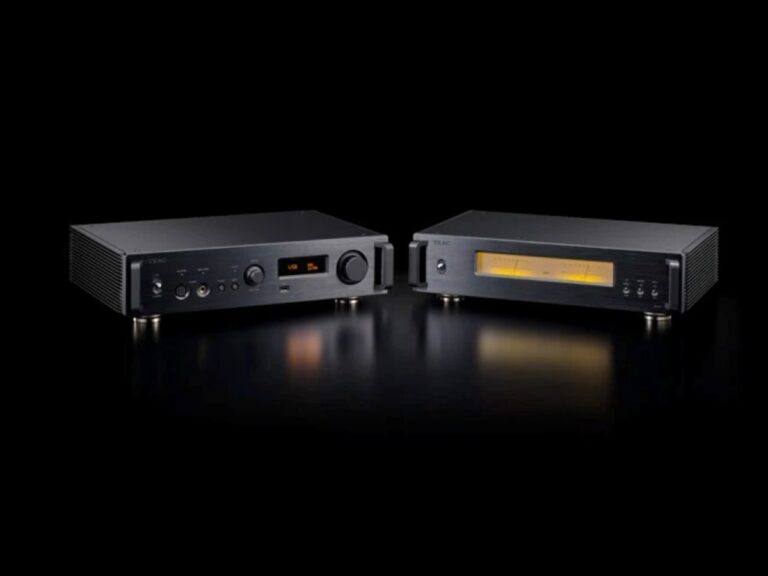
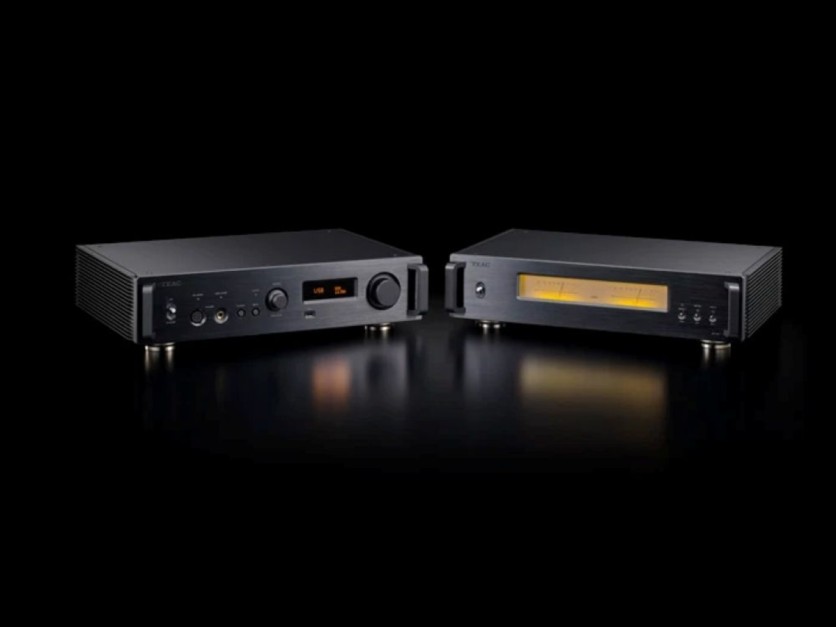
The UD-701N-X is a revision of TEAC’s 2021 UD-701N, a single chassis that combines a network player, USB DAC, analog preamplifier and headphone amplifier. TEAC says it revisited four areas: sound quality, networking, connectivity and the chassis. At its core is TEAC’s TRDD7 V2, the second revision of the company’s discrete DAC. Instead of a general-purpose DAC chip, it pairs an FPGA running a proprietary algorithm with multi-level delta-sigma discrete circuitry. “Discrete” means the conversion circuit is built from individual components rather than from a chip made by a supplier such as AKM or ESS Sabre. Chip supply became a live concern for the industry after the October 2020 fire at AKM’s Nobeoka plant, which cut off supply of the company’s DAC chips.

Published resolution figures differ by input. PHILE WEB lists PCM up to 384kHz/32-bit over USB and DSD up to 22.5MHz. A spec summary from audiomatome lists 768kHz/32-bit for network and USB-drive playback, up from the 384kHz of the UD-701N, while the USB input stays at 384kHz. Whether sampling rates above 96kHz are audible remains contested among researchers.

The change most relevant to listeners concerned with noise is a new SFP (Small Form-factor Pluggable) port, which lets the unit connect to a network over optical fiber through a compatible module, alongside a standard RJ45 Ethernet port. Fiber carries light rather than electrical current, so it removes the conductive path between a network switch, a possible source of electrical noise, and the DAC’s analog circuitry. That property is called galvanic isolation. A copper Ethernet connection stays electrically coupled; careful design can reduce the noise it carries but cannot remove that path. Whether the difference is audible in a given system is debated among audiophiles. Linn put an SFP port on its Klimax DSM flagship streamer when it relaunched the line in 2021, a move PHILE WEB noted drew attention worldwide. The UD-701N-X brings the same connection to a product priced at a small fraction of the Klimax DSM, which one UK retailer has listed at £35,000 in the UK, and adds preamplifier and headphone-amplifier functions.

The fourth-generation TEAC Network Engine G4 supports Qobuz Connect, TIDAL Connect, Spotify Connect, Roon Ready, QQ Music and KKBOX, according to audiomatome, which notes that some services are not yet available in Japan.

Hypex Ncore Class D Power in the AP-701-X

The AP-701-X is a stereo power amplifier built around Hypex Ncore Class D modules, with fully independent left and right channels from the input stage through the power supply. PHILE WEB reports that TEAC re-tuned the internal circuits and vibration-damping structure of the 2021 AP-701, aiming for fresher sound, a more three-dimensional soundstage and firmer bass.

Ncore was designed by Bruno Putzeys and announced in Hypex’s 2011 Ncore white paper as a successor to the company’s self-oscillating UcD modules. Both include the LC output filter, the low-pass network that smooths the high-frequency switching waveform into an audio signal, inside their feedback network, which keeps the filter’s behavior under correction whatever the speaker load. According to HiFi News, what Ncore added was an error signal, built by comparing the amplifier’s real output with a simulation of its filter, that allows over 50dB of feedback, compared with about 30dB for UcD, by separating loop gain from stability.

PHILE WEB’s sponsored 2021 review of the original AP-701, heard with the UD-701N and B&W 706 S2 speakers, found almost none of the hardness or coldness usually associated with switching amplifiers and described the sound as gentle and warm. That was one reviewer’s impression in one system, published as paid content.

The AP-701-X is rated at 230W per channel into 4 ohms and 135W into 8 ohms at 1% distortion. Maximum practical output is 260W into 4 ohms and 170W into 8 ohms, and total harmonic distortion is listed at 0.003% (8 ohms, 1kHz, 55W). Class D’s high efficiency, meaning less waste heat than a Class AB design at the same power, is what makes the slim chassis PHILE WEB describes practical.

Volumio Rivo ULTRA: Japan’s First Listening Session Before November 30 Shipping

Volumio, the Florence-based maker of audio software and streamers, gave its flagship Rivo ULTRA transport Japan’s earliest listening session on Saturday at 15:00 in Room 1. TOP WING’s Yosuke Suganuma presented it. The Rivo ULTRA was first announced at High End Vienna over the summer, and pre-orders opened November 18.

The unit is priced at £3,499 and $4,999, and at €3,999 including shipping and taxes (approximately $4,404 USD), with the pound price equal to approximately $4,626 USD. It ships November 30. No Japanese price has been announced.

The Rivo ULTRA has no built-in DAC. It outputs only digital signals and relies on an external DAC to perform the conversion, so its case rests on the quality of the digital signal it delivers. Volumio cites 54 femtoseconds RMS phase noise for the femto clock that drives its integrated digital outputs. Phase noise, or jitter, is timing uncertainty in the data stream; a DAC with strong jitter rejection largely ignores it, while one without may turn it into a subtle form of distortion. The USB-A output supports PCM up to 1536kHz and DSD1024, according to audiomatome, and the design uses a custom implementation of the Amanero768 digital interface. PHILE WEB adds that the unit has I2S and AES/EBU outputs and is the company’s first with a front display.

Other specifications include a 12-inch ultra-wide touchscreen, a dual internal linear power supply, and an SSD expansion slot for up to 16TB of local music storage. Each unit is assembled and tested by hand in Florence.

Bowers & Wilkins 800 Series Diamond D5: Full Range on Public Display

Bowers & Wilkins unveiled the 800 Series Diamond D5 at High End Vienna on June 4, 2026, and the range had already been heard in Tokyo at the Tokyo International Audio Show in October. At the Asakusabashi show, every D5 model stood in the new second-floor hall for a two-hour public listening demonstration. The first half compared the D5 range with the previous D4 generation; the second half played award-winning models from the 2027 Audio Award selection on the 801 D5. Sawada of D&M Holdings, who has handled Bowers & Wilkins in Japan for more than 50 years, explained the changes alongside audio critics on both days.

The D5 is the fifth generation of its flagship 800 Series Diamond range. Audioholics lists a new Space Frame Bracing of aluminum rails at the rear of the cabinet, an internal aluminum enclosure for the Continuum cone midrange on the 804 D5, and drive-unit motors and crossover components based on those of the Signature models.

U.S. list pricing is 801 D5 at $65,000 per pair and $15,000 per pair for the 805 D5, with availability from September 9, 2026. UK pricing is 801 D5 at £43,000 per pair (approximately $56,850 USD) and £10,000 per pair for the 805 D5 (approximately $13,221 USD). Bowers & Wilkins said at the June announcement that Japanese ordering would open in autumn, with pricing to follow.

When Each Product Arrives

Bowers & Wilkins’ D5 speakers are the only one of the three with a retail date already past in some markets, September 9. Volumio’s Rivo ULTRA begins shipping November 30. The TEAC Reference 700X components go on sale in Japan on January 30, 2027.

Exchange rates as of November 22, 2026; currency conversions are approximate.


Frequently Asked Questions

What is SFP optical networking, and why are audiophiles interested in it?

SFP (Small Form-factor Pluggable) is a standardized slot that accepts a module for fiber optic cable. In audio, the appeal is galvanic isolation: optical fiber carries no electrical current, so there is no conductive path between the network switch and the DAC’s analog circuitry. Switches and their power supplies can add electrical noise to a copper Ethernet cable, and an SFP connection removes that route. Linn added an SFP port to its Klimax DSM in 2021, and the TEAC UD-701N-X offers the same connection in a product priced at a small fraction of that streamer. Whether isolation is audible in a particular system is debated.

How does Hypex Ncore differ from conventional Class D amplifiers?

Many Class D amplifiers take error-correction feedback from before the output filter, so distortion added by the filter goes uncorrected. Hypex’s self-oscillating designs, including its earlier UcD modules and Ncore, include the filter inside the feedback network. Ncore, designed by Bruno Putzeys and announced in 2011, added a corrective error signal that allows more than 50dB of feedback, compared with about 30dB for UcD. The AP-701-X uses TEAC-tuned Ncore modules in a dual-mono layout.

What is the difference between a chip DAC and a discrete DAC like the TRDD7 V2?

A chip DAC uses an integrated circuit from a manufacturer such as AKM, ESS Sabre or Texas Instruments Burr-Brown to convert digital audio to analog. A discrete DAC builds an equivalent function from individual components, and TEAC’s TRDD7 V2 pairs an FPGA with multi-level delta-sigma discrete circuitry. Practical differences include independence from chipmaker supply, which became a concern after the October 2020 fire at AKM’s Nobeoka plant, and the ability to tune the circuit at component level. Whether the approach is audibly superior under controlled conditions is contested.

When does the TEAC UD-701N-X go on sale, and what does it cost?

The UD-701N-X goes on sale in Japan on January 30, 2027, at ¥638,000 (approximately $4,042 USD). The AP-701-X amplifier launches the same day at ¥528,000 (approximately $3,345 USD). Both come in silver and black. International pricing and availability had not been confirmed when the models were announced.

Source link