October 31, 2026:


Tathvamasi Studios’ SURI: The Seventh Note launched today on PlayStation 5 and PC — the first major commercial release to emerge from Sony’s PlayStation India Hero Project — and its beating heart is not the story or the visuals, but a proprietary engineering solution that nobody else has built: a Rhythm Haptics Engine specifically designed to translate the amplitude of live analog instrument recordings into DualSense tactile feedback, synchronized to a mathematically enforced 480-millisecond beat window.
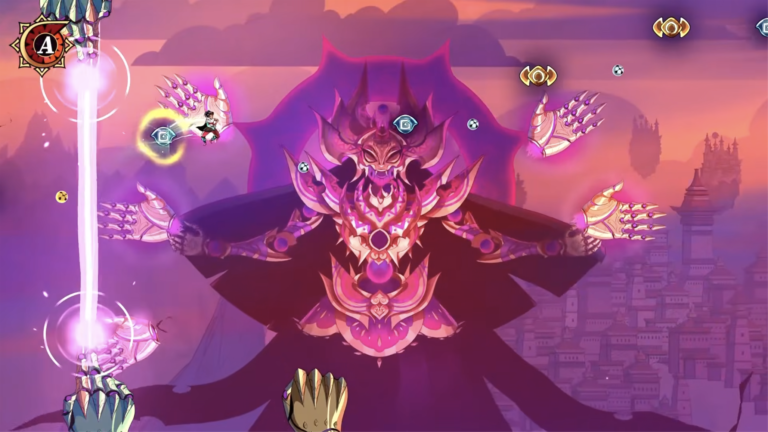
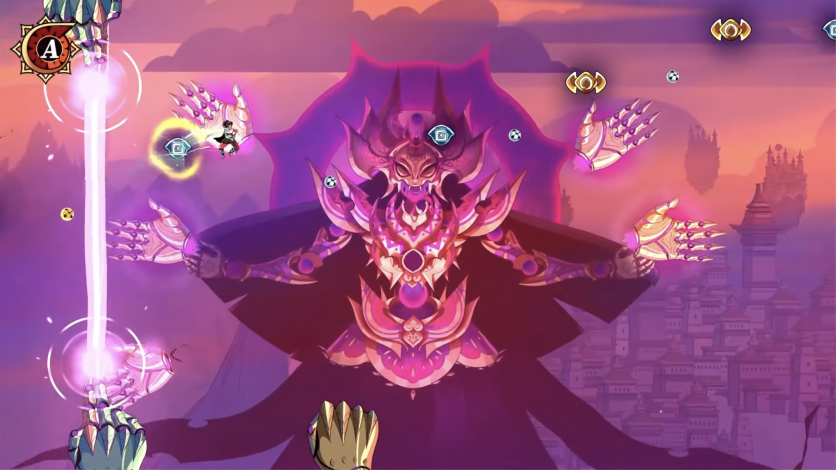
Ajira, a young woman from the island of Suri — a place where rhythm is described as “its lifeblood” — sets out on an urgent quest to save her mother from a deadly illness that has already claimed her father. Her only hope is a magical fruit hidden deep within Ragamandala, the island’s mythical interior, now torn apart by a corrupting force that has thrown its rhythm out of alignment. To progress, Ajira must master the island’s beat, channel its power, and fight through a world that shifts and reacts in real time to every note she plays. The tone sits somewhere between melancholy urgency and hand-illustrated fairy tale: the environments are lush and colorful, the story is grounded in personal loss, and the threat is simultaneously intimate (a dying parent) and cosmological (an island whose lifeblood is being corrupted). Illustrated portrait-style cutscenes drew praise from reviewers for their visual confidence, even as critics noted the absence of voice acting leaves the narrative feeling underserved.
The game is priced at $19.99 on both PS5 and PC via Steam and GOG. A Digital Deluxe Edition is available for $24.99 and includes three days of early access (which began October 27), the exclusive Chandini skin, and upcoming downloadable content.
Sony Interactive Entertainment launched the India Hero Project in May 2023 at the India Game Developer Conference in Hyderabad. The initiative operates similarly to Sony’s longer-running China Hero Project: selected studios receive development funding, technical mentorship, access to professional-grade hardware, and marketing support to help bring original intellectual property to a global audience. In March 2024, Sony announced five supported India Hero Project titles, of which SURI: The Seventh Note is the first to reach commercial launch.
The project arrives at a moment when India’s game development landscape is undergoing genuine structural change. India’s video game market revenue crossed $1 billion for the first time in 2025, growing 14.8% year-over-year according to Niko Partners, and the country now hosts over 1,900 gaming companies employing more than 130,000 people per the India Gaming Report 2025. For most of that history, Indian studios served as outsourced art, asset, and QA vendors for international publishers. Tathvamasi represents a different model: original IP, developed in Bengaluru, built for a global console platform.
Game Director and CEO Glen Martin stated in a press release: “It’s our first game, and we wouldn’t be here without the gracious support of PlayStation India Hero Project. We had a blast making it, now it’s your turn to feel the rhythm.”
The most technically interesting element of SURI is not a game mechanic in the conventional sense but an audio engineering system. Tathvamasi built a Rhythm Haptics Engine for DualSense specifically to leverage the PS5 DualSense controller’s haptic capabilities. The engine operates across three simultaneous sensory channels: players hear the beat through the game’s audio, see the beat through environmental visual responses, and feel the beat as DualSense vibration. According to Music and Audio Director Jitin David — a member of instrumental rock band Mushroom Lake from Thrissur — the haptic signals are fed directly from “the base groove in music during gameplay,” with controller vibration driven by the amplitude of the audio signal.
This is not a cosmetic feature. David notes that the haptic implementation was designed partly with accessibility in mind: for players who are fully or partially deaf, the DualSense vibration becomes the primary channel through which the game’s rhythm communicates. The PC version supports haptic feedback as well, though the PS5 implementation receives enhanced tuning through the Rhythm Haptics Engine’s deeper DualSense integration.
Critically, this approach also provides an answer to a question the studio does not often get asked publicly: why are rhythm games hard for deaf players to access at all? The answer is that most rhythm games build their feedback loop entirely around audio cues. SURI’s multi-sensory design makes rhythm visible and tactile simultaneously.
The central engineering problem Tathvamasi had to solve is one that any rhythm-action game faces but rarely discusses in public: the human thumb is slow. The minimum time it takes a player to perceive a beat cue, decide to act, and complete a button press creates a hard lower bound on how tightly a rhythm game can space its beats before the game becomes physically unplayable regardless of the player’s skill.
After “a lot of trial and error,” Glen Martin and the team landed on 480 milliseconds as beat gap between main consecutive beats. As Martin explained in the PlayStation Blog: a gap shorter than 480ms makes the fail-state “too subtle or quick for the player to consciously or subconsciously recognize that they have fallen off rhythm.” A gap longer than 480ms breaks the spacing and kills the sense of momentum. The specific value is not arbitrary — it represents the team’s measurement of how much time a player needs in a real-time action context to process failure, recalibrate, and re-engage without the game feeling either laggy or punishing.
This constraint in turn shaped the game’s approach to music. Because the 480ms requirement rules out many traditional Indian classical music rhythms — which operate on different temporal structures — Tathvamasi invented what Martin describes as “our own music genre”: a hip-hop-like structural foundation, bouncy and non-aggressive, with Indian textural instruments layered over it.
Eighty percent analog instrument recording rather than synthesized electronics was a deliberate decision the team made to preserve the “texture” of the sound. The instrument selection changes by biome: the southern island sections use a veena rather than a sitar; desert sections draw on Rajasthani musical traditions. Visual environments follow the same regional cultural traditions by biome — forest biomes draw from the Western Ghats and the ancient ritual art form of Theyyam, while architecture references Rajput forts and Himalayan monasteries.
The percussion palette assembled by David and composer Finny Kurian includes elathaalam, idakka, roto toms, floor toms, taikos, shakers, and finger bells, among others. David cites influences including the minimalist geometry-game 140, the music-synchronized level design of Rayman Legends, and HiFi Rush, where environmental objects pulse to the protagonist’s internal beat. He describes the result as “an experience that blends precision-based rhythmic gameplay with expressive, visually driven storytelling.”
David recommends headphones for the most immersive experience, citing the way the haptics and the audio signal work together.
SURI: The Seventh Note launched to mixed early critical reception. NoisyPixel reviewer Yuna Briggs, who reviewed the PC version before launch, awarded game 4 out of 10. Her primary criticisms centered on floaty movement that undermines the precision the rhythm mechanics demand, a combo meter and ranking system that builds visual complexity without offering meaningful rewards, repetitive music arising from reused obstacle sound assets, and cutscenes that communicate the story’s emotional beats without voice acting to support them. Praise went to the vibrant, hand-illustrated visual art direction.
The Outer Haven confirmed receiving a review copy and published a review on launch day. A broader critical consensus is still forming as of launch.
The disconnect between Tathvamasi’s genuine technical ambition — the 480ms solution, the multi-sensory haptics design — and the reported execution gap in feel and reward systems is the central tension any potential buyer should weigh. This is a game built by a team of first-time console developers over four years with meaningful institutional support; the engineering choices behind its rhythm system are clearly deliberate and thoughtful. Whether those choices feel right in the hands is the open question reviewers are working through today.
SURI: The Seventh Note is available now on PlayStation 5 and PC via Steam and GOG for $19.99. Players who own a PlayStation Plus membership received a 20% pre-order discount on PS5. The Digital Deluxe Edition, priced at $24.99, includes the Chandini skin, upcoming downloadable content, and three days of early access (started October 27).
The PlayStation India Hero Project is a Sony Interactive Entertainment incubator launched in May 2023 that provides selected Indian studios with development funding, technical mentorship, hardware access, and marketing support. It follows the model of Sony’s China Hero Project and was designed to help Indian developers build original intellectual property for global platforms rather than serving purely as outsourced production houses. SURI: The Seventh Note is the first of the program’s five initial titles to reach commercial launch, making it a significant test case for whether the India Hero Project can produce games that compete on the global PS5 library.
The Rhythm Haptics Engine is a proprietary system Tathvamasi built to translate the amplitude of the game’s audio signal directly into DualSense controller vibration. The result is that the PS5 controller vibrates in sync with the music’s underlying beat, giving players a tactile channel alongside the audio and visual cues. The PC version also supports haptic feedback, but the PS5 DualSense receives a more developed implementation because Tathvamasi built the engine specifically around DualSense’s capabilities. Music Director Jitin David notes that this also makes the game more accessible for deaf or hard-of-hearing players, for whom the haptic signal becomes the primary rhythmic guide.
Yes, significantly. The 480ms interval is the result of extensive trial and error to find the minimum gap between beats that allows players to perceive a rhythm failure, process it, and re-engage without the interaction feeling disconnected. Traditional Indian classical music rhythms were not compatible with this constraint, so Tathvamasi invented a hybrid genre: a hip-hop-like structural foundation — bouncy, non-aggressive, with decluttered layering — over which they placed Indian textural instruments. About 80% of the score was recorded on analog instruments, with the instrument selection varying by the biome’s regional inspiration (veena for southern sections, Rajasthani instruments for desert zones). The result is a score that sounds culturally rooted but is engineered around a human-performance timing requirement.
The earliest review (NoisyPixel, 4/10 on PC) identified floaty movement, a reward system that doesn’t back up its combo mechanics, and music that becomes repetitive as its main weaknesses. Praise went to the visual art direction. The broader critical picture is still developing on launch day. The strongest argument for purchasing is that the game represents something genuinely novel — Indian mythology, an original haptics architecture, and a regional music system built from analog instruments — that doesn’t exist anywhere else on PS5. The strongest argument for waiting is that early feedback suggests the execution of the core rhythm-feel may not yet match the ambition of the design. At $19.99, the risk is modest.