SpaceX USSF-385 Launches Saturday to Grow Spy Fleet Too Large for Anti-Satellite Weapons

September 26, 2026:

SpaceX USSF-385 Launches Saturday to Grow Spy Fleet Too Large for Anti-Satellite Weapons
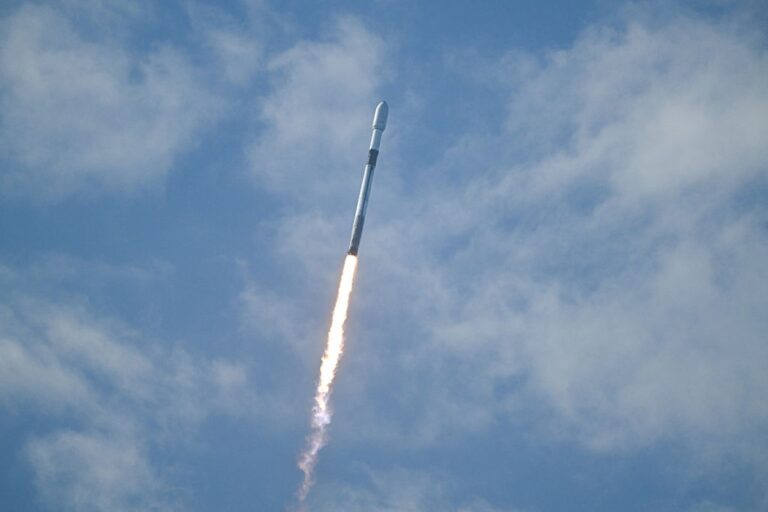
CHANDAN KHANNA/AFP via Getty Images

SpaceX is targeting early Saturday morning for the launch of USSF-385, a classified United States Space Force mission lifting off from California’s Vandenberg Space Force Base — and while the mission designation tells the public almost nothing, the strategic rationale behind it tells you everything about how America has quietly transformed its intelligence infrastructure in space. The USSF-385 mission tracking page lists the launch as GO for liftoff.

The three-hour launch window will open at 4:56 a.m. PT (7:56 a.m. ET) on September 26, 2026, with liftoff from Space Launch Complex 4E. If weather or technical conditions prevent a launch that morning, a backup window is available on Sunday, September 27, at 5:49 a.m. PT (8:49 a.m. ET). The mission is expected to carry another batch of Starshield satellites into low Earth orbit — compact, classified reconnaissance spacecraft that form the backbone of what the National Reconnaissance Office describes as the largest government constellation in history.

What makes USSF-385 more than a routine classified launch preview is what it represents in aggregate. When adversary nations developed anti-satellite weapons — China and Russia have both tested kinetic ASAT missiles capable of destroying satellites in low Earth orbit — they built them around a doctrine that assumed the United States depended on a small number of large, expensive spy satellites. Destroy three or four of them and you blind American ISR (intelligence, surveillance, and reconnaissance) capabilities for days or weeks. That doctrine no longer works against the constellation USSF-385 is joining. When hundreds of satellites orbit across multiple planes, no realistic ASAT campaign can destroy enough of them to achieve a meaningful coverage gap. The NRO built a constellation specifically engineered to make it harder for adversaries to disrupt American ISR capabilities.

What Starshield Is — and Why It Changed the Economics of Spying from Space

The payload almost certainly consists of Starshield satellites — SpaceX’s government-specific variant of the Starlink platform, publicly disclosed Starshield in December 2022. While Starlink is designed for broadband internet connectivity, Starshield is built for three distinct government missions: earth observation (satellite-mounted sensing payloads that deliver processed intelligence data directly to the user), assured global communications for government operators, and hosted payloads (a standardized satellite bus that can accept third-party sensor modules — the approach Northrop Grumman is believed to have used to supply the sensors for the NRO’s surveillance payloads). The SpaceX Northrop Grumman surveillance partnership was first reported by Reuters in April 2024.

The crucial technical differentiation from standard Starlink is in the SpaceX Starshield security architecture. Where Starlink uses commercial encryption for its data links, Starshield adds “high-assurance cryptographic capability” — in practice, hardware-enforced isolation of classified payloads and NSA-compatible Type 1 encryption for SECRET-and-above data. The inter-satellite laser communication links that SpaceX has deployed across the Starlink constellation are also present on Starshield, allowing the constellation to form an optical mesh network that can relay data globally without depending on ground relay stations — a significant operational advantage in contested electromagnetic environments where adversaries can jam conventional radio-frequency downlinks.

The reason the NRO can now deploy hundreds of satellites is straightforward once you understand the economics. A traditional large NRO satellite — the kind that took six or more years to design, build, and launch — cost several billion dollars per unit and was replaced perhaps once per decade. The Starshield bus, built on the same production line as Starlink V2 Mini satellites, uses the same flat-panel form factor (roughly 30 centimeters thick, 4.1 meters across, with a 29-meter wingspan of deployed solar panels) and weighs approximately 750 kilograms at launch — a fraction of a legacy spy satellite’s mass. The manufacturing cadence that allows SpaceX to produce Starlink satellites by the hundreds per year also applies to Starshield. That volume economics drove the cost per satellite down by orders of magnitude compared to the traditional program-of-record approach, making a constellation of hundreds of spacecraft economically viable for the first time.

B1100’s Tenth Flight: A Booster Built for This Moment

The workhorse lifting USSF-385 is first-stage booster B1100, which will be flying for the tenth time. The designation carries its own significance: B1100 was the 100th Falcon 9 Block 5 first stage ever produced by SpaceX, and the company marked the milestone with a special “100” logo painted on the booster when it launched Starlink Group 11-30 on November 23, 2025, from this same pad. Since then, it has carried the NROL-105 reconnaissance mission in January 2026 and rotated through commercial Starlink deployments before being selected for USSF-385 — its tenth flight in just over ten months, and its second national security mission.

Following stage separation, B1100 will attempt to land on SpaceX’s droneship Of Course I Still Love You, stationed offshore in the Pacific Ocean. A successful landing will be B1100’s tenth consecutive propulsive recovery, extending the operational life of a booster that has already flown twice as many missions as the first generation of Falcon 9 boosters were certified for. The economic logic is the same one that enables the Starshield proliferated architecture: every successful recovery cuts the effective cost of the next national security launch.

The Orbital Geometry That Makes Vandenberg Essential

Space Launch Complex 4E at Vandenberg Space Force Base has become the primary launchpad for these classified low-Earth-orbit missions for a reason that has nothing to do with geography and everything to do with trajectory mathematics. Reconnaissance satellites need to see as much of Earth’s surface as possible — ideally including polar regions where denied-area military activity frequently occurs. Achieving that requires a high orbital inclination, typically between 60 and 97 degrees to the equator.

Reaching those orbital planes requires launching on a trajectory that sweeps far south immediately after liftoff. Cape Canaveral in Florida is hemmed in by the populated US East Coast — any southward trajectory would fly over land masses before reaching orbit, creating unacceptable debris risk. Vandenberg’s Pacific Ocean coastline allows Falcon 9 to fly a south-to-southeast trajectory without overflying populated areas, unlocking orbital inclinations that Florida cannot achieve. That trajectory geometry makes SLC-4E the only viable West Coast launchpad for the NRO’s constellation of high-inclination reconnaissance satellites.

The signature of that trajectory also helps open-source space analysts identify the mission. Independent analysts noted that the booster stage drop zone analysis for prior USSF-series launches from SLC-4E are “exact fits with previous Starlink Group 15 launches” — meaning the ascent trajectory profile matches that of earlier Starshield missions. When the classified payload and trajectory fingerprints align with prior Starshield missions, the inference becomes strong enough that the space analyst community treats it as near-certain.

SpaceX Dominance in National Security Space Is Now Structural

USSF-385 falls under the strictest national security launch program — the National Security Space Launch (NSSL) Phase 3 Lane 2 contract, covering the most demanding national security payloads through 2029. The overall program spans two competitive lanes with the total NSSL procurement $76 billion for 337 launches between fiscal years 2004 and 2032, according to the most recent selected acquisition report published in September 2026.

SpaceX holds the largest share of the most sensitive Lane 2 missions, having secured $5.9 billion worth of assignments. In the most recent fiscal year 2026 assignment round, Space Systems Command awarded SpaceX five of seven mission slots worth $714 million — with United Launch Alliance securing the remaining two missions worth $428 million. Blue Origin, which is still working through the Space Force’s certification requirements for New Glenn, received no assignments in this round. The company’s Lane 1 position is also expanding rapidly: in July 2026, the Space Force tripled Lane 1 contract ceiling from $5.6 billion to $17 billion, with expected missions growing from 60 to approximately 170 over the ordering period. In parallel, a $1.6 billion 18-launch task order announced in late July 2026 locked SpaceX into the West Coast launch manifest through the end of 2027.

The pace at Vandenberg has become striking. USSF-385 is at minimum the fourth classified Space Force mission from SLC-4E in approximately six weeks — following USSF-366 in August, USSF-153 on September 10, and USSF-259 on September 17. The August 15 record back-to-back Falcon 9 launches — two Falcon 9 rockets launched within minutes of each other from Cape Canaveral and Vandenberg simultaneously — illustrated how fully SpaceX has absorbed the national security launch manifest into what is now an essentially routine operational cadence.

What to Watch Saturday

For observers on California’s central coast, the pre-dawn window means Falcon 9’s ascent plume may be visible against a dark sky. SpaceX will provide a webcast, though coverage will conclude shortly after confirmation of a successful upper stage separation — standard procedure for classified missions, with no payload deployment imagery released.

The primary indicator of mission success will be SpaceX’s confirmation of booster recovery on Of Course I Still Love You. Unlike commercial Starlink missions, there will be no satellite deployment confirmation, no orbital insertion data, and no imagery of the payload separating from the rocket’s upper stage. What will be visible is one more data point in the operational cadence of a satellite fleet that America’s adversaries have, by most accounts, not yet found an answer to.


Frequently Asked Questions

What is USSF-385 and what does it carry?

USSF-385 is a classified United States Space Force mission that SpaceX is scheduled to launch Saturday, September 26, 2026, from Vandenberg Space Force Base. The payload is officially undisclosed, but trajectory analysis and patterns from prior USSF-designated missions from the same pad strongly suggest it is carrying Starshield satellites — SpaceX’s government-specific variant of the Starlink platform, built to carry sensing and communications payloads for US intelligence agencies.

What makes the NRO’s proliferated satellite architecture strategically significant?

Traditional US reconnaissance satellites were large, few in number, and enormously expensive — each one a national-level intelligence asset that adversaries could prioritize as an ASAT target. The NRO’s current approach deploys hundreds of smaller Starshield satellites across multiple low Earth orbital planes. The strategic consequence is that anti-satellite weapons designed to blind American ISR capabilities by destroying key satellites no longer work: destroying ten or twenty satellites out of hundreds leaves coverage essentially intact. The NRO built a constellation specifically engineered to defeat ASAT doctrine by making the total count of targets too large to address with any realistic kinetic campaign.

What is booster B1100 and why does its flight count matter?

B1100 is the 100th Falcon 9 Block 5 first stage ever produced by SpaceX, a milestone the company marked with a special “100” logo on the booster when it first flew in November 2025. USSF-385 will be its tenth flight since then, a pace that would have been unthinkable for any launch vehicle before SpaceX demonstrated rapid reusability. The economic significance is direct: every reuse cuts the effective per-launch cost of the national security manifest, and lower launch costs were the primary enabler of the proliferated satellite architecture that the NRO now operates. Reusability is not just an engineering achievement — it is the financial mechanism that made building hundreds of spy satellites economically defensible.

What is Starshield and how does it differ technically from Starlink?

Starshield is SpaceX’s government-specific satellite platform, built on the same bus as Starlink V2 Mini satellites but with critical additions: high-assurance cryptographic capability for classified payloads, hardware-enforced security isolation for sensitive data, and modular payload hosting that allows government customers to integrate third-party sensors (such as Northrop Grumman-supplied imaging and signals intelligence packages) onto a standardized bus. Like Starlink, Starshield satellites carry optical inter-satellite laser links that allow the constellation to relay data globally without needing ground relay stations — a significant advantage in environments where adversaries attempt to jam radio-frequency downlinks.

Source link