November 7, 2026:


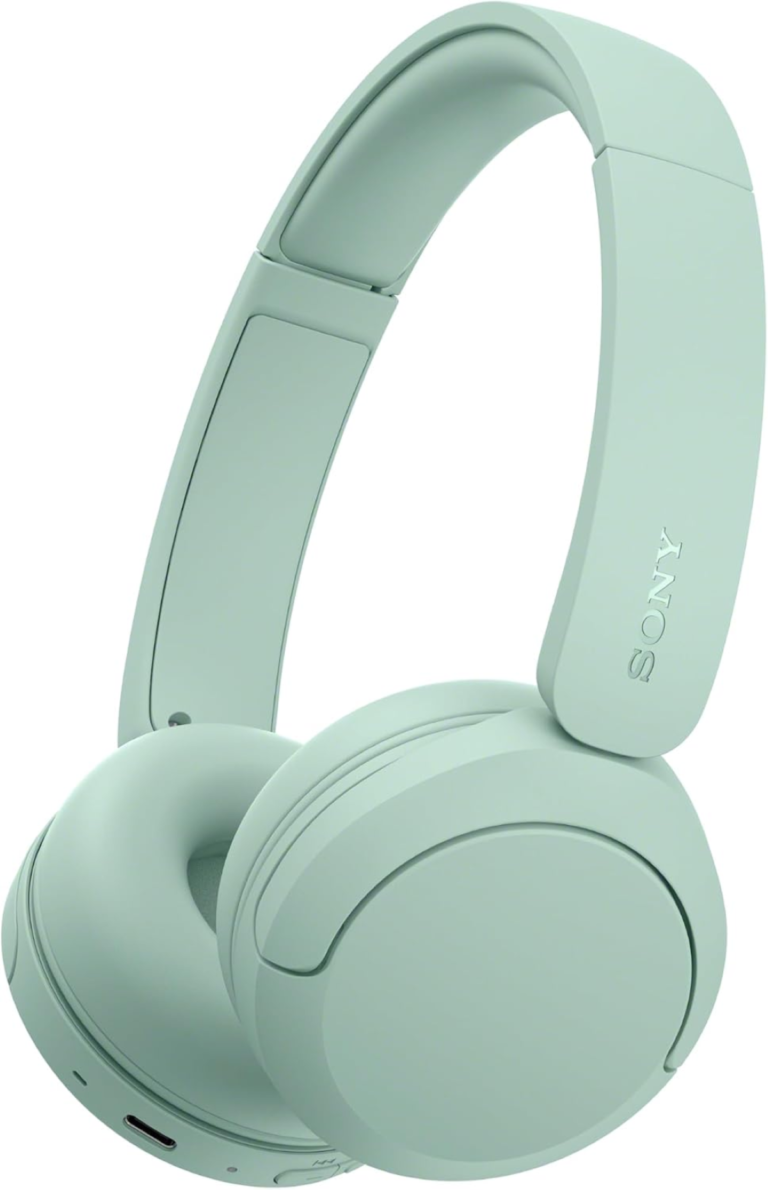
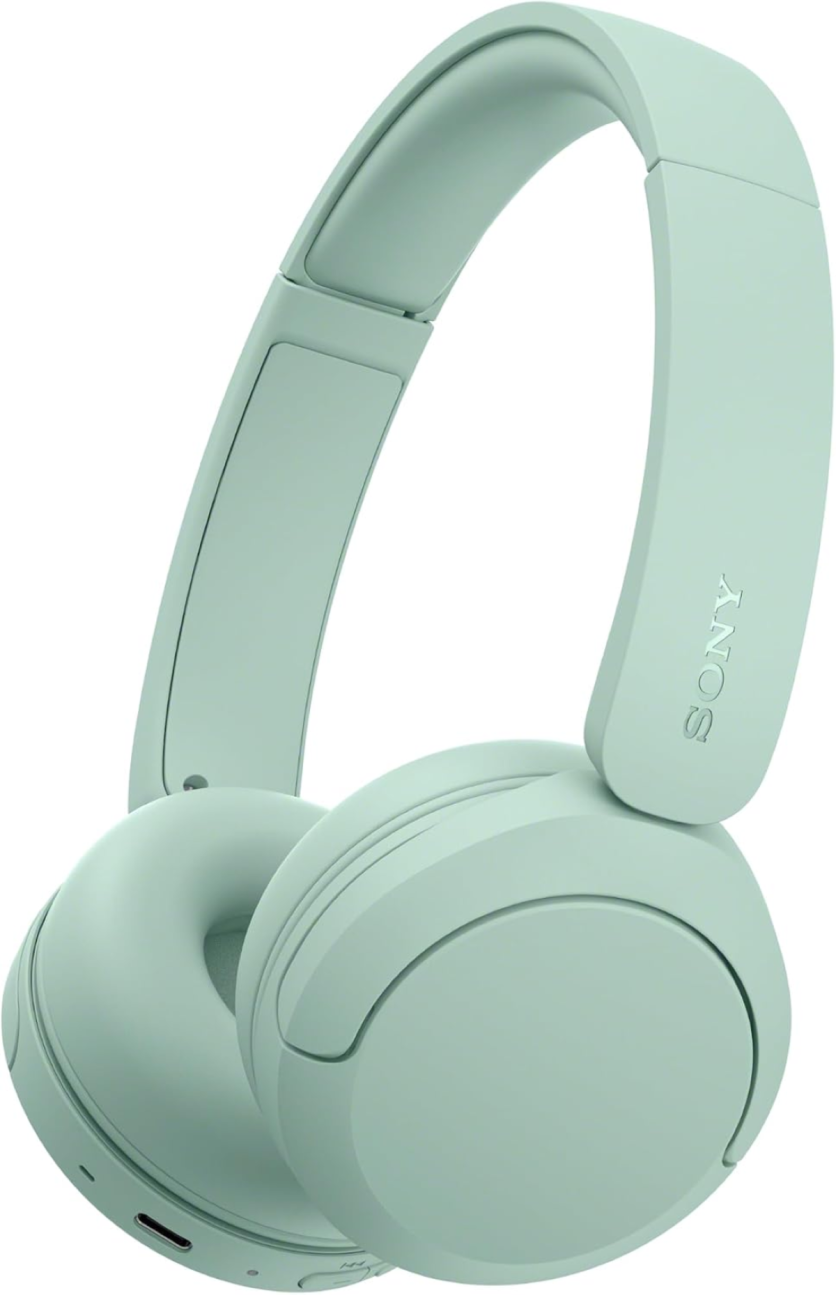
Amazon has dropped the Sony WH-CH530 Wireless On-Ear Headphones in Mint to $48.00 — the headphone’s lowest price since it launched in September 2026 at $69.99 and a 31% discount off its standard retail price. For anyone looking for capable everyday wireless headphones under $50, that price-to-feature ratio is worth pausing for: the WH-CH530 is the first budget headphone to combine Bluetooth 6.0, LE Audio with the LC3 codec, and Auracast broadcast support — technologies that until recently lived only in mid-range and premium hardware.
Most budget headphones ship with Bluetooth 5.x and the same SBC codec Bluetooth has used for over a decade. The WH-CH530 is different.
Bluetooth 6.0 enables LE Audio, a standard built on Bluetooth Low Energy (BLE) rather than the older Classic Bluetooth radio. The mandatory codec for LE Audio is LC3 (Low Complexity Communication Codec). In formal listening tests run by the Bluetooth SIG using the ITU-R BS.1116-3 subjective methodology, Bluetooth SIG’s LC3 listening tests showed LC3 at approximately 124 kbps achieved audio quality comparable to an uncompressed reference — while SBC, the legacy codec, requires around 345 kbps to reach the same perceived quality. The practical result: both the transmitter (your phone) and the receiver (the headphone) spend less time broadcasting over the air, reducing power consumption on both ends simultaneously.
Auracast goes a step further. Where standard Bluetooth operates on a 1:1 pairing model — your headphone connects to your phone and nothing else — Auracast uses BLE’s broadcast mode to let a single source transmit audio to an unlimited number of compatible receivers at once, with no pairing negotiation required. Think of it as a Bluetooth-based FM tuner for public spaces: an airport TV, a gym screen, a lecture hall PA system, or a cinema can broadcast in Auracast, and any compatible headphone or hearing aid in range can tune in via an assistant app — the same way you would select a Wi-Fi network. Auracast also supports hearing aids directly, which is part of why the Bluetooth SIG developed it: to replace the proprietary induction loop systems used in theaters and houses of worship with a universal wireless standard.
The WH-CH530 also introduces Auracast support, which the previous WH-CH520 (Bluetooth 5.2 only) lacked entirely. At the time of publication, Auracast infrastructure in public spaces is still rolling out — it is a future-ready feature rather than something most readers will use this week. But for a $48 headphone, being on the right side of a standards transition is rare.
The underlying drivers in the WH-CH530 are the same 30mm neodymium units as the WH-CH520, but Sony has updated its digital signal processing algorithms and upgraded the 10-band equalizer in the Sony Sound Connect app — up from the 5-band EQ on the predecessor. The EQ also adds a new Gaming preset designed to bring out directional cues (footsteps, ambient sounds) in first-person games.
What Hi-Fi?, which tested a production unit over multiple listening sessions in October 2026, with What Hi-Fi? awarding Sound 5/5 and Features 5/5. Reviewer Ioan Hazell found the headphones sensitive enough to convey subtle shifts in volume in Debussy and animated and impactful on Stravinsky’s Rite of Spring. The outlet’s verdict: an expressive, entertaining sound that shines particularly bright at their bargain price.
SoundGuys measured the WH-CH530’s Multi-Dimensional Audio Quality Score MDAQS at 4.8 out of 5 — placing it above 91% of on-ear headphones in their database. The reviewer specifically praised the passive isolation, which SoundGuys’ lab measured at reducing perceived outside noise by approximately 58% — meaningfully quieter than many ANC-enabled headphones at higher price points, without the power draw that active cancellation requires.
Sony’s DSEE (Digital Sound Enhancement Engine) is also onboard. DSEE is a proprietary DSP process that uses spectral band replication to reconstruct high-frequency content — typically above 16 kHz — that is discarded during AAC or MP3 compression at streaming bitrates. What Hi-Fi? confirmed the technology adds a sense of air to music. It engages automatically and can be toggled in the Sound Connect app.
The headphones also carry 360 Reality Audio certification, Sony’s immersive audio format that maps sound sources in a spherical field around the listener. This requires 360 Reality Audio content from supported services.
Sony rates the WH-CH530 at 55 hours of continuous playback — five hours more than the WH-CH520’s 50-hour ceiling. What Hi-Fi? confirmed real-world performance closely matches: their test unit went four days of frequent listening without reaching for the cable.
Fast charging is built in via USB-C: the three-minute USB-C fast charge delivers approximately 1.5 hours of playback, per Sony’s specification. Sony also claims approximately 5.5 hours of playback from a 10-minute charge (Sony’s stated specification; not independently verified in fetched third-party reviews at time of publication).
The single built-in microphone uses AI-based noise reduction to isolate voice and attenuate background noise in real time. SoundGuys tested the microphone in four conditions — ideal, office, street, and windy — and found voices came through clearly and were not overwhelmed by ambient sound in any of them.
Multipoint connection lets the WH-CH530 stay paired to two Bluetooth devices simultaneously — a laptop and a phone, for instance — and Swift Pair works on Windows 10 and later, while Google Fast Pair is supported for instant Bluetooth setup on Android.
At $48, the WH-CH530 offers a feature set that did not exist in the sub-$50 tier before September 2026. But knowing what it trades away matters for the right buyer.
What is missing: No active noise cancellation. The WH-CH530 relies entirely on passive isolation — its physical seal against the ear — to quiet the world. That seal is effective for office and street use (~58% noise reduction per SoundGuys), but it will not block the sustained cabin roar of a long-haul flight the way ANC does. There is also no wired audio option: the USB-C port charges the headphone but does not carry audio, so if the battery dies at 35,000 feet, there is no cable fallback. The earcups swivel but don’t fold flat — the headphone does not collapse into a compact form for transport, and no carrying case is included.
The headphone weighs approximately 150 grams (5.3 oz).
What is here: Bluetooth 6.0 (LE Audio, Auracast, LC3), 55-hour battery, 10-band EQ, AI call noise reduction, multipoint connectivity, DSEE upscaling, 360 Reality Audio certification, Google Fast Pair, Swift Pair for Windows, and USB-C charging. The Mint is exclusive to Amazon and Sony direct.
For users whose primary listening happens at a desk, on a commute with moderate ambient noise, or during light exercise — the WH-CH530 at $48 is a rare case of the budget option being meaningfully ahead of its price class, not just adequate for it.
| Feature | Sony WH-CH530 | Sony WH-CH520 |
|---|---|---|
|
Current price |
$48 (deal) |
~$33–$50 |
|
Bluetooth |
6.0 (LE Audio, Auracast, LC3) |
5.2 (SBC, AAC) |
|
Battery |
55 hours |
50 hours |
|
Quick charge |
3 min → 1.5 hrs |
3 min → 1.5 hrs |
|
EQ bands |
10-band |
5-band |
|
AI call noise reduction |
Yes |
No |
|
Auracast |
Yes |
No |
|
Weight |
~150 g (5.3 oz) |
~147 g (5.2 oz) |
|
ANC |
No |
No |
The WH-CH520 remains a proven product — What Hi-Fi? awarded it five stars and it is still widely available starting around $33. At today’s $48 price, the WH-CH530 replaces it as the stronger starting point for anyone who doesn’t already own the predecessor.
The price dropped to $48 on October 26, 2026 — the headphone’s lowest price since launch, arriving ahead of Black Friday on November 27. The Mint colorway is exclusive to Amazon and Sony, which limits price matching at other retailers. At $48, the WH-CH530 is priced $10 below what it sold for during Amazon’s October Prime Day Big Deals event ($58), suggesting this represents a genuinely deeper discount rather than a repackaged seasonal promotion.
Auracast is a one-to-many broadcast feature within Bluetooth 6.0’s LE Audio standard. Unlike standard Bluetooth’s 1:1 pairing, Auracast lets a single transmitter — a TV, PA system, or phone — broadcast audio to an unlimited number of compatible receivers simultaneously, with no pairing needed. Receivers tune in through a companion app the same way you would select a Wi-Fi network. Practical applications include hearing a gym TV through your headphones, receiving a live translation in an airport, or catching announcements at a transit hub. As of late 2026, Auracast transmitter infrastructure in public venues is still expanding — most US locations have not deployed it yet — but the WH-CH530 supports it at the receiver level, which positions it correctly for when the standard becomes widespread. The Bluetooth SIG’s Auracast broadcast overview covers implementation details and use cases.
The WH-CH530 adds Bluetooth 6.0 (versus 5.2 on the WH-CH520), which enables LE Audio, the LC3 codec, and Auracast support — features the CH520 does not have. It also gains a 10-band EQ (up from 5-band), AI-based call noise reduction, and 55 hours of battery life (versus 50 hours). The drivers and overall form factor are essentially identical. SoundGuys’ WH-CH530 review covers the connectivity differences in detail.
No. The WH-CH530 relies on passive isolation — the physical seal of its on-ear cushions — which SoundGuys measured 58% noise reduction of perceived outside noise. That is effective for most indoor and street environments, but it will not match a dedicated ANC headphone on a noisy airplane or train. Sony’s WH-CH730N, which starts at $179.99, adds ANC to this product family.
LC3, the mandatory codec for Bluetooth LE Audio, achieves audio quality equivalent to an uncompressed reference at approximately 124 kbps — roughly half the data rate that SBC requires for comparable perceived quality (~345 kbps). The practical consequences are lower battery consumption on both the headphone and the transmitting device, and better resilience in congested radio environments (offices, airports, public transit) where the radio spectrum is crowded. It also enables Auracast’s one-to-many broadcast model, which classic Bluetooth’s connection architecture cannot support. The Bluetooth SIG LC3 performance characterization documents the full subjective listening test methodology and results.