Sony a7 IV Kit Is $2,198 at Amazon: Full-Frame Pro Camera for $700 Less Than a7 V

November 7, 2026:

Sony a7 IV Kit Is $2,198 at Amazon: Full-Frame Pro Camera for $700 Less Than a7 V
Sony a7 IV Kit
Amazon.com

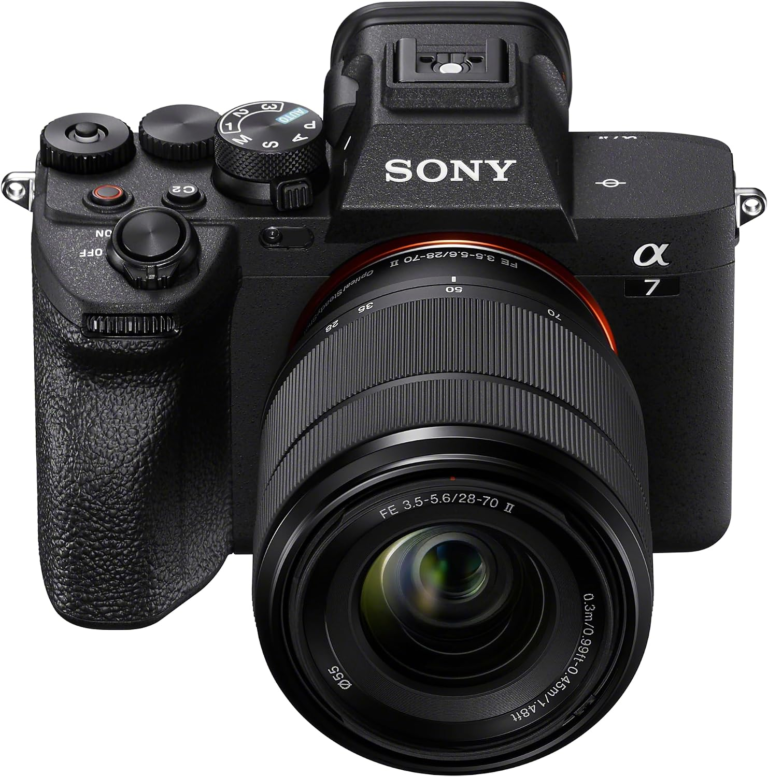
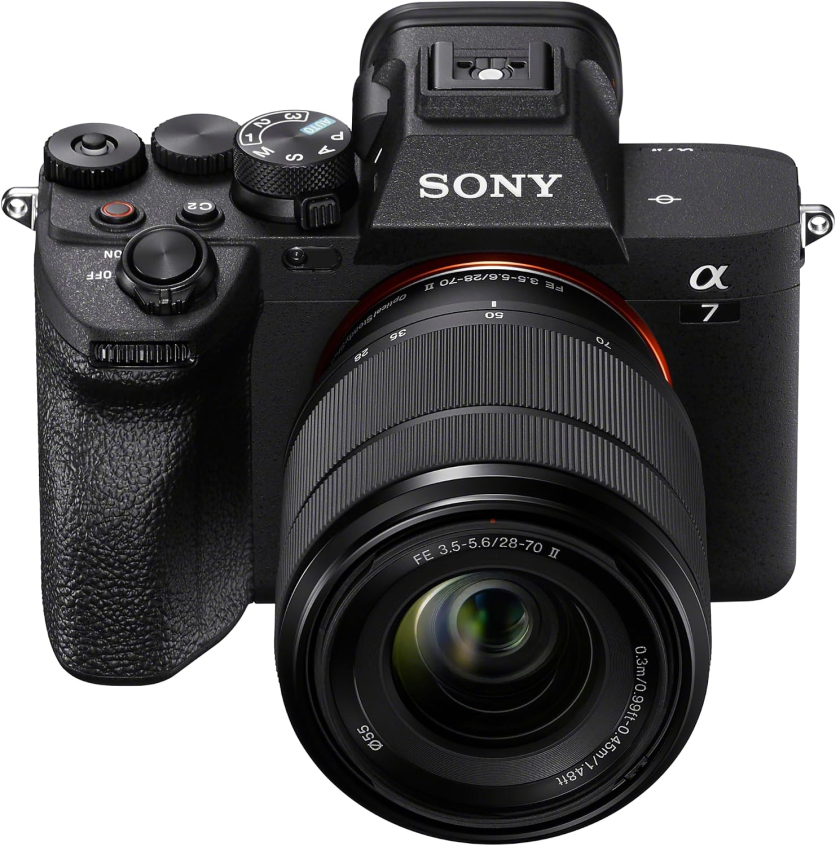
Amazon is currently selling the Sony Alpha a7 IV Mirrorless Camera with 28-70mm Lens for $2,198 on the Amazon product page, a 19 percent reduction from its $2,699.99 list price that saves buyers $501.99. Shipping is free.

That price matters most when measured against where Sony’s full-frame lineup stands today. The Sony a7 V — the a7 IV’s direct successor, which launched in December 2025 — starts at $2,898 for the body alone and $3,099 with its kit lens. At $2,198 for camera and lens together, the a7 IV undercuts its own replacement by roughly $700 to $900 depending on configuration. For photographers who don’t need the a7 V’s AI-driven 30-frames-per-second burst, blackout-free viewfinder, or uncropped full-frame 4K 60p output, that gap is the most useful data point this deal provides.

Black Friday arrives on November 27. The a7 IV kit hit $2,198 during Amazon sales earlier this year and fell to as low as $2,088.10 in some promotional windows, so a deeper discount is not impossible — but neither is it guaranteed. The current price sits at the lower boundary of what this camera has historically sold for during major sales events. Buyers who have been waiting for a “good enough” price have reached it.

Why This Camera Still Earns Its Price in 2026

The Sony a7 IV launched in late 2021 and was first available in December of that year. In the five years since, it has remained a consistently top-ranked hybrid body among working photographers and videographers, holding a DPReview Gold Award and earning a five-star award from major photography outlets. Its successor doesn’t expose obsolescence so much as it sharpens the question: what specifically are you giving up at $700 less?

The honest answer is: the a7 V’s partially stacked Exmor RS sensor, its BIONZ XR2 processor with a built-in AI engine, 30fps continuous shooting, and full-pixel 4K 60p output in full-frame mode without pixel binning. For portrait photographers, landscape shooters, wedding professionals, and most video content creators working in controlled or semi-controlled conditions, those gaps are largely academic — the a7 IV’s 33-megapixel sensor, class-leading Eye AF, 10fps burst, and outstanding IBIS cover the overwhelming majority of professional use cases.

The BIONZ XR Engine: What Flagship Processing Means at This Price

At the center of the a7 IV is Sony’s BIONZ XR image processing engine, shared with the flagship Alpha 1 and the Alpha 7S III — cameras that launched at $6,499 and $3,499 respectively. The BIONZ XR delivers 8x faster processing than its predecessor (the BIONZ X used in the a7 III), and that increase in throughput is what makes real-time AI subject tracking, 10fps burst shooting, and low-latency video processing possible simultaneously.

Sony designs the BIONZ XR’s circuitry in-house and outsources manufacturing. The chip operates as a two-part system: one SoC handles overall camera management (card storage, USB, Wi-Fi, HDMI output), while a dedicated ISP handles the raw data stream from the image sensor — the component most directly responsible for high-ISO noise performance. The result of sharing this architecture with Sony’s most expensive cameras is that the a7 IV’s high-ISO behavior and subject-detection accuracy perform substantially above what the body’s $2,000-range price point would suggest.

The a7 V’s successor chip, the BIONZ XR2, adds a dedicated on-chip AI acceleration unit that enables 30fps burst and improvements in pose estimation for edge cases in subject tracking. For action and wildlife photographers, that addition justifies the premium. For photographers who don’t shoot birds in flight or athletic events at 30fps, the BIONZ XR’s performance remains competitive in 2026.

How the Sensor and AF System Work

The a7 IV uses a 33-megapixel full-frame Exmor R back-illuminated CMOS sensor measuring 35.9 by 23.9 millimeters (1.41 by 0.94 inches). Back-illuminated (BSI) design moves the wiring layer behind the light-sensitive photodiodes rather than in front of them, allowing more light to reach each pixel — the core reason the sensor performs well at high ISO values without excessive noise. Sony rates the camera’s standard ISO range at ISO 100 to 51,200, with an expanded range reaching ISO 204,800 for extreme low-light scenarios.

The autofocus system combines 759 phase-detection points covering approximately 94 percent of the frame with 425 contrast-detection zones. Phase detection works by using dedicated pixels embedded in the image sensor to split incoming light and measure the direction and magnitude of a focus error in a single step — which is what gives it speed advantages over contrast-only systems. The a7 IV’s implementation runs Sony’s AI-based Real-time Eye AF, which uses BIONZ XR processing to identify and prioritize human eyes, animal eyes, and birds across both still and video recording modes. The Face/Eye AF system delivers 30 percent better eye-detection accuracy compared to the a7 III.

What the Video Pipeline Actually Does (and What It Doesn’t)

The a7 IV’s video capabilities are frequently summarized as “4K 60p,” which is accurate but incomplete in a way that matters technically. The full picture:

In full-frame mode, the camera reads all pixels in a roughly 7K region of the sensor and mathematically downsamples to a 4K output — a process called 7K oversampling that produces sharper, cleaner 4K than sensors that simply discard pixels. This oversampled output is available at up to 4K 30p in full-frame, in 10-bit 4:2:2 color.

4K 60p requires switching to the APS-C/Super35 crop mode, where the sensor reads a smaller area with full-pixel readout. The tradeoff is a 1.5x effective crop of the frame — which may matter or not depending on the shooter’s lens choices and subject distance.

The 10-bit 4:2:2 color sampling in both modes is the significant professional differentiator. At 10 bits per channel, the camera records 1,024 levels of brightness per color channel rather than 256, which provides smoother gradients and far greater latitude for color grading in post-production. The camera also supports Sony’s S-Log2 and S-Log3 picture profiles for expanded dynamic range capture, alongside S-Cinetone for a cinematic color response out of camera. Sony rates dynamic range at 15 stops for stills.

A full-size HDMI Type-A port enables clean external recording — a practical advantage over cameras limited to Micro-HDMI connectors, which are more prone to wear under daily use.

How Is the Stabilization in Practice?

The a7 IV’s 5-axis in-body image stabilization compensates for five types of motion: pitch, yaw, roll, and both horizontal and vertical shift. Sony rates the system at 5.5 stops of compensation, meaning a photographer who would normally need a minimum shutter speed of 1/60 second with a 50mm lens can shoot sharp handheld images at much slower speeds. For video, the camera’s Active Mode applies additional electronic stabilization for smoother handheld motion.

The kit lens — the Sony FE 28-70mm f/3.5-5.6 OSS — adds its own optical stabilization through the Optical SteadyShot mechanism, which works cooperatively with the body’s IBIS for stacked stabilization in video mode.

For action and sports photographers who require the full 10fps burst capability, the camera sustains that rate across both the mechanical and electronic shutters, with a buffer capable of capturing more than 1,000 compressed RAW+JPEG frames in a continuous sequence.

Build, Connectivity, and What Comes in the Box

The a7 IV’s body is dust and moisture resistant — Sony does not claim full waterproofing, but the sealing makes the camera suitable for outdoor shooting in light rain and dusty conditions.

Connectivity is comprehensive: Wi-Fi, Bluetooth, USB-C, full-size HDMI Type-A, and dual memory card slots (CFexpress Type A plus SDXC in Slot 1; SDXC only in Slot 2). CFexpress Type A is Sony’s proprietary smaller-form-factor standard for high-speed recording, capable of handling the demands of continuous 4K 10-bit capture.

The 3-inch articulating touchscreen (1,000,000 dots) is fully vari-angle — it can be positioned independently of the camera’s orientation, which is useful for video work and shooting at non-standard angles. The OLED electronic viewfinder provides a 3.68-million-dot image.

The kit includes the camera body, the FE 28-70mm lens, Sony NP-FZ100 rechargeable battery, AC adapter, shoulder strap, USB Type-C cable, body cap, and accessory shoe cap.

Should You Buy Now or Wait for Black Friday?

What the price history shows: The a7 IV kit has sold at $2,198 during Amazon and Sony promotional events throughout 2026, with a documented low of $2,088.10 at its record earlier this year and a body-only price of $1,998 during Black Friday 2025.

The current $2,198 Amazon price is at the lower end of what this camera sells for during sales. A further discount is possible — but not guaranteed — by November 27 (Black Friday). Buyers who want the maximum protection against missing a deal should check whether they can order through a retailer that allows free returns within 30 days or price matching.

Who should buy now: Photographers ready to enter the Sony E-mount ecosystem, upgraders from APS-C systems, professionals who need a reliable second body, and content creators who can use 4K 10-bit output but don’t need 30fps stills or the a7 V’s uncropped full-frame 4K 60p.

Who should wait or reconsider: Fast-action and sports photographers for whom 30fps burst and the a7 V’s AI engine may justify the premium. Photographers whose primary work is wildlife or athletics in unpredictable environments may find the a7 V’s advantages pay for themselves over time.

A note on where to buy: Amazon.com is a Sony Authorized Retailer. When purchasing through Amazon, verify that the seller listed is “Amazon.com” itself — third-party sellers on the Amazon marketplace may offer gray-market or import products that do not carry Sony USA warranty coverage.


Frequently Asked Questions

What is the difference between the Sony a7 IV and the a7 V, and is the price gap worth it?

The Sony a7 V, which launched in December 2025 at $2,898 for the body alone, uses a newer partially stacked Exmor RS sensor and Sony’s BIONZ XR2 processor with a built-in AI acceleration unit. The practical advantages over the a7 IV include blackout-free 30fps continuous shooting, improved autofocus for fast-moving subjects like birds in flight, and full-pixel 4K 60p output in full-frame mode without pixel binning. For photographers who primarily shoot portraits, landscapes, weddings, or studio work — where burst speed and uncropped 4K 60p are not central requirements — the a7 IV’s 33MP sensor and BIONZ XR processing deliver essentially equivalent image quality at roughly $700 less. For action photographers and wildlife shooters, the a7 V’s AI advantages are more meaningful.

Is $2,198 a good price for the Sony a7 IV kit, and could Black Friday bring it lower?

The $2,198 price is at the low end of what this kit has sold for during major Amazon and Sony promotional events in 2026. The all-time documented low for the kit is $2,088.10 at Amazon, recorded in a brief promotional window earlier this year. Black Friday 2025 brought the body-only price to $1,998, so a comparable kit deal on November 27 would likely require a discount in the $2,000–$2,100 range to represent meaningful improvement over today’s price. That is possible but uncertain. The current price is a reasonable buying point for anyone who doesn’t want to risk the deal ending before Black Friday.

What video formats does the Sony a7 IV support, and what are the trade-offs at different settings?

In full-frame mode, the camera captures 4K video at up to 30 frames per second using 7K oversampling — a process that reads the full sensor area and downsamples mathematically to 4K, yielding excellent detail and low noise. This mode supports 10-bit 4:2:2 color and S-Log3 for color grading. For 4K at 60 frames per second, the camera switches to APS-C/Super35 crop mode, which applies a 1.5x effective field-of-view crop. 1080p at up to 120 frames per second is available for slow-motion capture. All video modes support direct recording to CFexpress Type A or SDXC media.

What Sony lenses work best with the a7 IV kit as a starting point?

The included FE 28-70mm f/3.5-5.6 OSS covers the most versatile everyday range and is a solid starting point. Sony’s E-mount ecosystem includes hundreds of native full-frame lenses from Sony, Sigma, Tamron, and Zeiss, all of which communicate fully with the a7 IV’s autofocus and stabilization systems. Common first additions from photographers upgrading through the system include Sony’s FE 50mm f/1.8, Tamron’s 17-28mm f/2.8, and Sony’s FE 70-200mm f/4 G OSS II.

Prices and availability are subject to change. This article contains affiliate links.

Source link