HomeAuto SLAC X-Ray Laser Produces Data Faster Than Scientists Can Process; DOE Funds Self-Driving Lab
SLAC X-Ray Laser Produces Data Faster Than Scientists Can Process; DOE Funds Self-Driving Lab
October 11, 2026:
Slac.stanford.edu
The world’s most powerful X-ray laser has a problem no human team can fix: it now generates data faster than scientists can read it. On October 8, the Department of Energy selected SLAC National Accelerator Laboratory to receive funding from a $30 million national initiative to solve that problem — by building a platform in which AI agents, not scientists, run experiments from end to end.
The project is called SPIRE — A Source-to-Discovery Platform for Instrumentation, Robotics, and Embodied AI in DOE Photon-Science Facilities. Announced at the Golden Age of Science Summit in Washington, D.C., alongside a new round of DOE Genesis Mission awards, SPIRE will integrate physical sample manipulation and detectors at SLAC’s Linac Coherent Light Source (LCLS) and Stanford Synchrotron Radiation Lightsource (SSRL), connecting accelerator controls and edge-to-high-performance-computing pipelines into a single autonomous workflow.
SLAC’s X-Ray Laser Outran Human Science: and That’s the Point
LCLS, the world’s first X-ray free-electron laser, and its upgraded successor, LCLS-II, fire X-ray pulses capable of imaging proteins, capturing femtosecond-scale chemical reactions, and probing the atomic structure of materials in three dimensions. The upgrade to a superconducting accelerator allows LCLS-II to deliver up to one million X-ray pulses per second — and the detectors that read those pulses will produce data at rates exceeding one terabyte per second when operating at full power. To put that in context, that is roughly the equivalent of streaming a thousand full-length movies every second.
No human team, working any shift arrangement, can analyze a firehose that wide in real time. The science already runs faster than the scientific workflow. SPIRE is the institutional response to that mismatch: not an improvement layered onto an existing process, but a structural redesign of how the experiment-to-discovery pipeline works at national photon-science facilities.
“Our autonomous laboratory design opens up entirely new ways of making discoveries and dramatically reduces the time it takes to gain real-world experimental insights,” said SPIRE lead PI Angelo Dragone, SPIRE lead principal investigator, deputy associate lab director for SLAC’s Technology Innovation Directorate, and professor of photon science. “SI-assisted automation is the future of research in science and technology, and SLAC is well-positioned to lead this momentous step.”
How SPIRE Turns a Beamline Into an Autonomous Experiment
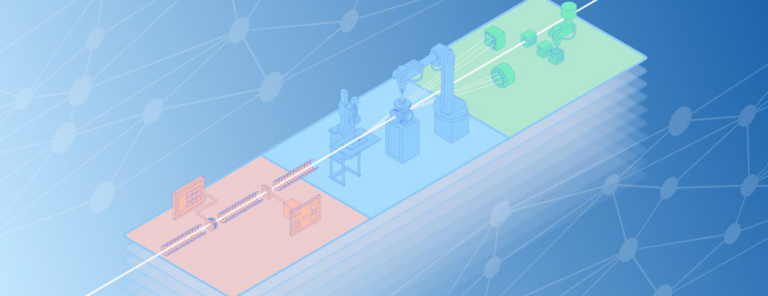
The SPIRE architecture stacks three technical layers that address three distinct bottlenecks in the current workflow.
The first is data. Under SPIRE, AI decision-making will be embedded directly into the detector chips themselves — operating within microseconds of data acquisition to make the first quality judgments before data even leaves the hardware. This is not a software layer running on a nearby server; it is intelligence at the point of measurement, enabling the system to discard noise, flag anomalies, and pass only scientifically meaningful signals downstream, all before a human operator has any opportunity to intervene. That edge-level filtering feeds a fully automated pipeline that pairs operational parameters — sample position, beamline conditions, beam energy — with scientific measurements, streaming the combined state to SLAC’s Shared Science Data Facility (S3DF) for analysis while experiments are still running.
“This step has the potential to be the most impactful in terms of time to science, taking a process that used to take months and reducing it to minutes,” said Tim Dunn, SLAC staff engineer and SPIRE co-PI.
The second bottleneck is beam control. Tuning the X-ray beam at a facility like LCLS — adjusting energy, brightness, focus, and pulse duration — has historically required hours of manual iteration between the accelerator control room and experimental stations. SPIRE will build a super intelligence (SI) control layer above existing subsystem controls, capable of autonomous beam adjustment based on live data from downstream detectors. The distinction is meaningful: automated systems follow fixed scripts; autonomous systems understand goals and choose tools. Proof of concept already exists — SLAC researchers demonstrated machine-learning-based tuning of the lab’s MeV-UED electron diffraction instrument, compressing a task that once took hours of expert time.
“Where an automatic workflow follows a fixed script, an autonomous system incorporates SI agents that understand high-level scientific goals and determine which tools, algorithms and parameters to use, without manual human intervention,” said Frederic Poitevin, head of AI for science and operations at LCLS and SPIRE co-PI.
What Does Self-Driving Mean in a Lab Where Samples Are Fragile Crystals?
The third bottleneck is the hardest: the physical manipulation of samples. The materials that move through SLAC’s beamlines — protein crystals grown over weeks, fusion fuel targets no larger than a grain of sand, ancient manuscripts too fragile to touch with bare hands — are too heterogeneous for today’s robotic systems. Current purpose-built robots are capable of performing one specific task within tight tolerances, repeatedly and consistently, but cannot adapt when the sample is slightly different from what they were trained on.
SPIRE will develop what the team calls “embodied SI” — robots trained to make context-aware physical decisions based on tactile sensors and visual feedback, handling heterogeneous fragile sample conditions that arise in real experiments. This work is being built in collaboration with Stanford’s Movement Lab and ARMLab, targeting deployment across SSRL, LCLS, and the MeV-UED ultrafast electron diffraction instrument.
“Today, we have robotic controls that can do one very specific task within tight boundaries, over and over again with incredible consistency,” said Dean Skoien, staff engineer at SSRL and SPIRE co-PI. “We want to develop SI-trained robots that are far more dynamic, able to handle heterogeneous tasks with tactile sensing and a delicate, precise touch.”
The embodied AI challenge is not trivial. A 2025 analysis in Nature Catalysis found that realizing the full potential of autonomous laboratories requires sustained human oversight to ensure rigorous data curation, validate machine-generated hypotheses and establish benchmarks to mitigate AI-related errors. SLAC’s design explicitly addresses this: hard-wired safety systems protecting personnel and equipment remain in place, the SI operates within those boundaries, and human scientists retain control over scientific goals. The automation takes on the execution, not the mission.
Already Running: A Battery Imaging Workflow That Does It Alone
SPIRE is not starting from zero. In a recent demonstration at a DOE American Science Cloud event, Dunn’s team showed a team of SI agents running complete battery imaging workflow autonomously — moving raw data from an SSRL beamline to a remote DOE computing facility, reconstructing the battery electrode in three dimensions, and applying a foundation vision model to identify individual battery particles — without human intervention at any step.
The same agentic framework is now deployed on a second SSRL beamline, where agents have monitored a live instrument continuously for weeks.
“People often do not realize just how much unglamorous, mundane work there is in the day-to-day process of doing science,” said Auralee Edelen, lead scientist and co-PI who heads the Accelerator Directorate’s Machine Learning Department. “Securing time at an advanced experimental facility, physically adjusting samples and equipment, monitoring experiments, and analyzing data take time and skill. Imagine the impact we could have if we speed up this process while also improving the quality of results.”
Part of a Nationwide Push That Is Already Spending $320 Million
SPIRE is one of four national-laboratory-led projects selected by DOE under its Robotics and Automation Testbeds for Autonomous Scientific Discovery solicitation (LAB 26-3601), funded through the Advanced Scientific Computing Research program. The others are MAESTRO (Argonne National Laboratory), TRACE (Oak Ridge National Laboratory), and DART (Brookhaven National Laboratory). Together the four projects address different stages of the same problem: MAESTRO develops robot skills that improve through experience; DART stress-tests whether those skills transfer reliably; TRACE packages capabilities for reuse across labs; SPIRE deploys them in production at consequential facilities where experimental failure has real scientific and financial cost.
The total allocation for the four projects is $30 million, with $2 million in Fiscal Year 2026 and subsequent-year funding subject to congressional appropriations.
These selections sit inside a much larger initiative. The DOE’s Genesis Mission — launched by executive order and led by Under Secretary for Science Darío Gil — has backed more than $320 million in investments for fiscal year 2026, encompassing 14 robotics and automation projects, 26 National Science and Technology Challenges, and more than 37 foundational AI awards. The stated goal: to double the productivity and impact of American science and engineering within a decade.
SPIRE is designed to produce reusable infrastructure, not laboratory-specific solutions. Methods, interfaces, digital twins, and benchmark tasks built at SLAC’s X-ray lasers are intended to be adapted at other DOE scientific user facilities — meaning advances at LCLS could eventually be deployed at Brookhaven’s National Synchrotron Light Source II or Argonne’s Advanced Photon Source.
“Our goal is to build tools for generalizable autonomous labs that can be applied to many different experimental scenarios,” said Edelen. “These same workflow patterns show up again and again across facilities, so what we are building here can translate broadly to other cases.”
SLAC is working on SPIRE in partnership with Stanford University, the University of Chicago, Argonne National Laboratory, Brookhaven National Laboratory, and Lawrence Berkeley National Laboratory. Stanford faculty collaborators include professors Karen Liu, Monroe Kennedy III, Eric Darve, and Mert Pilanci.
Why Autonomous Science Became the Only Option
Self-driving laboratories are not new — the concept of closed-loop automated experimentation traces to “Robot Scientist” systems developed in the mid-2000s, and Google DeepMind’s A-Lab at Lawrence Berkeley made headlines in 2023 for autonomously discovering more than 40 candidate materials. But prior deployments have mostly involved chemistry or materials synthesis platforms, where the physical environment is relatively controlled and the experimental variables are well-defined.
SPIRE is attempting something harder: autonomous science at a facility where experiments run at femtosecond timescales, samples are irreplaceable, and the physical conditions at the beamline change from experiment to experiment. The 2024 ORNL autonomous laboratories workshop specifically flagged the disconnect between human decision-making timescales and modern instrumentation capabilities as the central challenge for the field — and called for exactly the kind of national consortium, anchored in DOE facilities, that SPIRE is now building.
For researchers across chemistry, structural biology, and materials science, the practical stakes are direct. Scientists who today wait months between experiment and insight — the time consumed by manual beam tuning, sample handling, data offloading, and computational analysis — may find that time compressed to the duration of a single shift. That would not merely accelerate existing research programs; it would change what kinds of questions it is practical to ask.
Frequently Asked Questions
What is SPIRE, and how is it different from other lab automation projects?
SPIRE is a DOE-funded platform being built at SLAC National Accelerator Laboratory to make photon-science experiments — X-ray crystallography, ultrafast imaging, electron diffraction — fully autonomous from sample to result. What sets it apart is the scale and context: LCLS-II generates more than one terabyte of data per second at full power, a throughput that no human analytical pipeline can match, and SPIRE is designed for autonomous photon-science operations at those speeds without human intervention in individual steps. Prior self-driving lab deployments have mostly targeted chemistry or materials synthesis in controlled bench environments; SPIRE is deploying into a national user facility where experiments run at femtosecond timescales and irreplaceable samples are the norm.
What specific bottleneck is SPIRE designed to solve?
Three bottlenecks: physical sample handling (current robots cannot handle the heterogeneous, fragile specimens that move through SLAC’s beamlines), beam control (tuning LCLS’s X-ray beam for a specific experiment has historically taken hours of human coordination), and data analysis (LCLS-II will produce data faster than human analysts can process). SPIRE addresses all three by embedding AI agents at each stage of the workflow — with intelligence inside detector chips, inside the accelerator control layer, and inside the robotic sample-handling systems.
How much of the $30 million goes to SLAC specifically?
The $30 million is the total allocation across all four selected projects — SPIRE (SLAC), MAESTRO (Argonne), TRACE (Oak Ridge), and DART (Brookhaven). SLAC’s specific share has not been publicly disclosed as a separate figure. Of the $30 million total, only $2 million is allocated in Fiscal Year 2026; the remainder is subject to future congressional appropriations. The DOE explicitly notes that the selection is for negotiations, not a final funding commitment.
Will AI replace scientists at SLAC?
No — and SPIRE’s design explicitly rejects that framing. Hard-wired safety systems that protect personnel and equipment remain in place, and the SI agents operate within those boundaries. Human scientists retain control over the scientific goals; the automation takes on the execution of routine and repetitive tasks. Researchers in the autonomous laboratory field broadly agree that the optimal model is human-AI collaboration rather than full replacement: a 2025 analysis in Nature Catalysis found that autonomous lab platforms need human oversight — with scientists validating machine-generated hypotheses and establishing benchmarks to mitigate AI-related errors — to produce the most reliable and reproducible scientific outcomes.