HomeAuto Sea Urchin Harvest Revives Kelp at Cents Per Animal, but Australia Defunds It Anyway
Sea Urchin Harvest Revives Kelp at Cents Per Animal, but Australia Defunds It Anyway
October 20, 2026:
Kindel Media/pexels.com
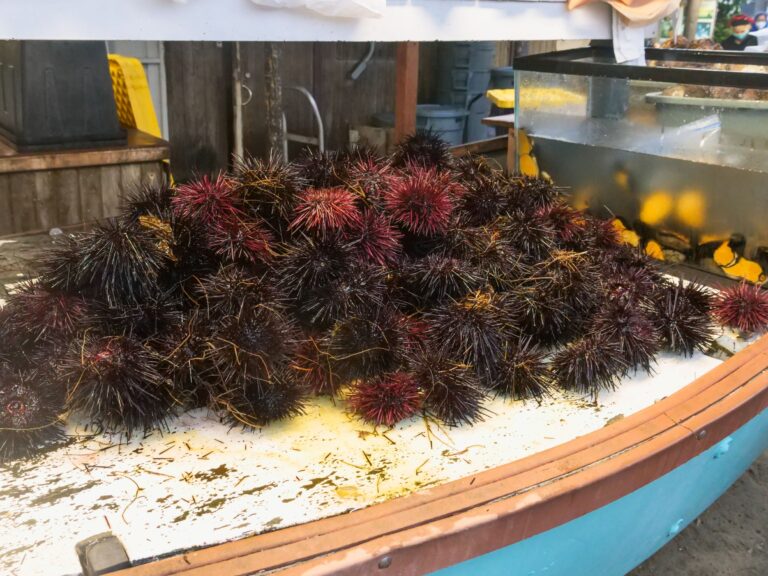
A pioneering program that paid commercial divers to harvest invasive sea urchins from Tasmania’s rocky reefs — and in doing so began reversing the collapse of its kelp forests — is now at serious risk of unraveling. Not because it failed, but because Australia’s federal government declined to sustain it.
The program, built around Tasmania’s long-spined sea urchin (Centrostephanus rodgersii), known locally as “Centro,” had demonstrated measurable ecological recovery in targeted areas along the state’s east coast. Its cost-effectiveness, confirmed in a peer-reviewed study published in July 2026, was extraordinary: harvesting one Centro urchin costs approximately A$0.40 (approximately $0.28 USD), compared to A$336 (approximately $233 USD) to cull a single crown-of-thorns starfish on the Great Barrier Reef — a gap of more than 840 to one, according to the comparative reef management study. Yet the federal government’s formal response to a 2023 Senate inquiry into the crisis, published in April 2026, committed no new targeted funding and no new control measures — leaving scientists warning that hard-won ecological gains could quickly reverse, according to the tabled parliamentary response.
Tasmania’s underwater coastline was historically dominated by giant kelp (Macrocystis pyrifera), whose fronds can stretch 40 meters (131 feet) from the seafloor to form dense surface canopies. These ecosystems — part of the Great Southern Reef, a temperate network of rocky reefs spanning roughly 8,000 kilometers (4,971 miles) of Australian coastline — are among the ocean’s most productive. They support extraordinary biodiversity, filter water, buffer wave energy, and are increasingly recognized as significant carbon sinks. Research covering the entire Great Southern Reef kelp system has found kelp forests account for more than 30 percent of total blue carbon stored and sequestered around the Australian continent, with carbon export capable of remaining stored in the deep ocean for centuries. They also underpin two of Tasmania’s most economically significant commercial fisheries: blacklip abalone and southern rock lobster.
That picture changed dramatically as Australian ocean temperatures rose. Tasmania’s coastal waters are warming at a rate among the fastest in the Southern Hemisphere, driven by a strengthening East Australian Current pushing warmer, nutrient-poor water south — a trend documented by CSIRO ocean climate data. Scientists link this warming directly to a decline of more than 90 percent in Tasmania’s giant kelp canopy coverage between 1987 and 2015, with only 5 percent of the original kelp forests remaining. The same warming carried Centro larvae south from their native range off New South Wales into Tasmanian waters, where the species is now an invasive overachiever: it grazes kelp, large brown algae, and even microscopic organisms down to bare rock, creating what ecologists call “urchin barrens” — rocky deserts bereft of kelp and populated by urchins but little else, as documented in the Senate inquiry into climate-related marine invasive species.
By 2002, urchin barrens covered an estimated 3.4 percent of Tasmania’s east coast rocky reefs. More than 15 percent of Tasmania’s healthy kelp beds have since been transformed into barrens, displacing over 120 Tasmanian endemic species. The ecological loss translated directly into economic harm. Tasmania’s abalone fishery — which contributed A$46 million (approximately $32 million USD) to the Tasmanian economy in the 2022–2023 financial year — has seen its allowed catch fall from roughly 2,793 metric tons (approximately 3,080 short tons) in 2010 to approximately 744 metric tons (820 short tons) in 2025, according to the most recent Institute for Marine and Antarctic Studies fishery assessment.
What Happened When Divers Turned Pest Into Product
The response from Tasmania’s abalone industry and state government was pragmatic and creative. Rather than paying for culling with no return, why not build a commercial fishery around the urchin itself? Centro’s gonads — its roe — are a high-value food product, directly comparable to Japanese uni, and the harvest could fund the very removal operation needed to protect the kelp.
During the 2016–2017 harvest season, the Tasmanian abalone industry began offering divers a flat-rate subsidy of A$0.75 per kilogram (approximately $0.52 USD/kg) to harvest Centro. In 2018, the industry and Tasmanian government formalized this into the Abalone Industry Reinvestment Fund (AIRF), allocating A$5.1 million (approximately $3.5 million USD) spread over five years, then committing another A$2 million (approximately $1.4 million USD) in 2023 for two additional years. In high-priority areas — where urchins were encroaching on intact kelp habitat most valuable for abalone — divers received up to A$2.50 per kilogram (approximately $1.73 USD/kg).
The results were tangible. The program enabled the removal of around 500 metric tons (approximately 551 short tons) of urchins per year. In heavily harvested areas, scientists estimated it restricted urchin biomass density by up to 50 percent and enabled localized kelp forest recovery. John Keane, a senior research fellow and wild fisheries program leader at the University of Tasmania’s Institute for Marine and Antarctic Studies (IMAS), who has studied Centro for more than 15 years, described watching the decline firsthand — and then watching some of it reverse. “The rise of the fishery has put a halt on that in some areas. We have seen some localised successes where we’ve seen kelp come back,” Keane told Mongabay.
Why Diver Economics Make This Problem Worse
The biology of kelp forest protection creates a financial trap that the program’s designers built it specifically to avoid — but only if funding holds.
The ecological threshold for kelp recovery from a barren is specific: urchin biomass density must fall below approximately 70 grams per square meter, below which kelp recruits can successfully establish. Achieving this in a kelp-intact area — where urchins are still sparse enough that kelp survives but moving in — requires active targeted removal before barrens form. Those areas are exactly where the commercial harvest case is weakest: fewer urchins per dive means fewer kilograms recovered, lower income per trip, and a stronger economic signal for divers to go elsewhere, as outlined in Tasmania’s longspined sea urchin management strategy.
And they do. Without targeted subsidies, commercial divers are naturally drawn to the St. Helens region of northeastern Tasmania — the area with the highest density of urchin barrens in the state — where a single dive trip can recover far more urchins in far less time. This produces a perverse ecological outcome: the commercial fishery is most economically productive precisely where the ecological damage is already irreversible, and least economically productive where intervention would prevent the next wave of destruction.
Shane Blackwell, a commercial diver who spent years harvesting Centro under the AIRF subsidy, found the economics untenable in the lower-density areas where kelp still exists and protection matters most. He relocated to St. Helens — ineligible for the AIRF subsidy — and opened his own urchin processing business there in October 2025, Mongabay reported. His business is commercially viable. The program designed to prevent Tasmania’s next round of barrens is not.
A 2025 study published in Nature Sustainability, co-authored by IMAS researcher Katie Cresswell, formalized this tension. The study found that “intentional overfishing” of Centro in kelp-intact zones is a viable ecological strategy — but only with sustained subsidy. Without it, Cresswell’s modeling predicted: “fishing contract to northeast of the state, and barrens expand significantly in valuable abalone fishery habitat in the southeast.”
Where Does Australia Spend Its Reef Money?
The contrast with parallel reef conservation spending is striking enough to have generated its own peer-reviewed investigation.
The July 2026 study published in Marine & Freshwater Research — “Prickly problems on Australian reefs: comparative ecology and management of crown-of-thorns starfish and long-spined sea urchins” — was co-authored by Keane and colleagues at the University of Tasmania and James Cook University. It found that the federal government spends approximately A$20 million (approximately $14 million USD) per year controlling the crown-of-thorns starfish (Acanthaster planci) on the Great Barrier Reef, while funding for urchin control in Tasmania runs at more than 40 times lower. The per-organism cost gap is even more striking: culling one crown-of-thorns starfish runs approximately A$336 (approximately $233 USD), while harvesting one Centro through Tasmania’s incentivized fishery costs approximately A$0.40 (approximately $0.28 USD), according to Mongabay’s reporting on the study.
Both reef systems contribute A$9 billion to A$11 billion (approximately $6.2 billion to $7.6 billion USD) annually to the Australian economy, according to research quantifying the Great Southern Reef’s economic value, yet their conservation investment diverges by more than a factor of 40. The study noted that management for the crown-of-thorns starfish “is locked in years in advance” — precisely the structural certainty that the Tasmanian program has never had.
Does Australia Know This Is Happening?
Yes. A 2023 Senate inquiry into climate-related marine invasive species focused substantially on Centro’s spread and recommended A$55 million (approximately $38 million USD) over five years to address the problem. The federal government’s April 2026 formal response committed no funding to support the Centro fishery and no new Centro control measures, as documented in the tabled government response. The response stated that “the Australian Government is best placed to operate in a research coordination role.” From previous federal funding rounds, a single research project supporting the commercial Centro fishery remains ongoing, at a cost of just under A$251,000 (approximately $174,000 USD) between 2025 and 2027, per the Centro Population Survey 2026.
The Great Southern Reef Foundation’s Stefan Andrews described the gap between acknowledgment and action bluntly: “This is a nationally significant issue that has been building for years. While it’s positive to see it formally recognised, the response stops short of what’s needed to deliver change on the ground,” he said in a statement on the Great Southern Reef Foundation’s response to the inquiry.
Processing Is the Chokepoint
The urchin harvest alone does not solve the problem. The extracted gonads must be processed — cleaned, graded, and cold-chained to market — before they spoil, which happens within hours of extraction. Processing operations require refrigerated live-holding infrastructure, skilled labor for manual roe extraction, and — critically — a reliable, high-volume supply of urchins to stay economically viable.
That supply requires predictable harvesting, which requires predictable funding, which requires multi-year commitments. Annual rolling budgets do not provide this. Since the commercial Centro fishery was established in 2009, two major urchin processors have closed, Mongabay reported. Ryan Morris, from South Coast Sea Urchins, summarized the situation in a statement to the Great Southern Reef Foundation: “Processors across the board are struggling. Some are talking about shutting down. Without funding for processing, there’s no way to scale this industry.”
Industry estimates suggest that targeted investment of approximately A$18 million to A$21 million (approximately $12.5 million to $14.6 million USD) in processing infrastructure nationally could unlock the capacity needed for urchin removal at ecologically significant scale. That is less than a single year of the federal crown-of-thorns starfish control budget.
Marine ecologist Scott Bennett, Keane’s colleague at IMAS, identified the structural reason this cannot be resolved at the state level alone. Kelp forests straddle both state and federal jurisdictions, while urchin larvae travel hundreds of kilometers on ocean currents with no regard for administrative borders. “It requires significant investment from state and federal governments and the private sector,” Bennett told Mongabay.
Kelp Loss Is Also Climate Loss
There is one dimension of the Tasmania crisis that rarely enters federal budget discussions: kelp forests are not only fisheries assets. They are increasingly recognized as significant blue carbon ecosystems — among the world’s most productive biological carbon sinks.
Giant kelp is one of the fastest-growing organisms on Earth, photosynthesizing atmospheric carbon dioxide and exporting a portion of it to the deep ocean where it can remain stored for centuries. Research published in Scientific Reports has found the Great Southern Reef kelp system accounts for more than 30 percent of total blue carbon stored and sequestered around the Australian continent. Every hectare that converts from a living kelp forest to an urchin barren represents a permanent reduction in carbon sequestration capacity — in addition to the loss of biodiversity, fish habitat, and fisheries productivity.
The Tasmanian urchin program is therefore simultaneously a fisheries protection program, an ecological restoration program, and a climate action program. None of this appeared in the federal government’s framing of its role as “research coordination.”
Tasmania’s Uncertain Next Step
Since 2025, the Tasmanian state government has continued to allocate A$1 million (approximately $700,000 USD) per year to the AIRF program — but only on a one-year rolling basis, with no long-term commitment, confirmed by the June 2026 Great Southern Reef Foundation newsletter. Those involved in Centro management did not know whether the program would continue beyond the 2025–2026 financial year until the annual state budget was announced in May. A Tasmanian government spokesperson told Mongabay: “The Tasmanian Government has consistently backed action on long-spined sea urchins. Future funding will be considered through normal budget processes.”
That framing — “normal budget processes” — is precisely the problem scientists identify. Kelp recovery does not pause while governments deliberate. Without active urchin removal, urchin barrens expand; with it, kelp can return within months of targeted intervention. The program has demonstrated that reversal is possible. What remains in doubt is whether Australia is willing to sustain the effort long enough for those gains to hold.
Tasmania’s crisis is also a local chapter in a global one. A 2024 United Nations report found that over the prior 50 years, 40 to 60 percent of kelp forests worldwide had degraded, under pressure from climate change, pollution, overfishing, and invasive species. The Centro problem extends beyond Tasmania: urchin barrens now cover more than half of shallow reefs in southern New South Wales, and similar dynamics are playing out in eastern Victoria and New Zealand, per the national longspined sea urchin management plan.
What distinguishes the Tasmanian situation is that a functioning solution already exists. The question is no longer whether Centro can be managed. It is whether Australia will fund the management required to protect the reefs — and the billion-dollar industries — that depend on it.
First Nations communities face an additional dimension of this failure. Wally Stewart, Operations Manager of Joonga Land and Water Aboriginal Corporation, noted that communities who have stewarded Sea Country for thousands of years “remain under-resourced and excluded,” with no clear pathway for Aboriginal-led urchin control solutions despite longstanding calls for Indigenous economic models in reef management, according to a Great Southern Reef Foundation statement on the inquiry response.
Frequently Asked Questions
What is an urchin barren, and can a reef recover once one forms?
An urchin barren forms when long-spined sea urchins overgraze kelp and all other large algae from a rocky reef, leaving bare rock colonized by only urchins and microscopic life. The barren is a self-reinforcing ecological state: bare rock provides no settlement substrate for kelp recruits, and urchins in a semi-starved condition can persist indefinitely on microalgae and detritus. Recovery requires sustained active urchin removal below a critical biomass density of approximately 70 grams per square meter. Once that threshold is crossed, kelp recruits can establish and regrowth has been observed within months of targeted intervention. But sustained removal — not a single culling event — is required, and annual funding-cycle uncertainty prevents the sustained effort the ecology demands.
Why is the Australian government spending so much more protecting the Great Barrier Reef from a similar pest?
The Great Barrier Reef’s crown-of-thorns starfish program benefits from federal institutional management, a dedicated national park authority, and decades of sustained political attention. The Great Southern Reef, which contributes a comparable A$9 to A$11 billion (approximately $6.2 to $7.6 billion USD) annually to the Australian economy, has no equivalent institutional home at the federal level. Long-spined sea urchins also straddle multiple state jurisdictions — unlike the crown-of-thorns problem, which is concentrated in a single federally managed marine park — making coordinated national investment structurally harder to secure. The July 2026 peer-reviewed study by Tebbett and colleagues quantified the result: funding for Great Southern Reef urchin management runs at more than 40 times lower than the tropical crown-of-thorns program, despite similar economic stakes.
Can eating more sea urchin roe actually make a dent in the problem?
Partly. Sea urchin roe — comparable in quality and price to Japanese uni — is a high-value product, and growing global demand means that harvested Centro urchins can generate commercial revenue. The incentivized fishery model turns this into a conservation tool: divers are paid a subsidy to harvest in kelp-intact areas where commercial economics alone would not justify the effort. The limitation is structural: at current market scale, commercial harvest concentrates in high-density barren areas where urchins are easy to find and harvest is profitable, rather than in kelp-intact prevention zones where harvesting is harder. Scaling the roe market and maintaining geographically targeted subsidies in prevention zones are both necessary conditions. Neither happens without sustained investment in processing infrastructure and a multi-year funding commitment.
What happens to the kelp forests if the urchin program collapses?
Modeling by IMAS researchers suggests that without active urchin control, up to 50 percent of Tasmania’s remaining rocky reef habitat could be converted to urchin barrens within approximately a decade. Because urchin barrens are a self-reinforcing regime — not a temporary state from which reefs naturally recover — the window for cost-effective intervention closes as barrens expand. Each year of inaction increases both the area in the barren state and the intensity of removal required to reverse it. The losses would compound: further decline in abalone and rock lobster populations, additional loss of blue carbon sequestration capacity, displacement of more than 120 Tasmanian endemic species, and the permanent closing of processing and dive businesses that cannot be easily restarted once the supply chain collapses.