HomeAuto Samsung Smart Glasses Slip to December: Google Keeps Gemini Conversations 18 Months
Samsung Smart Glasses Slip to December: Google Keeps Gemini Conversations 18 Months
November 2, 2026:
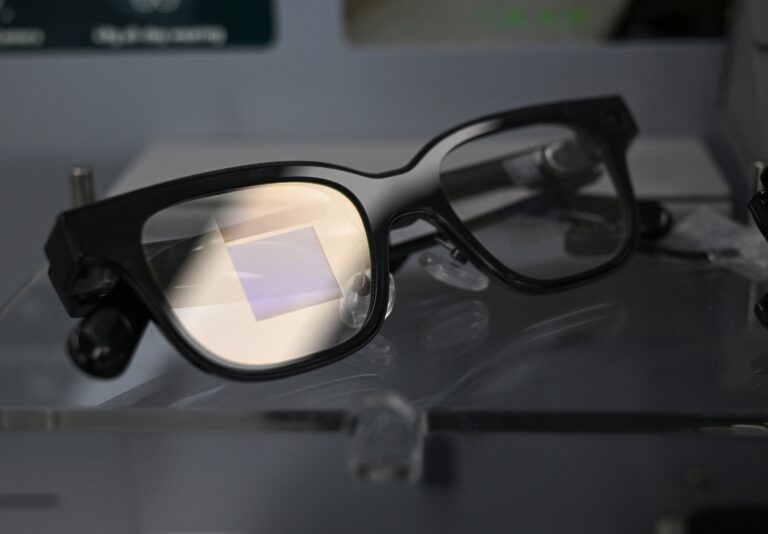
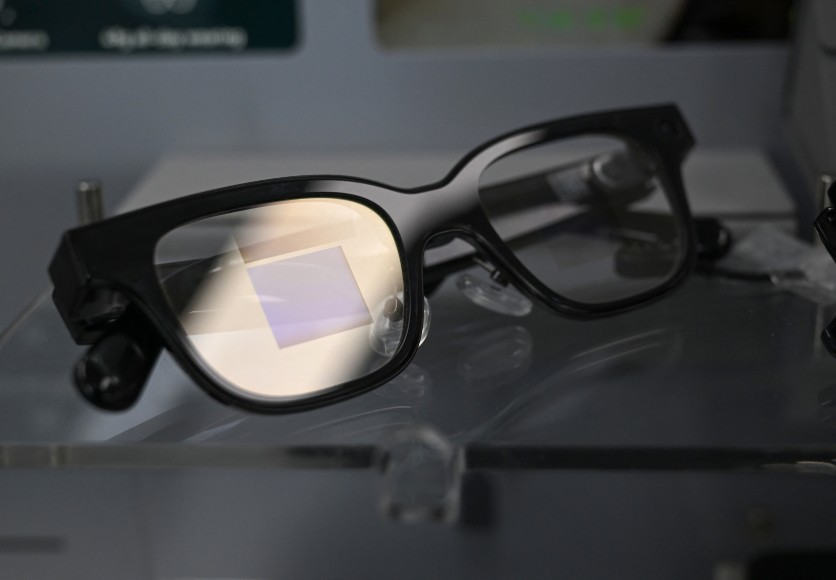
A pair of smart glasses is pictured on display at the Eyedaq eyewear store in Seoul on October 30, 2026. South Korea will file criminal complaints against students caught cheating with smart glasses and toughen penalties for their use, a government official told AFP on October 30. Jung Yeon-je/AFP via Getty Images
Samsung’s Intelligent Eyewear will not arrive in November. Two independent reports confirmed Samsung has delayed Intelligent Eyewear to mid-December, a six-week slip from the November window officials confirmed to The Korea Herald in early October. GSMArena’s October 31 report established that the initial launch covers only the US and South Korea; Europe, China, and Japan have been excluded from the first rollout. Readers expecting to pick up a pair through EU retailers or in the run-up to a broader international launch will need to wait beyond December.
Before reaching for a pre-order, Samsung Galaxy smartphone owners considering Intelligent Eyewear should also understand a detail the company’s marketing materials do not emphasize: the glasses do not process AI on your face. Every request you make through the glasses — whether you are asking Gemini to identify a dish, navigate a route, or read an email — is routed through your paired Galaxy phone and handled by Google’s Gemini infrastructure. Under Google’s Gemini Apps Privacy Hub terms, that activity is retained for 18 months by default, and any conversation flagged for human review can be kept for up to three years. The privacy hardware Samsung has built into the glasses — dual LED indicators, a physical kill switch, tamper-detection — addresses the bystander consent problem. It does not address the data retention question. That is a Google terms-of-service question, and the answer is currently 18 months.
What Changed: November Becomes Mid-December, and the Map Got Smaller
Samsung first confirmed a “fall 2026” retail timeline for Intelligent Eyewear at Galaxy Unpacked London on July 22. A Samsung official narrowed that window to November in early October, speaking to The Korea Herald. That November window is no longer operative. Reports from NewsBytesApp and GSMArena, published October 30 and 31 respectively, placed the revised launch in mid-December, with both sources independently confirming the US and South Korea as the only initial markets.
The geographic scope of the launch matters for two reasons. First, the mid-December date in the US falls just before the holiday buying surge peaks — a narrow window for Samsung to drive initial volume before the competitive dynamic shifts post-holidays. Second, the exclusion of Europe is notable given that the EU regulatory environment around wearable cameras has been active: in October, an EU data protection watchdog called on smart glasses makers to ensure cameras and microphones clearly signal when they are recording. Samsung’s absence from the EU launch means European regulators will not have production units to evaluate under their emerging framework until at least early 2027.
Samsung has not confirmed an exact launch date within December, a retail price, or which specific frame styles will be available at launch across the two markets.
Display-Less by Design: Audio AI Without a Screen
The most consequential product decision in Intelligent Eyewear’s design is what Samsung left out. The glasses carry no display, no heads-up overlay, and no pixels in the lenses. The entire interface runs through open-ear speakers and microphones, with Gemini responding by voice.
That approach mirrors the form factor that made Meta’s Ray-Ban glasses a breakout product: ordinary-looking frames in which a camera, speakers, and microphones do all the work. Samsung’s design rationale, as stated by Mobile EVP Jay Kim at Galaxy Unpacked London, is that any user who needs a screen already has a smartphone and a smartwatch. Intelligent Eyewear is designed for a different mode of interaction — one where the wearer gets information without looking at anything.
The display-free choice also reduces cost and weight, the two most practically significant barriers to all-day wearable adoption. Samsung has claimed its frames weigh approximately 50 grams (1.76 oz) — roughly 5 grams (0.18 oz) lighter than Meta’s Ray-Ban frames — and rates battery life at nine hours, competitive with the Ray-Ban lineup.
The Phone Does the Thinking: How Samsung’s Tethered Gemini Architecture Works
Intelligent Eyewear uses Qualcomm’s Snapdragon AR1 Gen 1, the same chip that powers the Ray-Ban Meta Gen 2. The AR1 Gen 1 was Qualcomm’s first XR platform designed specifically for smart glasses: it includes dual Image Signal Processors for camera capture and is optimized for low power consumption on a wearable frame. That low-power design is precisely what prevents it from running a full large language model locally — the power envelope of a glasses frame cannot sustain LLM inference without destroying battery life and generating heat against the wearer’s face.
The consequence is that Samsung Intelligent Eyewear is architecturally a peripheral, not a standalone AI device. When a user activates Gemini, the glasses capture visual and audio input with the 12-megapixel camera and microphones, transmit that data via Bluetooth to a paired Galaxy smartphone, and the phone handles Gemini inference — either using Gemini Nano on-device or Gemini Pro in Google’s cloud, depending on the task’s complexity. The glasses receive the response and play it through their open-ear speakers. The glasses’ local processor manages sensors, connectivity, and the LED privacy indicators; it does not perform AI reasoning.
This is not a design flaw — it is the same trade-off Meta made with Ray-Ban and Meta AI, and it is what makes it possible to produce a 50-gram (1.76 oz), nine-hour-battery wearable at a sub-$500 price point. Qualcomm’s newer Snapdragon AR1+ Gen 1, unveiled in June 2025, added on-device AI processing capability. Samsung’s Intelligent Eyewear uses the original AR1 Gen 1, not the AR1+, which means local AI is not available on this generation.
Because Gemini processes interactions on a phone and potentially in Google’s cloud, every conversation made through Intelligent Eyewear falls under Google’s Gemini data retention terms. That means activity is retained by Google for 18 months by default; conversations flagged for human review may be retained for up to three years.
Samsung VP James Choi, head of XR R&D, confirmed in his Galaxy Unpacked design interview that “privacy is not an afterthought” in the glasses’ design. Choi’s statement referred specifically to the hardware privacy features Samsung has built into the frames — the dual LED system and physical kill switch. Those features address one specific privacy question — whether bystanders know they are being recorded. They do not alter what Google does with the recordings once they have been processed.
Hardware: Snapdragon AR1 Gen 1, Camera, and a Nine-Hour Battery
The camera is a 12-megapixel unit using a Sony IMX681 sensor, mounted at the front of the frame with an LED indicator adjacent to it.
Battery life is rated at up to nine hours per charge, with a charging case providing up to seven additional full charges in reserve — enough for a full week of daily use before reaching a wall outlet. FCC filings for the two model families (SM-O200J and SM-O200P, with eleven total model codes reflecting multiple frame styles across both design partnerships) also confirmed Wi-Fi connectivity alongside Bluetooth, a capability Samsung had not previously publicized.
Controls span touch panels on the frame arms, voice commands, a capture button, and — for paired Galaxy Watch owners — wrist-based gesture input. Photochromic lenses adapt automatically to ambient light. The glasses weigh approximately 50 grams (1.76 oz) and are designed for prescription lens integration.
Two Design Families: Gentle Monster and Warby Parker
Samsung structured Intelligent Eyewear’s design program around two established eyewear brands rather than developing proprietary frames. Gentle Monster, the Korean luxury eyewear label known for art-installation retail concepts and bold aesthetic, handles one design family. Warby Parker, the American direct-to-consumer brand that made eyewear more accessible at around $95 and above for prescription lenses, provides the second.
Both partnerships were confirmed at Samsung’s Galaxy Unpacked in July after being announced at Google I/O in May 2026. The dual-brand strategy mirrors Meta’s approach with EssilorLuxottica, whose Ray-Ban label has given Meta’s smart glasses the crucial ingredient of looking like something people actually want to be seen wearing. Samsung is betting that Gentle Monster and Warby Parker carry sufficient fashion credibility to push Intelligent Eyewear out of the “tech gadget” category and into mainstream eyewear retail.
The Gentle Monster family leans into statement styling consistent with that brand’s luxury positioning. The Warby Parker family reflects that brand’s classic, accessible silhouettes. Specific frame model names and the full selection available at launch have not been confirmed.
What Samsung Does About Privacy That Meta Does Not
Privacy is the sharpest competitive battleground for any camera-equipped wearable, and Samsung has invested more deliberately in hardware controls than Meta’s original design provides.
Intelligent Eyewear carries two LED indicators: one facing outward toward bystanders, signaling that the camera is active, and one facing the wearer. If a user covers or blocks the outward LED — whether accidentally or intentionally — the camera automatically disables. Samsung XR R&D head James Choi stated in his Galaxy Unpacked product interview that physically damaging the LED can be detected, and that Samsung engineers are studying how circumvention attempts might work. That tamper-detection feature goes further than Meta’s single indicator design.
The glasses also include wear detection that disables the camera when removed, and a physical privacy toggle mounted on the frame arm — a hardware control that lets the wearer disable the camera by touch, without navigating software.
The regulatory context for these design choices has been shifting. In July 2026, New York State’s Office of Court Administration banned recording-capable eyewear from its state courts. South Korea’s Personal Information Protection Commission held meetings with Samsung in July to discuss notification protocols for active cameras and microphones, and the Ministry of Science and ICT began drafting safer-use guidelines in September — no finalized rules exist as of this writing. In October, the EU data protection watchdog urged smart glasses makers to ensure cameras and microphones clearly signal when they are recording.
Samsung’s privacy hardware architecture — dual LEDs, tamper detection, physical kill switch, wear-detection disable — appears designed in part to stay ahead of the regulatory direction those institutions are indicating.
How Does Samsung Intelligent Eyewear Compare to Meta Ray-Ban?
Both Samsung Intelligent Eyewear and Meta Ray-Ban Gen 3 run on Qualcomm’s Snapdragon AR1 Gen 1 and use a phone-tethered AI architecture — Samsung with Gemini, Meta with Meta AI. At the chip level, they are equals. The differentiators are in software ecosystems, privacy hardware, design partnerships, and AI integration depth.
Samsung’s advantages over Meta Ray-Ban (reported):
Deeper Google ecosystem integration: day-one access to Gemini Live, Gmail, Google Calendar, and Google Maps as confirmed by reviewers at Galaxy Unpacked
Claimed weight advantage: approximately 50 grams (1.76 oz) vs. Meta’s approximately 55 grams (1.94 oz)
Dual LED privacy system with tamper detection vs. Meta’s single LED
Physical camera kill switch vs. software-only controls on Meta
Meta’s advantages over Samsung:
In market now, with established track record and software maturity
Entry price: $299 for Ray-Ban Meta Gen 3 (following a June 2026 price cut) — below Samsung’s reported $349–$499 range
Camera-free option: Meta launched the Ray-Ban Meta Audio at Meta Connect in September 2026, giving privacy-conscious buyers an alternative Samsung does not match
Scale: Meta shipped more than 7 million Ray-Ban units in 2025, giving it established retail presence through EssilorLuxottica’s global network
iOS integration maturity: Meta AI works with both Android and iOS; Samsung’s Gemini feature depth is tied to Galaxy devices running Android XR
The practical question for Galaxy smartphone owners: If you own a Galaxy phone, Samsung Intelligent Eyewear integrates more deeply with your existing ecosystem. The price premium over Meta’s entry-level frames — potentially $50 to $200 more — buys you Gemini over Meta AI, the Gentle Monster or Warby Parker frame design, and stronger privacy hardware. If you use an iPhone or a non-Samsung Android phone, the calculus shifts sharply toward Meta, where cross-platform support is more mature.
Pricing: $349 to $499 Is the Reported Range — Nothing Is Official Yet
Samsung has not announced a retail price. The Korea Herald has reported an expected US price range of $349 to $499, with a $379 starting price cited in some reports. Samsung’s official communications have not confirmed any figure.
At $379, Intelligent Eyewear would cost roughly $80 more than Meta’s post-June-2026 Ray-Ban entry price of $299. At $499, it would represent a nearly 67 percent premium over Meta’s entry point. Whether that gap is justified by Gemini’s depth, Samsung’s privacy hardware, and the Gentle Monster or Warby Parker design credentials will become clearer once Samsung announces pricing and reviewers have production units in hand.
For context: display-equipped AR glasses from competitors, including the Samsung Haean model reportedly planned for 2027, are expected to cost $600 to $900 — roughly double the reported Intelligent Eyewear range.
The Market Samsung Is Entering
AI glasses have gone from a niche experiment to one of the fastest-growing consumer electronics segments in 2026. Counterpoint Research data for the first half of 2026 showed global AI glasses shipments rising 263 percent year-on-year, with display-less models — the category Samsung is joining — accounting for 96 percent of those shipments.
Within the display-less segment, Meta held 94 percent market share for the first half of 2026. IDC’s Q2 2026 data tells a comparable story: Meta held 68.7 percent of the overall smart glasses market by volume, with the nearest competitors — RayNeo at 3.6 percent, Alibaba Group at 2.6 percent, XREAL at 2.5 percent, and Xiaomi at 2.3 percent — far behind. Samsung, which had not yet launched, was grouped in the “others” category.
Analysts forecast the broader AI glasses market to surpass 10 million units in 2026 and reach approximately 35 million by 2030, with growth concentrated in the phone-tethered, display-less architecture that both Samsung and Meta represent. Approximately 91 percent of 2026 smart glasses shipments are expected to fall into that lighter, phone-paired category.
Whether Samsung can convert Galaxy smartphone owners into AI glasses buyers at scale — and eventually chip into Meta’s 94 percent hold on display-less — will depend as much on software updates, retailer execution, and Gemini’s competitive depth as on the hardware previewed across a year of announcements.
Road Map: A Display Model Is Coming in 2027
Samsung has structured its XR glasses roadmap in two tiers. Intelligent Eyewear — codenamed “Jinju” internally — represents the accessible, high-volume entry point. A second model, internally codenamed “Haean,” is reported for 2027 at a price of $600 to $900 and will feature a micro-LED heads-up display for augmented reality overlays. Both models run Android XR and Gemini.
Kering, the luxury conglomerate that owns Gucci, announced Gucci Android XR smart glasses for 2027, building on Google’s platform rather than Samsung’s hardware. That announcement signals that the display tier of the XR glasses market is attracting fashion-house brand equity on a timeline parallel to Samsung’s own two-year roadmap.
The mid-December 2026 launch for Intelligent Eyewear is now confirmed. The launch event, the exact retail price, and the full frame selection remain the final details waiting to be disclosed.
Frequently Asked Questions
When are Samsung Intelligent Eyewear smart glasses available to buy?
Samsung’s Intelligent Eyewear will launch in mid-December 2026, according to reports published October 30 and 31, 2026. The November window that Samsung officials confirmed in early October is no longer current. The initial launch covers only the US and South Korea; Europe, China, and Japan are excluded from the first rollout. Samsung has not confirmed an exact date within December, a retail price, or the full frame selection.
How do Samsung smart glasses compare to Meta Ray-Ban?
Both use Qualcomm’s Snapdragon AR1 Gen 1 chip and a phone-tethered AI architecture — Samsung with Google Gemini, Meta with Meta AI. Samsung’s advantages include deeper Google ecosystem integration (Gemini Live, Gmail, Google Maps), claimed lighter weight (50 grams / 1.76 oz vs. approximately 55 grams / 1.94 oz for Meta), and a stronger privacy hardware design with dual LED indicators and a physical kill switch. Meta’s advantages include a lower starting price ($299 vs. Samsung’s reported $349–$499), a camera-free audio option, established retail distribution, and stronger iOS compatibility.
Do Samsung smart glasses send your conversations to Google?
Yes. Samsung Intelligent Eyewear uses a phone-tethered architecture in which Google’s Gemini processes AI requests through a paired Galaxy smartphone, not on the glasses themselves. Under Google’s Gemini Apps Privacy Hub terms, Gemini activity is retained for 18 months by default; conversations flagged for human review may be kept for up to three years. This is a condition of using Gemini — it is not specific to Samsung’s hardware. Readers who want to understand the full scope of Google’s data practices before purchase should review Google’s Gemini privacy documentation.
Are Samsung smart glasses available outside the US?
Not at launch. The mid-December 2026 launch covers the US and South Korea only. Samsung’s Australian operation has indicated it hopes to bring the product to market there but has not confirmed timing. European, Chinese, and Japanese availability has not been announced. A broader international rollout is expected to follow the initial two-market launch, though Samsung has not specified when.