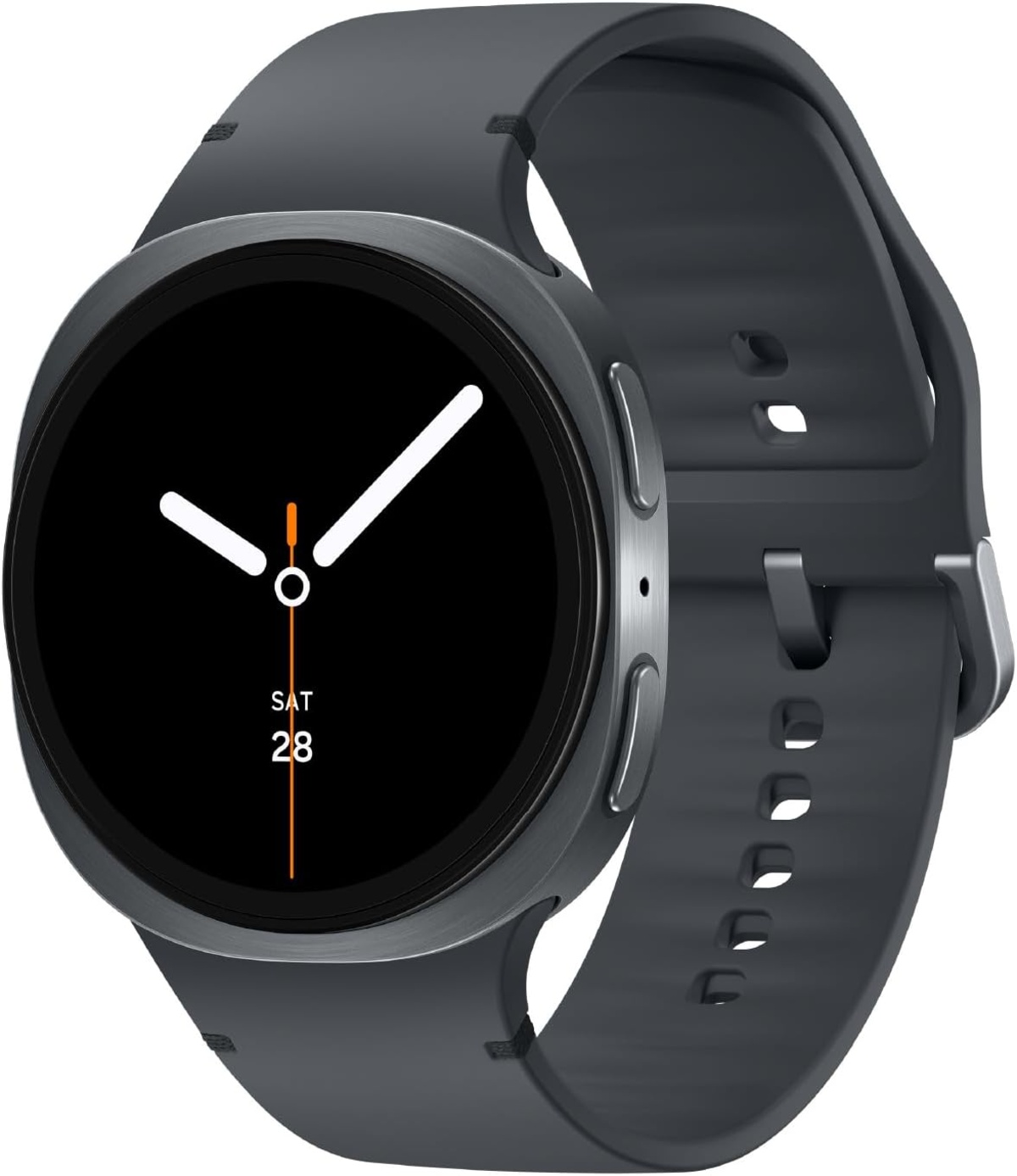
Samsung Galaxy Watch 8 Drops to $290 on Amazon With Watch 9 Already on Shelves

September 25, 2026:

Samsung Galaxy Watch 8 Drops to $290 on Amazon With Watch 9 Already on Shelves

Samsung’s Galaxy Watch 8 — a solid 2025 flagship that is now one generation behind — is on sale at Amazon for $289.99 in its 44mm Graphite Bluetooth configuration, a $40 discount from the standard retail price of $329.99. That is a real saving on proven hardware, but buyers in September 2026 need context the deal listing does not provide: the Galaxy Watch 9 has been on store shelves since August 7, and it closes one of the Watch 8’s biggest weaknesses. Here is what both sides of that $90 gap look like.

Galaxy Watch 8 Is Discontinued — and That Is Not the Same as Bad

Samsung discontinued the Galaxy Watch 8 on July 22, 2026, the same day it announced the Galaxy Watch 9 in London. The Watch 8 did not stop being a good watch on that date. What changed is that it stopped receiving new software features and became a fixed target — excellent hardware running a defined, complete feature set, now being sold off at a discount. That is a familiar and legitimate consumer electronics position: buy the discontinued model at a lower price if the incumbent features meet your needs, or pay more for the successor’s upgrades. Both are reasonable choices.

What the Watch 8 Actually Delivers

The Galaxy Watch 8 launched in July 2025 at Samsung’s Galaxy Unpacked event in Brooklyn. It represented a meaningful redesign from the Watch 7 — the 44mm version is 8.6mm thin and weighs 34 grams, and the cushion-style case design with its Dynamic Lug System was introduced specifically to reduce wrist pressure during long wear and improve sensor contact accuracy.

The 3,000-nit Super AMOLED display runs at 480 × 480 pixels on the 1.47-inch screen — a 50% improvement over the Watch 7’s 2,000-nit ceiling that makes outdoor use genuinely readable in direct sunlight.

Under the hood sits the Exynos W1000, Samsung’s 3nm processor for wearables. This chip uses Fan-Out Panel-Level Packaging (FOPLP) and embedded Package-on-Package (ePOP) technology to integrate RAM, storage, and the power management chip on a single compact die — which is part of what allows the Watch 8’s slimmer profile compared to the Watch 7. Samsung claims the W1000 delivers 3.4× faster single-core and 3.7× faster multi-core performance versus the Exynos W930 in the Watch 6. In practice the Watch 8 is snappy: app launches are fast, the always-on display runs a dedicated low-power engine, and on-device health processing runs continuously without perceptible lag.

Health features that matter:

The Watch 8 carries the full Samsung Health suite: ECG, blood pressure monitoring, continuous heart rate, blood oxygen (SpO₂), skin temperature, body composition analysis, and sleep apnea detection. The sleep apnea feature screens for moderate to severe cases during sleep and provides a longitudinal assessment — it does not diagnose, but it flags patterns worth discussing with a physician.

The genuinely novel addition is the Antioxidant Index. Samsung spent seven years miniaturizing a spectroscopy-based sensor that measures carotenoid levels from the wrist. Traditional carotenoid measurement requires either blood draws or bulky Raman spectroscopy equipment that relies on lasers. Samsung’s approach uses reflectance spectroscopy — multi-wavelength LEDs paired with a custom photodetector array shrunk to coin size — to read carotenoid concentrations via a five-second thumb scan. Carotenoids serve as proxy markers for fruit and vegetable intake and oxidative stress; higher levels generally correlate with more consistent produce consumption. This is the first time such a measurement has been miniaturized to a consumer wrist device. Samsung describes the accuracy as “lab-grade,” though no independent third-party peer-reviewed validation of the sensor’s accuracy has been published in publicly accessible scientific literature as of this writing — a gap worth noting for health-conscious buyers.

The Vascular Load feature tracks overnight cardiovascular stress patterns. Combined with the ECG and blood pressure monitoring, the Watch 8 represents one of the more medically comprehensive consumer wearables commercially available at this price range.

AI integration: The Watch 8 launched with Google’s Gemini AI running natively on the watch — no paired phone required for basic queries over Wi-Fi or LTE. Voice commands cover workout launches, messaging, reminders, and general queries. One UI Watch 8 includes Multi-Info tiles for glanceable health data.

Software support: Samsung committed to four years of OS updates for the Watch 8, covering the device through 2029.

Key specs at a glance:

Spec Detail
Display 1.47-inch Super AMOLED, 480×480, 3,000 nits
Processor Exynos W1000 (3nm, FOPLP/ePOP)
RAM / Storage 2GB / 32GB
Battery (44mm) 435mAh
Connectivity Bluetooth 5.3, Wi-Fi 802.11 a/b/g/n (2.4+5GHz), NFC, L1+L5 dual-band GPS
OS Wear OS 6.0 / One UI Watch 8.0
Durability 5ATM + IP68 + MIL-STD-810H, Sapphire Crystal glass
Weight (44mm) 34g (1.2 oz) without strap
Updates Through 2029

What the $90 Gap Buys You: Galaxy Watch 9 Versus Galaxy Watch 8

The Galaxy Watch 9 launched on August 7, 2026, starting at $379.99 for the 40mm Bluetooth model and $429.99 for the 40mm LTE version. At $289.99 for the Watch 8 44mm versus $379.99 for the Watch 9 40mm, the gap in favor of the Watch 8 is approximately $90 — but the Watch 9 is not a minor refresh.

The chip switch: The Watch 9 is the first Galaxy Watch to run on Qualcomm hardware rather than Samsung’s in-house silicon. It carries the Snapdragon Wear Elite (SDW6100), a five-core, 3nm chip with a dedicated neural processing unit (NPU) for on-device AI. Compared to the Watch 8’s Exynos W1000: 32% better CPU performance, 19% better GPU performance, 15% better power efficiency — and the NPU opens capabilities the W1000 cannot access, including more sophisticated local AI health analysis.

Battery: The Watch 9’s 40mm model carries a 390mAh battery, up from the Watch 8 40mm’s 325mAh — a 20% increase that addresses the main complaint reviewers had about the Watch 8’s smaller size. The 44mm battery stays at 445mAh versus the Watch 8 44mm’s 435mAh — essentially unchanged.

Connectivity: Bluetooth 6.0 on the Watch 9, up from 5.3 on the Watch 8. Wi-Fi 6 support.

Software: Wear OS 7.0 with One UI 9 Watch, versus Wear OS 6.0 on the Watch 8.

Update support: Watch 9 five-year update commitment (through 2031) versus the Watch 8’s four years (through 2029).

Health features added in Watch 9: Heart Health Score, Daily Cardio Load monitoring, and Hearing Protection alerts. The Watch 9 also retains sleep apnea detection, which received FDA clearance.

What the Watch 9 does not change: Case materials (Armor Aluminum), display size and brightness (3,000-nit AMOLED), general durability rating (IP68, 5ATM, MIL-STD-810H), and the squircle cushion design. Price: $30–$60 higher depending on configuration.

For buyers comfortable with the Watch 8’s feature set and willing to accept a prior-generation chip and a shorter update window, the $90 savings is genuine value. Weighing the Watch 8 against the Watch 9 comes down to three factors: the NPU’s future AI capabilities, Bluetooth 6.0 connectivity, and that extra year of software updates. If none of those matter to a buyer’s use case, the Watch 8 remains a competitive option at its current price.

How Does It Compare to What Apple Is Selling Right Now?

The Apple Watch Series 12 went on sale September 18, 2026, starting at $399 for the 42mm GPS aluminum model (or $449 for the 46mm). Comparing the Watch 8 at $289.99 to the Apple Watch Series 12 puts the price gap at roughly $100–$110 for the closest size comparison.

The fundamental boundary remains: the Galaxy Watch 8 requires an Android phone running Android 10 or later, and Samsung Health’s deepest feature integrations (Energy Score personalization, some AI health insights) require a Samsung Galaxy phone specifically. The Watch 8 is not compatible with iPhone. Buyers already in the Android ecosystem, particularly those with Galaxy phones, gain the most from the Watch 8’s feature set. Cross-platform switchers should not factor this deal into their decision at all.

Is the $289.99 Price a Deal or Just a Normal Discount?

The Watch 8 44mm Bluetooth Graphite has sold at prices ranging from approximately $279.99 on Black Friday in November 2025 to lower still during brief promotional events. The current $289.99 on Amazon is a genuine discount from the $329.99 standard retail price but is not the lowest this watch has traded at. It is in the range of what this watch has cost for several months since the Watch 9 launched and put downward pressure on Watch 8 pricing.

Price history matters for one reason: buyers should not feel pressure to act on this as a once-in-a-while opportunity. The Watch 8 will likely remain available at or near this price range for some time as Samsung moves inventory ahead of the Watch 9’s continued rollout.

Who Should Buy the Watch 8 at $289.99?

The Galaxy Watch 8 at this price is the right call for:

Android users (especially Galaxy phone owners) who want a comprehensive health-and-AI smartwatch and are not specifically seeking the Snapdragon NPU’s future AI capabilities. The Watch 8’s health suite — antioxidant tracking, ECG, sleep apnea detection, vascular load, running coach, bedtime guidance — is genuinely deep and runs well on the Exynos W1000.

Fitness and health tracking priorities over raw performance: If the primary use cases are health monitoring, sleep coaching, and workout tracking rather than demanding watch-face animations or on-device AI inference, the Watch 8’s chip remains capable through 2029.

Buyers who would not buy the Watch 9 at $380: If the $90 premium would push a buyer out of budget, the Watch 8 is the better choice over a lower-tier wristband or an older Watch 7.

The Galaxy Watch 8 at $289.99 on Amazon is a Bluetooth-only model. LTE variants are available at higher prices for users who need standalone cellular connectivity without a paired phone.


Frequently Asked Questions

Is the Samsung Galaxy Watch 8 still worth buying now that the Galaxy Watch 9 exists?

It depends on your priorities. The Watch 8 remains a capable, well-reviewed wearable with a strong health feature set including ECG, sleep apnea detection, and the first wrist-based antioxidant sensor. The Watch 9 offers a meaningfully faster chip (Qualcomm Snapdragon Wear Elite with an NPU), longer battery life in the smaller 40mm size, Bluetooth 6.0, and five years of updates instead of four. If none of those upgrades is critical to your use case, the Watch 8 at $289.99 delivers excellent value. If you want the newest chip architecture or a longer support window, spend the extra $90 on the Watch 9.

What is the Exynos W1000 chip in the Galaxy Watch 8, and how does it differ from the Watch 9’s processor?

The Exynos W1000 is Samsung’s own 3nm wearable chip, introduced in 2024 and used in both the Galaxy Watch 7 and Watch 8. It uses Fan-Out Panel-Level Packaging to integrate RAM, storage, and power management on a single compact die — a key reason the Watch 8 is 8.6mm thin. It delivers strong everyday performance. The Galaxy Watch 9 replaces it with Qualcomm’s Snapdragon Wear Elite (SDW6100) — the first non-Samsung chip in a Galaxy Watch — which adds a dedicated NPU for on-device AI processing, delivers 32% better CPU performance, 15% better power efficiency, and enables Bluetooth 6.0. The Exynos W1000 remains genuinely capable; the Snapdragon is architecturally ahead for future AI-driven health features.

Is the Galaxy Watch 8 compatible with iPhone?

No. The Galaxy Watch 8 requires an Android smartphone running Android 10 or later. Some advanced Samsung Health features, including the full Energy Score and certain AI health personalization, require a Samsung Galaxy phone specifically. If you use an iPhone, the Watch 8 will not pair with it, and this deal is not relevant to you.

How long will the Galaxy Watch 8 receive software updates?

Samsung committed to four years of OS updates for the Watch 8 from its July 2025 launch, covering major software upgrades through 2029. After 2029, the Watch 8 will likely still function but will no longer receive new Wear OS versions or Samsung One UI Watch feature updates. The Galaxy Watch 9, by comparison, carries a five-year commitment through 2031.

Source link