October 7, 2026:


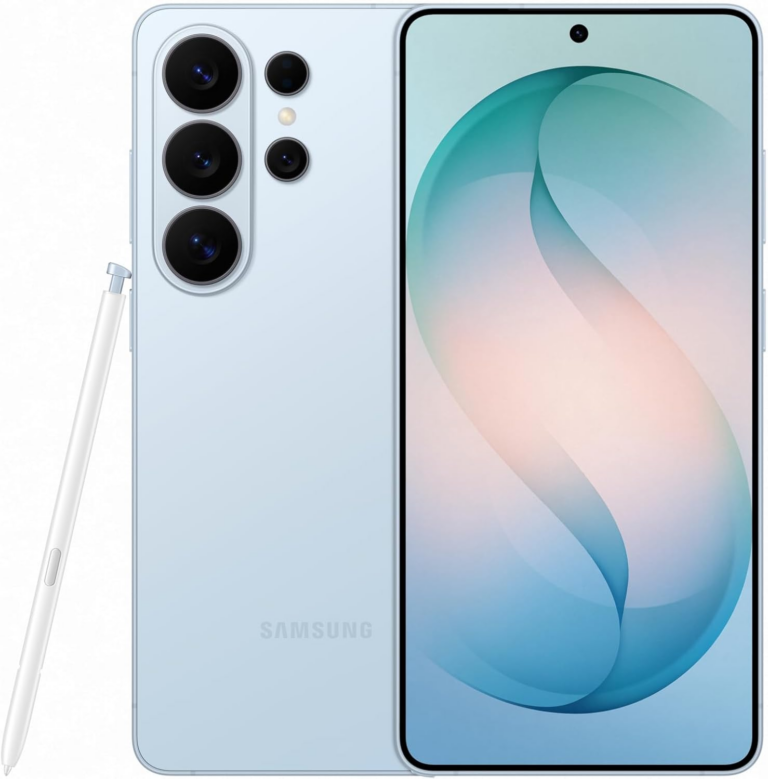
Amazon Prime Big Deal Days 2026 kicked off this morning, and the deal most worth knowing about is on Samsung’s top-tier flagship: the Galaxy S26 Ultra (256GB, unlocked) has fallen to $979.99 for Amazon Prime members, down $420 from its current list price of $1,399.99 — a 30% discount. The promotion runs through October 7, 2026 — tomorrow — and Prime membership is required to access the advertised price.
A note on the math: Samsung hiked the S26 Ultra’s price from $1,299.99 to $1,399.99 approximately one week before this sale began. At the new list price, the $420 discount is a genuine 30%. Against the original launch price, the savings is approximately $320. Either way, $979.99 places the phone among the lowest prices since its March 2026 sale launch — though not quite the all-time floor: a brief flash sale on September 7, 2026 dropped the Sky Blue to $953, and the June 2026 Prime Day event saw prices as low as $919 to $949.
The Sky Blue and other color options are confirmed at this price. Trade-in discounts of up to $815 are available in addition to the $420 sale price for buyers with eligible trade-ins.
The feature Samsung most prominently added to the Galaxy S26 Ultra — and the one that has no direct equivalent on any competing Android or iPhone — is the Privacy Display, powered by Samsung Display’s FMP and LEAD 2.0 — Flex Magic Pixel and Light-Emitting with Antireflection Display — technology.
Standard OLED displays are prized for their wide viewing angles — light from each pixel scatters broadly, making the screen readable from the sides. Privacy Display reverses that design priority on demand. The FMP panel embeds two types of pixels: wide pixels (standard OLED configuration) and narrow pixels enclosed within a black matrix structure. When Privacy Mode is activated, the narrow pixels become the primary light source, dramatically reducing the emission angle so that only the person holding the phone can read the screen. The effect works on all sides — not just left and right, but also top and bottom, so someone looking over your shoulder on a subway platform cannot read your screen.
This is not a software filter or an adhesive film. Privacy Display is a world-first per-pixel hardware feature developed over approximately five years by Samsung Display, and the Galaxy S26 Ultra is the only smartphone in the world currently shipping with it. The feature can be activated for the entire display or selectively — for specific apps, notification previews, or password fields — while the rest of the screen retains normal brightness and viewing angle. One tradeoff worth knowing: when maximum privacy mode is engaged, brightness is slightly reduced, so keeping it off for video is advisable.
| Spec | Detail | US Equivalent |
|---|---|---|
|
Display |
6.9 in. Dynamic LTPO AMOLED 2X, 120Hz, HDR10+, 2,600 nits |
— |
|
Resolution |
1440 x 3120 (Quad HD+, ~500 ppi) |
— |
|
Processor |
Qualcomm Snapdragon 8 Elite Gen 5 for Galaxy (3nm N3P) |
— |
|
RAM / Storage |
12GB LPDDR5X / 256GB UFS 4.0 |
— |
|
Main Camera |
200MP f/1.4 wide + 50MP 5x periscope telephoto + 10MP 3x telephoto + 50MP ultrawide |
— |
|
Front Camera |
12MP |
— |
|
Battery |
5,000mAh, 60W wired fast charging + 25W wireless |
— |
|
OS |
Android 16 / One UI 8.5 |
— |
|
Durability |
IP68 water/dust resistance |
— |
|
Stylus |
Integrated S Pen |
— |
|
Build |
Corning Gorilla Armor 2 front, Gorilla Glass Victus 2 back, Armor Aluminum 2 frame |
— |
|
Dimensions |
163.6 x 78.1 x 7.9mm |
6.44 x 3.08 x 0.31 in. |
|
Weight |
214g |
7.55 oz (0.47 lbs) |
The Galaxy S26 Ultra is a refinement rather than a redesign. The S26 vs. S25 Ultra upgrades center on three areas:
Cameras: The main 200MP sensor is unchanged in megapixels but widened from f/1.7 to f/1.4 — that is 47% more light through the lens, which Samsung says translates to noticeably better low-light performance and improved subject separation.
Charging: Wired charging jumped from 45W on the S25 Ultra to 60W on the S26 Ultra, shaving meaningful time off a full charge. Wireless charging stayed at 25W maximum, though the no-built-in-magnets situation described below creates friction there.
Processor: The Snapdragon 8 Elite Gen 5, manufactured on TSMC’s 3nm N3P node, delivers roughly 20% faster CPU with 35% efficiency compared to the Snapdragon 8 Elite in the S25 Ultra. Its Hexagon neural processing unit runs 37% faster, which underpins the Galaxy AI improvements in this generation.
Design: Samsung swapped the S25 Ultra’s titanium frame for Armor Aluminum 2, resulting in a phone that is marginally slimmer (7.9mm vs. ~8.2mm) and about 4 grams lighter.
Unchanged: Battery capacity is 5,000mAh — the sixth consecutive year Samsung has held that figure flat across the Ultra line.
One UI 8.5 leans further into what Samsung calls “agentic” AI — the ability to complete multi-step tasks without constant user input. The Galaxy AI suite, which integrates Google Gemini, Bixby, and Perplexity, can now handle longer chains of actions on behalf of the user: editing photos through typed natural language commands, drafting and formatting notes, real-time translation during calls, and Circle to Search. Galaxy AI features are included on the device with no subscription, and Samsung gives users the option to disable AI features entirely if preferred.
For buyers considering the S26 Ultra, the relevant questions are:
Who should buy now: Anyone upgrading from the S24 Ultra or earlier who wants the Privacy Display, the improved low-light camera, and the fastest Android SoC available. At $979.99 (Prime membership required), the S26 Ultra is $75 less than the Galaxy S26+ is selling for at its own Prime Day price — a notable inversion of the usual pricing hierarchy that makes the Ultra’s value proposition sharper than usual.
Who should wait: Buyers deeply invested in the Qi2 wireless charging ecosystem should understand the limitation before purchasing. The Galaxy S26 Ultra does not have built-in Qi2 magnets; Samsung cited its “thinner, lighter” design commitment and concerns about S Pen interference as the rationale. The phone supports Qi2 25W wireless charging speeds in principle, but reaching those speeds requires a Qi2-compatible magnetic case — and even then, many cases miss the Qi2 handshake at 25W. Standard wireless charging without a magnetic case works fine; it is the faster Qi2 speed that is case-dependent.
Price trajectory: Black Friday and Cyber Monday are approximately seven weeks away. Given that Samsung has now raised the official list price, a deeper discount than $979.99 in the near term is less certain than it was before the price hike. The September 7 flash sale at $953 occurred before the list-price increase; future flash deals may or may not drop to that level again.
Yes. The $979.99 price is exclusive to Amazon Prime members as part of Amazon Prime Big Deal Days 2026. The sale runs October 6 and 7 only. Without a Prime membership, the phone lists at $1,299.99 (or $1,399.99 at other retailers using the new Samsung list price). If you are not a Prime member, Amazon offers a 30-day free trial that would cover this sale window — confirm terms before purchasing.
Prices and availability are subject to change. TechTimes may earn a commission from purchases made through links in this article.
Yes. The Prime Big Deal Days discount is exclusive to Prime members and expires at the end of October 7, 2026. Without Prime, the phone is listed at $1,299.99 on Amazon or $1,399.99 at Samsung and Best Buy under the new list price. Amazon does offer a 30-day free trial for new Prime members.
No — not even close to the record. The June 2026 Prime Day brought the 256GB model down to the $919 to $949 range, and a brief flash sale on September 7, 2026 put it at $953. The current Prime Big Deal Days price of $979.99 is among the lowest sustained non-sale prices since the phone went on sale in March 2026, but it is not the all-time floor.
Privacy Display uses Samsung Display’s FMP and LEAD 2.0 — Flex Magic Pixel and Light-Emitting with Antireflection Display — technology to narrow the viewing angle at the hardware level. The panel contains narrow pixels embedded in a black matrix structure; when Privacy Mode is active, these narrow pixels become the dominant light source, making the screen unreadable from the sides, top, and bottom. It works on the pixel level — no adhesive film, no software simulation — and can be toggled selectively for specific apps or notifications rather than only as an all-or-nothing setting.
It supports Qi2 wireless charging speeds (up to 25W), but it does not have Qi2 magnets built into the chassis. To access 25W Qi2 speeds, a Qi2-compatible magnetic case is required. Without such a case, standard wireless charging is available but capped below the Qi2 25W maximum. Apple’s iPhone lineup and Google’s Pixel 10 series both include built-in magnets, making them fully Qi2-compatible out of the box; the S26 Ultra requires the extra step of a compatible case.