October 24, 2026:


Rolls-Royce is reportedly days away from locking in a UK government subsidy of between £100 million and £200 million to build and ground-test a demonstrator for its UltraFan 30 engine — the company’s first serious narrowbody play in over a decade and a direct bid to challenge the CFM International and Pratt & Whitney duopoly that has controlled the single-aisle jet engine market for years. The deal was first reported by the Financial Times on October 22, drawing on two sources with direct knowledge of the negotiations, and a formal announcement could come as soon as next week.
Rolls-Royce reached an agreement in October 2011 to sell its equity stake in International Aero Engines — the consortium behind the V2500 turbofan that powered the original Airbus A320 family — to Pratt & Whitney. That transaction closed formally on June 29, 2012, marking the moment Rolls-Royce fully departed the single-aisle engine business. The exit ceded an enormous and still-growing segment to CFM International’s LEAP and Pratt & Whitney’s GTF — two programmes that now collectively power virtually every new narrowbody aircraft entering service worldwide.
Winning back a share of that market will require more than ambition, and the timeline is becoming urgent. Both Airbus and Boeing are anticipated to open formal engine selection processes for their next-generation narrowbody replacements before the end of the decade, making the current two-to-three-year window the last realistic opening for Rolls-Royce to position a credible demonstrator ahead of those conversations.
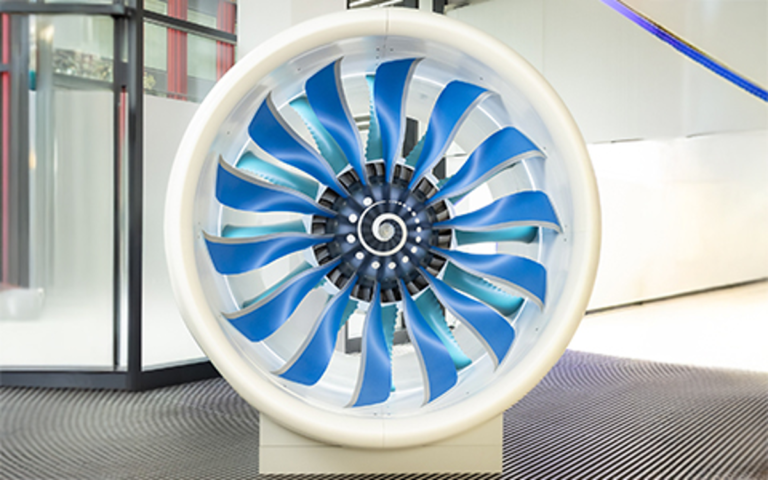
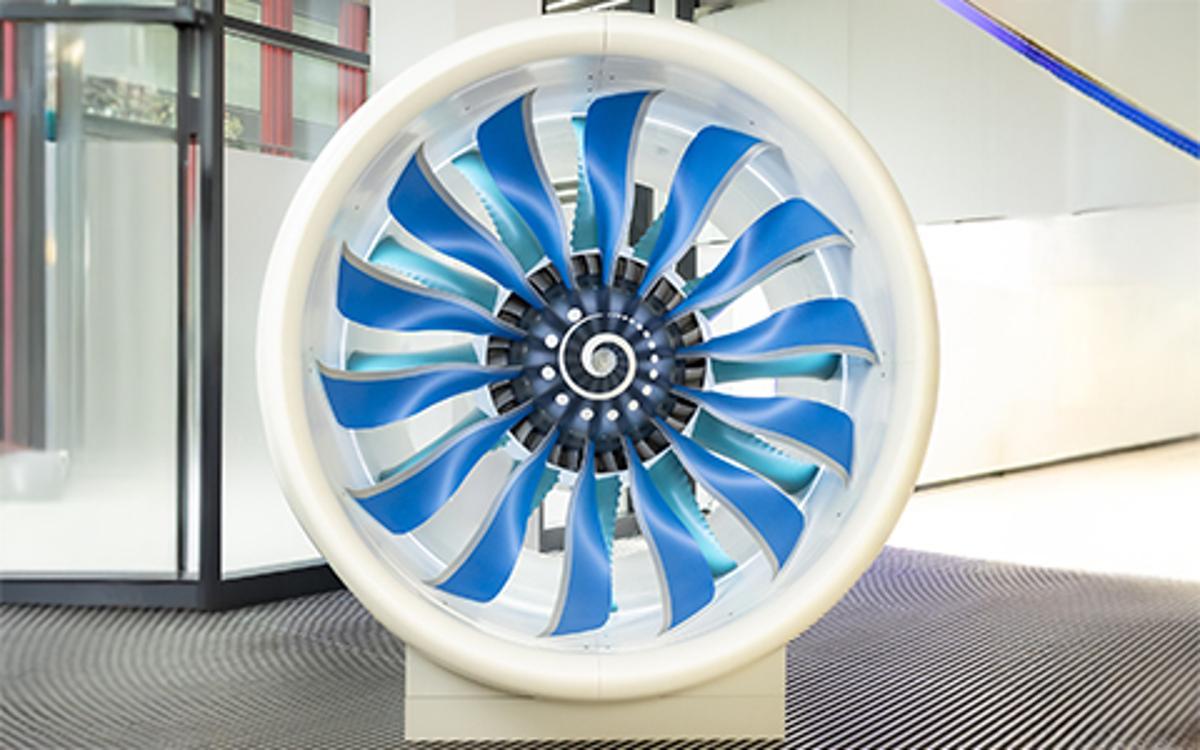
The UltraFan 30 is a geared turbofan built on the same scalable architecture that underpins the larger UltraFan 80, which Rolls-Royce successfully ran to maximum power at its purpose-built Derby test facility in 2023. The “30” in the engine’s designation reflects its approximate thrust class — around 30,000 pounds of force — placing it within the performance band required for the next generation of single-aisle commercial jets. According to Rolls-Royce’s own published performance targets, the engine is designed to deliver up to 20% greater fuel burn efficiency compared with engines currently operating in commercial service — a margin with direct implications for airline operating costs at a moment when both fuel budgets and carbon commitments are under sustained pressure.
The architecture is also configured to accommodate future propulsion options, including full compatibility with hydrogen, placing the UltraFan 30 within the trajectory of long-term decarbonization commitments across European aviation.
The proposed public co-investment of £100M–£200M covers only the demonstrator phase. Bringing the UltraFan 30 to full commercial certification would require an estimated £3 billion in total — capital Rolls-Royce intends to assemble through a combination of government co-investment, its own balance sheet, and potential future risk-sharing partners.
Rolls-Royce has made the competitive argument publicly: rival engine manufacturers including GE Aerospace, Pratt & Whitney, and Safran each benefit from substantially larger flows of government and defence-linked funding in their home markets. The company has framed the UK ask not as corporate subsidy but as market-standard co-investment in a globally contested technology programme — consistent with how comparable aerospace powers approach long-cycle industrial competition.
The deal would become one of the defining early moves by Prime Minister Andy Burnham, who entered 10 Downing Street on July 20 after Keir Starmer stepped down as Labour leader. Burnham has centred his opening economic agenda on rebuilding domestic manufacturing capacity and creating high-skill employment — and a UK-anchored Rolls-Royce commitment to engine production and testing would sit squarely within that framing.
The negotiations were not without leverage on both sides. Reports indicate Rolls-Royce signalled it could divert portions of the programme to Germany if British support did not materialise — a pressure point that appears to have driven the accelerating pace of talks through October.
Rolls-Royce is not approaching this deal from a position of weakness. The company reported a 46% year-on-year increase in underlying operating profit to £2.5 billion for the first half of 2026, and subsequently raised its full-year profit guidance to a range of £4.7 billion to £4.9 billion. Alongside those results, Erginbilgic announced a multi-year share buyback programme totalling between £7 billion and £9 billion running through 2028 — a clear signal of management confidence in the company’s cash generation trajectory.
That context reframes the UltraFan 30 bid entirely. This is not a struggling manufacturer seeking rescue; it is a highly profitable one making a calculated wager on the dominant commercial aviation growth story of the next generation. Narrowbody aircraft production is forecast to roughly double over the next 25 years, and Rolls-Royce has stated plainly it intends to capture engine revenue from every wave of that expansion.
Both Rolls-Royce and the UK Department for Business and Trade declined to comment on the reported transaction. The timing of any formal announcement remains subject to change.