Rocket Lab, Stoke Space Secure Pentagon Loans to Strengthen America’s Space Launch Industry

November 12, 2026:

Rocket Lab, Stoke Space Secure Pentagon Loans to Strengthen America’s Space Launch Industry

The US military is upgrading its financial support for emerging commercial rocket companies as SpaceX prepares to shift away from its long-running Falcon rocket program.

The Pentagon has committed a combined $300 million in conditional loans to Rocket Lab and Stoke Space, signaling growing concern about the future availability of reliable launch vehicles for national security missions.

The move comes as SpaceX gradually redirects its resources toward Starship, its next-generation super-heavy-lift rocket. Although Falcon 9 and Falcon Heavy launches for government customers are expected to continue for several more years, their eventual retirement could leave the US military with fewer established launch options.

Pentagon Commits $300 Million to Rocket Lab and Stoke Space

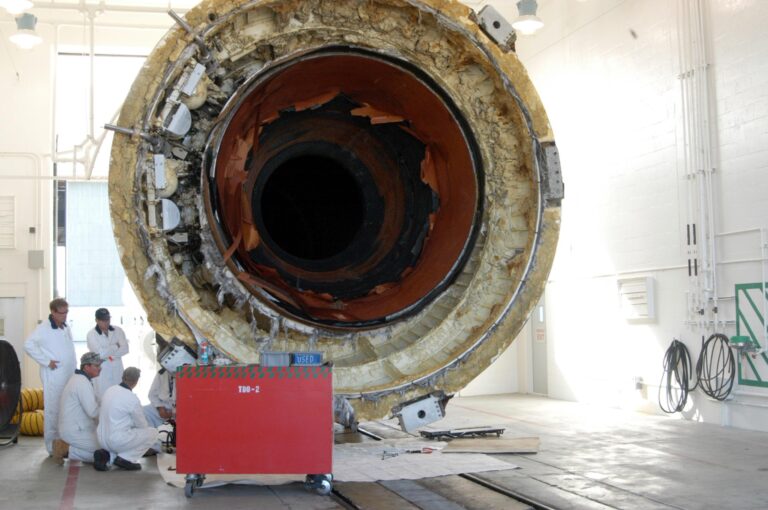
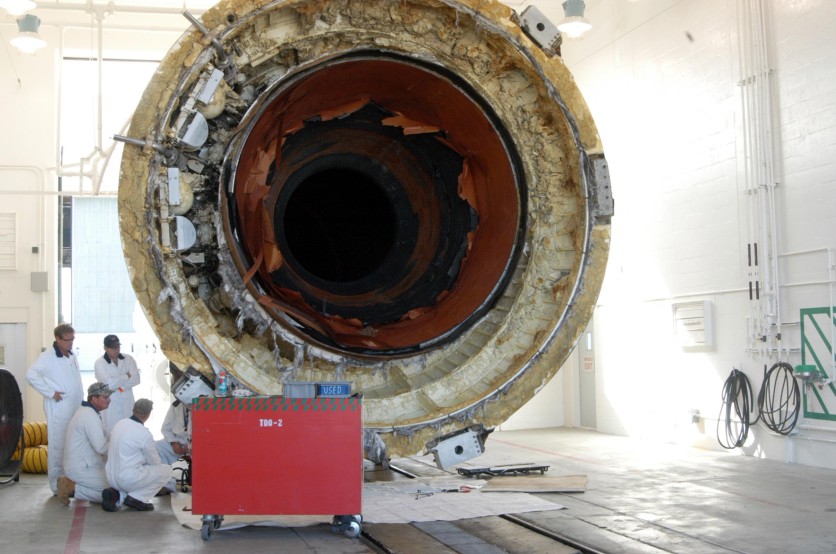
handout photograph NASA one spent Solid Rocket
In this handout photograph from NASA, one of the spent Solid Rocket Boosters (SRBs) from the launch of Space Shuttle Discovery July 26 on Return to Flight mission STS-114 is moved into Hangar AF at Cape Canaveral Air Force Station on August 1, 2005 in Cape Canaveral, Florida.
NASA via Getty Images

The Pentagon’s Office of Strategic Capital (OSC) announced two major financial commitments within a two-week period. On October 26, the office revealed a conditional $150 million loan for Stoke Space.

A second $150 million commitment for Rocket Lab followed on November 10. Both companies are developing rockets intended to compete for future government and commercial launch contracts.

Established in 2022, the Office of Strategic Capital was created to provide financing for companies developing technologies considered important to US national security. Its investments extend beyond the space industry, covering areas such as batteries, drones, and semiconductors.

The office has also committed $150 million to LeoLabs, a commercial satellite-tracking company, to support the production and deployment of radar systems.

The latest investments reflect an effort to strengthen the American commercial space industry by helping companies develop the infrastructure and manufacturing capabilities needed to support future military requirements.

Why the SpaceX Falcon Retirement Concerns the US Military

SpaceX currently serves as the Pentagon’s leading launch provider through its Falcon rocket family, which includes the Falcon 9 and Falcon Heavy.

However, the company has stopped accepting commercial orders for Falcon 9 launches after 2028 as it prepares to concentrate on Starship. Government launches for customers such as NASA and the US Space Force are expected to continue beyond that date.

Under its existing agreement with the Space Force, the military can place orders for Falcon 9 and Falcon Heavy missions through 2029, with launches scheduled to extend through 2033.

The longer-term plan remains less certain. If Starship delivers on its intended capabilities, SpaceX eventually expects to retire the Falcon program entirely.

Starship could eventually become an option for national security payloads. However, its near-term priorities include deploying SpaceX’s Starlink internet satellites and supporting its planned Starmind orbital data centers.

America’s Assured Access to Space Policy Explained

According to Ars Technica, the Pentagon’s decision to support additional rocket companies is connected to a long-standing military policy known as assured access to space. Maintained since the 1990s, the policy aims to ensure that the United States has access to at least two domestic launch programs capable of carrying national security satellites into orbit.

The strategy reduces dependence on a single rocket provider. It also gives the government greater flexibility when technical problems, production delays, or unexpected launch failures affect one company’s operations.

Historically, military support has taken several forms, including direct subsidies, development funding, and launch contracts at premium prices. These arrangements help maintain commercial launch providers’ technical capabilities and financial stability while giving the government greater insight into their operations.

Today, the Space Force relies primarily on SpaceX’s Falcon rockets and United Launch Alliance’s Vulcan rocket. However, Vulcan has experienced two groundings in the past two years because of problems involving its solid rocket boosters. These setbacks forced the Space Force to move several national security missions to SpaceX, highlighting the importance of maintaining alternative launch options.

Rocket Lab’s $150 Million Loan Will Support Neutron Development

Rocket Lab plans to use its Pentagon financing to expand manufacturing and launch capabilities for its partially reusable Neutron rocket. The proposed $150 million loan will support faster vehicle production, improved processing operations, and additional maritime equipment needed to recover and transport the rocket’s reusable components.

It will also help fund manufacturing upgrades for composite structures and engines, along with infrastructure designed to reduce the time between launches. Neutron is being developed as a medium-lift launch vehicle that could serve both commercial customers and future government missions.

Rocket Lab has targeted its first Neutron launch for 2027, making the coming development period important for the company’s position in the competitive launch market. Chief Financial Officer Adam Spice described the Pentagon financing as being offered on attractive terms. He also said the additional capital would help the company scale important parts of its business, particularly the Neutron program.

Rocket Lab has separately increased its announced Neutron launch price from $55 million to $70 million amid growing demand. The company also reported a backlog of 117 contracted launches across its Neutron and smaller Electron rocket programs.

Stoke Space Receives Funding for a Second Launch Pad

The Pentagon’s investment in Stoke Space is focused on expanding the company’s launch infrastructure. The $150 million conditional loan is intended to support construction of a second launch pad at Cape Canaveral Space Force Station in Florida.

The additional facility would accommodate flights of Nova Block 2, an upgraded version of Stoke Space’s fully reusable Nova Pathfinder rocket. Stoke Space is pursuing a fully reusable rocket design, an approach intended to reduce the cost and complexity of launching payloads into orbit.

The company’s infrastructure expansion matters because launch capacity depends on more than having a completed rocket. Launch facilities, processing equipment, transportation systems, and recovery operations also determine how frequently a vehicle can fly. OSC senior managing director of investments Jordan Sebold said the investment would strengthen the commercial space industrial base’s capacity and resilience.

More Rocket Companies Are Competing For US Military Contracts

The Pentagon’s latest financing commitments come as the Space Force anticipates a substantial increase in demand for medium- and heavy-lift launches. Space Systems Command now estimates that the military could require as many as 249 launches through the early 2030s. That projection is more than twice the command’s estimate from two years earlier.

Beyond SpaceX and United Launch Alliance, several companies are eligible to compete for portions of these future missions. They include Blue Origin, Rocket Lab, Stoke Space, Relativity Space, and Impulse Space.

Each company has a different development focus. Blue Origin has already flown a rocket capable of meeting Space Force requirements, while Rocket Lab, Stoke Space, and Relativity Space are developing medium- or heavy-lift vehicles. Impulse Space specializes in in-space propulsion technology.

The growing list of potential providers gives the military more options, although several companies still need to demonstrate that their vehicles can meet the required launch standards. The Pentagon’s conditional loans are also subject to financial, legal, technical, investment, and other due diligence requirements.

Frequently Asked Questions

Why is the Pentagon funding Rocket Lab and Stoke Space?

The Pentagon is supporting both companies to expand commercial launch capacity and maintain reliable access to space for national security missions as SpaceX prepares to retire its Falcon rocket family.

How much money did Rocket Lab and Stoke Space receive?

The Pentagon’s Office of Strategic Capital announced conditional loan commitments of $150 million for each company, totaling $300 million.

Is SpaceX retiring the Falcon 9 rocket?

SpaceX has stopped accepting commercial orders for Falcon 9 launches after 2028. Government missions are expected to continue longer, with existing Space Force ordering arrangements extending through 2029 and launches scheduled through 2033. Full retirement depends partly on Starship’s development and capabilities.

What is Rocket Lab’s Neutron rocket?

Neutron is Rocket Lab’s partially reusable medium-lift launch vehicle for commercial and government customers. Its development includes investments in manufacturing, recovery equipment, and launch processing infrastructure.

What is Stoke Space developing?

Stoke Space is developing Nova, a fully reusable rocket system. Its Pentagon financing will support a second launch pad at Cape Canaveral Space Force Station for the upgraded Nova Block 2 vehicle.

What does assured access to space mean?

Assured access to space is a US military policy designed to maintain multiple domestic launch capabilities for national security satellites. It reduces dependence on a single rocket provider and helps protect military launch schedules from disruptions.

Which companies could compete for future US military launch contracts?

Potential competitors include SpaceX, United Launch Alliance, Blue Origin, Rocket Lab, Stoke Space, Relativity Space, and Impulse Space. Their eligibility and ability to secure contracts depend on meeting the Space Force’s technical and operational requirements.

Source link