November 15, 2026:


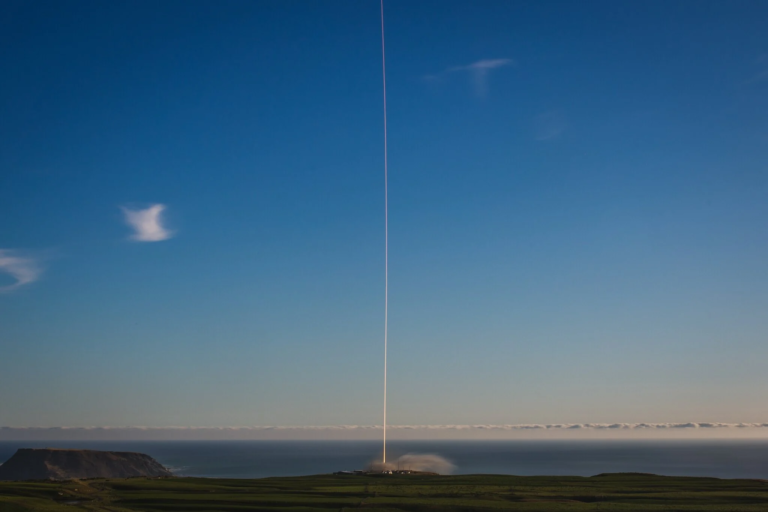
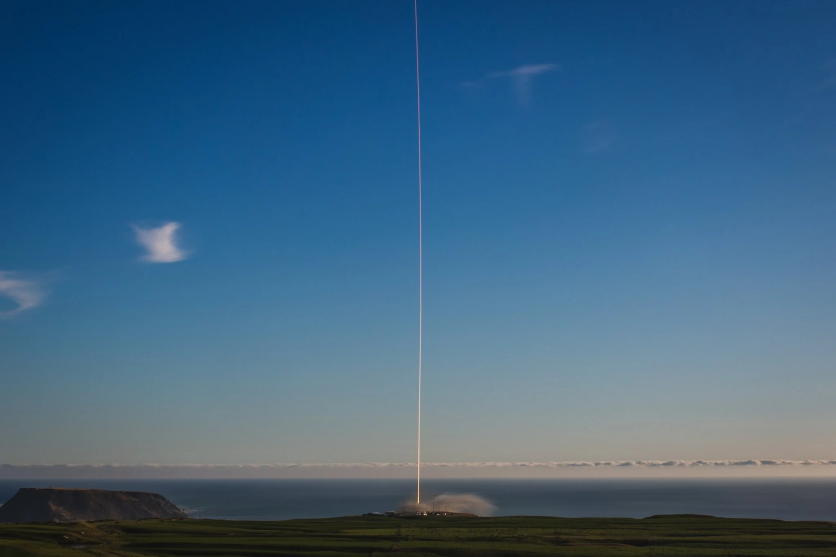
Rocket Lab’s Electron flew its 100th mission at 6:30 p.m. New Zealand time on Saturday, Nov. 14 (12:30 a.m. ET), but that total includes hypersonic test flights that never reach orbit, so Electron’s count of orbital launches is lower. The mission, called “The Mountain God Rises,” lifted off from Launch Complex 1 on New Zealand’s Māhia Peninsula and, according to Rocket Lab, placed YAMATSUMI-II, a radar-imaging satellite for Japanese operator iQPS, into a 575 km (357 miles) low Earth orbit.
Rocket Lab says Electron set a new 100-launch record among commercially developed rockets, and its release does not publish the comparison behind that claim. Measured against Falcon 9 from first flights, Electron got there about a year sooner, but only if suborbital flights count. That caveat decides whether the milestone says what Rocket Lab says it does, and it matters to any satellite operator weighing Electron’s record against its competitors.
Rocket Lab flies a suborbital variant of Electron called HASTE, short for Hypersonic Accelerator Suborbital Test Electron. Wikipedia describes it as a derivative that can deliver 700 kg on a suborbital trajectory, carrying customers’ hypersonic test vehicles on arcs that return to Earth instead of circling it. HASTE first flew on June 18, 2023.
Rocket Lab counts those flights in Electron’s mission totals. The company said Electron ended 2025 with its 79th mission, a record 21 launches that year, so the 100th mission is the 21st of 2026. That puts this year level with 2025’s record with more than six weeks left. Rocket Lab’s release for the 99th flight called it the 20th mission of 2026; it launched at 5:41 a.m. NZDT on Nov. 3, or 11:41 a.m. ET on Nov. 2. Rocket Lab has not said that the 100th is the 21st of 2026. That figure follows from simple addition.
Wikipedia’s list of Electron launches counts nine HASTE flights among the 97 launches it records. Subtracting nine from 100 leaves roughly 91 orbital launches, because flights 98 through 100 were orbital missions and add no HASTE flights. Rocket Lab publishes no split, and the same list shows flight 89 in both categories, a HASTE launch that reached orbit, so treat 91 as approximate; it would be 92 if that flight counts as orbital.
The distinction is not pedantic. Reaching space on a trajectory that returns to Earth takes far less energy than reaching orbit: Wikipedia puts the lowest delta-v for 100 km at about 1.4 km/s, while low Earth orbit requires a speed of roughly 7.7 km/s (4.8 miles per second).
HASTE counts will keep rising. Rocket Lab announced a $190 million block buy of 20 HASTE flights under the Pentagon’s MACH-TB 2.0 hypersonic test program on March 18, and a $266 million Space Systems Command contract for at least 12 suborbital launches, mostly from Alaska, in July. Both point to more suborbital flights entering the total, so a future “Electron launches” figure will drift further from an orbital-only count unless Rocket Lab reports the two separately.
Electron’s record is not flawless. It has failed four times, at flights 1, 13, 20 and 41. The first test flight, in May 2017, failed because of telemetry problems, as The Register has noted, though Rocket Lab’s investigation pointed to an independent contractor’s ground equipment issue rather than the rocket. The flight on Sept. 19, 2023, was lost after a short circuit cut power to the second stage.
The two failures in between sit in the same place. SpaceNews reported that the July 2020 and May 2021 losses involved problems with the upper stage, so three of the four failures trace to the second stage.
Every flight since has succeeded. Wikipedia’s list of Electron launches records no failure after flight 41, and Rocket Lab reported successful missions for flights 98 through 100. Flights 42 through 100 make 59 straight successes, and a lifetime tally of 96 successes in 100 flights. Rocket Lab said all 21 launches in 2025 succeeded. iQPS’s own record with Electron is clean: Rocket Lab says every iQPS mission since 2023 has succeeded.
For scale, Wikipedia lists Falcon 9 with two in-flight failures and one partial failure across 650 launches as of June 2026. For a buyer booking a launch today, the 59-flight run is the more current number, because all four failures sit behind it.
Falcon 9 first flew on June 4, 2010, and its 100th flight came on Nov. 24, 2020 local time (Nov. 25 UTC), about 10.5 years later. Electron first flew on May 25, 2017, which makes the Nov. 14, 2026 flight about 9.5 years in. On those dates, Rocket Lab’s claim holds against Falcon 9, by roughly a year.
Three limits apply. First, the 100 includes HASTE flights. On an orbital-only count, Electron has not reached 100, and the claim would not apply. Second, the comparison uses calendar time since first flight, not flights per year, and Falcon 9’s early years were slow. Third, this comparison covers only Falcon 9, the obvious benchmark, and does not test other vehicles. Rocket Lab’s wording, “commercially developed rocket,” narrows the field, but the release does not say which rockets it compared.
Electron’s Rutherford engines burn RP-1 kerosene and liquid oxygen, but they drive their propellant pumps with electric motors and a lithium polymer battery instead of a gas generator. The engine debuted on Electron’s first flight in May 2017, and its combustion chamber, injectors, pumps and main propellant valves are 3D printed.
Electron is a small-lift rocket that carries about 300 kg (661 lbs) to low Earth orbit, so mass spent on batteries and structure competes with payload. That is a general design tradeoff, not a claim Rocket Lab has made. The failure record concentrates in the upper stage, which is the stage the three most recent losses involved. The reader consequence is concrete: a satellite operator should read 96 of 100 as the lifetime figure and 59 straight as the current one, and ask any provider for failure-inclusive and orbital-only counts when comparing them.
YAMATSUMI-II is a synthetic aperture radar (SAR) satellite for the Institute for Q-shu Pioneers of Space, Inc. (iQPS). SAR satellites transmit their own radar pulses, so they image the ground regardless of day, night or weather. The iQPS spacecraft carry a 3.6 m (11.8 ft) deployable antenna that stows to a diameter of 0.8 m (31.5 in), weigh about 100 kg (220 lbs) and have imaged at resolution as fine as 46 cm (18 in).
The satellite’s name follows iQPS’s practice of naming spacecraft after Japanese deities. YAMATSUMI-I, which also takes its name from the mountain god, flew on Electron in June 2025 on a mission called “The Mountain God Guards”.
This was Rocket Lab’s 11th Electron launch for iQPS, and the release says iQPS has booked seven more dedicated Electron launches through 2030. Eleven flown plus seven booked makes 18 contracted launches, after iQPS added three launches in April 2026. A 10-minute repeat cycle is listed for a full 36-satellite constellation, but that is a long-range plan: SpaceNews reported targets of 24 satellites by 2028 and 36 by 2030.
Dedicated launches matter because a constellation needs each satellite in a specific orbital plane. A rideshare flight sets the plane for its passengers, not for one of them, so a dedicated Electron lets iQPS choose it.
Rocket Lab pushed the first flight of Neutron, its medium-lift vehicle, into 2027, with CEO Peter Beck disclosing the delay on Oct. 14. Satellite Today reported problems with a machine that makes the rocket’s carbon composite sections and a manufacturing defect traced to a tank that ruptured in testing in January. Rocket Lab has not set a new date; Beck expects testing and assembly to finish around the first quarter of 2027, and a new target date will come then.
Beck said in the release, “The next 100 Electrons are already booked so we’re only accelerating from here.” Public sources show only partial manifest detail, such as the seven remaining iQPS flights, so the claim cannot be checked against a published schedule. What can be checked is the pace: Electron needs one more flight in the remaining weeks of 2026 to beat its own annual record, and the HASTE contracts mean some of the flights that follow will not go to orbit.
Rocket Lab publishes no split. Subtracting the nine HASTE suborbital flights on Wikipedia’s launch list leaves roughly 91 orbital launches, or 92 if flight 89, a HASTE flight that reached orbit, counts as orbital.
Yes, four times, at flights 1, 13, 20 and 41. Flights 42 through 100 have all succeeded, a run of 59.
Against Falcon 9, yes by about a year, counting from first flights: roughly 9.5 years for Electron versus 10.5 for Falcon 9’s 100th flight. The claim depends on counting HASTE suborbital flights, and this comparison did not test other vehicles.
A SAR satellite uses radar technology to send its own pulses and record the echoes as it moves along its orbit. That motion lets the system synthesize a much larger virtual antenna, which yields fine detail without sunlight or clear skies.