HomeAuto Psychedelic Depression Drug GH001 Gets Initial FDA Feedback; Lilly-Owned Rival Advances Phase 3 Work
Psychedelic Depression Drug GH001 Gets Initial FDA Feedback; Lilly-Owned Rival Advances Phase 3 Work
November 14, 2026:
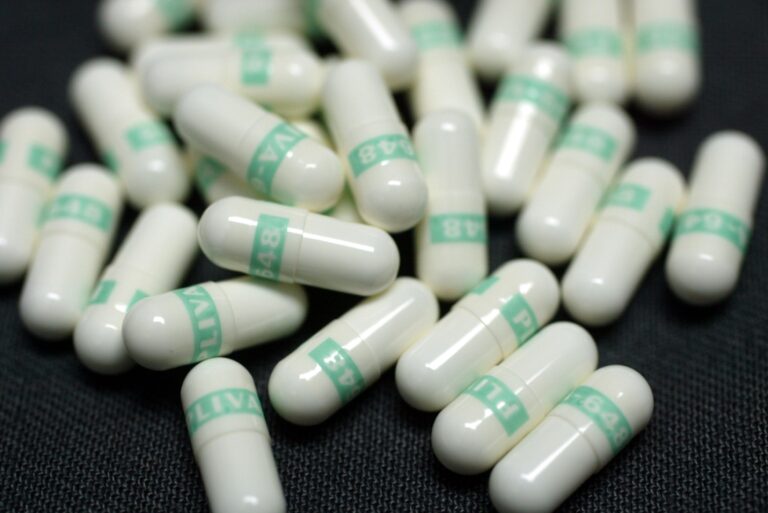
MIAMI, FL – MARCH 23: Anti-depressant pills named Fluoxetine are shown March 23, 2004 photographed in Miami, Florida. The Food and Drug Administration asked makers of popular antidepressants to add or strengthen suicide-related warnings on their labels as well as the possibility of worsening depression especially at the beginning of treatment or when the doses are increased or decreased. Illustration by Joe Raedle/Getty Images
GH Research said Friday that the FDA gave “positive initial feedback” on the pivotal trial design for GH001, its inhaled psychedelic for treatment-resistant depression, but the design is not final and no pivotal trial has started.
The nearest rival developing the same molecule, 5-MeO-DMT (also called mebufotenin), is further along. AtaiBeckley’s nasal spray BPL-003 has initiated Phase 3 activities, and Eli Lilly completed its purchase of the company in September in a deal worth up to $3.8 billion. AtaiBeckley expects topline results from its two pivotal studies by early 2029, while GH Research’s End-of-Phase 2 meeting, the FDA session meant to settle its design, is not due until the first quarter of 2027.
For nearly 30% of people with major depression whose illness is classed as treatment-resistant, that sequence sets the realistic timeline. Neither inhaled nor nasal 5-MeO-DMT is approved, the molecule remains a Schedule I controlled substance, and the first pivotal results are more than two years away.
GH001 Pivotal Plan Resembles Design FDA Backed for Lilly-Owned Rival in March
GH Research’s plan calls for randomized, double-blind trials with parallel fixed-dose arms against placebo, one fixed dose per visit through a new device, and a primary endpoint of change in Montgomery-Åsberg Depression Rating Scale (MADRS) score at Week 4, followed by a 12-week double-blind period. MADRS is a ten-item scale scored 0 to 60 that mental health professionals use to rate depression severity.
AtaiBeckley announced March 3 that the FDA supported its proposed pivotal program. Its ReConnection-1 trial enrolls about 350 participants in three arms (8 mg, 4 mg and placebo, randomized 2:1:2), with a primary endpoint of MADRS change at Week 4 comparing 8 mg with placebo inside a 12-week randomized, double-blind core.
Feature
GH001 (GH Research)
BPL-003 (AtaiBeckley, now Lilly)
Delivery
Inhaled aerosol through new GH001 Aerosol Delivery System
Nasal spray using a device from a previously approved product
FDA status
“Positive initial feedback”; End-of-Phase 2 meeting expected in Q1 2027
End-of-Phase 2 meeting completed in March; FDA supported pivotal program
Pivotal status
Not started; planned shortly after the meeting if alignment is reached
Phase 3 activities initiated; company CEO said program began in June
Primary endpoint
MADRS change from baseline at Week 4
MADRS change at Week 4, 8 mg vs. placebo
Dose arms
Parallel fixed doses vs. placebo; dose levels not disclosed
8 mg, 4 mg, placebo (ReConnection-1)
Topline timing
Not stated
By early 2029 (company target)
Table entries come from GH Research’s third-quarter release and AtaiBeckley’s End-of-Phase 2 release.
Lilly announced the deal July 16 at $6.75 per share in cash, about $2.8 billion, plus contingent value rights worth up to $2.50 per share tied to development and regulatory milestones. The deal closed September 11.
By TechTimes’ reading, Friday’s FDA feedback describes convergence on a template already in use, not a new regulatory precedent for this molecule. GH Research’s stated advantages are the device and the visit length. The company expects about one hour with a single fixed dose, and in Phase 2b it reported 99% of patients were ready for discharge within one hour of dosing. AtaiBeckley describes an in-clinic experience of about two hours.
The timeline has also slipped. In January, GH Research targeted starting its global pivotal program in 2026, and the third-quarter report now puts the End-of-Phase 2 meeting in early 2027, with trials to start shortly afterward if final alignment is reached.
Fixed Dosing Needs a New Aerosol Device: Bench Tests Show 82% to 89% Delivery
5-MeO-DMT cannot work as a swallowed pill because the enzyme monoamine oxidase A breaks it down in first-pass metabolism, which is why it is typically inhaled after vaporization. Smoked, the effects begin within seconds to minutes and the main phase lasts about 10 minutes.
In the Phase 2b trial, mebufotenin powder was vaporized in a Volcano Medic 2 vaporizer, collected in a balloon and inhaled through a mouthpiece, according to a Dutch trial-registry protocol summary. Clinicians gave up to three escalating doses (6, 12 and 18 mg) in one session. The company reports that the share of patients reaching a peak experience rose from 23% after the first dose to 62% after two and 86% after three (19, 50 and 70 of 81 patients). A fixed-dose design removes that dose-by-dose adjustment.
That makes delivery consistency the central engineering requirement. In bench testing, the new Aerosol Delivery System delivered 82% to 89% of the loaded dose, compared with 55% to 79% for the vaporizer used before, with reduced variability, according to the company. A device that lands closer to the intended dose matters more when no second dose is available. Bench data, however, say nothing about how patients respond.
The human data behind the fixed dose are small. In the healthy-volunteer study the company calls GH001-HV-106, 88% (7 of 8) of volunteers reached a peak experience at the dose planned for the pivotal program.
The device is also a regulatory item. GH Research said the FDA’s written responses in July found its manufacturing and device plans “appear Phase 3 ready.” The inhaled route carries its own history. The FDA clinical hold on GH001, lifted January 5, was down to a single remaining topic in mid-2025: respiratory tract findings in rats, which the company argues are specific to rats. A dog inhalation study found no respiratory tract histology findings at any dose tested, the company reported in January 2025.
Is Week 4 Endpoint Tougher Than Phase 2b Day 8 Result?
The Phase 2b trial enrolled 81 adults (40 on GH001, 41 on placebo) and measured remission at Day 8. Healio’s summary reported a 15.5-point difference from placebo on the 60-point MADRS and remission in 57.5% of treated patients (23 of 40) versus none on placebo, published in JAMA Psychiatry on March 25. A Week 4 endpoint asks whether the effect lasts longer. GH Research’s second-quarter report still described the pivotal design as intended to replicate Phase 2b, and the third-quarter plan changes both the endpoint timing and the dosing.
Durability data so far come with a retreatment caveat. Of the 23 patients in remission at Day 8, 20 (87%) were in remission at six months, but only three stayed in remission without retreatment, according to the JAMA Psychiatry report as summarized by Healio. The company’s headline figure is 73% remission at six months with about four treatments on average in the open-label extension. The pivotal design as described tests a single fixed dose at Week 4, and the release summary TechTimes reviewed does not describe retreatment. Adverse events occurred in 72.5% of GH001 patients and 7.3% of placebo patients, mostly nausea, excess salivation and tingling rated mild or moderate, with no serious treatment-related events at six months.
Independent psychiatrists flagged limits. Michael Thase of the University of Pennsylvania described the unblinding problem as recognized in psychedelic trials and said placebo response is likely to rise in larger Phase 3 studies. Gerard Anmella of Hospital Clínic in Barcelona noted that participants had to stop antidepressants for at least two weeks, which may have amplified the effect, and that expectation may inflate benefit. In a JAMA commentary on AtaiBeckley’s nasal-spray trial, Chittaranjan Andrade of India’s NIMHANS wrote that the effect was incomplete and that “difficult-to-treat” describes such patients better than “treatment-resistant,” a caution aimed at the nasal trial that bears on the class.
The FDA’s final psychedelic guidance, published July 14, tells sponsors to measure whether blinding held, recommends alternatives to inert placebos and sets an evidence bar that results must be robust enough to overcome unblinding bias. GH Research’s second-quarter report cited FDA guidance issued in July 2026 as a design consideration. The third-quarter summary TechTimes reviewed does not describe how blinding will be measured.
Postpartum Depression: All 10 Women Reached Remission, but Study Stopped at 10 of 15 Planned
In the Phase 2a postpartum depression study, all 10 women were in remission (MADRS of 10 or lower) at 2 hours, Day 2 and Day 8 after a single dosing day. MADRS fell 35.4 points from a baseline average of 36.7 at Day 8 (pJournal of Clinical Psychiatry paper published online June 3. Each woman received the individualized regimen of up to three doses with one hour between them: one received a single dose, seven received two and two received three.
The limits are written into the paper. The trial was planned for 15 participants and stopped at 10 because of recruitment challenges, enrolled at one UK site, had no control arm and no blinding, followed patients for one week, was 90% White and included nine women who were not taking drug therapy. GH Research sponsored the study, and several authors are company employees or shareholders. Participants were 18 to 45, more than four weeks and up to 12 months postpartum, with a MADRS score of at least 28. Breastfeeding participants had to stop from just before dosing until 24 hours after the last dose.
The company plans a pivotal postpartum program using one fixed dose through the new device, targeted for the second half of 2027 and subject to regulatory alignment, so it would not repeat the multi-dose regimen used in the 10-woman study. The need is real: CDC research shows about 1 in 8 women with a recent live birth reported symptoms of postpartum depression. Two drugs are approved. Brexanolone is a 60-hour monitored infusion at a certified health care facility, and zuranolone (Zurzuvae) is a 14-day oral course with an estimated retail price of $19,000. A one-day treatment would be a different proposition if controlled trials support it.
Compass Filed First, and Any 5-MeO-DMT Drug Still Needs DEA Rescheduling
Compass Pathways completed its New Drug Application for COMP360 psilocybin in treatment-resistant depression on November 9, backed by two Phase 3 trials (COMP005 and COMP006). It targets a first-half 2027 launch, contingent on FDA approval and rescheduling.
An April 18 executive order directs the Attorney General to review Schedule I products that finish Phase 3 trials for a serious mental illness, though legal analysts note it remains debatable whether an executive order can compel rescheduling. The FDA’s priority vouchers, issued April 24, went to Compass, Usona Institute and Transcend Therapeutics, not to either 5-MeO-DMT company.
Compass is a psilocybin program, so its review will not decide GH001’s fate. By TechTimes’ reading, though, it will be the first test of how the FDA weighs unblinding in a psychedelic depression application, and GH Research’s data would be read against that precedent. Andrade proposed this month a patient-level blinding index, and a systematic review found only 33 of 112 psychedelic trials assessed blinding integrity at all.
Cash Fell $12.1 Million in Third Quarter to $350.6 Million Before Pivotal Spending
Cash, cash equivalents and marketable securities were $350.6 million at September 30, down from $362.7 million at June 30 and up from $280.7 million at December 31, 2025. The second-quarter figure followed an underwritten offering that raised $117.5 million gross.
Metric
Q3 2026
Q3 2025
R&D expense
$10.1 million
$10.6 million
G&A expense
$5.3 million
$6.0 million
Net loss
$12.5 million ($0.18 per share)
$14.0 million ($0.23 per share)
Nine-month net loss was $46.6 million, compared with $34.1 million a year earlier, and nine-month R&D spending rose to $34.8 million from $27.4 million.
The company also named Vanina Popova, MD, chief development officer. She previously worked on clinical development of Spravato (esketamine) at Johnson & Johnson and was lead author of the TRANSFORM-2 pivotal Phase 3 publication, experience in the same indication GH001 targets.
No 5-MeO-DMT Depression Drug Is Approved, and Rival’s Earliest Readout Targets Early 2029
Friday’s update moves GH Research closer to a final trial design, not closer to approval. The dose plan draws on eight volunteers at the chosen dose, the FDA’s July guidance raises the bar on blinding, and a Lilly-owned program built on the same molecule is months ahead with a Week 4 endpoint of its own. Patients weighing trials should know that antidepressants had to stop at least two weeks before the Phase 2b study, a decision for a prescribing clinician. Unregulated toad-venom products sold as “bufo” contain mebufotenin and a second compound in unmeasured amounts, and deaths have been reported with MAO-inhibitor combinations.
GH001 and BPL-003 are investigational and have not been approved by the FDA or any other regulatory authority. This article is for information only and is not medical or investment advice.
Frequently Asked Questions
Is 5-MeO-DMT approved to treat depression?
No. GH001 and BPL-003 are investigational, and no regulator has approved either for depression. 5-MeO-DMT is a Schedule I controlled substance in the United States. GH Research has not started a pivotal trial.
How long does a GH001 treatment last?
In Phase 2b, the psychoactive effects lasted a median of about 11 minutes, and 99% of patients were ready for discharge within one hour, according to the company. The one-hour visit under the planned fixed dose is a company expectation, not a measured result.
Has the FDA agreed to GH Research’s pivotal trial design?
Not yet. The company reports positive initial feedback and expects an End-of-Phase 2 meeting in the first quarter of 2027 to finalize the design, with pivotal trials to start shortly afterward if final alignment is reached. The design resembles the one AtaiBeckley said the FDA supported for BPL-003 in March, which is now in Phase 3 start-up.
Does the postpartum depression result show GH001 works for new mothers?
No. It was an open-label study of 10 women with no control group and one week of follow-up, stopped short of its planned 15 participants, so it cannot show how long remission lasts or whether the drug caused it.