October 31, 2026:


Probably Stolen, a cyberpunk shopkeeper sim from first-time studio Questing Goose, sold over 200,000 copies in its first hours on Steam on October 28, 2026, then surpassed 112,145 concurrent players the following day — a peak that surpassed publisher tinyBuild’s previous record by 85 percent and placed it in the top fraction of indie debuts in Steam’s history. The game carries a 96 percent positive rating across more than 2,400 user reviews.
Probably Stolen was published by tinyBuild (the Seattle-based indie publisher behind the Graveyard Keeper series and Hello Neighbor) and developed in Montreal by Questing Goose Studio. The game launched on PC via Steam with a 10 percent introductory discount, bringing the price to $17.99 on a $19.99 base.
What made the result striking is that it was not surprising to anyone who had tracked the game’s pre-launch numbers. Industry benchmark data shows a 20 percent demo-to-wishlist conversion rate is considered strong, with the median sitting around 19 percent and the top 30th percentile at roughly 23 percent. Probably Stolen’s demo, released ahead of Steam Next Fest October 2026, drew 660,000 players before the full game launched. Those players converted to Steam wishlists at an implied rate of approximately 76 percent — around 500,000 wishlists accumulated before launch — placing the game’s wishlist inflows 17 times above the top benchmark for Next Fest wishlist totals.
Steam’s discovery algorithm treats wishlist velocity as its primary signal for allocating placement on high-traffic surfaces such as “Popular Upcoming,” “New and Trending,” and automated recommendation queues. A demo that converts at 76 percent against an industry median of roughly 19 percent accumulates that velocity at a rate the algorithm treats as an unambiguous quality signal, compounding each time the game surfaces in a new discovery queue. By launch day, Probably Stolen had already done most of the algorithmic work. The 200,000 copies sold in the first hours — roughly a 40 percent wishlist-to-purchase conversion rate in the launch window, against an industry top-decile of 24.5 percent — were the predictable output of a funnel that had been running exceptionally hot for months.
The demo itself topped Output Lag’s Next Fest chart by 12,000 players over the next-closest title, reaching a peak of 39,696 concurrent users during the festival — a figure that exceeded 40,000 across the wider playtest period.
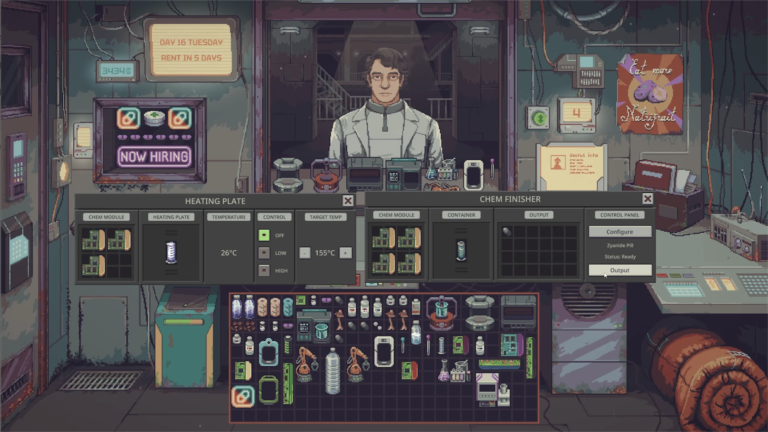
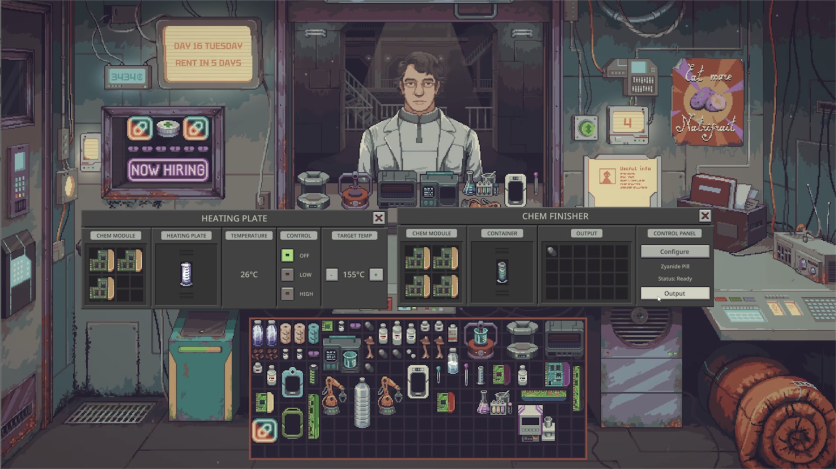
The game puts you in the role of a former smuggler who has claimed a trade stall on the lower levels of a space station — the kind of place where the rent goes up and the security forces may be less legitimate than their badges suggest. Your goal is to earn enough to buy out your lease before a rising rent cycle forces you under. What you sell, to whom, and under what circumstances is almost entirely your decision.
On your first day of operations, a security officer slides a Most Wanted list under your counter and instructs you to press the alert button if any named individuals show up. It is a straightforward job until you begin to realize the people on that list might be fighting the same structural pressures you are — and that keeping them onside could be worth more than the informant reward. The game never resolves that tension for you.
The emotional register is pressure without melodrama: a “just one more day” loop tension built from small decisions whose consequences accumulate. Inventory space is limited and organized on a Resident Evil-style grid; customers range from security personnel looking for evidence to faction representatives demanding loyalty. You will make choices you regret, and the game makes you live with them.
Mechanically, Probably Stolen extends the inspection-and-judgment loop that Papers, Please established in 2013 — where Lucas Pope’s border-inspector game made bureaucratic document-checking feel morally weighty — and repositions it in a commercial context. Rather than deciding who crosses a border, you are deciding what crosses your counter, which factions to prioritize, and how far commercial survival can justify. Alongside the counter work, players can craft items using in-shop machinery, offer appraisal services (checking items for authenticity using provided guides and tools), and head out scavenging during the off-hours.
Nine starting scenarios include specialist roles — gunsmith, chemist, water merchant, farmer, fence, or a penniless shopkeeper starting from scratch — with four difficulty settings and Steam Workshop support for modifications. Questing Goose has committed to further free content updates.
The 112,145 peak concurrent figure represents an 85 percent increase over tinyBuild’s prior record holder, Graveyard Keeper 2, which reached a peak of 60,538 concurrent players following its September 22, 2026 launch. It is also more than double the original Graveyard Keeper’s all-time Steam peak of 46,305 — a record the 2018 game set during a surge driven by a free-to-keep promotion tied to the sequel’s announcement in April 2026.
For tinyBuild, a publisher whose simulation portfolio has been a steady Steam performer over its 15-year history, the numbers validate the studio’s approach to demo-led marketing. The Graveyard Keeper free-giveaway campaign generated roughly 400,000 wishlists for GK2 and nearly $250,000 in DLC revenue over four days — a deliberate pre-launch strategy. Probably Stolen’s demo strategy achieved a larger wishlist total with a smaller toolset: no legacy sequel, no free base-game promotion, just a well-executed demo that retained player attention through completion at an exceptional rate.
Owner estimates from third-party tracking services currently place total copies sold between approximately 249,000 (PlayTracker estimate) and 381,000 (VG Insights estimate) — suggesting the 200,000 Day 1 figure was surpassed within the first 48 hours.
Steam Next Fest is widely understood by indie developers as an amplifier of existing momentum rather than a discovery engine on its own. The platform’s algorithm during the festival surfaces games with strong pre-existing wishlist velocity and early demo engagement signals — download counts, time-in-demo, and wishlist conversions are all inputs the system reads as quality indicators before a game reaches a wider discovery queue.
A demo launched months before the festival — as Probably Stolen’s was, with a playtest going live in August 2026 — accumulates those signals over time, giving the algorithm runway to treat the product as an established quantity. GamesRadar noted that the demo stood out in part because it landed during a Steam Next Fest heavily populated by AI-generated game submissions, which may have amplified Probably Stolen’s comparative visibility as a hand-crafted title with an immediately coherent premise.
The developer’s own reaction to launch day — Questing Goose posted on r/IndieGaming that the result “came out of nowhere” — reflected honest surprise at the magnitude rather than the direction. The funnel had been pointing toward a strong launch for months. What nobody predicted was the precise height of the ceiling.
At $19.99 (currently $17.99 for a limited launch period), Probably Stolen is priced competitively for its content volume and apparent playability. GameSpew awarded it an 8 out of 10, calling it a “rich and varied experience” that goes far beyond your standard shopkeeping simulator, and noting that the involvement of multiple interconnected systems — faction reputation, counterfeit detection, crafting, appraisal, scavenging — gives it the kind of replay depth that sustains an active player base past launch day.
With more than 73,000 players still in-game on October 30, two days after launch, early retention numbers look healthy. The game currently holds 96 percent positive reviews across more than 2,400 Steam user reviews and sits at seventh in Steam’s global top sellers as of this writing.
The game is available now on PC via Steam, Windows only.
SteamDB recorded an all-time peak of 112,145 concurrent players on October 29, 2026 — the day after launch. The developer, Questing Goose Studio, reported independently that the game passed 100,000 concurrent players on day one via a post on r/IndieGaming, which is consistent with the SteamDB figure. An earlier figure of 86,099 circulated at the time the draft article was written but has since been superseded by the confirmed all-time peak.
The short answer is that it had already done the work. Probably Stolen’s demo drew 660,000 players during Steam Next Fest and the pre-launch period, converting approximately 76 percent of them to wishlists — roughly four times the industry median of around 19 to 20 percent. Steam’s discovery algorithm treats wishlist velocity as a primary quality signal and compounds it through placement on high-traffic surfaces. By launch day, that compounding effect had already primed the recommendation engine. The 200,000 Day 1 sales were the algorithmic consequence of an exceptional demo-to-wishlist funnel — not a lucky break. Steam demo conversion benchmarks show how rare that rate was.
They share a design lineage but operate in different registers. Lucas Pope’s 2013 game — which has sold more than five million copies — made bureaucratic document inspection feel morally weighty by framing it around immigration and state violence. Probably Stolen borrows the inspection mechanic (you scan packaging and labels, check items for counterfeits, and verify what customers hand you) but repositions the stakes in a commercial context: what crosses your counter, which factions you protect, and how far economic survival justifies moral compromise. The setting is cyberpunk rather than Cold War-adjacent; the pressure is rent and rival gangs rather than a totalitarian government. Players who found Papers, Please’s tension compelling will likely recognize the DNA, but the games feel distinct.
No console release has been announced. The game launched on PC via Steam on October 28, 2026, for Windows only. Questing Goose Studio has announced that free content updates are planned, but has not disclosed a console roadmap as of this writing.