Pancreatic Cancer Drug Ampligen Readout Cannot Separate It From Durvalumab, Trial Design Shows

November 14, 2026:

Pancreatic Cancer Drug Ampligen Readout Cannot Separate It From Durvalumab, Trial Design Shows
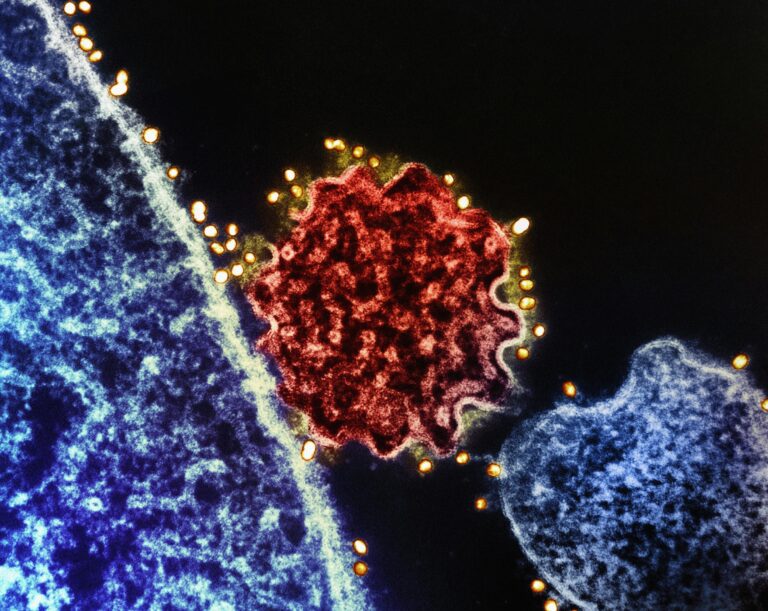
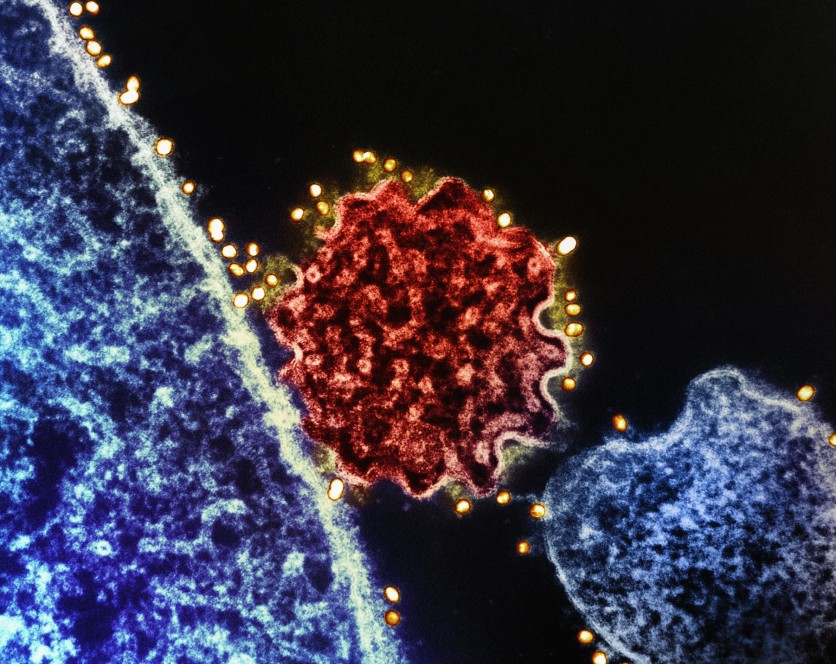
Nipah Virus Particle Colorized transmission electron micrograph
Nipah Virus Particle Colorized transmission electron micrograph of a single Nipah virus particle (center, colorized red) that has budded from the surface of an infected cell (blue). Nipah virus surface glycoproteins have been labeled using a technique called “immunogold labeling,” in which gold particles are bound to antibodies that recognize a specific viral antigen or epitope, which then bind to that individual virus species both within and on the surfaces of infected cells, allowing researchers to see the antibodies and confirm the virus type in the image.
National Institute of Allergy and Infectious Diseases/Unsplash.com

AIM ImmunoTech’s third-quarter report, dated Nov. 13, describes a “major clinical inflection point” for Ampligen (rintatolimod), but the milestone behind it is a schedule event, not a result: the release says Ampligen dosing is concluded in the Phase 2 DURIPANC trial, and the topline readout expected in the first quarter of 2027 comes from an open-label study in which every patient also receives the immunotherapy durvalumab. Patients with metastatic pancreatic cancer, which has about 3% five-year relative survival once it has spread, should read any “clinical benefit rate” from this trial as a measure of disease control in a pre-selected group, not proof that Ampligen added anything.

The company’s schedule calls for the primary-endpoint analysis to begin in December and topline clinical-benefit results in the first quarter of 2027. The same release carries a cautionary statement that significant additional testing and trials will be required, and although it says enrollment is complete, it does not give a final patient count.

How Does Ampligen Work Alongside Durvalumab in Pancreatic Cancer?

Ampligen is a mismatched double-stranded RNA that activates Toll-like receptor 3 (TLR3), an innate immune sensor, and TLR3 signaling produces type I interferons, immune messengers that help coordinate defenses. AIM’s hypothesis, as Targeted Oncology reported it, is that Ampligen increases dendritic cell maturation and the cross-priming of cytotoxic T cells, so that the PD-L1 blocker durvalumab (Imfinzi, AstraZeneca) has an immune response to unleash in a “cold” tumor microenvironment.

That hypothesis rests on contested biology. A 2021 review in Frontiers in Immunology says TLR3 can play protumor or antitumor roles depending on the tumor type and cell context. Pancreatic tumors have historically resisted checkpoint inhibitors, which is the gap the combination aims to close.

Why Does Ending Ampligen Dosing Not Mean Treatment Is Over?

DURIPANC is an investigator-initiated, open-label, single-center Phase 2 study at Erasmus MC in the Netherlands, enrolling up to 25 patients. Every participant had radiologically confirmed stable disease after eight cycles of FOLFIRINOX chemotherapy, according to the Targeted Oncology report.

Under the protocol as described there, patients receive 200 to 400 mg of intravenous Ampligen twice weekly for up to six weeks, alongside 1,500 mg of durvalumab on day one of each 28-day cycle for up to 12 cycles. Twelve cycles span roughly 48 weeks, so durvalumab dosing can run well into 2027. AIM announced June 18 the final patient had received a first dose, so a six-week Ampligen course would have ended by early August. A short, fixed Ampligen course ending in the second half of the year is what the protocol predicts.

The primary endpoint is clinical benefit rate: the share of patients with stable disease, partial response or complete response 24 weeks after the combination starts. Secondary endpoints include overall survival, progression-free survival and immune profiling.

Why Can Stable-Disease Trials Not Show Ampligen Works?

Because enrollment required stable disease after chemotherapy, the trial starts with patients whose cancer has already shown some restraint. A high share still showing “stable disease” at 24 weeks is the expected behavior of that group and needs a comparator to interpret. Neither the company’s release nor the trial descriptions reviewed here report a randomized comparison arm, and every patient receives durvalumab as well, so the study cannot separate Ampligen’s own effect.

The interim numbers show the problem. AIM’s mid-2025 update reported that 3 of 14 patients, about 21%, had progression-free survival beyond six months, and 64% had survived beyond six months. Those figures come with no comparator, and CURE’s February 2026 update reported only encouraging survival trends, not specific DURIPANC efficacy figures.

Independent randomized evidence on immunotherapy in this cancer has been discouraging. The Canadian Cancer Trials Group PA.7 trial, which added durvalumab and tremelimumab to chemotherapy, did not improve survival, with a p-value of 0.72.

What Does the Earlier Dutch Named-Patient Program Actually Show?

AIM’s case for Ampligen leans on a Dutch named-patient program at Erasmus MC. Its published analysis covered 27 patients pretreated with FOLFIRINOX, compared with 54 historical controls treated between 2012 and 2018 and matched on age, sex, stage and FOLFIRINOX cycles. Against a 27-patient control subset selected for a longer progression-free interval, median overall survival was 19 months versus 12.5 months, with a hazard ratio of 0.52 (95% CI 0.28-0.90).

The authors list their own limitations: a small, non-randomized sample, risk of selection bias, and no performance status or CA 19-9 data for controls. They also measured survival from the start of FOLFIRINOX, not from the start of rintatolimod, and their abstract and results text swap the two hazard ratios. They conclude that rintatolimod could potentially be an effective maintenance therapy and call for a randomized controlled trial.

The Nov. 13 release adds exploratory observations from that Dutch program: 39 Ampligen-treated patients with a baseline neutrophil-to-lymphocyte ratio below 4.5 had median overall survival of 34.8 months from the start of chemotherapy. That is not a DURIPANC result, and survival counted from chemotherapy start cannot be compared with DURIPANC’s endpoints, which run from the start of the combination. The release also quotes Erasmus MC’s Dr. Casper van Eijck, whom it identifies as AIM’s consulting oncologist, saying only a focused future clinical trial can establish whether Ampligen produces better outcomes.

Has Ampligen Faced This Efficacy Question Before?

In December 2009, AIM’s predecessor Hemispherx Biopharma received a Complete Response Letter in which the FDA said the two primary studies of Ampligen in chronic fatigue syndrome did not provide credible evidence of efficacy, as RTTNews also reported. In February 2013, a second letter said Hemispherx should conduct at least one additional clinical trial. Those letters concerned chronic fatigue syndrome, not pancreatic cancer. Ampligen is in Phase 2 testing for pancreatic cancer and AIM says combinations remain exploratory.

How Does Daraxonrasib Approval Change AIM’s Odds?

On Aug. 26, the FDA approved Revolution Medicines’ daraxonrasib (Rasonque), an oral RAS(ON) inhibitor, for adults with metastatic pancreatic adenocarcinoma who have received at least one prior systemic therapy. In the Phase 3 RASolute 302 trial it produced median overall survival of 13.2 months versus 6.7 months for chemotherapy. On Sept. 14, the FDA granted breakthrough therapy designation to daraxonrasib plus gemcitabine and nab-paclitaxel for first-line treatment, and the Phase 3 RASolute 303 trial is ongoing.

AIM CEO Thomas Equels says he expects daraxonrasib to become first-line therapy, and that AIM intends to design its Phase 3 to be relevant as a maintenance therapy. The company says combinations with RAS-targeted drugs are exploratory and that safety and efficacy have not been established. A control arm in any future Ampligen trial would therefore be defined by a standard of care that is changing.

How Long Does AIM’s Cash Last Before Readout?

AIM reports about $6.9 million in cash, equivalents and marketable securities at Sept. 30, up from about $3.0 million at Dec. 31, 2025, with a third-quarter net loss of about $3.1 million. Research and development expense was about $846,000, up from $607,000 a year earlier, which the release attributes mainly to Ampligen precursor manufacturing costs. The release gives no runway estimate. AIM’s Form 10-Q describes going-concern doubt and several 2026 warrant-linked equity financings.

At the third-quarter loss rate, $6.9 million covers a little over two quarters, which reaches roughly the first-quarter readout; that is simple arithmetic, not company guidance, and another financing around the topline data would not be surprising. AIM has also agreed to a roughly $1.5 million Sterling proposal for polynucleotide drug-substance manufacturing at Sterling Pharma Solutions.

Which Numbers Matter When Readout Arrives?

Three figures determine whether the readout means anything: the final enrolled patient count, the clinical benefit rate at 24 weeks, and how that rate compares with published benchmarks for maintenance after FOLFIRINOX in stable-disease patients. Overall survival, which regulators weigh most heavily, comes later, and the release gives both mid-2027 and the third quarter of 2027 as timing. A randomized trial, not DURIPANC, would be the first test of whether Ampligen adds benefit to durvalumab or to maintenance alone.


Frequently Asked Questions

Does ending Ampligen dosing mean the DURIPANC trial is complete?

No. The Ampligen course is limited to six weeks, while durvalumab can continue for up to 12 four-week cycles, and the primary-endpoint analysis does not begin until December.

Can an open-label trial show that Ampligen improves survival in pancreatic cancer?

No. Without a randomized comparison group, a study in patients already stable on chemotherapy cannot separate the effect of Ampligen from the effect of durvalumab, from prior FOLFIRINOX, or from patient selection. The authors of the earlier Dutch program called for a randomized trial.

Is Ampligen approved to treat pancreatic cancer?

No. Ampligen is still in Phase 2 testing for pancreatic cancer, although the FDA granted orphan designation in 2020, a status that does not reflect proof of efficacy.

What changed in pancreatic cancer treatment this year?

The FDA approved daraxonrasib on Aug. 26 for metastatic disease after at least one prior therapy, and it is being tested first-line in a Phase 3 trial.

Source link